
Selecting the perfect wine gift bag requires more than just guessing the volume; it demands a precise match between the bottle’s physical profile and the bag’s expanded dimensions. Whether you are gifting a standard Bordeaux, a wide-shouldered Burgundy, a thick-glassed sparkling wine, or a large-format Magnum, understanding how to measure and match these shapes ensures your presentation looks tailored, secure, and elegant. This guide walks you through the exact steps to measure your bottle, interpret bag sizing labels, and troubleshoot common fit issues so your gift never looks too loose or risks tearing the bag.
Identify Your Wine Bottle Shape and Profile
To choose the right wine gift bag, you must first understand that wine bottles are not uniform cylinders. The shape of the bottle is often determined by the style of wine it holds, and these structural differences directly impact how the bottle sits inside a gift bag. Recognizing these silhouettes before you shop prevents the frustration of buying a bag that is too narrow at the base or too tight around the shoulders.
The most common shape is the Bordeaux bottle. This style features straight, parallel sides and high, distinct shoulders that lead up to a straight neck. Because of its symmetrical, compact footprint, the Bordeaux bottle fits easily into most standard wine gift bags. It is the baseline shape that manufacturers use when designing standard single-bottle packaging.
Products mentioned in this guide
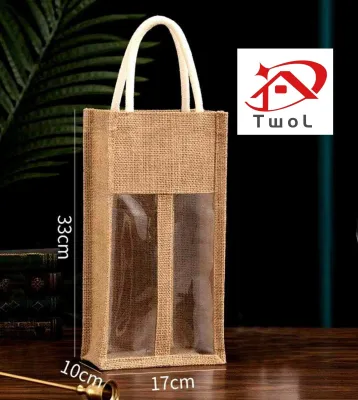
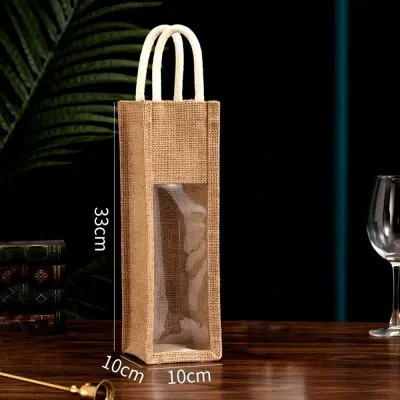
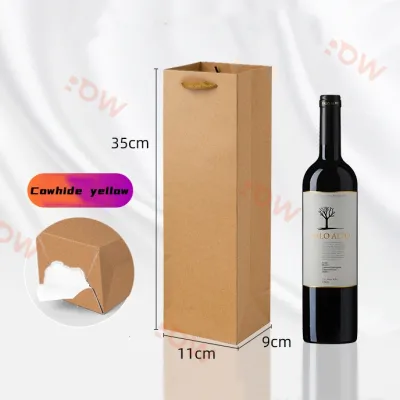
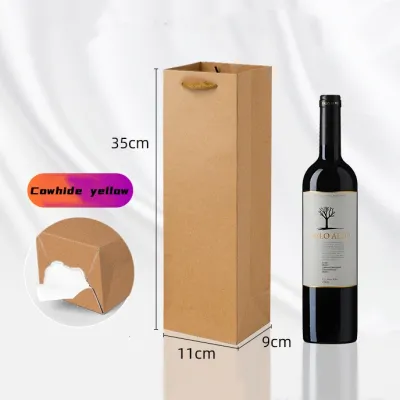
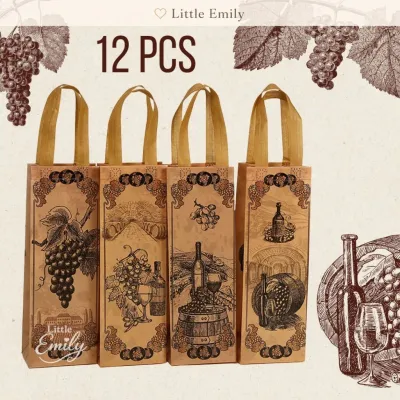
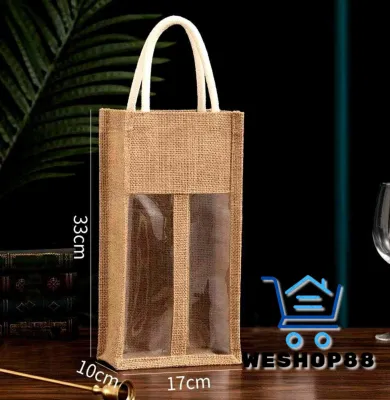
Prices are valid at publication and may change. Please refer to the product page for the latest price.
In contrast, the Burgundy bottle has a wider base and gently sloping shoulders that transition gradually into the neck. This wider lower half means a Burgundy bottle requires more horizontal space at the bottom of the bag. If you try to slide a Burgundy bottle into a bag designed strictly for a narrow Bordeaux, the sloping shoulders can stretch the paper, causing unsightly creases or even tearing the seams.
Sparkling wine bottles, such as those used for Champagne, Prosecco, or Cava, present an even greater sizing challenge. These bottles are constructed with significantly thicker glass to withstand internal pressure, which increases their overall diameter. They also feature a wider, flared base and a prominent neck wrapped in foil, often secured with a wire cage and cork. This extra bulk requires a bag with a generous bottom gusset and a wider opening.
Finally, large-format bottles like Magnums hold double the volume of a standard bottle (1.5 liters instead of 750 milliliters). These bottles are both taller and much wider than standard formats. Attempting to fit a Magnum into a standard wine gift bag is highly risky, as the bottle will either protrude awkwardly from the top or split the side seams entirely. Always check the bottle’s label for volume indicators to confirm if you are dealing with an oversized format.
How to Measure Your Wine Bottle Accurately
Before purchasing wrapping supplies, taking a few quick measurements of your bottle will save time and prevent gifting mishaps. You do not need professional tools; a simple flexible measuring tape or a standard ruler will suffice. Knowing the exact dimensions of your bottle allows you to compare them directly against the specifications listed on the packaging of the wine gift bag.

Start by measuring the total height of the bottle. Place the bottle on a flat, stable surface and measure from the very bottom of the base to the highest point of the closure. For standard corked or screw-cap wines, this is a straightforward measurement. For sparkling wines, make sure to measure to the very top of the wire cage or the rounded cork, as these elements add extra height that must be accommodated by the bag.
Next, determine the bottle’s diameter at its widest point. For a Bordeaux bottle, this measurement is consistent from the base to the shoulders. For Burgundy and sparkling bottles, the widest point is typically near the bottom third of the bottle. Lay the measuring tape flat across the bottom of the bottle to find the diameter, or wrap the tape around the widest part to find the circumference, then divide by 3.14 to calculate the diameter if needed.
Once you have the exact diameter, you must calculate the minimum bag width required. Never choose a bag with an interior width that matches your bottle’s diameter exactly. To allow for smooth insertion and removal without friction, add a small clearance allowance of at least 1 to 2 centimeters to your bottle’s diameter. This extra space ensures the paper does not scrape against the bottle label, which can scratch or tear delicate paper labels during gifting.
Additionally, take note of any irregular physical features. Some premium bottles have a deep punt, which is the indentation at the bottom of the bottle. While this does not change the external height, it can alter how the bottle’s weight is distributed. Other specialty bottles may feature unusually long, elegant necks or embossed glass designs that add texture and width, requiring a slightly more forgiving bag size.
Match Bag Dimensions to Specific Bottle Formats
When shopping for a wine gift bag, understanding how manufacturers list dimensions is key to finding the right fit. Most gift bag dimensions are presented as Width x Gusset (or Depth) x Height. The gusset refers to the fold-out side panels that allow the bag to expand from a flat sheet into a three-dimensional box shape. Comparing these three measurements to your bottle’s dimensions ensures a perfect match.
For standard 750ml Bordeaux and Burgundy bottles, a typical standard wine gift bag measuring approximately 12 centimeters wide, 9 centimeters deep, and 36 centimeters high is usually ideal. This size provides a snug yet comfortable fit. The bottle should sit flat on the bottom insert without stretching the side seams, and there should be enough height so that the neck of the bottle does not protrude past the top edge of the bag.
Sparkling wine bottles require a bag with a wider gusset to accommodate their thick glass and flared bases. Look for bags labeled specifically for sparkling wine or Champagne, which often feature a wider footprint, such as 13 to 14 centimeters in width and a deeper gusset of 10 to 11 centimeters. This extra depth prevents the wide base of the sparkling bottle from stretching the corners of the bag, which can lead to structural failure when lifted.
If you are gifting a Magnum or another large-format bottle, standard bags are entirely out of the question. You must seek out bags explicitly labeled as “Magnum” or “Oversized.” These bags are designed with reinforced materials and much larger dimensions, often exceeding 16 centimeters in width and 40 centimeters in height. Using a bag that is too small for a Magnum not only looks unprofessional but also poses a serious safety risk if the heavy bottle slips out.
Always distinguish between flat and expanded measurements when reading product labels. A bag that measures 15 centimeters wide when flat will shrink in width once the side gussets are fully opened to accept a round bottle. Always calculate the expanded interior space rather than relying solely on the flat dimensions printed on the packaging.
Evaluate Material Strength and Handle Clearance
A wine bottle is a heavy, dense glass container filled with liquid, meaning the structural integrity of the gift bag is just as important as its visual appeal. When selecting a bag, evaluate the material strength to ensure it can safely support the weight of the bottle. Common materials include kraft paper, non-woven fabric, and heavy laminated paper, each offering different levels of rigidity and tear resistance.
In warm, tropical climates like the Philippines, chilled white or sparkling wines can quickly develop condensation when taken out of the refrigerator. This moisture can easily saturate and weaken standard, untreated kraft paper fibers, leading to a sudden tear at the base. For chilled bottles, it is highly recommended to choose laminated paper bags or non-woven fabric bags, as these materials resist moisture and maintain their strength even when exposed to condensation.
Always inspect the bottom of the bag before purchasing. High-quality wine gift bags feature a reinforced base, which typically consists of a thick cardboard insert glued to the bottom. This insert distributes the heavy bottle’s weight evenly across the entire base, preventing the glass from punching through the paper. If the bag lacks this reinforcement, you can cut a piece of thick cardboard to fit the bottom of the bag yourself to add essential structural support.
The handles of the bag also require careful inspection. Look for bags with sturdy, braided rope handles, ribbon handles secured with metal eyelets, or die-cut handles integrated directly into a reinforced top collar. Avoid bags with thin paper handles that are simply glued to the inside rim, as these can easily snap under the weight of a heavy bottle.
Finally, account for the handle drop length and the top folding space. The handle drop is the distance from the top of the bag to the peak of the handles when held. Ensure there is enough clearance so that the neck of the bottle does not interfere with your hand when carrying the bag. The bottle should sit deep enough in the bag that the handles can meet naturally without straining against the cork or foil.
Troubleshoot Common Sizing and Fit Issues
Even with careful planning, you may occasionally find yourself with a wine gift bag that does not fit perfectly. Fortunately, there are several simple ways to adjust the fit and ensure your presentation remains elegant and secure. If your bag is slightly too large, the bottle may tilt or slide around inside, which can feel unstable and look untidy.
To secure a bottle in an oversized bag, use decorative tissue paper or crinkle-cut paper filler. Stuffing a few sheets of color-coordinated tissue paper around the base and shoulders of the bottle will cushion it, preventing it from shifting during transport. You can also use this extra space to tuck in a small accessory, such as a premium wine stopper, a corkscrew, or a small box of chocolates, which helps fill the void while adding value to your gift.
If the bag is too tight around the shoulders of the bottle, do not attempt to force it inside. Forcing a tight fit will stretch the paper fibers, causing the seams to split or the handles to pull away from the rim. If you notice resistance when sliding the bottle in, stop immediately and switch to a wider, gusseted bag. It is always better to use a slightly larger bag with filler than to risk a torn presentation.
When gifting multiple items, such as a bottle of wine alongside a greeting card or a small box of treats, make sure to account for the extra depth required. A standard single-bottle bag will not have enough room for these additions. Opt for a double-bottle bag with a built-in divider, or a wider gift bag with a generous gusset that allows the items to sit side-by-side without crushing each other.
If your bag is too tall for the bottle, leaving the neck hidden deep inside, you can create a custom, tailored look by folding the top edge of the bag downward. Neatly fold the top of the bag inward or outward to create a clean cuff. This reduces the overall height of the bag, allowing the elegant foil-wrapped neck of the bottle to peek out beautifully while maintaining a secure hold.
Frequently Asked Questions (FAQ)
Can I use a standard wine gift bag for a Champagne bottle?
Standard wine gift bags are generally not suitable for Champagne or other sparkling wine bottles. Sparkling wine bottles are designed with thicker glass to withstand high internal pressure, resulting in a much wider base and a larger overall diameter than standard Bordeaux or Burgundy bottles. Attempting to force a Champagne bottle into a standard bag will stretch the seams, deform the bag, and likely cause the paper to tear at the corners. To ensure a safe and elegant presentation, always choose a bag specifically labeled for sparkling wine or one with a wide, generous gusset.
How do I measure a wine gift bag if it only lists flat dimensions?
If a wine gift bag only lists its flat, unexpanded dimensions, you can estimate its fully expanded capacity with a simple calculation. To find the approximate expanded width, look at the flat width and the side gusset width. When the bag opens, the sides fold out to create depth. The true perimeter of the bag’s opening is equal to twice the flat width. To ensure your bottle fits, the circumference of your bottle must be comfortably less than this total perimeter. As a general rule of thumb, subtract the gusset depth from the flat width to estimate the maximum bottle diameter that can easily slide into the expanded bag.
Community discussion
Share your experience or ask a question. Comments are reviewed before publication.