
Choosing the right water color paints can transform your creative process from a struggle with muddy washes into a seamless flow of vibrant color. For artists in the Philippines, navigating tropical humidity and heat adds another layer of decision-making, as environmental factors directly influence how paint behaves on paper and inside the palette. The primary distinction in the watercolor world lies between student-grade and artist-grade formulas. Understanding how these grades differ in pigment load, binder quality, and overall performance allows you to invest your budget wisely while building a reliable toolkit that matches your current skill level and artistic goals.
Understanding the Core Differences in Pigment and Binder
At the heart of every watercolor paint are two primary ingredients: pigment for color and a binder to hold the pigment together and adhere it to the paper. The ratio and quality of these ingredients are what separate student-grade paints from their artist-grade counterparts.
Artist-grade watercolors are formulated with high concentrations of pure, finely ground pigments. Because they contain minimal fillers, a tiny dab of artist-grade paint delivers intense, saturated color that spreads beautifully across a wet wash. In contrast, student-grade paints substitute expensive pigments with synthetic alternatives, often labeled as “hues.” To keep manufacturing costs low, makers of student-grade paints add extenders, fillers, or opacifiers like chalk or barium sulfate. These additives bulk up the paint but result in a less vibrant, slightly chalky finish when dry.
Products mentioned in this guide
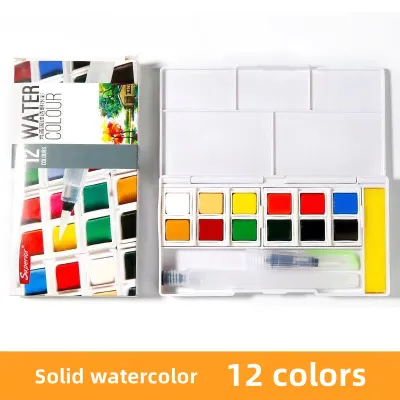
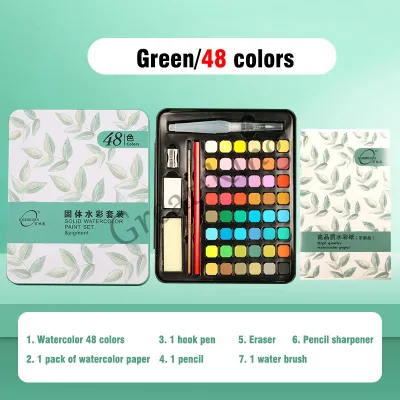
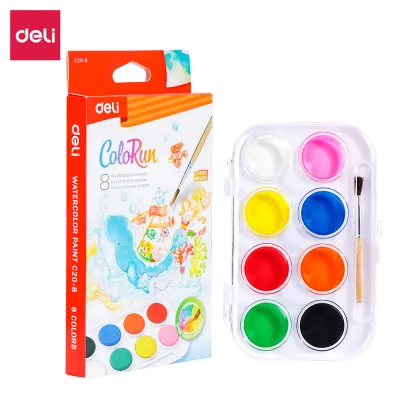
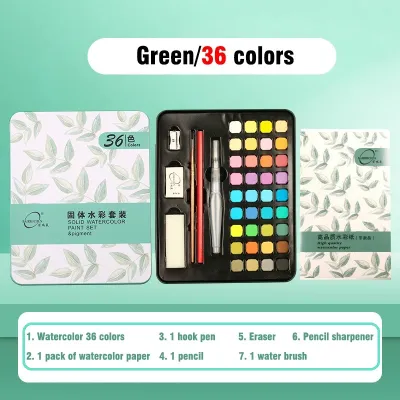
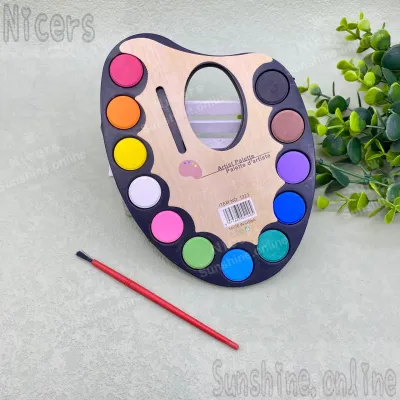
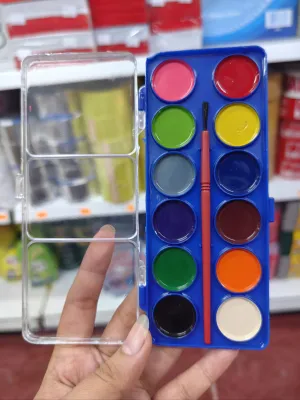
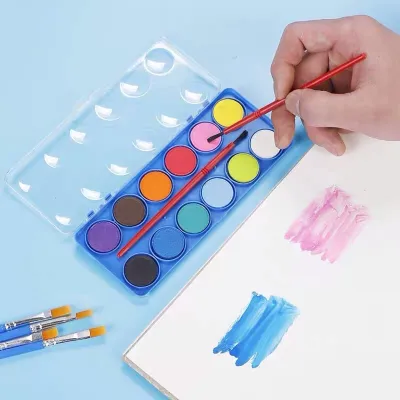
Prices are valid at publication and may change. Please refer to the product page for the latest price.
Binder quality also dictates how the paint behaves when water is introduced. High-quality gum arabic is the standard binder for professional paints, ensuring smooth reactivation, excellent flow, and strong adhesion to paper fibers. Student-grade formulas may use synthetic binders or lower-grade gum arabic. This can make the paint sticky, slow to reactivate, or prone to flaking off the paper over time, especially when applied in thick layers.
To identify these differences before purchasing, learn to read manufacturer labels. Artist-grade paints clearly list the specific Pigment Index codes (such as PB29 for Ultramarine Blue or PY150 for Nickel Azo Yellow), lightfastness ratings (usually using the ASTM international standard or the Blue Wool Scale), and transparency levels. Student-grade paints often omit these details or list multiple pigments in a single tube to mimic a single color, which makes clean color mixing much more difficult.
These chemical differences translate directly to what you see on your paper. Artist-grade paints offer distinct characteristics like natural granulation, where heavy mineral pigments settle into the valleys of textured paper to create beautiful, organic textures. Student-grade paints, loaded with uniform fillers, tend to lay flat and uniform, lacking the dynamic mixing behavior and luminous transparency that define professional watercolor work.
Matching Paint Grades to Your Skill Level and Goals
Selecting the right paint grade is not just about buying the most expensive option; it is about matching your supplies to your current practice routines, learning stages, and final project goals.

Student-grade paints are highly practical for beginners, hobbyists, and students focusing on foundational techniques. When you are learning brush control, water management, and basic color theory, you need to paint without the fear of wasting expensive materials. Student-grade paints allow you to fill sketchbooks, practice washes, and experiment with color mixing freely. They are also excellent for art journaling, quick outdoor sketching, and classroom settings where archival longevity is not a priority.
Artist-grade paints become necessary when you transition to creating finished, archival artwork intended for sale, exhibition, or long-term display. If your artistic style relies on complex glazing—the technique of layering multiple transparent washes over one another—professional paints are essential. Their high transparency ensures that underlying layers remain visible and luminous, whereas layering student-grade paints quickly results in a cloudy, muddy surface.
Your choice of paint grade also directly impacts how easily you can execute specific watercolor techniques. In wet-on-wet painting, where paint is dropped onto damp paper, artist-grade pigments disperse rapidly and create soft, predictable blooms. Student-grade paints, held back by heavy fillers, often stay where they are placed or spread unevenly. For lifting techniques—where you remove wet or dry paint to reveal highlights—artist-grade paints offer predictable staining properties, while the fillers in student paints can leave stubborn, chalky residues that resist clean removal.
If you are ready to upgrade but are working within a budget, you do not need to replace your entire collection at once. A practical transition pathway is to upgrade your primary mixing colors first. Replacing your basic warm and cool reds, yellows, and blues with artist-grade tubes will immediately improve your color mixing results. You can continue using student-grade paints for earth tones like Burnt Sienna or Yellow Ochre, where the differences in pigment purity are less critical for overall vibrancy.
Navigating Costs and Budgeting for Watercolor Supplies
Building a watercolor palette requires balancing quality and affordability. Understanding how different paint formats and paper choices interact with your budget will help you make highly cost-effective decisions.
Watercolor paints are primarily sold in two formats: tubes and pans. Tubes contain moist paint that is easy to squeeze out and mix in large quantities, making them ideal for large-scale washes and studio work. Pans are dry blocks of paint that reactivate with water. They are highly portable, easy to organize, and dry quickly after use. In hot, humid tropical climates, pans are often easier to manage because open tubes can sometimes leak, separate, or dry out prematurely if the caps are not sealed perfectly.
To maximize your budget, consider mixing student and artist grades within a single palette. You can invest in artist-grade tubes for highly vibrant, transparent colors like Quinacridone Gold or Phthalo Blue, while keeping budget-friendly student-grade pans for earth tones and neutrals. This hybrid approach keeps your overall costs low while ensuring your key mixing colors remain clean and brilliant.
When evaluating prices, look at the price per volume rather than the initial price tag. Pre-packaged starter sets often seem like a bargain, but they frequently contain colors you will rarely use, such as black or opaque white. Buying individual tubes of essential colors allows you to build a custom palette tailored to your specific style, saving you money in the long run by eliminating unused paint.
Finally, always factor in the cost of compatible watercolor paper. Watercolor paper is the most critical component of your setup; even the most expensive artist-grade paint will perform poorly on cheap, wood-pulp paper. For instance, allocating ₱1,500 for a high-quality cotton paper pad and a few essential artist-grade tubes will yield far better results than spending the same amount on a massive 36-color student-grade set used on cheap paper. Cotton paper (ideally 300 gsm) features specialized sizing that controls water absorption, allowing both student and artist-grade paints to flow, blend, and lift correctly without warping or pilling.
Steps to Test and Select Your Ideal Watercolor Paints
Before committing to a full purchase or integrating a new paint into your workflow, performing a few simple, observable tests will help you verify its quality and compatibility with your existing supplies.
First, create a test swatch on your preferred watercolor paper. Draw a thick, black waterproof ink line across the paper, then paint a solid gradient of the watercolor over it, transitioning from highly concentrated paint to a very diluted wash. This test allows you to observe the paint’s transparency (how clearly the black line shows through), its staining properties (how easily it lifts off the paper when rubbed gently with a damp brush), and its granulation (whether the pigment settles into the paper’s texture or dries completely flat).
Next, check the paint’s reactivation time and flow characteristics. Squeeze a small dab of paint onto your palette and let it dry completely, which may take a day or two depending on local humidity. Once dry, touch the paint with a damp brush. High-quality paints should soften and release rich pigment almost instantly. If a paint requires vigorous scrubbing to reactivate, it can damage your brush bristles and make smooth color mixing difficult.
When opening a new tube of paint, verify its consistency. Gently squeeze the tube to check for binder separation, which occurs when clear gum arabic liquid runs out before the pigment. While minor separation is normal and can be fixed by massaging the tube, excessive separation indicates poor formulation. In humid environments, inspect your dried palette regularly for signs of mold. If a paint brand consistently develops mold on your palette, it may lack adequate preservatives for tropical climates.
Establish clear stop conditions for your supplies. If a paint feels excessively sticky, refuses to dry on the palette after several days, or flakes off your paper once dry, stop using it. These behaviors indicate a poor binder-to-pigment ratio or compatibility issues with your paper’s sizing. When this happens, consult the manufacturer’s technical specifications or safety data sheets to verify the paint’s ingredients and recommended usage guidelines.
Frequently Asked Questions (FAQ)
Can I mix student and artist grade watercolors together?
Yes, you can mix student and artist-grade watercolors on your palette or directly on the paper. However, keep in mind that the fillers and lower pigment loads in student-grade paints will dilute the vibrancy and transparency of your artist-grade paints. The resulting mixture may also have lower lightfastness and a higher tendency to turn muddy. It is always best to test the mixture on a scrap piece of your watercolor paper first to ensure it behaves predictably.
Do watercolor paints expire or go bad over time?
Watercolor paints are highly stable, but they can experience issues over time. Tube paints can dry out inside the metal casing, separate from their binder, or develop mold if exposed to moisture and high humidity. Pan paints are generally more stable and can last for decades, though they may require more water and time to reactivate if they become extremely dry. If a paint smells sour, shows visible mold, or refuses to reactivate, it should be discarded.
Is it better to buy a pre-made set or individual tubes?
For absolute beginners, a pre-made student-grade pan set offers convenience and a balanced introduction to color mixing. However, as you progress, buying individual tubes is highly recommended. Building a custom palette allows you to select specific single-pigment colors that suit your style, avoids the waste of unused colors found in pre-made sets, and lets you invest in high-quality artist-grade paints gradually.
Community discussion
Share your experience or ask a question. Comments are reviewed before publication.