
Selecting the right waterproof vinyl stickers for journaling in a tropical climate requires looking beyond basic aesthetic appeal. In environments characterized by high humidity and sudden temperature shifts, standard paper stickers often warp, peel, or bleed, ruining hours of meticulous creative work. To ensure your memory-keeping, planner spreads, and art journals remain pristine, you must evaluate the physical composition of the sticker material, the resilience of its adhesive backing, and the protective qualities of its top finish. High-quality options, such as quaff vinyl sticker waterproof sheets, offer a robust foundation that resists moisture absorption, but their ultimate performance depends on how well they match your specific journaling media and environmental conditions.
By understanding what makes a vinyl sticker truly waterproof, you can make informed purchasing decisions that protect your creative investments. True waterproof vinyl relies on a synthetic plastic base rather than a wood-pulp paper base, making it inherently impervious to water molecules. However, the ink layer on top and the adhesive layer underneath require equal scrutiny. Evaluating these components systematically allows you to select stickers that will not lift at the corners when the air gets damp or smudge when you accidentally spill your afternoon coffee.
Material and Adhesive Traits for High-Humidity Journaling
Standard craft vinyl and specialized waterproof vinyl serve very different purposes in the stationery world. While basic craft vinyl is often designed for temporary indoor use or dry environments, specialized waterproof vinyl features a synthetic polymer base that does not swell, tear, or degrade when exposed to moisture. For journaling in humid regions, look for vinyl that is specifically designated as printable waterproof vinyl or pre-laminated decorative vinyl. These materials maintain their structural integrity even when the pages of your journal absorb ambient moisture from the air, preventing the unsightly rippling that often plagues standard paper-based stickers.
Products mentioned in this guide
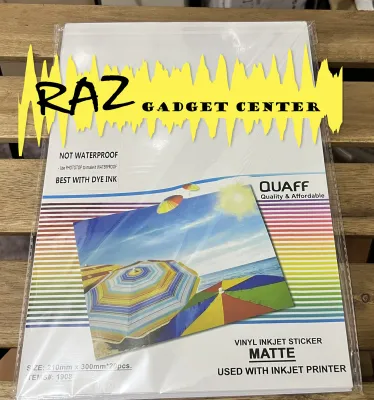
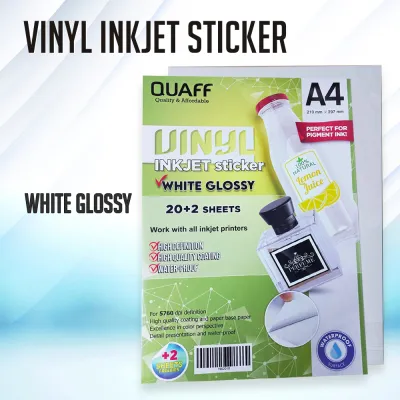
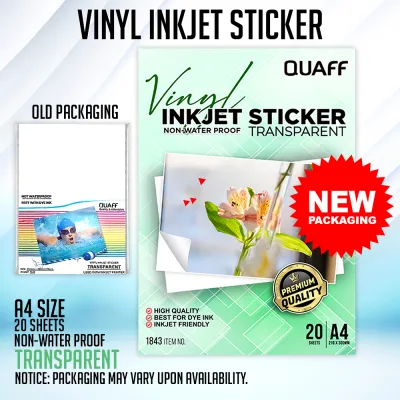
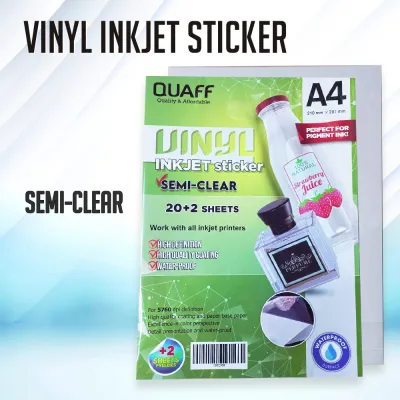
Prices are valid at publication and may change. Please refer to the product page for the latest price.
The adhesive formulation is another critical factor that determines how well a sticker performs over time. High-humidity environments can cause low-quality adhesives to soften, lose their grip, or slide across the page, leaving a sticky, dirt-attracting residue. When choosing vinyl stickers, look for permanent acrylic-based adhesives that cure and bond securely to paper fibers over a twenty-four-hour period. This type of adhesive resists the lifting forces caused by paper expansion and contraction, ensuring that your sticker edges remain flush with the page even during the wettest months of the year.
Structural indicators of quality are often visible to the naked eye and touch before you even apply the sticker to your journal. High-quality vinyl stickers typically have a balanced thickness, usually ranging between 80 to 120 microns, which provides enough rigidity to lie flat without feeling overly bulky on a journal page. The backing paper should also be thick and stable; thin, flimsy backing paper often curls in response to humidity changes, which can cause the vinyl sticker itself to peel away prematurely or become difficult to feed through a printer if you are making your own designs.
Furthermore, the flexibility of the vinyl plays a major role in how well it adheres to curved or uneven journal surfaces. If you enjoy journaling in thick, bound notebooks that do not lie completely flat, a stiff vinyl sticker will constantly fight the natural curve of the page, leading to edge-lifting. A highly flexible, soft-grade vinyl conforms more easily to the contours of the paper, distributing the adhesive tension evenly and preventing the corners from catching on adjacent pages as you flip through your journal.
Assessing Print Quality and Water-Sealed Finishes
Even the most durable vinyl base is of little use if the printed design smudges or fades at the first sign of moisture. To prevent this, high-quality waterproof stickers utilize protective overlays, clear coats, or physical lamination layers that seal the ink beneath an impenetrable barrier. When shopping for sticker sheets, check if the product description specifies a laminated finish, which can be glossy, matte, or holographic. This micro-thin plastic film physically blocks water from reaching the ink layer, ensuring that your hand-drawn illustrations or printed graphics remain crisp and clear even if the sticker is subjected to direct water contact.

For those who print their own designs using quaff vinyl sticker waterproof sheets or similar media, the choice of ink and printer settings is just as important as the vinyl itself. Pigment-based inks naturally offer superior water resistance compared to dye-based inks, which tend to dissolve and bleed when exposed to moisture. If you are using a standard inkjet printer with dye inks, applying a cold laminate sheet over the printed vinyl before cutting is a mandatory step to seal the ink and achieve a truly waterproof result that can withstand the oils from your hands during daily handling.
Sunlight exposure is another environmental factor that can quickly degrade the appearance of your journal spreads. UV-resistant properties in the vinyl or the laminating film help prevent the printed colors from fading or shifting over time, especially if you carry your journal outdoors or store it near a window. Look for stickers that explicitly mention UV protection or fade resistance, as these formulations use stabilizers that absorb harmful ultraviolet rays, preserving the original color saturation and contrast of your designs for years to come.
Color opacity and vibrancy are also key indicators of a premium print finish. High-quality waterproof vinyl stickers feature a dense, opaque white or clear base that prevents the underlying journal grid, lines, or dark paper from showing through the design. When a sticker has poor opacity, the colors can appear muddy or washed out once applied to a page that is not perfectly white. Testing a small corner of a sticker on a dark background can quickly reveal whether the ink density is sufficient to maintain its visual impact across various paper types.
Matching Sticker Formats to Your Journal Layout
Selecting the right sticker format is essential for maintaining an organized and functional journal layout. Sticker sheets, which contain multiple designs on a single backing page, are highly efficient for space management and are easy to store flat inside a journal pocket. On the other hand, individual die-cut stickers, which are cut through both the vinyl and the backing paper to the exact shape of the design, are excellent for focal points but can be more challenging to organize. Kiss-cut stickers, where only the vinyl layer is cut while the backing paper remains intact, offer the best of both worlds by allowing easy peeling while keeping the sheet organized.
The dimensions of your stickers should scale naturally with the size of your notebook to avoid cluttering your layouts. For popular journal sizes like A5 or B6, smaller sticker elements ranging from one to three centimeters are ideal for habit trackers, daily headers, and subtle accents. Larger die-cut stickers, measuring five centimeters or more, work best as central themes on cover pages or weekly spreads. Before purchasing, verify the dimensions listed by the seller and compare them against your journal’s grid spacing to ensure the designs will fit comfortably within your columns and margins.
Intricate, small-scale designs require careful handling to prevent tearing during application. When vinyl stickers feature very fine details, thin lines, or sharp corners, the physical strength of the vinyl is put to the test. High-quality vinyl possesses enough tensile strength to stretch slightly rather than tear when you peel it from the backing paper. If you frequently use delicate, lace-like designs or script lettering, look for kiss-cut sheets with a slightly thicker vinyl weight, as these are much easier to lift off the backing without distorting the shape of the sticker.
Additionally, the ease of peeling is directly influenced by the precision of the cutting process. Clean, deep cuts that penetrate the vinyl layer completely without slicing into the backing paper ensure that even the most complex shapes release effortlessly. If you find yourself struggling to separate a sticker from its backing, or if the paper backing tears away with the vinyl, it usually indicates poor calibration during the manufacturing or cutting phase, which can lead to damaged stickers and frustrated journaling sessions.
Practical Tests to Verify Waterproof Claims at Home
Before committing a new set of stickers to an important journal page, conducting a few simple, low-risk tests at home can save you from future disappointment. The most straightforward evaluation is the “water drop and wipe” test. Apply a sample sticker to a scrap piece of the exact journal paper you plan to use, press it down firmly, and let it cure for a few hours. Place a few drops of water directly onto the sticker’s surface, let it sit for five minutes, and then gently wipe it away with a clean microfiber cloth or tissue.
After removing the water, carefully inspect the test area for any signs of failure. Check the edges of the sticker to see if they have lifted or curled away from the paper, which indicates that the adhesive is sensitive to moisture. Examine the cloth or tissue you used to wipe the water; if you see any ink transfer or smudging, the print layer is not properly sealed. Finally, look at the surrounding journal paper to see if water managed to seep under the sticker, causing the paper fibers to warp or buckle, which suggests a weak adhesive seal.
To simulate the long-term effects of a high-humidity tropical climate, you can perform an environmental exposure test. Place your test paper with the applied sticker inside a humid environment, such as a bathroom during a warm shower, or near a room humidifier for twenty-four hours. Observe how the sticker behaves under these conditions; high-quality waterproof vinyl should remain perfectly flat and firmly bonded to the paper, while inferior products may begin to bubble, warp, or show signs of adhesive degradation as the moisture penetrates the paper fibers from behind.
Another useful test involves checking the scratch resistance of the printed surface when wet. While the sticker is damp, gently run your fingernail across the design using light pressure. A truly waterproof and durable sticker will resist scratching and color loss, as the protective laminate or top coat shields the ink from physical abrasion. If the ink scrapes off easily or turns into a paste, the sticker is merely water-resistant rather than fully waterproof, meaning it will likely degrade quickly under the friction of daily journal handling and page-turning.
Creating a Condition-Based Purchasing Checklist
To streamline your future stationery purchases, it is helpful to establish a personalized checklist based on your specific journaling habits and environmental conditions. If your journaling style involves heavy mixed media, such as watercolors, wet inks, or thick gouache layers, your checklist must prioritize stickers with absolute water resistance and strong acrylic adhesives that can bond to textured, painted surfaces. Conversely, if you primarily use dry media like colored pencils and ballpoint pens, you can afford to be more flexible with adhesive strength while still prioritizing humidity resistance to prevent page curling.
Brand transparency is a crucial indicator of product reliability when shopping on online marketplaces. Look for sellers who provide detailed material specifications, including the type of vinyl used, the printing technology, and whether a protective laminate layer is applied. Avoid listings that rely on vague buzzwords like “super waterproof” without explaining how that resistance is achieved. A reputable brand will often share clear care instructions, storage recommendations, and realistic expectations for how their products perform under different environmental conditions.
Budget considerations should always be balanced against the quality and yield of the sticker sheets. In the local market, prices can vary widely, but establishing a baseline budget framework in ₱ per sheet can help you evaluate value accurately. For instance, high-quality, durable waterproof vinyl sticker sheets typically range from ₱30 to ₱80 per sheet, depending on the complexity of the designs and the presence of specialty finishes like holographic lamination. While cheaper options under ₱15 per sheet may be tempting, they often compromise on adhesive quality or print durability, leading to peeling and fading that can ruin your creative layouts over time.
Ultimately, building a reliable collection of waterproof vinyl stickers comes down to consistent verification and matching the material to your creative workflow. By keeping a small log of how different brands perform during your home tests, you can quickly identify which products are worth the investment. This systematic approach ensures that your journals remain beautiful, durable, and protected against the elements, allowing you to focus on the joy of creating without worrying about the longevity of your designs.
Frequently Asked Questions (FAQ)
Can I apply waterproof vinyl stickers directly over wet watercolor or ink?
No, you should never apply waterproof vinyl stickers over wet or damp journaling media. The adhesive on vinyl stickers requires a completely dry, clean surface to form a secure chemical bond with the paper fibers. If moisture is trapped beneath the sticker, it will prevent the adhesive from curing, leading to immediate edge-lifting, bubbling, and potential mold growth over time. Additionally, the trapped moisture can warp the underlying paper, ruining the flat profile of your journal page. Always allow your watercolors, fountain pen inks, or brush pens to dry completely before placing your stickers.
How should I store vinyl sticker sheets to prevent curling in humid weather?
To prevent vinyl sticker sheets from curling in humid tropical climates, store them flat inside airtight plastic containers or resealable zip-top bags. Adding a few food-grade silica gel packets to your storage container will actively absorb ambient moisture, keeping the air dry and preserving the flat profile of the backing paper. Avoid storing your sticker sheets in areas exposed to direct sunlight, high heat, or rapid temperature fluctuations, such as near windows or air conditioning units, as these conditions can degrade the adhesive backing and cause the vinyl layer to contract and curl away from its paper backing.

Community discussion
Share your experience or ask a question. Comments are reviewed before publication.