
As the mid-year transition of 2026 approaches, organizing the months ahead requires tools that align with your daily habits and environment. A wall calendar is far more than a simple grid of dates; it serves as a shared household dashboard, an aesthetic focal point, or a tactile tool for daily mindfulness. Choosing the wrong format can lead to an abandoned piece of paper that curls in the humid air or remains blank because the writing spaces do not fit your favorite pens.
Evaluating your options requires looking closely at how you interact with your physical space and schedules. The three primary formats available for 2026—planner-style calendars with large writing grids, photo or art calendars focused on visual appeal, and traditional tear-off daily pads—each serve distinct organizational styles. By assessing your writing habits, paper preferences, and wall space, you can select a calendar that remains functional and pristine throughout the entire year.
Planner-Style Wall Calendars: Best for Detailed Scheduling
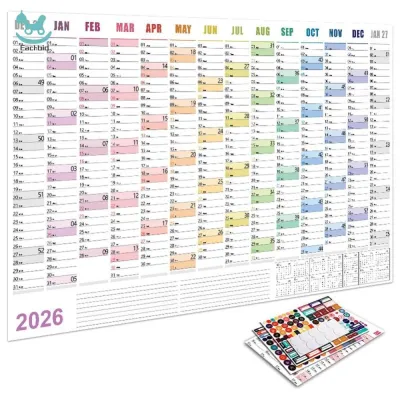
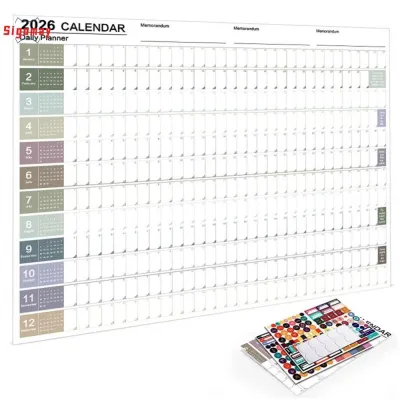
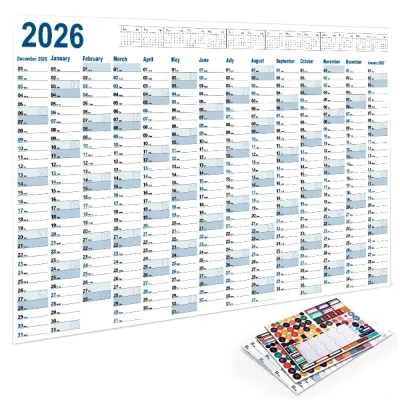
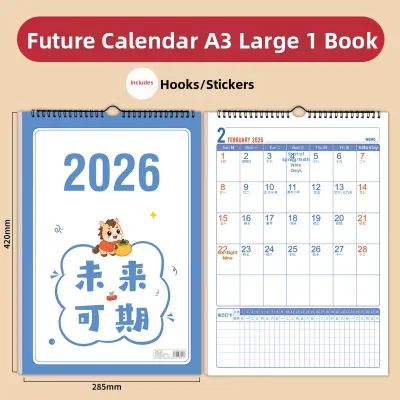
Planner-style wall calendars are designed for active, hands-on organization. If your primary goal is to coordinate household chores, track school quarters, manage freelance deadlines, or keep a busy family schedule visible to everyone at a glance, this functional format is the most reliable choice.
Products mentioned in this guide
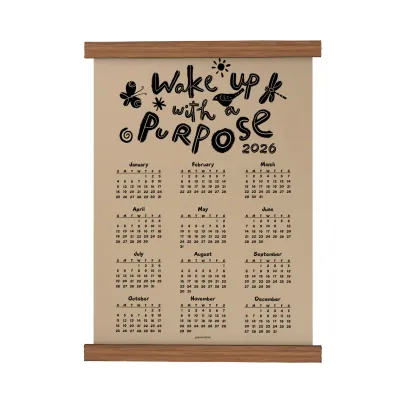
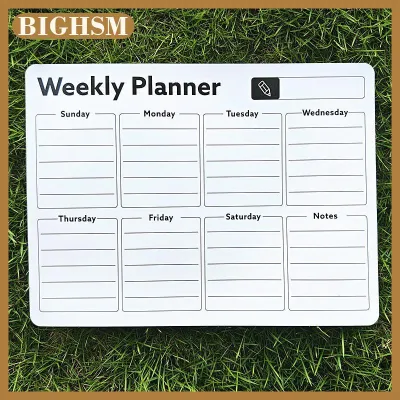
Prices are valid at publication and may change. Please refer to the product page for the latest price.
Key Features and Best Use Cases
The defining feature of a planner-style wall calendar is its spacious, open grid. Each date box is designed with maximum writing area, often featuring clean horizontal lines to keep your handwriting neat. These calendars act as a centralized command center, typically hung in high-traffic areas like the kitchen, hallway, or home office where multiple people can view and update them daily.
Beyond standard paper grids, some planner-style calendars feature dry-erase or wet-erase laminated surfaces. These are excellent for dynamic schedules that change frequently, allowing you to wipe away and rewrite appointments without leaving messy cross-outs. Standard paper versions remain the favorite for those who prefer the tactile feel of traditional pens and wish to keep a permanent archive of their year’s activities.
What to Check Before Buying
When purchasing a planner-style calendar, the technical specifications of the paper and construction are critical to its usability:
- Paper Weight and Ink Compatibility: To prevent ink from bleeding through to the next month, pay close attention to the paper's GSM (grams per square meter). For writing with gel pens, rollerballs, or fine liners, look for a paper weight of at least 100 GSM to 120 GSM. Uncoated, wood-free paper is ideal because it absorbs ink quickly, minimizing the risk of smudging when you write. Avoid glossy finishes on planner calendars, as they cause gel and fountain pen inks to pool and smear.
- Grid and Box Dimensions: Do not rely solely on the overall dimensions of the calendar. Check the product specifications for the exact size of the individual daily boxes. A daily box measuring at least 4 x 4 centimeters is generally required to write multiple legible lines of text. If you have large handwriting or need to track schedules for three or more family members, look for oversized or family-grid formats that provide dedicated rows for different individuals.
- Binding and Hanging Mechanisms: A heavy-duty wire-o or double-spiral binding is highly recommended for planner-style calendars. This binding allows the pages to turn smoothly and lie completely flat against the wall. Ensure the hanging hook is made of sturdy metal rather than thin plastic, and check that standard paper hanging holes are reinforced with metal grommets or thick cardstock borders to prevent the calendar from tearing under its own weight over time.
Photo and Art Wall Calendars: Best for Aesthetics and Gifting
Photo and art wall calendars prioritize visual design, serving as rotating gallery pieces that refresh your space on the first of every month. This format is ideal if you want to elevate your interior decor, enjoy curated photography or illustrations, or present a highly personalized gift to friends and family.

Key Features and Best Use Cases
In a photo or art wall calendar, the visual image occupies the dominant upper half of the layout, while the date grid is kept small and minimalist at the bottom. This format is less about managing complex, multi-person schedules and more about setting a visual tone for the room. It is best suited for spaces where you want to add character, such as living rooms, dining areas, guest rooms, or reception workspaces.
Because of their high visual appeal, these calendars are incredibly popular as thoughtful gifts. Whether featuring professional landscape photography, botanical illustrations, classic art reproductions, or custom family photos, they offer a blend of utility and personal expression. Writing space is typically limited to brief, single-word reminders, national holidays, or birthdates, keeping the overall look clean and uncluttered.
What to Check Before Buying
To ensure your visual calendar looks professional and handles environmental factors well, verify the following material details:
- Print Quality and Paper Finish: The choice between a glossy or matte finish dramatically alters how the calendar looks on your wall. A glossy finish enhances color saturation and contrast, making vivid photographs look striking, but it can create harsh reflections under bright overhead LED lights or near open windows. A matte or satin finish offers a softer, glare-free viewing experience from any angle and is much easier to write on if you need to jot down occasional notes.
- Paper Thickness for Humid Climates: In tropical regions with high relative humidity, thin paper easily absorbs moisture from the air, causing the bottom corners of the calendar pages to curl upward. To prevent this unsightly warping, choose calendars printed on heavy cardstock of 150 GSM to 200 GSM, or those with double-sided coated pages. Heavier paper maintains its structural integrity and hangs flat even during the dampest months of the rainy season.
- Customization and Resolution Requirements: If you are ordering a custom photo calendar through a local print service, check the manufacturer's image guidelines carefully. To avoid blurry, pixelated prints, your digital photos should have a resolution of at least 300 DPI (dots per inch) at the final print size. Verify the color profile requirements as well, as templates designed for CMYK printing will display colors more accurately than those converted automatically from digital RGB files.
Traditional Tear-Off Calendars: Best for Daily Focus and Habits
Traditional daily tear-off calendars, often styled as thick daily pads, offer a classic and highly tactile way to experience the passage of time. If you find monthly grids overwhelming or want to cultivate a daily habit of mindfulness and focus, this format provides a refreshing alternative.
Key Features and Best Use Cases
A tear-off calendar dedicates an entire page to a single day, presenting the date, day of the week, and often a wealth of daily content such as motivational quotes, historical trivia, illustrations, or small puzzles. The defining routine of this format is the physical act of tearing away yesterday’s page each morning, symbolizing a fresh start and encouraging you to focus entirely on the present day.
These calendars are incredibly versatile in terms of placement. While traditionally hung on walls using a built-in top hook, many models feature a fold-out easel backing that allows them to sit comfortably on a desk, bedside table, or kitchen counter. They are perfect for personal workspaces, study desks, or any area where you want to establish a consistent morning routine.
What to Check Before Buying
Because tear-off calendars require daily physical interaction, their mechanical construction determines how satisfying they are to use:
- Perforation Quality: The ease with which you can remove each sheet is paramount. Look for calendars that feature clean, precise micro-perforations along the top edge. Poorly perforated pages will tear unevenly, leaving unsightly paper scraps stuck to the header or ripping the main body of the page. Reading user reviews or testing a sample in a local stationery store can help you verify a clean tear.
- Backing Board Stiffness: A daily tear-off pad contains 365 sheets of paper, making it surprisingly heavy at the beginning of the year. The cardboard backing board must be thick, rigid, and resistant to bending. If the backing board is too flimsy, the calendar will bow outward under the weight of the paper, pulling away from the wall and making it difficult to tear pages off cleanly with one hand.
- Daily Content and Layout: Consider how much blank space is provided on each daily page. Some layouts are purely informational, filled entirely with text, quotes, or illustrations. Others leave the bottom half of the page blank or lined, allowing you to write down a single daily goal, a quick to-do list, or a brief gratitude note. Choose a layout that matches whether you want a passive reading experience or an active journaling prompt.
Quick Comparison: Which 2026 Calendar Fits Your Space?
To help you finalize your decision, this comparison table summarizes the key differences in functionality, material requirements, and placement for each of the three main formats:
| Format | Best For | Writing Space | Key Spec to Verify | Ideal Room Placement |
|---|---|---|---|---|
| Planner-Style | Heavy scheduling, family tracking, and office deadlines | Large, lined or unlined daily grid boxes | Paper weight (100+ GSM) and box dimensions | Kitchen, home office, or central hallway |
| Photo/Art | Room aesthetics, interior decor, and personal gifting | Minimalist grid with very limited writing space | Paper finish (matte/glossy) and 150+ GSM thickness | Living room, dining area, or reception space |
| Tear-Off | Daily mindfulness, single-day focus, and morning routines | Small daily note, checklist area, or none | Perforation quality and rigid backing board | Personal desk, bedside table, or workspace |
Before finalizing your purchase from an online marketplace or a local stationery shop, always measure your intended wall space. Wall calendars vary significantly in size, ranging from compact A4 formats (approximately 21 x 29.7 cm) to massive, poster-sized A2 formats (approximately 42 x 59.4 cm). A calendar that is too large can overwhelm a small room, while a tiny calendar will be difficult to read across a spacious living area. Additionally, check the return and exchange policies of the retailer to ensure you can swap the calendar if the physical dimensions or paper texture do not meet your expectations upon arrival.
Frequently Asked Questions (FAQ)
Can I use a wall calendar in a humid environment without the pages curling?
Yes, you can minimize paper curling by choosing a calendar printed on heavy, coated cardstock (ideally 150 GSM or higher) or pages with a protective matte or glossy coating, as these materials resist moisture absorption. Additionally, hang your calendar away from areas with rapid humidity fluctuations, such as directly in front of air conditioning vents, near open windows, or close to kitchen cooking areas. For extremely humid rooms, a laminated dry-erase planner calendar is an excellent, moisture-proof alternative.
What is the standard size for a 2026 wall calendar?
While there is no single universal standard, the most common size for traditional square wall calendars is 12 x 12 inches (approximately 30 x 30 cm) when closed, which opens up to a vertical 12 x 24 inches (30 x 60 cm) display. Rectangular art and planner calendars often follow standard A3 dimensions (approximately 30 x 42 cm) when hanging. Always check the exact dimensions listed in centimeters or inches on the product packaging, as sizes can vary between local publishers and imported stationery brands.
Community discussion
Share your experience or ask a question. Comments are reviewed before publication.