
Starting your journey into fuse bead crafting is an exciting creative milestone, but walking into the craft aisle can quickly feel overwhelming. To ensure a smooth and frustrating-free start, your first perler beads set should be a well-curated kit that includes a versatile color palette, compatible pegboards, reusable ironing paper, and a secure storage system. Selecting the right starter set is not just about buying a bucket of colorful plastic; it requires understanding how different components work together to turn loose beads into durable, vibrant works of art. In tropical environments where humidity can affect materials, choosing high-quality, moisture-resistant storage and uniform beads is especially important to prevent your designs from warping or sticking prematurely.
Define Your Crafting Goals and Skill Level
Before purchasing your first set, take a moment to consider what types of projects you want to create. If you are drawn to simple, flat two-dimensional designs like custom coasters, keychains, or basic pixel art characters, a modest starter kit with a standard color selection will serve you perfectly. These flat projects are excellent for beginners because they allow you to practice your ironing technique and gauge how the plastic melts without the pressure of complex assembly.
If your ultimate goal is to build intricate three-dimensional structures, such as small jewelry boxes, standing figurines, or multi-layered desk organizers, your requirements will change significantly. Three-dimensional projects demand a much larger quantity of beads in specific, consistent colors to ensure the interlocking tabs fit together perfectly. For these advanced designs, a set that offers deep color gradients rather than a random assortment of bright primary colors is essential.
Products mentioned in this guide
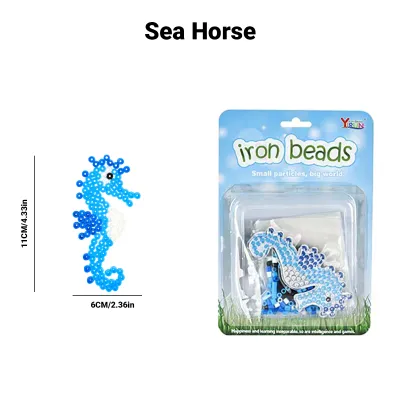
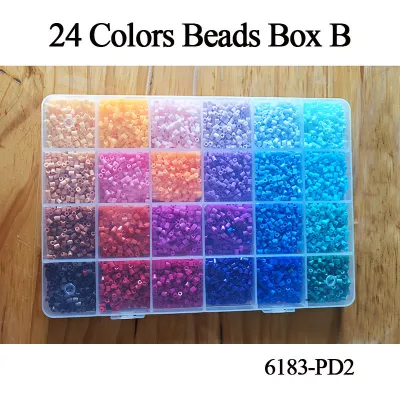
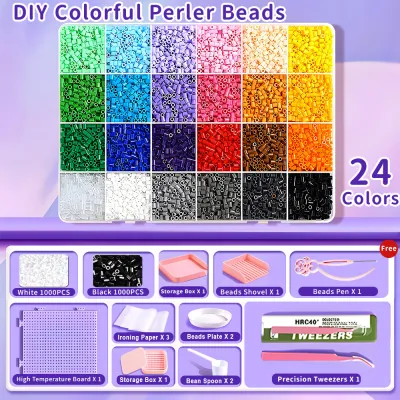
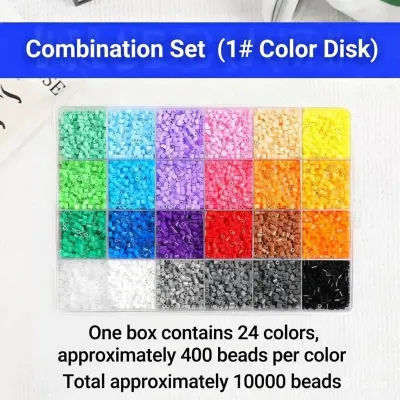
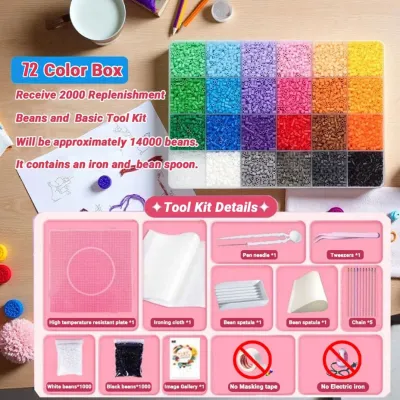
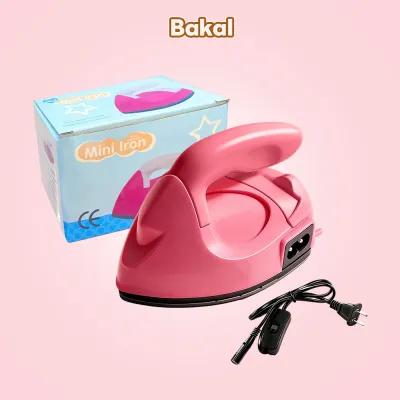
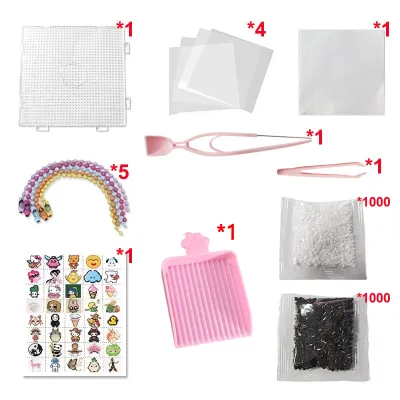
Prices are valid at publication and may change. Please refer to the product page for the latest price.
You should also honestly assess your patience and fine motor skills before committing to a highly detailed kit. Placing hundreds of tiny plastic cylinders onto tiny pegs requires steady hands and focused attention, which can be relaxing for some but frustrating for others. If you are crafting to unwind, starting with a kit that features pre-made patterns and clear templates will help you build confidence before you attempt to design your own complex layouts from scratch.
Select the Right Bead Size for Your Needs
Fuse beads are manufactured in several distinct size categories, and choosing the correct diameter is critical to the success of your projects. The standard size for most crafters is 5 millimeters, which is widely considered the most versatile option for beginners, teenagers, and adults alike. This standard size strikes the perfect balance between ease of handling and design detail, making it easy to find compatible accessories and replacement colors.

For younger crafters or those who struggle with fine motor coordination, larger beads measuring approximately 10 millimeters are the ideal choice. These jumbo beads are much easier to grasp with small fingers, allowing children to develop their hand-eye coordination without the frustration of accidentally knocking over tiny pieces. Conversely, advanced crafters who want to create highly detailed, miniature pixel art or delicate jewelry often turn to mini beads, which measure just 2.6 millimeters.
A fundamental rule of fuse bead crafting is that different bead sizes cannot be mixed on the same pegboard. Because the spacing of the pegs on a board is manufactured to match a specific bead diameter, attempting to place a mini bead on a standard board, or vice versa, will result in misaligned designs that cannot be fused. Always check the product description carefully to confirm the exact millimeter size of the beads included, as online product photos can sometimes make mini beads look identical to standard ones.
Verify Essential Tools and Pegboard Inclusions
A truly beginner-friendly perler beads set must include the necessary tools to complete a project from start to finish without requiring immediate trips back to the craft store. The most important accessory in any kit is the pegboard, which serves as the physical foundation for your designs. Look for sets that include sturdy, reusable plastic pegboards in basic geometric shapes, such as squares and circles, rather than single-use or flimsy alternatives. Interlocking square boards are particularly valuable because they allow you to connect multiple boards together as your projects grow in size.
Ironing paper is another critical component that must be verified before you make a purchase. This specialized paper acts as a heat-resistant barrier between your household iron and the plastic beads, preventing the melting plastic from sticking to the metal soleplate of your iron. High-quality kits will include reusable parchment paper or silicone sheets that can be used dozens of times without tearing or losing their non-stick properties.
While you will need to provide your own standard household iron, your starter kit should ideally include a pair of precision tweezers. Trying to place individual 5-millimeter beads using only your fingers can be incredibly tedious, especially in warm, humid climates where hands can become slightly damp. A pair of plastic or metal tweezers allows for precise placement and makes it easy to correct mistakes without disturbing the surrounding beads on your pegboard.
Assess Bead Quality and Fusing Consistency
The overall quality of the plastic used to manufacture the beads directly impacts how easily they melt and how durable your finished project will be. High-quality beads are characterized by uniform cylinder shapes, consistent heights, and smooth, clean cuts at the edges. If the beads in a set vary in height or have jagged edges, they will not sit evenly on the pegboard, leading to weak spots and uneven fusing when heat is applied.
When evaluating different brands, look for products that are known for consistent melting points. Reliable beads are made from food-grade plastics like low-density polyethylene (LDPE) or ethylene-vinyl acetate (EVA), which melt smoothly at moderate temperatures without emitting harsh chemical fumes. Low-grade beads often warp, bubble, or burn easily under the iron, resulting in a brittle finished product that can snap apart with minimal pressure.
It is highly recommended to avoid mixing different brands of beads within a single project, especially when you are just starting out. Different manufacturers use unique plastic formulations, which means their beads will melt at slightly different temperatures and rates. Mixing brands on a single pegboard often results in a frustrating situation where some beads have completely melted flat while others have barely begun to fuse, ruining the visual appeal and structural integrity of your design.
Evaluate Storage and Organization Solutions
How your beads are packaged and stored plays a massive role in your overall crafting experience. Many budget-friendly options are sold in large, unsorted buckets containing thousands of mixed colors. While these buckets offer excellent value per bead, sorting through a massive pile of mixed colors to find the exact shade you need can quickly drain the fun out of your crafting session.
For a seamless introduction to the hobby, prioritize starter sets that come pre-sorted in compartmentalized plastic storage boxes. These containers feature individual sections for each color, keeping your workspace organized and allowing you to focus entirely on your design. Look for boxes with secure, heavy-duty latches that will not pop open accidentally if the container is dropped or stored sideways on a shelf.
In tropical regions like the Philippines, where seasonal humidity and dust can be quite high, a durable, airtight plastic storage container is highly beneficial. Excess moisture in the air can sometimes make cheaper plastics feel slightly tacky over time, and open storage bags easily collect household dust that can interfere with the melting process. A portable, stackable storage box not only protects your materials from environmental factors but also makes it easy to pack up your craft supplies and move your workspace to any room in the house.
Frequently Asked Questions (FAQ)
Can I use a standard household iron for fusing beads?
Yes, a standard household iron is perfectly suitable for fusing your bead designs, provided it has adjustable temperature controls. When preparing to iron, ensure that the steam function is turned completely off, as any moisture or steam released from the soleplate can warp the pegboard and ruin the beads. Because the iron must reach high temperatures to melt the plastic, this step should always be performed by an adult or under strict adult supervision to prevent accidental burns.
How do I tell if the beads are properly fused?
You can tell your beads are properly fused when you see them begin to look slightly wet and flatten through the semi-transparent ironing paper. The holes in the center of the beads should shrink slightly as the plastic edges melt and bond together, but they should still retain their general circular shape. Avoid over-ironing, which can cause the plastic to melt completely flat, warp your reusable pegboard, or damage the protective ironing paper.
Are fuse beads safe for young children?
Standard and mini fuse beads pose a significant choking hazard due to their small size, meaning they are not suitable for children under three years of age. For younger crafters, larger jumbo-sized beads are a much safer and more manageable alternative that helps develop fine motor skills. Regardless of the bead size being used, the final fusing process requires a hot iron and must always be handled exclusively by an adult to ensure a safe crafting environment.
Community discussion
Share your experience or ask a question. Comments are reviewed before publication.