
Choosing your first watercolor paint set is a pivotal step in your artistic journey, but the sheer variety of options can quickly feel overwhelming. To make an informed decision, a beginner should focus on three primary criteria: selecting a reputable student-grade formulation, choosing a balanced palette of 12 to 24 colors, and opting for a dry pan format. These elements offer the ideal balance of control, convenience, and affordability, allowing you to learn the unique properties of the medium without unnecessary frustration.
Unlike opaque mediums such as acrylic or gouache, watercolor relies on the transparency of its pigments and the reflective quality of the paper beneath it. Starting with the right tools ensures that you are observing how the paint actually flows, blends, and dries, rather than fighting poor-quality materials that behave unpredictably. By understanding a few key technical specifications, you can easily find a high-performing set that fits your budget and creative goals.
Understanding Watercolor Grades: Student vs. Professional
Watercolor paints are broadly categorized into two quality tiers: student-grade and professional-grade. The fundamental differences between them lie in the concentration of pigment, the quality of the binder, and the presence of fillers. Understanding these distinctions will help you set realistic expectations for your budget and your painting experience.
Products mentioned in this guide
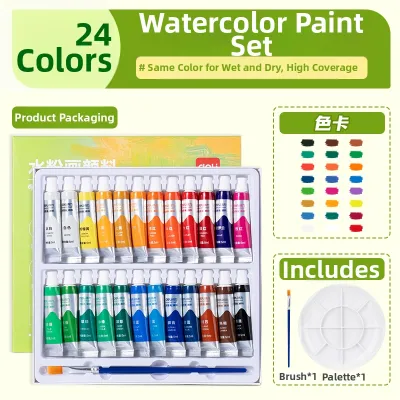
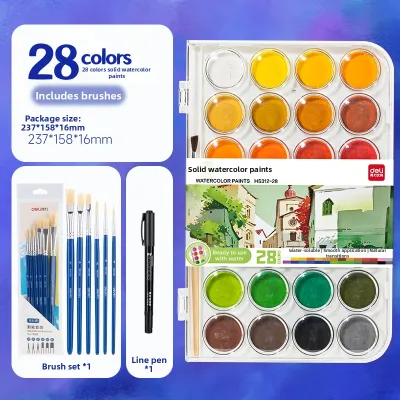
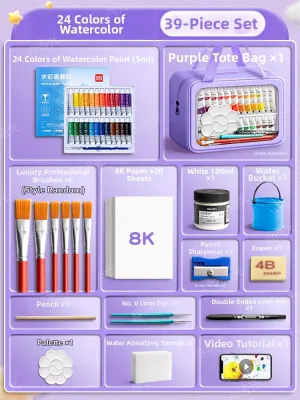
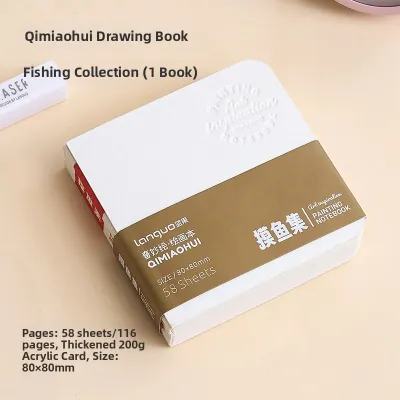
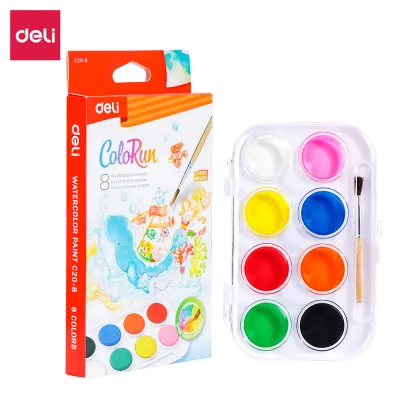
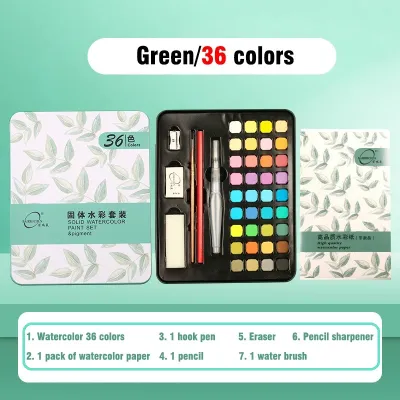
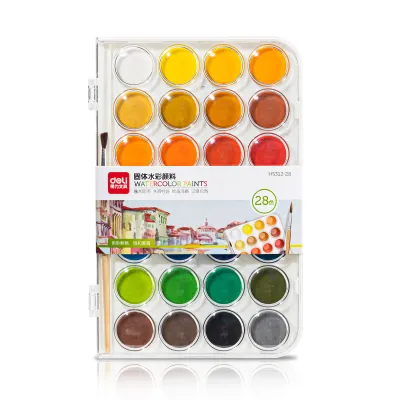
Prices are valid at publication and may change. Please refer to the product page for the latest price.
Student-grade watercolors are formulated specifically for beginners, hobbyists, and art students. To keep manufacturing costs low, makers use more affordable alternative pigments—often labeled as “hues” on the packaging—and mix them with a higher ratio of binders and fillers, such as dextrin or chalk. This results in a lower pigment concentration, meaning you may need to use more paint to achieve deep, saturated colors. However, these sets are highly affordable, typically ranging from ₱500 to ₱1,500 for a complete palette, which lowers the psychological barrier to daily practice.
Professional-grade watercolors, by contrast, feature high concentrations of pure, often single-pigment formulations bound with premium gum arabic. They offer exceptional color intensity, superior transparency, and excellent lightfastness. Because they contain minimal fillers, a tiny dab of professional paint can cover a large area with vibrant color. However, professional sets are a significant financial investment, often costing upwards of ₱3,000 to ₱6,000, and individual colors are sold in price tiers based on the rarity of the raw pigment.
For those just starting out, a student-grade set from a reputable, established art brand is the highly recommended choice. These sets provide a low-pressure environment for experimentation, allowing you to practice wet-on-wet washes, glazing, and color mixing without worrying about wasting expensive materials.
It is crucial to distinguish reputable student-grade paints from unbranded “toy-grade” or “craft-grade” sets. Craft-grade paints often lack proper binders and rely on cheap industrial dyes rather than ground pigments. This causes the paint to dry with a chalky, opaque finish that can literally crack and flake off the paper once dry. Investing in a recognized student-grade set ensures you are working with real watercolor chemistry that reactivates smoothly with water.
Pan vs. Tube: Choosing the Right Format for Your Workflow
Watercolors are primarily sold in two physical formats: solid pans and wet tubes. Neither format is objectively superior to the other; instead, your choice should depend on where you plan to paint, the scale of your artwork, and your preferred cleanup routine.

Solid Pans (Half-Pan and Full-Pan)
Pan watercolors are blocks of dry, concentrated paint housed in small plastic cups. These cups are arranged inside a metal or plastic carrying case. Pans are available in two standard sizes: half-pans (approximately 15mm x 19mm x 10mm) and full-pans, which are twice the size of a half-pan.
Half-pans are highly compact, making them the dominant format for travel and outdoor sketching sets. Full-pans offer a larger surface area, which easily accommodates broader brush strokes and larger round brushes without damaging or fraying the delicate bristles.
The primary advantage of a pan set is its incredible convenience. The carrying case almost always features built-in mixing wells on the fold-out lid, providing a self-contained workstation. Cleanup is virtually effortless: you simply let the wet pans air-dry and snap the lid closed.
The main limitation of solid pans is the effort required to mix large volumes of paint. If you want to paint a massive, continuous background wash, repeatedly scrubbing a wet brush against a dry pan to extract enough pigment can be tedious and can wear down your brush tips over time.
Tube Watercolors
Tube watercolors consist of wet, concentrated paint paste packaged in small aluminum or plastic tubes, typically ranging from 5ml to 15ml. Because the paint is already moist, it dissolves instantly in water with minimal effort.
Tubes provide immediate access to large, rich pools of fluid paint. This makes them the ideal choice for studio work, large-scale illustrations, and techniques that require heavy water usage. You can easily mix a substantial volume of wash in a matter of seconds, ensuring consistent color across a large sky or background.
Another benefit of tube paints is their versatility. You can squeeze them into empty plastic pans, allow them to dry for a few days, and then use them exactly like dry pan watercolors. However, keep in mind that some brands shrink or crack significantly when dried this way, depending on the specific humectants (such as honey or glycerin) used in their formulas.
The trade-off with tubes is the necessity of a separate, adequately sized mixing palette. Managing multiple wet tubes can also be cumbersome when painting on the go, making this format less convenient for spontaneous sketching sessions outside the home.
Key Quality Markers to Check on the Label
Before purchasing a watercolor paint set, take a close look at the product packaging or online technical specifications. Reputable manufacturers print essential quality markers directly on the label to help artists evaluate the paint’s performance.
- Color Range: Look for a set containing 12 to 24 colors. Avoid massive sets of 48 or more colors, which often contain redundant, low-quality shades. A smaller, well-curated palette forces you to learn color mixing, which is the fastest way to understand color relationships and avoid creating flat, muddy mixtures.
- Pigment Transparency: Traditional watercolor relies on transparency so that light can pass through the paint and reflect off the white paper. Labels usually indicate transparency with a symbol: a clear circle for transparent, a semi-filled circle for semi-transparent, and a black circle for opaque. For your first set, prioritize a majority of transparent or semi-transparent colors.
- Lightfastness Ratings: This rating measures how resistant a pigment is to fading when exposed to light over time. Look for sets that display the ASTM international standard (Class I is Excellent, Class II is Very Good) or a brand-specific star rating (usually three stars for high permanence). Even as a beginner, using lightfast paints ensures your practice pieces will not fade within a few months.
- Accessory Evaluation: Many beginner sets include free accessories like plastic water pens, small sponges, or cheap synthetic brushes. Do not let these bundled bonuses influence your decision. These accessories are often low-grade fillers that perform poorly. Focus your budget entirely on the quality of the paint itself, and purchase your brushes separately.
To verify the performance of any new set, you can conduct a simple transparency test at home. Draw a bold line on a sheet of watercolor paper using a black waterproof archival ink pen. Once the ink is completely dry, paint a wash of your watercolor directly over the line. A high-quality, transparent paint will leave the black line perfectly crisp and visible, while a low-quality, filler-heavy paint will leave a hazy, semi-opaque film over the ink.
Recommended Set Profiles Based on Your Painting Style
To help you narrow down your options, consider which of the following three profiles best matches your intended painting environment and creative goals.
The Portable Sketching Profile
If you plan to paint in local cafes, parks, or while traveling, your priority should be portability and quick setup. Look for a compact half-pan set featuring 12 to 18 colors, housed in a durable metal tin or a rigid plastic case.
The case should feature a secure latching mechanism to protect the dry pans from dust and physical damage during transport. A fold-out metal lid with distinct, deep mixing wells is essential to keep your mixed colors from bleeding into one another. Many portable sets also feature a metal ring on the bottom of the case, allowing you to hold the palette securely in one hand while painting standing up.
The Studio Practice Profile
If you intend to paint primarily at a dedicated desk or easel on larger sheets of paper, you should prioritize paint volume and mixing space. Look for a set of 12 to 24 watercolor tubes (5ml or 12ml sizes) or a full-pan set.
Pair this profile with a separate, large mixing palette. While plastic palettes are affordable, a heavy ceramic palette is highly recommended for studio work. Water naturally beads up on plastic, making it difficult to judge the exact color and water-to-paint ratio of your wash. On a smooth ceramic surface, the paint spreads out evenly, allowing you to see exactly how the color will look on paper before you apply it.
The Color Theory Minimalist Profile
If you want to master color mixing rapidly on a budget, look for a limited palette set containing only 6 to 10 colors. This profile typically utilizes a “split primary” system, which includes a warm and a cool version of each primary color (yellow, red, and blue), along with a few essential earth tones.
By restricting your color choices, you are forced to mix your own secondary and tertiary shades. This hands-on practice rapidly builds your understanding of color temperature and color harmony. It also prevents the common beginner mistake of over-mixing pre-made, multi-pigment convenience colors, which quickly results in dull, muddy grays and browns.
Buying Traps: What Beginners Should Avoid
When shopping for art supplies, it is easy to fall for marketing gimmicks that promise professional results at impossibly low prices. Avoiding these common traps will save you money and protect you from early artistic frustration.
The most common trap is the “more is better” fallacy. Suspect any set that offers 72, 100, or more colors for a very low price. These sets almost always rely on cheap dyes and heavy chalk fillers. They lack tinting strength, meaning you must use a massive amount of paint to get any color payoff. This heavy application quickly ruins your brushes and leaves a dull, chalky residue on your paper that cannot be layered.
Another critical mistake is ignoring the quality of your paper. Even the highest-grade professional watercolor paint will perform poorly on standard printer paper or thin sketchbook pages. Watercolor paper must be heavy and absorbent to handle water without warping or pilling. Ensure you allocate a portion of your budget for dedicated watercolor paper, specifically looking for cold-pressed paper with a weight of at least 300 gsm (grams per square meter).
Finally, take local climate conditions into account. In humid, tropical environments like the Philippines, high relative humidity can severely affect how watercolor paints dry and age. If you squeeze tube paints onto an open plastic palette, the high humidity may prevent the paint from drying completely, leaving a sticky surface that easily attracts household dust, pet hair, and mold spores.
For humid climates, dry pan sets are highly recommended because they contain less moisture initially and dry out faster after use. If you prefer using tubes, only squeeze out the exact amount of paint you need for a single painting session, or invest in an airtight palette with a secure rubber seal to protect your wet paint from environmental moisture and mold.
Frequently Asked Questions (FAQ)
Can I mix student-grade and professional-grade watercolors later?
Yes, student-grade and professional-grade watercolors are fully compatible and can be mixed directly on your palette or layered on paper. Both grades utilize water-soluble binders, meaning they will blend together seamlessly. However, keep in mind that mixing a student-grade paint with a professional-grade paint will dilute the professional paint’s high pigment concentration and may lower the overall lightfastness of that specific mixture. A practical, budget-friendly strategy is to start with a student-grade set and gradually upgrade your most frequently used colors—such as your primary blues and yellows—to professional-grade tubes as the student-grade pans run out.
Do I need to buy separate brushes if the set includes them?
Yes, in almost all cases you should purchase at least one high-quality brush separately. The brushes bundled inside beginner watercolor sets are typically low-cost synthetic options designed for basic utility rather than performance. They often fail to hold a sharp point, shed hairs onto your wet washes, and have poor water retention, forcing you to constantly stop and reload your brush. Instead of struggling with a poor brush, invest in a single, high-quality synthetic round brush (such as a size 8 or size 10) from a reputable art brand. A well-made round brush can hold a generous amount of water for broad washes while still maintaining a fine, sharp point for delicate detail work.
How does a humid climate affect watercolor storage and drying?
High relative humidity slows down the evaporation of water, meaning your paint pans and mixing palettes will remain damp for much longer after a painting session. If you close a damp watercolor case immediately after use, the trapped moisture creates a perfect breeding ground for mold and can cause the solid paint in your pans to turn mushy or dissolve. To prevent this, always leave your watercolor palette completely open in a well-ventilated room—ideally under a ceiling fan or in an air-conditioned space—until the paint surface is dry to the touch before snapping the lid shut. For long-term storage in highly humid areas, consider placing your dry, closed palettes inside a sealed plastic container along with a few silica gel packets to absorb any residual environmental moisture.

Community discussion
Share your experience or ask a question. Comments are reviewed before publication.