
Cutting and shaping an EVA foam sheet cleanly requires sharp blades, controlled pressure, and a systematic multi-pass technique. This versatile material, widely used in local craft projects, cosplay armor, and school displays, is prone to tearing and jagged edges if compressed or pulled during the cutting process. By mastering blade angles and surface preparation, you can achieve professional-grade edges that fit together seamlessly.
In warm, humid tropical environments like the Philippines, managing your workspace and materials is particularly important. High humidity can subtly affect how adhesives cure and how dust behaves during sanding, making a clean, dry, and well-ventilated work area essential. Understanding the physical properties of the foam allows you to adapt your technique for consistent results across various thicknesses.
Essential Tools and Workspace Setup for Clean Cuts
The foundation of any successful project involving an EVA foam sheet lies in selecting the right cutting implements. A heavy-duty snap-off utility knife is ideal for thick sheets (6mm to 10mm or more), as it allows you to easily snap off a dull segment to expose a fresh, razor-sharp edge. For thinner sheets (1mm to 5mm) or intricate details, a precision hobby knife with a fine, pointed blade offers the maneuverability needed for tight corners. Always inspect your blades before starting; even a slightly nicked or dull edge will drag through the foam, causing unsightly tears and fraying.
Products mentioned in this guide

235 Lazada user ratings
Beautiful assortment of colors to choose from, Versatile foam sheets for various DIY projects, Durable and long-lasting foam sheets, High-qu…Read full reviewShow less
Beautiful assortment of colors to choose from, Versatile foam sheets for various DIY projects, Durable and long-lasting foam sheets, High-quality material, easy to work with, Vibrant colors, perfect for crafts, Excellent for creating detailed crafts, Great thickness for crafting projects, Perfect size for my crafting needs,
Perfect size for my crafting needs, Great thickness for crafting projects, High-quality material, easy to work with, Excellent for creating …Read full reviewShow less
Perfect size for my crafting needs, Great thickness for crafting projects, High-quality material, easy to work with, Excellent for creating detailed crafts, Durable and long-lasting foam sheets,
Excellent for creating detailed crafts, Vibrant colors, perfect for crafts, Perfect size for my crafting needs, Versatile foam sheets for va…Read full reviewShow less
Excellent for creating detailed crafts, Vibrant colors, perfect for crafts, Perfect size for my crafting needs, Versatile foam sheets for various DIY projects,
Excellent for creating detailed crafts, Great thickness for crafting projects, Vibrant colors, perfect for crafts, Perfect size for my craft…Read full reviewShow less
Excellent for creating detailed crafts, Great thickness for crafting projects, Vibrant colors, perfect for crafts, Perfect size for my crafting needs,
Okay naman po siya. Mas maganda pa po sana kapag madaming candy colour ang ganda kasi niya ginawa kong background design para sa cake.
602 Lazada user ratings
The item is only 44 x 79.5, not even close to 48x96in equivalent to 4x8ft. I am doubly disappointed as I bought 2 sheets. Please change the …Read full reviewShow less
The item is only 44 x 79.5, not even close to 48x96in equivalent to 4x8ft. I am doubly disappointed as I bought 2 sheets. Please change the size description as the items aren't actually that measurement
Malaki pala siya perfect for diy ng costume gagamitin ko siya for buwan ng wika costume ng anak ko 1st time Kong gumamit neto at mas napadal…Read full reviewShow less
Malaki pala siya perfect for diy ng costume gagamitin ko siya for buwan ng wika costume ng anak ko 1st time Kong gumamit neto at mas napadali Buhay ko dahil Dito 😂❤️
material is good. high quality foam. l just don't know if it's going to serve. i plan to use it for insulation. let's see if it works
Quality:fair Size:fair Design:fair Price:fair Vibrant colors make costumes stand out, HINDI MAGANDA PAG PACKAGES...YUPI MGA DULO
Versatile material for various creative uses, Durable quality, thickness is just about right for my purpose
170 Lazada user ratings
Seller took long to pack and ship the product. But its okay . The product is well packed and complete . The size is better than my first ord…Read full reviewShow less
Seller took long to pack and ship the product. But its okay . The product is well packed and complete . The size is better than my first order in this store. Highly recommended sfore. More power.
Quality:Good Appearance:Good This is my third time buying in this shop /store. Highly recommended. 👍 Everything is great
recommended seller legit, just received my order today..Great value for the price.,
Yo ang laki?!?! Just right yung thickness pero the amoy is bleghhhhhhhhhhhh
nice quality but its actually 3mm not 2mm so be aware

281 Lazada user ratings
Perfect for children's costumes!, Love the vibrant blue color!, The foam is soft and comfortable!, Easy to work with for costume design!, Ve…Read full reviewShow less
Perfect for children's costumes!, Love the vibrant blue color!, The foam is soft and comfortable!, Easy to work with for costume design!, Versatile size for various costume projects!,
🧼Ease of Cleaning:100 🛠️Durability:100 📏Fit:100 sakto sa kapal at kukay ang binigay nila. plus mabait ung rider na nag diliver. kuha ulit po …Read full reviewShow less
🧼Ease of Cleaning:100 🛠️Durability:100 📏Fit:100 sakto sa kapal at kukay ang binigay nila. plus mabait ung rider na nag diliver. kuha ulit po ako next time. thanks seller.
Product is okay, Items seems good, quiality is there, delivery is on time, thank you seller. We’ll order again soon!👍
Perfect for children's costumes!, Ideal for DIY costume projects!, Versatile size for various costume projects!,
super legit, ambilis pa dumating forda 10/10 agad lov love exactly what we need
Prices are valid at publication and may change. Please refer to the product page for the latest price.
Protecting your work surface and your tools requires a dedicated cutting surface. A self-healing cutting mat is the preferred choice, as its resilient surface yields to the blade without dulling the tip prematurely. If a large cutting mat is unavailable, a clean, flat piece of sacrificial backing board, such as thick cardboard or dense MDF, can serve as a temporary alternative. Avoid cutting directly on hard surfaces like stone, glass, or bare wood, which will instantly dull your blade and lead to jagged cuts on your very next stroke.
To guide your blade along straight lines, rely on a heavy metal ruler or a steel straight edge. Plastic or wooden rulers are easily nicked by sharp utility blades, which can ruin the ruler and cause your knife to veer off course. Look for a metal ruler with a non-slip backing, such as cork or rubber, to prevent it from sliding across the smooth surface of the foam sheet. If your ruler lacks this backing, you can apply strips of masking tape to the underside to increase friction and secure your guide line.
Step-by-Step Cutting Techniques for EVA Foam Sheets
Executing Straight and Long Cuts
Achieving a perfectly straight, flush edge on an EVA foam sheet requires patience and a light touch. Begin by aligning your metal ruler with your cutting line, pressing down firmly with your non-dominant hand to compress the foam slightly along the guide. For your first pass, do not attempt to cut all the way through the material. Instead, hold your knife at a shallow angle (around 30 to 45 degrees relative to the foam surface) and score the top layer lightly. This initial score line acts as a physical track that guides the blade during subsequent passes, preventing it from wandering.

Once the guide track is established, execute the cut using multiple shallow passes rather than forcing the blade through in a single, heavy stroke. Forcing a deep cut compresses the foam ahead of the blade, which inevitably leads to a distorted, sloped edge or a jagged tear at the bottom of the sheet. Depending on the thickness of your EVA foam sheet, it may take two, three, or even four passes to cut completely through. Maintain consistent, moderate downward pressure, allowing the sharpness of the blade to do the work.
Throughout the entire cutting process, keep your blade strictly perpendicular to the cutting mat unless you are intentionally cutting a bevel. Tilting the knife to the left or right will create an angled edge, making it difficult to join pieces flush against one another during assembly. Keep your wrist locked and move your entire arm from the shoulder to ensure a smooth, continuous motion along the length of the cut.
Navigating Curves and Intricate Shapes
Cutting curved lines and complex patterns presents a different challenge, as the blade must change direction without binding in the dense foam. The key to clean curves is to rotate the EVA foam sheet itself rather than twisting your blade or wrist. Keep your knife hand relatively stationary, holding the blade at a steep angle to minimize the surface area of metal in contact with the foam. Use your other hand to slowly and smoothly feed the foam sheet into the path of the blade, turning the material around the pivot point of the cut.
For tight radii, small circles, or detailed stencil work, switch to a smaller, specialized hobby knife with a thin, pointed blade. These blades have a much smaller profile, which reduces friction and allows for rapid direction changes without tearing the delicate foam fibers. If you encounter an extremely sharp corner, do not try to turn the blade in place. Instead, cut into the corner from one direction, stop, and then make a second cut from the opposite direction to meet at the point, allowing the waste piece to fall away cleanly.
When cutting complex shapes that will require seamless joining or precise fitting, it is wise to leave a slight margin of about one to two millimeters outside your drawn pattern line. This extra material acts as a safety buffer, protecting your final piece from accidental over-cutting or blade slips. You can easily sand away this excess margin later during the refining stage, ensuring a perfectly smooth and accurate final shape without compromising the structural integrity of the design.
Shaping and Refining Foam Edges and Surfaces
Beveling and Angling Edges
Beveling, or cutting an edge at an angle, is a fundamental technique for creating three-dimensional shapes, sloped seams, and realistic armor panels. To cut a bevel manually, hold your utility knife at a consistent angle—typically 45 degrees—relative to the foam surface. For long, straight bevels, you can use specialized bevel-cutting guides or adjustable jigs that hold the blade at a fixed angle. If cutting freehand, practice maintaining a steady wrist and a uniform speed to prevent the angle from fluctuating along the edge.
Thermal shaping is another highly effective method for setting curves and contours in your cut foam pieces. Applying heat relaxes the internal structure of the EVA foam sheet, allowing it to be bent, stretched, or domed, and it will retain this new shape once cooled. Always check the manufacturer’s instructions and safety guidelines for any thermal shaping tools, such as heat guns, before starting. Work in a well-ventilated area, as heating foam can release mild fumes, and wear heat-resistant gloves to protect your hands from burns.
Before committing to a bevel cut or heat-shaping on your main project pieces, always test your tools and angles on scrap pieces of the same thickness. This trial run allows you to verify the cutting pressure required, check the sharpness of your blade, and observe how the specific foam density reacts to heat. Adjust your technique based on these observations to avoid ruining your carefully measured and marked project components.
Smoothing and Sanding Surfaces
Even with precise cutting, your foam edges may still feature minor tool marks, ridges, or slight misalignments that require smoothing. Sanding is the most effective way to refine these surfaces and blend seams together seamlessly. Start with a medium-grit sandpaper (around 120 to 180 grit) to quickly knock down high spots and rough edges. Once the major imperfections are removed, transition to a fine-grit sandpaper (240 to 400 grit) to polish the surface and restore a smooth, uniform texture.
When sanding EVA foam, use gentle, circular or directional motions, applying light pressure to avoid gouging the material. Keep a close eye on the foam surface as you work; because EVA foam is porous, excessive or aggressive sanding can break the smooth outer skin of the sheet, exposing the more textured cells underneath or creating uneven dips. If you plan to paint or seal the foam, a smooth, unbroken surface is essential for achieving a professional, high-quality finish.
Sanding generates a large amount of fine, static-charged foam dust that clings to surfaces and can be easily inhaled. Always wear a dust mask and protective eyewear during this process, and work in a well-ventilated space—ideally outdoors or near an open window with a fan blowing dust away from you. Clean your workspace frequently using a damp cloth or a vacuum cleaner equipped with a fine-particle filter to prevent the dust from settling on your wet adhesives or paints later in the project.
Troubleshooting Common Mistakes and Preventing Tears
The most common cause of torn, jagged, or fuzzy edges on an EVA foam sheet is a dull blade. Because EVA foam is highly abrasive, it dulls steel blades surprisingly quickly—often after only a few long cuts. Learn to recognize the visual and tactile signs of a dulling blade: if you feel the knife dragging, pulling, or bunching the foam instead of slicing smoothly, or if the cut edge looks fuzzy rather than clean, it is time to refresh your edge. Establish a habit of snapping off the dull segment of your utility knife or replacing your hobby blade regularly to maintain peak cutting performance.
Another frequent error is applying excessive downward pressure in an attempt to cut through the foam in a single pass. This heavy pressure compresses the foam fibers, causing the blade to slip, skip, or tear the bottom layer as it exits the sheet. It also increases the risk of the blade slipping off your metal ruler and causing injury. If you find yourself straining or pressing down hard, stop and check your blade sharpness, then return to the light, multi-pass technique described earlier.
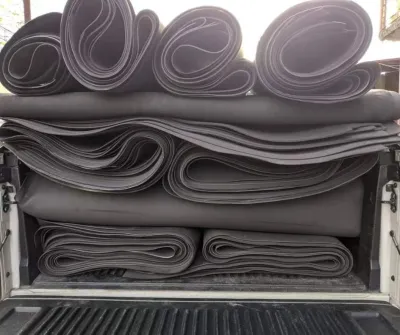
Proper storage of your EVA foam sheets is also crucial for preventing physical defects that can interfere with clean cutting. Store your sheets flat in a cool, dry place away from direct sunlight, which can cause the foam to warp, discolor, or become brittle over time. If you must store your foam rolled up to save space, roll it loosely with the textured side facing outward, and secure it with soft straps rather than tight tape or rubber bands that can leave permanent creases. Before cutting, unroll the sheet and allow it to lie flat at room temperature for a few hours to recover its original shape.
Frequently Asked Questions (FAQ)
Can I use regular household scissors to cut EVA foam sheets?
While household scissors may seem convenient, they are generally not recommended for cutting EVA foam sheets thicker than 2mm. The pinching action of scissor blades compresses the foam as it cuts, resulting in a squished, uneven edge with a noticeable bevel on one side. For sheets thicker than 2mm, always use a sharp utility or hobby knife for clean, vertical edges. Scissors should only be used for very thin crafting foam (1mm to 2mm) or for rough, oversized trimming of larger pieces before you refine the edges with a proper blade.
How do I safely join cut EVA foam pieces together?
To join cut EVA foam pieces securely, you must select an adhesive that is compatible with the material and can withstand the flexibility of the foam. Contact cement is widely considered the standard for strong, flexible bonds in foam crafting. Ensure that both mating surfaces are clean, dry, and free of sanding dust before applying a thin, even layer of adhesive to both sides. Allow the adhesive to dry until it is tacky to the touch—usually a few minutes depending on local humidity—before pressing the pieces firmly together. Always work in a well-ventilated area to avoid inhaling strong adhesive fumes, and strictly follow the manufacturer’s curing times for a secure hold.

Community discussion
Share your experience or ask a question. Comments are reviewed before publication.