
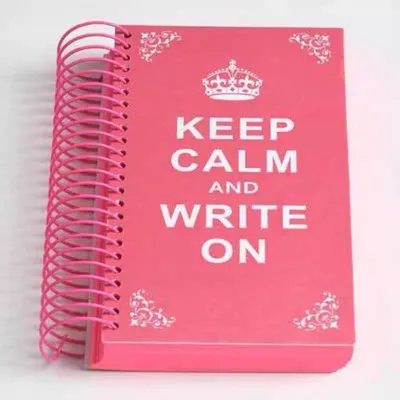
When shopping for a keep calm notebook, the iconic “Keep Calm and Carry On” design on the front is only the surface of your purchase. Because this popular motivational graphic is printed by many different manufacturers on a wide variety of notebook bases, the cover art itself is no guarantee of the paper quality or structural durability inside. To find a notebook that will actually survive daily use without your ink bleeding through the pages, you must look past the design and evaluate the physical specifications. Key factors like paper weight, bleed-through resistance, cover material resilience, and binding strength determine whether your notebook remains a functional tool or becomes a frustrating, warped mess. In tropical climates like the Philippines, where high humidity can soften paper fibers and affect ink drying times, these physical details are even more critical to check before you buy.
Checking Paper Weight and Bleed-Through Resistance
To ensure your writing remains clean and legible on both sides of a page, the first specification to verify is the paper weight, which is measured in Grams per Square Meter (GSM). You can typically find the GSM rating listed in the product specifications on online marketplaces, printed on the back cover label, or detailed in the manufacturer’s description. Standard utility notebooks often use paper between 50 GSM and 70 GSM, which is lightweight but highly prone to ghosting and ink bleed-through. For general writing with standard ballpoint pens or fine gel pens, look for a minimum of 80 GSM to 100 GSM. If you prefer using heavy gel pens, rollerballs, or fountain pens, prioritizing paper that is 120 GSM or higher will provide the density needed to prevent wet inks from soaking through the fibers.
When physical inspection is not possible, such as when browsing online marketplaces, you can evaluate paper quality by carefully analyzing user-uploaded photos in the review section. Look closely at images where customers have written on the pages; check if the writing on the reverse side is clearly visible (known as ghosting) or if the ink has actually seeped through in dark spots (bleed-through). Pay attention to the edges of the written lines in these photos to see if the ink has spread out into fuzzy, spiderweb-like patterns, a phenomenon known as feathering. Feathering indicates highly absorbent, low-quality paper fibers that will make your handwriting look messy, especially when using liquid inks.
Products mentioned in this guide
Prices are valid at publication and may change. Please refer to the product page for the latest price.
The type of pen you plan to use should directly dictate the paper weight you select. Oil-based ballpoint inks are thick and dry almost instantly, making them highly forgiving on thinner, lower-GSM papers. In contrast, water-based gel inks, rollerball inks, and fountain pen inks are much wetter and rely on capillary action to sink into the paper. In humid environments, the moisture in the air naturally relaxes paper fibers, which can slow down ink drying times and exacerbate bleed-through on porous sheets. Therefore, if you write with a 0.7mm or 1.0mm gel pen, choosing a higher GSM paper with a smooth, less absorbent finish is essential to keep your notes crisp and clean.
Assessing Cover Durability and Binding Strength
The cover of your keep calm notebook does more than display a motivational slogan; it serves as the primary shield protecting your notes from the wear and tear of daily transit. Common cover materials include rigid hardboard, faux leather (often polyurethane or PU), and flexible cardstock. Hardboard covers offer excellent structural support, allowing you to write comfortably on your lap or while standing, and they resist bending inside a crowded backpack. Faux leather covers provide a premium feel and offer superior moisture resistance, which is highly beneficial for protecting your pages from accidental spills or humid weather. Flexible cardstock is lightweight and easy to slip into small bags, but it is highly susceptible to creasing, dog-eared corners, and water damage.

Equally important is the binding method, which holds the entire notebook together and dictates how flat the pages will lay when open. Stitched or thread-bound notebooks are highly durable because the pages are sewn together in sections, allowing the notebook to lay completely flat without the spine cracking or pages falling out over time. Glued or perfect-bound notebooks are common for budget-friendly options, but they often resist laying flat, and applying pressure to force them open can break the adhesive spine, leading to loose pages. Spiral or wire-o binding offers the convenience of folding the notebook completely back on itself, but you must check product images to ensure the metal rings are thick, properly aligned, and closed securely so they do not snag on your clothes or bag lining.
To maximize the lifespan of your notebook, look for supplementary protective features that reinforce its structure. Rounded corners are highly effective at preventing the edges of the cover from fraying or bending when slid in and out of bags. An elastic closure band is another valuable feature, as it keeps the notebook tightly shut, preventing loose items in your bag from sliding between the pages and crumpling them. Additionally, some high-quality notebooks feature reinforced spine edges or ribbon bookmarks that help you navigate your notes without putting unnecessary stress on the binding.
Decision Framework: Matching Specs to Your Daily Needs
Choosing the right keep calm notebook requires balancing your writing habits, transport methods, and the specific tools you use daily. If your primary goal is a lightweight, highly portable notebook for quick jotting, a flexible cardstock cover paired with standard 80 GSM paper is an excellent choice. This combination minimizes bulk and weight in your daily carry, making it easy to slip into a tote bag or folder. Because you will likely use dry-ink ballpoint pens or pencils for quick notes, the thinner paper will perform adequately without significant ghosting, and the lower weight ensures your bag remains comfortable to carry during long commutes.
Conversely, if you use your notebook for extensive journaling, study notes, or professional planning, you should invest in a more robust configuration. Prioritize a rigid hardcover, a stitched lay-flat binding, and paper that is at least 100 GSM to 120 GSM. This setup is ideal if you write with wet-ink gel pens, fine liners, or fountain pens, as the denser paper prevents bleed-through and allows you to utilize both sides of every sheet. The sturdy hardcover provides a stable writing surface anywhere, while the sewn binding ensures the notebook can withstand being opened and closed repeatedly over months or years of active use.
When shopping online, if a product listing lacks clear specifications regarding GSM, paper composition, or binding type, treat this as a warning sign of potential low quality. In such cases, look for alternative listings that explicitly state these technical details, or reach out to the seller directly to confirm the paper weight. If you must purchase a notebook without verified specifications, prioritize online stores that offer clear return or refund policies. This allows you to inspect the physical notebook upon delivery and return it if the paper feels excessively thin, rough, or prone to immediate tearing.
Frequently Asked Questions (FAQ)
How can I test for ink bleed-through before committing to a full page?
To test your notebook’s paper without ruining your main writing space, turn to the very last page or use the inside back cover if it features the same paper stock. Select the exact pen you plan to use most frequently and write a few test characters, applying your typical writing pressure. Draw a small solid block of ink to simulate heavy saturation, then wait a few moments for the ink to dry completely. Flip the page over to inspect the reverse side; if you see dark spots of ink coming through, the paper is prone to bleed-through, and you should switch to a drier ballpoint pen or a finer tip size.
Does a thicker cover always mean a more durable notebook?
A thicker cover does not automatically guarantee better durability, as the material composition plays a far more significant role than thickness alone. For example, a thick but rigid cardboard cover can easily crease, warp, or split at the corners if it is bent inside a tightly packed bag or exposed to high humidity. On the other hand, a slightly thinner cover made from high-density flexible plastic, reinforced hardboard, or water-resistant faux leather can withstand bending and moisture much better without showing permanent damage. When evaluating durability, prioritize materials that offer scratch and moisture resistance over sheer thickness.
Community discussion
Share your experience or ask a question. Comments are reviewed before publication.