
In a busy workspace, maintaining order while protecting your equipment is a constant challenge. If you are looking for a “black plastic cover,” you might be searching for very different tools depending on your immediate organizational bottleneck. The ideal black plastic cover depends entirely on your specific task: document sleeves protect active paperwork, desk pads shield physical desk surfaces, file covers bundle and bind archives, and adhesive organizer wraps unify mismatched storage bins. Identifying which form factor aligns with your workflow ensures you build a functional, visually cohesive workspace that stands up to daily wear.
Identify Your Primary Desk Organization Challenge
Look at your desk right now. Are loose papers scattering across your workspace, getting crumpled, or collecting coffee ring stains? Is your physical wooden or laminate desk surface showing signs of wear, such as scratches from laptop edges, ink stains from leaky gel pens, or heat marks from hot mugs? Perhaps your open shelving looks chaotic because your archived records lack uniform spines, or your collection of mismatched plastic storage bins creates visual noise that disrupts your focus.
To solve these issues, you must define your core organizational task before buying any supplies. Distinguish between surface protection (shielding the desk itself), individual paper protection (keeping active documents clean), long-term archiving (storing records securely), and aesthetic uniformity (hiding clutter and matching colors). By pinpointing these observable pain points, you establish a solid baseline for choosing the correct type of black plastic cover, preventing impulse purchases that fail to address your actual workspace needs.
Products mentioned in this guide

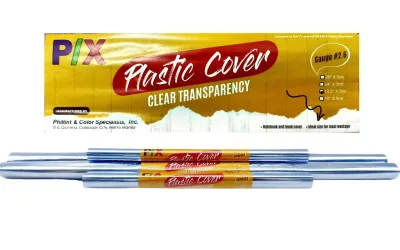
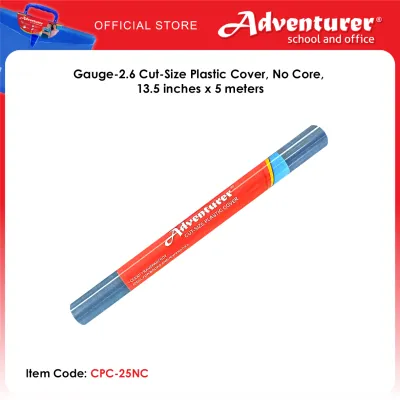
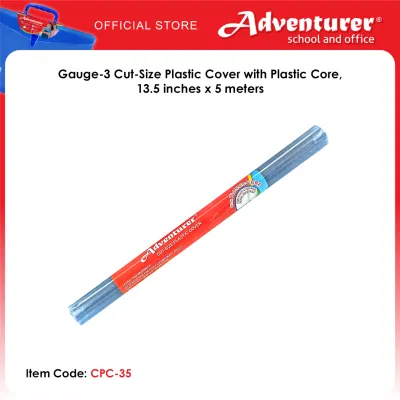


Prices are valid at publication and may change. Please refer to the product page for the latest price.
Match the Right Black Plastic Cover to Your Task
When searching for a black plastic cover, it is easy to get overwhelmed by search results because the term covers several completely different stationery and organization products. A cover can be a thin, flexible envelope, a heavy-duty desk mat, a rigid binder front, or a roll of adhesive vinyl wrap. Selecting the right type depends on whether your primary goal is to enclose, cover, bind, or wrap your items. Let’s break down these four distinct categories so you can match the correct product to your organizational goals.

Document Sleeves for Daily Paper Protection
For active paperwork that you handle throughout the day, flexible plastic document sleeves are the ideal choice. These covers protect printed reference sheets, daily to-do lists, client invoices, and active project notes from accidental spills, tears, and dirt. They keep your essential papers clean while keeping them easily accessible on top of your desk or inside a drawer.
When shopping for document sleeves, pay close attention to the design variations. Top-loading sleeves are perfect for documents you rarely need to remove, while side-loading or L-type folders allow you to slip papers in and out quickly. If you plan to store these sleeves inside a binder, look for options with reinforced, multi-hole punched edges to prevent the plastic from tearing away from the binder rings.
Additionally, always check the plastic thickness, which manufacturers typically specify in microns (often ranging from 30 to 100 microns). For heavy daily handling, opt for thicker sleeves (around 80 microns or higher) to ensure they maintain their shape and resist creasing or tearing over time.
Desk Pads for Surface Protection and Writing
If your main concern is preserving the physical desk surface, a large black plastic desk pad is the most effective solution. These pads cover a significant portion of your workspace, protecting the wood or laminate from scratches, heat from your morning coffee, and accidental ink marks. They also serve a double purpose by providing a smooth, consistent surface for your computer mouse and a comfortable backing for writing.
A critical feature to verify before purchasing a desk pad is the texture and material of the underside. Look for a non-slip backing, such as textured rubber or specialized foam, to prevent the pad from sliding around when you move your arms or type.
You should also test or verify the top surface texture. A good desk pad must be smooth enough to allow ballpoint pens and gel pens to glide effortlessly without skipping, catching, or causing ink to feather on thin paper. Ensure the plastic is firm enough that your pen tip does not puncture through your writing paper.
File Covers for Archiving and Binding
For long-term archiving, professional report presentations, or organizing loose manuals, rigid black plastic file covers provide the necessary structural support. These covers wrap around bound documents or act as the front and back shields for comb-bound and wire-bound presentations, giving your paperwork a clean, uniform look on open shelves or in filing cabinets.
When selecting file covers, look for practical design features that simplify the binding process. Many high-quality covers come with pre-punched holes that match standard two-hole or four-hole filing systems, or pre-scored folding lines that make it easy to create neat, professional spines.
Verify the rigidity of the material. The plastic must be thick and stiff enough to keep your documents standing upright on a shelf without sagging or bending under their own weight. This structural integrity is essential for maintaining a neat, organized library of records over several years.
Organizer Wraps for Customizing Storage Bins
If you have a collection of mismatched, brightly colored, or worn-out storage bins, adhesive black plastic organizer wraps offer a budget-friendly way to achieve a minimalist, high-end desk aesthetic. These wraps are adhesive-backed or highly stretchable plastic sheets that you apply directly over the exterior of generic boxes, drawer units, or pen cups to create visual uniformity.
Before buying an adhesive wrap, check the manufacturer’s specifications regarding the adhesive properties. It is crucial to choose a wrap with a semi-permanent or removable adhesive that allows for repositioning during application and leaves no sticky, hard-to-clean residue if you decide to remove or replace it later.
Also, consider the material’s stretchability and overall thickness. A slightly flexible, medium-thickness wrap is easier to manipulate around sharp corners, edges, and curved handles of storage bins, helping you achieve a clean, professional, bubble-free finish without tearing the plastic.
Essential Specifications to Verify Before Purchasing
To ensure your chosen black plastic cover performs well and lasts in your specific workspace, you must evaluate three primary physical and material specifications before making a purchase.
First, pay attention to Thickness and Rigidity. This is often measured in microns (for thin sleeves) or millimeters (for heavy desk pads). Thin, flexible plastics (under 100 microns) are perfect for document sleeves where flexibility is key. However, for desk pads and file covers, you need a much thicker, more rigid material (typically 1 mm to 3 mm for desk pads) to provide adequate protection and structural support. You can test rigidity physically by gently bending the corner of the cover; it should resist bending if it is meant for structural archiving.
Second, evaluate the Surface Finish. Black plastic covers generally come in either matte or glossy finishes, each with clear trade-offs. A matte black finish is excellent for reducing glare from overhead office lights or desk lamps, and it does a superior job of hiding fingerprints, dust, and minor scratches. On the other hand, a glossy black finish offers a sleek, modern look and is incredibly easy to wipe clean, but it will show smudges, oil from your hands, and dust particles almost immediately, requiring more frequent maintenance.
Third, consider Material Composition and Climate Resilience, which is especially critical in hot, humid environments like the Philippines. Low-quality plastics, particularly cheap Polyvinyl Chloride (PVC), are highly susceptible to high humidity and heat. Over time, they can become sticky, warp out of shape, transfer oils onto your documents, or emit strong, unpleasant chemical odors. When shopping, check the product labels for safer, more stable material types such as Polypropylene (PP) or Polyethylene (PE). These materials offer better climate resilience, will not stick to your printed papers, and maintain their structural integrity without degrading in tropical conditions.
Budget-friendly options typically range from ₱50 to ₱150 for basic document sleeves and file covers, while premium desk pads or high-grade self-adhesive organizer wraps can range from ₱300 to ₱1,200 depending on thickness and material quality.
Maintaining and Cleaning Black Plastic Desk Covers
To keep your black plastic covers looking professional and functioning properly, you must follow safe, reversible maintenance steps. Regular care prevents dust buildup and keeps the deep black color looking sharp.
For routine cleaning, start by dusting the surface with a dry microfiber cloth to remove loose particles. To clean off daily grime, fingerprints, or minor ink transfers, wipe the cover gently with a microfiber cloth slightly dampened with water and a drop of mild dish soap. Always dry the surface thoroughly with a clean towel afterward to prevent water spots.
Establish clear safety boundaries to avoid damaging the plastic. Never use harsh chemical solvents, acetone, bleach, or alcohol-based cleaners on black plastic. These chemicals can strip the black pigment, cause the plastic to turn cloudy or white, or leach out plasticizers, making the material brittle and prone to cracking. Additionally, avoid using abrasive scrubbers or steel wool, which will leave permanent scratches on both matte and glossy finishes.
When storing seasonal or extra covers, such as spare file covers or unused document sleeves, keep them flat in a cool, dry place. Avoid folding or bending them, as this can cause permanent white stress marks or creases in the plastic. Never place heavy, sharp, or hot objects on top of stored covers, as the constant pressure can leave permanent indentations or cause the plastic sheets to fuse together in warm weather.
Frequently Asked Questions (FAQ)
Can I use a desk pad as a document sleeve?
No, you cannot use a desk pad as a document sleeve. Desk pads are thick, rigid sheets designed to lay flat on a desk surface to provide protection and a writing area. They do not have enclosed pockets, openings, or the flexibility required to insert, hold, and protect individual paper sheets.
How do I prevent black plastic covers from turning white or fading?
To prevent black plastic covers from fading or developing white stress marks, keep them out of direct, prolonged sunlight, which degrades the plastic through UV exposure. Avoid bending, folding, or creasing the material sharply, as physical stress damages the plastic structure and turns it white. Finally, clean the covers only with mild soap and water, avoiding any alcohol-based or harsh chemical cleaners that strip the plastic’s protective finish.
Community discussion
Share your experience or ask a question. Comments are reviewed before publication.