
To keep your important documents pristine, the most critical rule is that a folder’s internal dimensions must always exceed the physical dimensions of the paper inside. When dealing with a long file folder, relying solely on generic size labels can lead to bent corners, exposed edges, and damaged files. This is because the term “long” is highly ambiguous and varies significantly depending on regional manufacturing standards and local office customs. To ensure a perfect fit, your primary action should always be to check the manufacturer’s exact internal measurements—typically listed in millimeters or inches on the packaging or online product description—before making a purchase.
Decoding "Long" Folder Standards and Regional Variations
In many office environments, the term “long” is used interchangeably with different paper standards, which often leads to confusion during procurement. In the United States and international markets following US standards, a standard long folder is designed to hold US Legal paper, which measures 8.5 by 14 inches (215.9 by 355.6 mm). However, in the Philippines, the local office standard for “long” paper—often historically referred to as folio size—typically measures 8.5 by 13 inches (215.9 by 330.2 mm). If you purchase a folder designed strictly for the local 13-inch standard, a true US Legal document will protrude by an inch, leaving the top edge vulnerable to dust, moisture, and tearing.
Conversely, ISO A3 paper is an entirely different class of oversized document, measuring 297 by 420 mm (approximately 11.7 by 16.5 inches). Because A3 paper is both wider and longer than both US Legal and local long formats, standard long folders are completely inadequate for storing them without folding. Attempting to force an A3 sheet into a standard long folder will result in severe creasing and damage. Therefore, you must carefully verify the exact millimeter or inch specifications printed on the product label or online listing to ensure the folder matches your specific paper standard.
Products mentioned in this guide
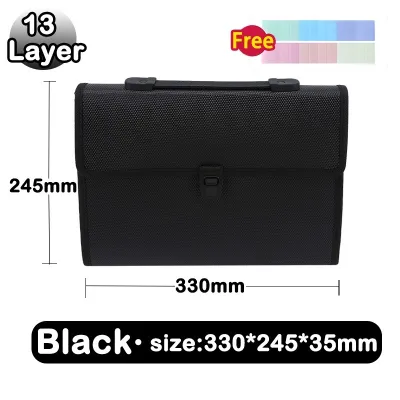
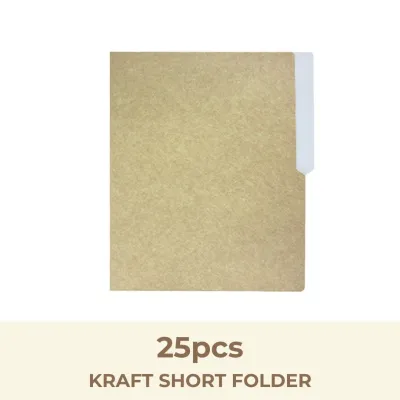
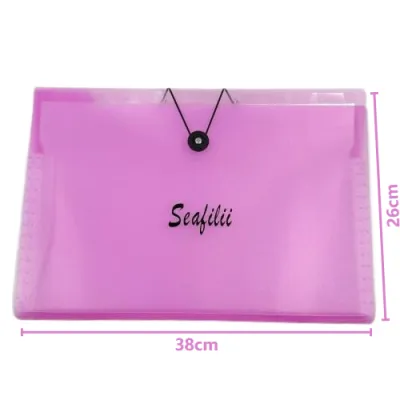
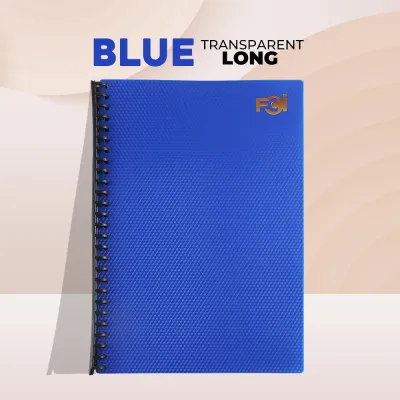
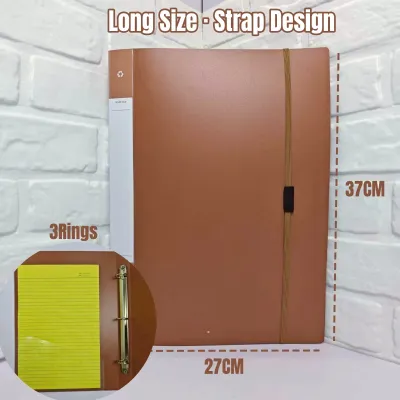
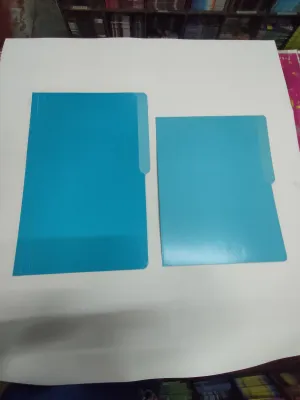
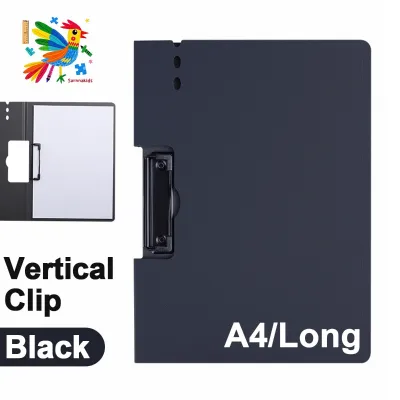
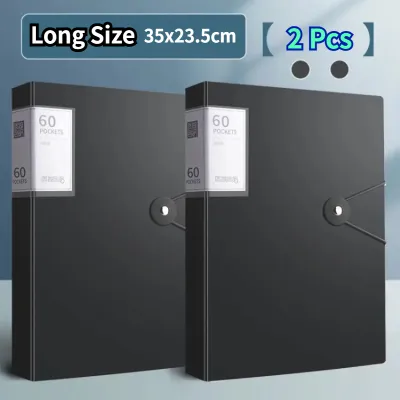
Prices are valid at publication and may change. Please refer to the product page for the latest price.
How to Measure Documents and Folders for a Perfect Fit
Achieving a perfect fit requires understanding the difference between a folder’s external dimensions and its internal usable capacity. Manufacturers often print the external dimensions on the packaging, which include the outer margins, heat-sealed seams, plastic welds, or hanging rod extensions. The actual usable space inside is always slightly smaller than these external measurements. For instance, a plastic envelope folder with a snap button might have an external length of 14.5 inches, but the usable space inside stops at the seam, reducing the effective capacity to just under 14 inches.

When storing thick stacks of oversized papers, you must also account for the folder’s spine width, also known as the gusset. A flat folder with no spine can easily hold two or three sheets of paper, but as the stack grows to 20, 50, or 100 sheets, the paper stack gains physical thickness. This thickness pulls the front and back covers of the folder inward, effectively shortening the usable width and length of the folder. If you do not account for this dimensional shrinkage, the edges of your documents will press tightly against the folder’s seams, making them difficult to extract and prone to wrinkling.
To measure your documents and folders accurately, use a standard rigid ruler or a metal measuring tape. First, measure the exact length, width, and stack thickness of your document pile. When selecting a folder, look for internal dimensions that offer a margin of error of at least 5 to 10 millimeters (about a quarter to half an inch) of clearance on all sides. This extra space ensures that you can insert and remove your documents smoothly without catching the edges on the folder’s closure mechanism, zipper, or seams.
Sizing Strategies for Legal, A3, and Oversized Papers
Managing different document sizes requires tailored filing strategies to preserve the integrity of your paperwork. For legal documents, the choice often comes down to top-loading versus side-loading orientations. Top-loading folders, such as vertical pocket files or expanding jackets, are excellent for quick access but require sufficient vertical clearance so the flap can close securely over the 13-inch or 14-inch paper edge. Side-loading folders, like standard clear books or L-folders, must have a secure weld at the bottom to prevent the heavy legal sheets from slipping out. Ensure that the critical long edge of your legal paper is fully enclosed within the folder’s protective boundaries to shield it from environmental exposure.
A3 documents present a unique challenge due to their large surface area and weight. Because A3 paper is highly susceptible to bending and creasing under its own weight, folders designed for A3 must possess high structural integrity. In humid tropical climates, paper naturally absorbs moisture from the air, making it limp and more vulnerable to warping. To combat this, look for rigid A3 presentation binders, heavy-duty polypropylene display books, or thick cardboard flat files that keep the paper perfectly flat and supported.
For oversized or custom documents that exceed standard A3 or legal dimensions, standard long folders are no longer viable. In these cases, you should transition to specialized storage solutions such as expandable plastic envelopes with protective flaps, artist portfolio cases with rigid backing, or custom-sized archival boxes. These options provide the necessary depth and structural reinforcement to protect blueprints, large-format charts, or historical records without subjecting them to harmful folds or tight squeezes.
Common Sizing Mistakes to Avoid When Buying Folders
One of the most frequent errors when purchasing office supplies online is confusing “Letter” size with “Legal” or local “Long” sizes. Letter-size paper is shorter and wider (8.5 by 11 inches), and purchasing a letter-size folder for your legal documents will leave several inches of your paperwork exposed to the elements. Always double-check the product specifications rather than relying on generic search terms like “office folder” or “school folder,” as online marketplaces often group different sizes under a single product listing.
Another common mistake is ignoring the cumulative thickness of your document stack. Many buyers purchase a standard flat paper folder expecting it to hold a thick legal brief or a multi-page contract. When forced to accommodate a thick stack, the folder’s seams are put under immense tension, often leading to split edges, broken plastic welds, or a folder that simply refuses to close. If your document stack exceeds a few millimeters in thickness, always opt for a folder with a built-in expandable gusset.
Lastly, do not assume that all A3 or oversized folders are identical in design and function. Some folders are designed with pre-punched holes for ring binders, which reduces the usable width of the paper area, while others feature tight elastic band closures that can crimp the corners of oversized sheets if the folder is not wide enough. Always inspect the folder’s binding margins, punching styles, and closure mechanisms to ensure they do not interfere with the specific layout of your documents.
Frequently Asked Questions (FAQ)
Can I fold A3 documents to fit into a standard long folder?
Folding an A3 document in half reduces its size to A4, which easily fits inside a standard long folder. While this is a convenient and acceptable solution for casual reference sheets, drafts, or personal notes, you should avoid folding official, legal, or presentation documents. Folding creates permanent creases that can degrade the professional appearance of your work, weaken the paper fibers, and potentially obscure important details, signatures, or stamps. For high-value documents, blueprints, or official certificates, it is highly recommended to use flat files, A3-specific portfolios, or rolled storage tubes to preserve their original condition.
What is the difference between a long folder and an expandable file?
A standard long folder is typically flat, featuring a single fold or a very narrow spine designed to hold a limited number of loose sheets, usually up to 30 or 50 pages depending on the material. An expandable file, on the other hand, features pleated sides or a flexible gusset that allows the folder to expand significantly, often accommodating hundreds of sheets. Standard flat folders offer excellent portability and space-saving benefits for thin files, but they lack the structural support needed for heavy archives. If you are managing thick legal case files, multi-page financial reports, or large document batches, upgrading to an expandable format is essential to prevent seam failure and document damage.
Community discussion
Share your experience or ask a question. Comments are reviewed before publication.