
Finding the perfect gift for a loved one is only half the journey; presenting it beautifully completes the experience. In the Philippines, where gift-giving is a central part of celebrations—from birthdays and weddings to the long Christmas season—the presentation speaks volumes about your care. Using a paper bag that is too small can stretch the seams and ruin the surprise, while an excessively large bag makes the gift look neglected or empty. To ensure a flawless fit, you must match the physical dimensions of your gift with the structural limits of the bag.
Selecting the right packaging is not just about aesthetics; it is also about protecting the item inside. A well-fitted bag keeps the gift upright, prevents it from sliding around, and ensures it arrives at its destination in pristine condition. By taking a few quick measurements and applying a simple calculation, you can easily find a bag that looks professional, elegant, and intentional.
How to Measure Your Gift Accurately
To get started, gather a few basic tools. A rigid metal or plastic ruler is ideal for boxed gifts with straight, defined edges. If you are wrapping a soft or irregular item, such as a knitted scarf, a plush toy, or folded apparel, a flexible vinyl measuring tape will wrap around the curves more accurately. Having a pen and paper nearby to jot down the numbers will prevent mistakes when you start shopping.
Products mentioned in this guide

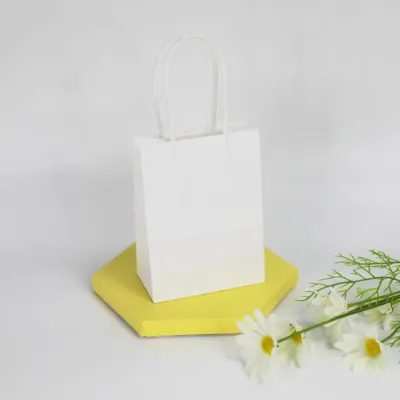
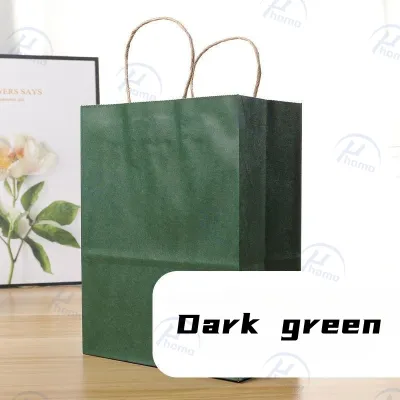
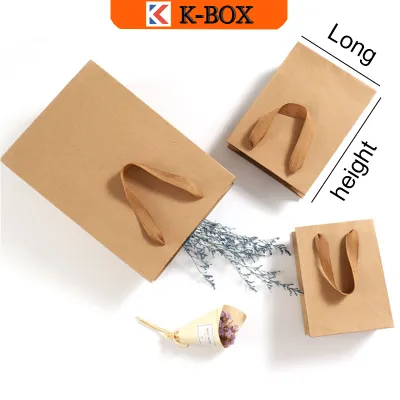
![[CHEAPEST] Brown SOS Paper Bags (Multiple Sizes) | Food-Grade Kraft Bags | Eco-Friendly Takeout & Bakery Bags | Thick & Durable |](https://img.lazcdn.com/g/p/3fb4a60a6fd1708783cab3e0f576def3.png_400x400q80.png_.webp)
Prices are valid at publication and may change. Please refer to the product page for the latest price.
When recording dimensions, always use the standard order of Length, Width, and Height (or Depth). Length refers to the longest horizontal side of the item when it is resting on a flat surface. Width is the shorter horizontal distance across the front. Height, or depth, is the vertical measurement from the base of the item to its highest point. Keeping this order consistent prevents confusion when comparing your numbers to retail bag dimensions.
Measuring a pre-boxed gift is straightforward because the flat planes are easy to align with a ruler. If your gift is loose, however, you must decide how it will sit inside the bag. For instance, if you are gifting a loose fabric item, fold it to the approximate shape and thickness you want it to retain inside the bag before taking measurements. This ensures you measure the actual space the item will occupy.
If the item is irregularly shaped, measure at the absolute widest and tallest points. A ceramic mug with a protruding handle requires you to measure from the outer edge of the handle to the opposite side of the cup. Ignoring these protrusions will result in a bag that bulges, stretches, or tears at the pressure points. Always measure the maximum footprint of the item to guarantee a comfortable fit.
How to Calculate the Ideal Paper Bag Dimensions
Once you have the exact measurements of your gift, you cannot simply buy a bag with those identical dimensions. You must add allowances to accommodate the physical structure of the bag and to ensure you can place and remove the gift without friction. A bag that fits too tightly is difficult to pack and risks tearing at the corners before the recipient even opens it.

For the bag’s width and depth, add a minimum of 1 to 2 inches (2.5 to 5 centimeters) to the gift’s corresponding measurements. This extra space prevents the gift from stretching the paper, which can weaken the seams and cause the bag to burst. It also allows the recipient to easily slide their hand inside to retrieve the item without struggling.
Calculating the height requires a slightly larger allowance. Add 2 to 4 inches (5 to 10 centimeters) to the height of your gift. This extra space serves several purposes: it leaves room for decorative tissue paper to plume out of the top, allows the bag’s top edges to fold over if you prefer a sealed look, and ensures the handles do not press uncomfortably against the top of the gift.
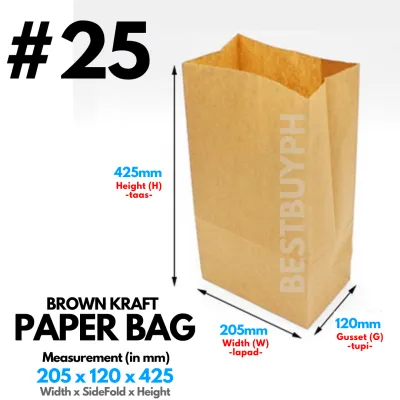
You must also understand the role of the gusset, which is the pleated side fold of the paper bag. When a paper bag is stored flat, the gusset is folded inward. When you expand the bag, the gusset opens up to create depth. However, as the gusset expands, it slightly pulls the front and back panels inward, which can reduce the usable flat width of the bag. Always ensure the fully expanded gusset depth is at least 1 inch wider than your gift’s thickness.
Let us look at a practical example. Suppose you are gifting a rectangular box that measures 8 inches long, 5 inches wide, and 3 inches deep. To find the ideal bag, add 1.5 inches to the length (8 + 1.5 = 9.5 inches) and 1.5 inches to the depth (3 + 1.5 = 4.5 inches). For the height, add 3 inches to the vertical measurement (5 + 3 = 8 inches). Your target paper bag dimensions should be approximately 9.5 inches wide, 8 inches high, and 4.5 inches deep.
Sizing Adjustments for Different Gift Shapes
Cylindrical and Round Gifts
Round items like scented candles, cosmetic jars, or bottles of local fruit wine do not have flat sides, which makes sizing slightly different. To choose the right bag, use the item’s diameter as your primary guide. The diameter must dictate both the minimum width and the minimum depth (gusset) of the paper bag.
For these items, look for square-bottom paper bags. A square-bottom bag has equal width and gusset dimensions (for example, 6 inches by 6 inches). This structural design provides a flat, stable base that prevents cylindrical items from tipping over, rolling around, or sliding to one side, which could tear the paper.
Irregular or Fragile Items
When gifting fragile items like local pottery, delicate glassware, or handmade ornaments, protective packaging is non-negotiable. You must always wrap the item securely in bubble wrap, foam, or several layers of thick tissue paper before taking any measurements.
Measure the gift only after it has been fully wrapped in its protective layers. Once you have these wrapped dimensions, add an extra 1 inch of allowance on all sides. This prevents the bag’s stiff paper walls from compressing the protective wrap, ensuring the cushioning remains fluffy and effective during transport.
Multiple Items in One Bag
If you are putting together a curated gift bundle—such as a notebook, a box of local tea, and a customized mug—you must plan their arrangement inside the bag. You can either stack them vertically or arrange them side-by-side.
A side-by-side arrangement requires a wider bag with a generous gusset, while stacking them vertically requires a taller bag with a reinforced base. To calculate the correct size, arrange the items on a table exactly how you want them to sit inside the bag. Measure this entire arrangement as a single, solid block, then apply your standard dimensional allowances to those combined figures.
Matching Paper Bag Material to Your Gift's Weight
Selecting the correct size is only half the battle; you must also ensure the paper bag is strong enough to carry the weight of your gift. Never guess the strength of a bag based on its thickness alone. Always check the manufacturer’s stated weight capacity, which is often printed on the packaging or product label.
Different paper materials offer varying levels of structural integrity. Standard brown kraft paper is excellent for lightweight items like clothing, stationery, or plush toys. For moderate weights, choose coated or laminated art paper, which features a glossy or matte plastic film that reinforces the paper fibers. For heavy gifts, opt for heavy-duty kraft paper with thick, twisted paper or woven rope handles.
Pay close attention to the bottom construction of the bag. A flat, reinforced bottom—often called a block bottom—frequently includes a thick cardboard insert. This insert distributes the weight of the gift evenly across the base, preventing the paper from sagging, stretching, or tearing when the bag is lifted.
In the tropical climate of the Philippines, humidity plays a significant role in material performance. During the humid rainy season, untreated paper fibers absorb moisture from the air, which can temporarily reduce the tensile strength of the bag by up to thirty percent. If you are gifting heavy items during these months, always choose laminated art paper or double-ply kraft bags with reinforced handles to prevent sudden, embarrassing tears.
Quick Reference: Common Paper Bag Sizes and Uses
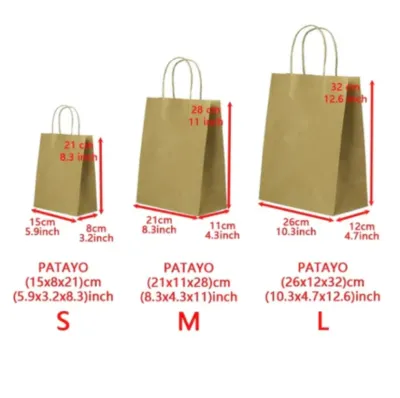
To make your shopping easier, most local stationery and gift supply shops categorize paper bags into standard sizes. Small bags (typically around 5 x 3 x 8 inches) are perfect for jewelry, cosmetics, watches, or small gift cards. They keep tiny items from getting lost in a sea of paper.
Medium bags (roughly 8 x 4 x 10 inches) are highly versatile. They easily accommodate standard novels, folded apparel like t-shirts, medium-sized candles, or standard-sized boxed board games. Keeping a pack of medium bags at home is highly recommended for last-minute birthdays or corporate events.
Large bags (often 12 x 5 x 16 inches or larger) are designed for bulky items. Use them for shoeboxes, small kitchen appliances, large stuffed toys, or multi-item gift bundles. However, remember that “standard” is not a legally binding term; dimensions vary significantly between manufacturers, so always verify the exact measurements on the product label before checking out.
Frequently Asked Questions (FAQ)
Can I use a paper bag that is slightly too big for my gift?
Yes, you can use a larger bag, but you must take steps to keep the presentation neat. Use crumpled tissue paper, shredded paper filler, or a small inner box to elevate your gift and keep it centered. This prevents the item from sliding around, which can damage the gift or make the bag tip over. However, avoid using a bag that is so large that your gift is completely swallowed up, as this can make the presentation look careless.
How do I measure a paper bag's gusset correctly when shopping?
To measure the gusset of a flat-packed paper bag, lay the bag flat on a table. Locate the side fold and measure the distance from the outer edge of the fold to the inner crease, then double that measurement to find the total expanded depth. When shopping online, always check whether the product listing specifies the flat dimensions or the fully expanded dimensions to ensure the bag will open wide enough for your gift.
Community discussion
Share your experience or ask a question. Comments are reviewed before publication.