
In emergency situations such as sudden house fires, severe tropical storms, or rapid flooding, having your critical paperwork secured can make the difference between a swift recovery and months of bureaucratic headache. A high-quality fireproof document bag serves as your primary shield against extreme heat and external moisture. However, simply tossing all your birth certificates, land titles, and insurance policies loosely into a bag defeats half its purpose.
During a high-stress evacuation, you cannot afford to waste precious minutes rummaging through a chaotic pile of papers to find a single passport or medical record. True emergency readiness requires a systematic internal filing structure. By pairing your protective bag with the right organizational stationery, you ensure that your most valuable papers remain not only safe from disaster but also instantly retrievable when every second counts.
Essential Stationery and Tools for Internal Organization
While a fireproof document bag provides the armored outer shell, the interior often consists of a single large compartment or basic mesh pockets. To prevent your documents from shifting, bending, or becoming a jumbled mess, you must build an internal filing framework using targeted stationery supplies.
Products mentioned in this guide
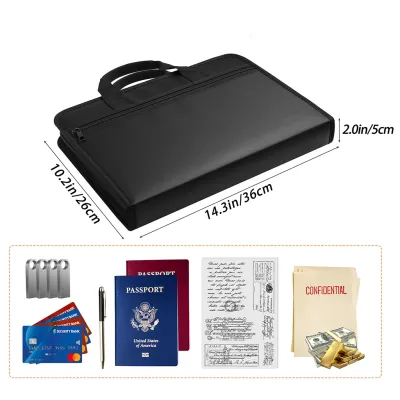
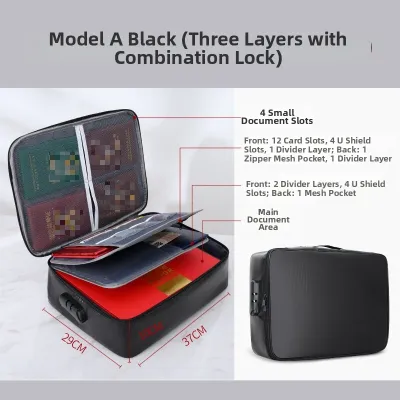
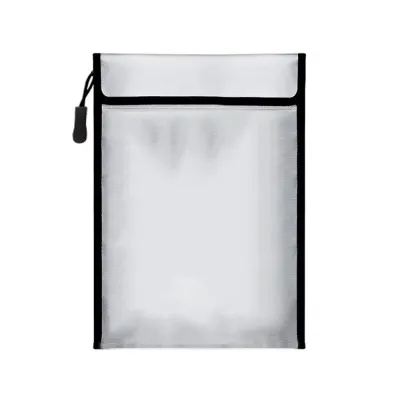
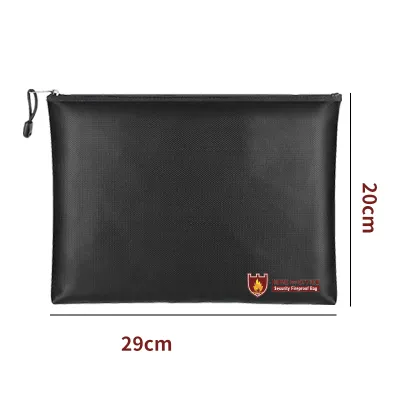
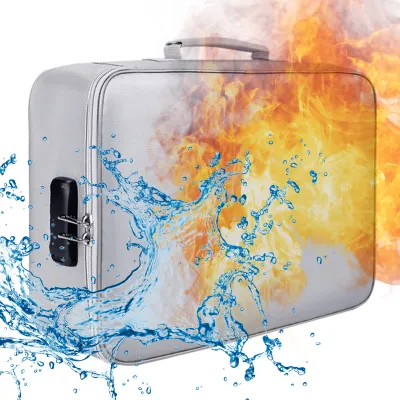
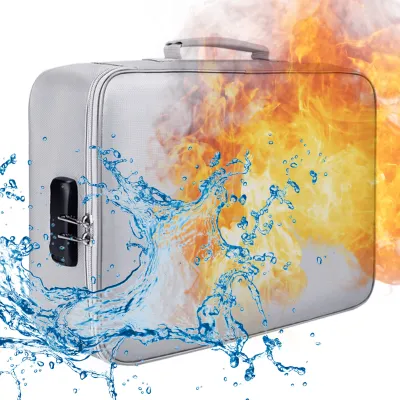
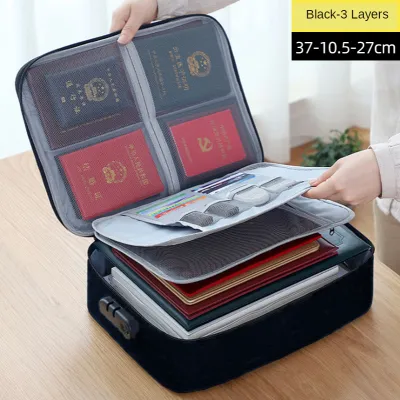
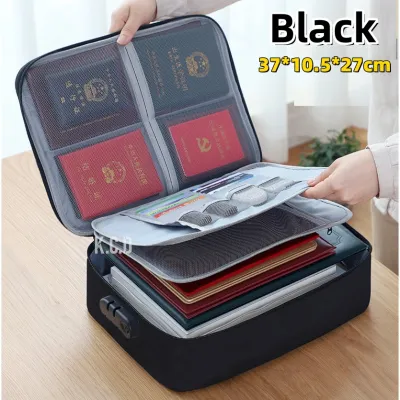
Prices are valid at publication and may change. Please refer to the product page for the latest price.
To construct this system, gather the following essential tools:
- Expandable Accordion Files: These serve as the primary divider for standard-sized documents, keeping different categories separated and upright.
- Clear Zippered Utility Pouches: These are ideal for containing smaller, loose items such as passports, emergency cash, and keys.
- Color-Coded Label Stickers: High-visibility labels allow you to identify document categories at a glance under low-light conditions.
- Rust-Resistant Binder Clips: Use these to keep multi-page legal documents clamped securely together so individual sheets do not slip out.
When selecting these internal tools, material composition is a critical safety factor. Many cheap document sleeves and plastic folders are made of thin vinyl or low-grade PVC. In a fire, even if the exterior of your fireproof bag successfully blocks the flames, the internal temperature of the bag can still rise significantly. Low-melting-point plastics can easily soften, warp, or completely fuse to your original papers, permanently ruining the very documents you are trying to protect.
Instead, opt for heavy-duty cardstock dividers, acid-free paper folders, or high-temperature-resistant polypropylene accessories. For any metal components like binder clips, ensure they feature a rust-resistant coating to withstand the high relative humidity typical of tropical environments.
Step 1: Sort and Categorize Your Critical Documents
Before placing anything inside your bag, lay out all your important paperwork on a clean, flat surface. Sorting your documents beforehand ensures that you only allocate space to items that are truly irreplaceable, preventing the bag from becoming overstuffed.

Divide your paperwork into four distinct, logical categories:
- Personal Identification: This includes passports, birth certificates (such as official PSA copies), marriage contracts, professional licenses, and primary government IDs.
- Property and Legal Ownership: Focus on land titles (Transfer Certificates of Title), vehicle registration documents (OR/CR), lease agreements, and notarized contracts.
- Financial and Insurance Records: Gather active insurance policies (life, health, and property), stock certificates, bank account summaries, and tax identification records.
- Medical and Emergency Reference: Keep copies of critical medical histories, vaccination cards, prescriptions, and an emergency contact sheet.
Space inside a standard fireproof bag is limited, so you must ruthlessly prioritize. Separate “must-have originals” from “reference copies.” Original land titles, active passports, and official certificates must go into the bag. Secondary items, such as old utility bills, expired contracts, or routine bank statements, should be digitized or stored elsewhere to save space.
Once your documents are sorted, create a single-page master inventory list. This sheet should clearly list every document category, the specific folder it occupies, and key policy or contact numbers. Place this inventory list at the very front of your bag. To ensure this vital sheet remains legible even if exposed to high humidity or minor leaks, write it out using a pigment-based, water-resistant gel pen or print it with a laser printer. You can verify the ink’s durability by running a quick water-drop test on a sample scrap of paper before writing the final list.
Step 2: Build a Structured Filing System Inside the Bag
With your documents sorted, you can now map them to physical organizers that fit neatly inside the bag. This prevents papers from crumpling or sliding around when the bag is moved.
Using Expandable File Folders
Expandable accordion folders are the most efficient tool for maximizing the vertical space inside your fireproof bag. They hold standard papers flat, preventing dog-eared corners and creased sheets.
Before purchasing an accordion folder, you must carefully verify its dimensions against both your documents and your fireproof bag. In the Philippines, legal documents—such as land titles, contracts, and notarized deeds—are frequently printed on “long” legal paper (8.5 x 13 inches) or US Legal paper (8.5 x 14 inches), which are longer than standard A4 or US Letter sizes. Ensure that both your internal accordion folder and your outer fireproof bag are explicitly rated to fit these longer legal dimensions. Forcing long documents into a standard A4 folder will bend the edges, potentially damaging official seals or fragile paper fibers over time.
Assign a dedicated tabbed section in the accordion folder to each of your sorted categories. Once filled, secure the folder’s closure—whether it uses an elastic band, a string-and-button tie, or a plastic snap. This ensures that even if the fireproof bag is dropped, carried upside down, or jostled during a hurried evacuation, your documents remain firmly in place within their designated slots.
Using Clear Zippered Pouches and Binders
Smaller, non-standard items do not sit well in large accordion pockets. Items like passports, spare emergency cash (ideally kept in clean ₱500 and ₱1,000 bills), and small certificates can easily slip to the bottom of the bag and get lost. Store these smaller items in clear, heavy-duty zippered utility pouches. The clear material allows you to verify the contents instantly without opening the pouch, while the zipper keeps small items from falling out.
Standard ring binders with plastic sheet protectors can also be used, but they present a major trade-off: bulk and weight. Binders require a very large, box-style fireproof document bag to fit comfortably. If you choose this route, avoid cheap vinyl sheet protectors. Vinyl can off-gas and stick to printed ink over time, especially in hot, humid climates. Instead, use heavy-duty, non-stick, acid-free polypropylene sheet protectors to preserve your documents safely.
Step 3: Pack and Label for Emergency Quick Access
In a real emergency, panic and low visibility can make finding items difficult. Your physical packing order and labeling strategy must be optimized so that you can retrieve any critical document in under a minute.
When packing your organized folders and pouches into the fireproof bag, follow a logical physical hierarchy:
- Heavy and Rigid Items at the Bottom: Place thick cardboard folders, binders, or heavy accordion files at the very bottom of the bag. This creates a solid, flat foundation and prevents lighter, delicate papers from being crushed or creased.
- Quick-Grab Items at the Top: Position your clear zippered pouches containing passports, emergency cash, and medical emergency sheets at the very top of the stack, directly beneath the bag's main zipper. If you are stopped at an evacuation checkpoint or need to access cash quickly, you should be able to unzip the bag and pull these items out within seconds without disturbing the rest of your filing system.
Do not rely on your memory to identify folders. Use bold, high-contrast labels on the tabs of your accordion files and the fronts of your pouches. Write in clear block letters using a permanent, water-resistant marker.
Implementing a simple color-coding system can also save valuable time. For example, use red labels for personal identification, blue for financial policies, and green for property titles. This visual shorthand allows you to identify and pull the correct folder instantly, even in a dark or smoke-filled room.
Safety Limits and Common Mistakes to Avoid
While a fireproof document bag is an invaluable asset for disaster preparedness, it is not an absolute, indestructible shield. To ensure your documents actually survive a disaster, you must understand the physical limitations of these bags and avoid common packing mistakes.
First, recognize that fireproof bags are designed to delay heat transfer, not block it indefinitely. Most standard bags carry ratings to withstand temperatures up to approximately 1,000°C to 1,100°C for a limited duration, typically 30 to 60 minutes. If a bag is left in the core of a building fire for hours, the internal temperature will eventually rise high enough to char paper, even if the bag’s exterior remains intact.
Second, never pack flammable or hazardous items inside your document bag. This includes matches, lighters, pocket knives with oily mechanisms, aerosols, or lithium-ion batteries (such as portable power banks). In a fire, the external heat will cause these items to ignite or explode internally, completely destroying your documents from the inside out.
Third, avoid the temptation to overstuff your bag. A fireproof bag relies on its heavy-duty zippers, overlapping Velcro flaps, and an insulating layer of air to protect its contents. If you pack too many folders inside, you strain the seams and prevent the protective flaps from sealing completely. This leaves the zipper teeth and the bag’s interior directly exposed to incoming heat, smoke, and water. Always select a bag that is slightly larger than your planned contents so that it zips shut easily with room to spare.
Finally, be aware that fireproof does not automatically mean waterproof. In tropical regions prone to severe typhoons and heavy flooding, water damage is often a much more frequent threat than fire. Most fireproof bags are only water-resistant, meaning water can eventually seep through the zipper teeth or seams during prolonged submersion. To protect against this, seal your organized documents inside waterproof silicone pouches or heavy-duty zip-top bags before sliding them into the fireproof bag.
Additionally, sealed airtight bags trap ambient moisture. In hot, humid climates, this trapped moisture can cause mold, mildew, and ink bleeding within a few weeks. Always toss three or four rechargeable silica gel packets inside your fireproof bag to absorb excess humidity and keep the interior dry.
Step 4: Maintain and Update Your Document Bag Annually
An emergency document bag is not a project you complete once and forget. Over time, documents expire, financial policies change, and physical materials degrade. Regular maintenance is required to keep your emergency kit functional.
Establish a routine to review your bag’s contents at least once a year. A practical time to schedule this is at the start of the rainy season in June, aligning with general household disaster preparedness. During this annual review, swap out expired passports, add updated insurance policies, remove outdated receipts, and ensure your emergency cash stash is intact.
Take this opportunity to conduct a thorough physical inspection of the bag itself:
- Check the Outer Coating: Examine the exterior silicone or fiberglass coating for any signs of cracking, peeling, or wear.
- Test the Closures: Slide the zippers back and forth to ensure they run smoothly without catching. If they feel stiff, clean them of any debris.
- Inspect the Velcro: Check that the overlapping Velcro flaps still grip tightly. Gently brush away any lint, dust, or pet hair that may have accumulated in the fibers.
Lastly, remember that physical storage should always be paired with a digital safety net. A physical bag can still be lost, stolen, or swept away in an extreme disaster. During your annual review, take photos or scans of all the documents in your bag. Store these digital copies in an encrypted, password-protected folder on a secure cloud storage service, or save them onto an encrypted USB flash drive kept at a secure off-site location, such as your workplace. This ensures that even if the physical bag is lost, you still possess the vital information needed to rebuild your records.
Frequently Asked Questions (FAQ)
Can I store USB drives or external hard drives in a fireproof bag?
Standard fireproof document bags are designed and rated specifically to protect paper. Paper has a relatively high ignition temperature (around 233°C), whereas digital media—such as USB flash drives, external hard drives, and CDs—are made of plastics and delicate electronic components that can warp, melt, or lose data at much lower temperatures (often starting around 50°C to 60°C). While a fireproof bag may prevent a USB drive from burning, the internal heat of the bag during a fire can still destroy the digital data inside. For electronic media, it is highly recommended to use a specialized media safe rated for electronics, or rely on secure, encrypted cloud backups.
Should I keep original documents or photocopies inside the bag?
Prioritize original documents for items that are legally difficult, expensive, or time-consuming to replace. This includes active passports, original land titles (TCTs), birth certificates, and notarized contracts. For secondary documents—such as routine bank statements, vehicle registration records, or minor insurance policies—it is best to store high-quality color photocopies instead. This saves valuable space inside your fireproof bag and reduces the risk of losing your only copy of secondary paperwork, while still providing you with the necessary reference details in an emergency.
Community discussion
Share your experience or ask a question. Comments are reviewed before publication.