
Properly managing minor business expenses requires a structured system that prevents financial discrepancies and simplifies the auditing process. A petty cash voucher serves as the official paper trail for small, immediate cash disbursements—such as emergency office supplies, local transportation fares, or minor repairs—where writing a formal corporate check is impractical. By establishing a rigorous process for filling out, authorizing, and filing these vouchers, your organization can maintain tight internal controls and ensure every peso is accounted for.
To achieve complete transparency, the process must be handled systematically from the moment cash is requested to the final filing of the document. This guide outlines the exact steps needed to prepare your materials, complete each field on the voucher, secure the necessary approvals, and organize your physical records for seamless accounting audits.
What You Need Before Filling Out a Petty Cash Voucher
Before you begin documenting a transaction, gathering all the necessary tools and documents prevents errors and keeps the process efficient. Having everything ready at your desk ensures that you do not have to leave the cash box unattended or pause mid-entry, which can lead to tracking gaps.
Products mentioned in this guide
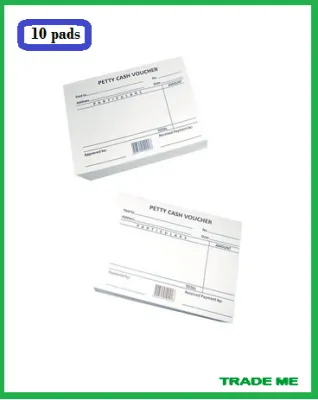
106 Lazada user ratings
Great for documenting cash payments, Compact and portable size, Convenient and easy to use, Ideal for organizing petty cash transactions, Sa…Read full reviewShow less
Great for documenting cash payments, Compact and portable size, Convenient and easy to use, Ideal for organizing petty cash transactions, Saves time and reduces paperwork, Perfect for keeping track of small expenses,
malinaw ang ganda
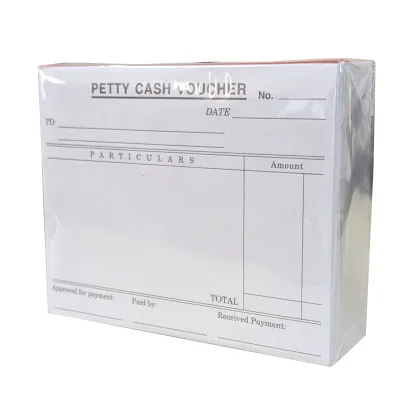
68 Lazada user ratings
Compact and portable size, Single sheet per page,
good quality...great item..thanks
thanks so muxh
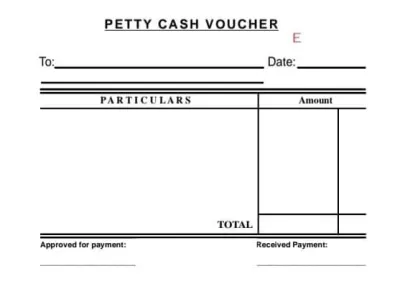
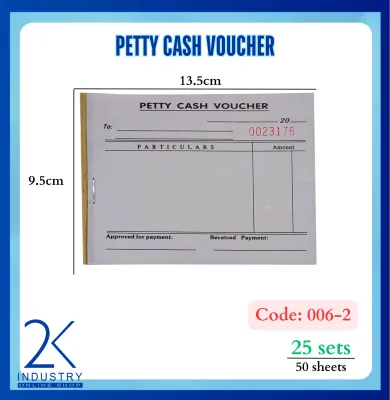
180 Lazada user ratings
i was expecting that this is pre numbered but is not...
2nd Time I purchase this product. Thanks!
sakto lng ang lapad di mashadong malaki..
Perfect for keeping track of petty cash,
Quality:Smooth and clean transfer,
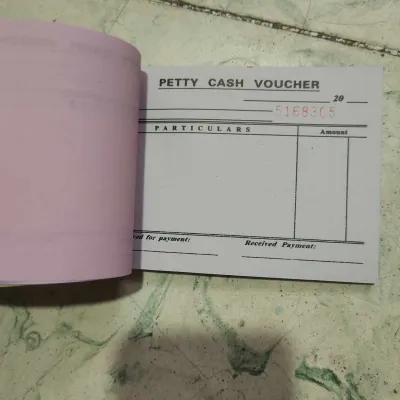
59 Lazada user ratings
Carbonized copy for easy record-keeping, Affordable office essentials, Durable and reusable design, Affordable office essentials,
We received the items in good condition and delivery was on time. We are satisfied with the product.
Affordable office essentials,
Quality:Well-made,
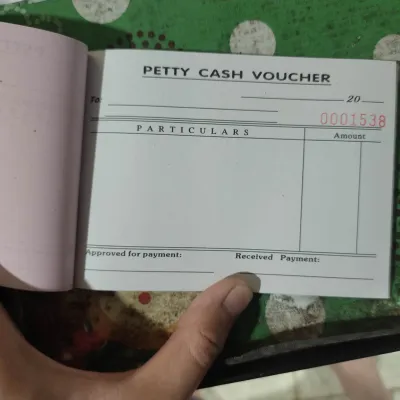
186 Lazada user ratings
Quality:good Design:typical petty voucher design. with sheet numbers Price:good Convenient for keeping track of expenses, carbonised.
Quality: is good, as expected Design: good as well. will order again next time Price: cheap and is enough for the item purchased
Easy to carry around, Convenient for keeping track of expenses, Sturdy construction, Great for organizing petty cash,
Quality:Good Ease of Use:ok Appearance:good Good for the price. serve its purpose. surely order again fast delivery.
everything arrived complete and in good condition, thank you! 🩵🩵🩵🩵🩵🩵🩵🩵🩵🩵🩵
Prices are valid at publication and may change. Please refer to the product page for the latest price.
First, obtain the physical or digital petty cash voucher form approved by your organization. If your office uses physical stationery, these forms are typically bound in padded books or loose-leaf sheets. Carbonless duplicate pads (often called NCR or No Carbon Required paper) are highly recommended for this task. They automatically create an identical copy of the voucher as you write, allowing the custodian to keep a duplicate in the pad while the original is routed to the accounting department.
Next, collect the original official receipts or sales invoices that correspond to the exact expense. A receipt is the primary evidence that a transaction occurred and that cash was actually spent. Ensure the receipt is legible, complete, and free of alterations. If the transaction has not occurred yet—such as when cash is advanced for an upcoming errand—you will need a temporary cash slip, which must be replaced by the official receipt immediately upon the employee’s return.
Review your company’s specific accounting guidelines or chart of accounts to identify the correct expense categorization. Every transaction must be assigned to a specific account, such as office supplies, representation, or local travel. Knowing these codes beforehand prevents classification errors that can complicate the monthly reconciliation process.
Finally, ensure you have a reliable writing instrument. For physical paper vouchers, especially carbonless duplicate forms, a standard ballpoint pen with medium or heavy pressure is ideal. Avoid soft felt-tip pens or light gel pens, as they do not apply enough physical pressure to transfer the ink clearly to the duplicate sheet below. Use permanent blue or black ink to ensure the document remains legible for years in storage and cannot be easily altered.
Step-by-Step Instructions for Completing the Voucher
Filling out a petty cash voucher requires precision, as even a minor typo can cause discrepancies during a financial audit. Each field on the form serves a specific tracking purpose and must be completed in full before any cash is disbursed.

Date and Voucher Number
Record the exact date the cash is physically disbursed from the fund, rather than the date on the receipt or the date the request was made. This ensures the transaction aligns perfectly with the daily cash log. Next, record the sequential voucher number. If your organization uses pre-printed voucher pads, these numbers are usually pre-inked in sequential order to prevent missing records. If you are using unnumbered forms, establish a strict, chronological numbering system, such as using the year and a sequential three-digit code (e.g., 2026-001, 2026-002).
Payee Details
Write the full, official name of the person or business receiving the cash. If an employee is receiving a cash advance to purchase supplies, write the employee’s full name. If you are reimbursing a vendor directly, write the registered business name of the vendor. Avoid using nicknames, initials, or generic terms like “courier” or “driver,” as clear payee details are essential for verifying who is responsible for the funds.
Amount
Enter the exact transaction amount in two distinct formats to prevent unauthorized alterations. First, write the numerical figure clearly in the designated box, including the decimal point and centavos (for example, ₱500.00). Second, write out the amount in words on the designated line (for example, “Five hundred pesos only”). This dual-entry method is a classic financial control; if a discrepancy arises or if someone attempts to alter the numbers, the written words serve as the legally binding amount.
Purpose and Account Code
Provide a clear, specific description of the business expense. Avoid vague terms like “miscellaneous,” “supplies,” or “office stuff.” Instead, write a descriptive phrase such as “Purchase of 3 packs of white board markers for conference room” or “Taxi fare for client meeting at Makati office.” Directly below or alongside this description, write the corresponding account code from your company’s chart of accounts to ensure the transaction is posted to the correct ledger.
Prepared By and Signatures
The person who physically fills out the voucher must sign and date the “Prepared By” section. If you are the petty cash custodian, your signature indicates that you verified the request and prepared the cash. The individual receiving the cash must also sign the “Received By” or “Payee Signature” line. This signature is absolute proof that the physical cash was handed over to the correct person, protecting the custodian from claims of missing funds.
Attaching Receipts and Securing Approvals
Once the voucher is filled out, it must be paired with its supporting documentation and routed for authorization. Without these two elements, a petty cash voucher is simply an unverified slip of paper that will not pass an internal or external audit.
Securely attach the original official receipt or sales invoice to the back of the voucher. The standard method is to use a staple in the upper-left corner, ensuring that the receipt does not cover any critical fields on the voucher itself. If the receipt is small, printed on thin thermal paper, or oddly shaped, tape it flat onto a clean sheet of standard bond paper first, then staple that sheet to the voucher. When using tape, avoid covering the printed text on thermal receipts, as the chemical adhesive can cause the thermal ink to fade rapidly over time, leaving you with a blank piece of paper.
Verify that the total amount printed on the attached receipt matches the amount written on the voucher exactly. If the receipt total is slightly less than the cash advanced, the remaining change must be returned to the cash box, and the voucher must reflect the actual spent amount. If the receipt matches the exact disbursement, the transaction is considered balanced.
Route the completed voucher and attached receipt to the designated approver, such as a department head, supervisor, or finance manager. The approver must physically sign the “Approved By” section of the voucher. Under standard internal control principles, the person who prepares the voucher and the person who approves it must be two different individuals to prevent conflicts of interest and unauthorized spending.
In the Philippines, the Bureau of Internal Revenue (BIR) maintains strict guidelines regarding what constitutes a valid official receipt or sales invoice for tax-deductible business expenses. Consult your internal accounting or finance team to verify that the receipts you accept meet these local requirements. Valid receipts typically must display the seller’s registered name, address, Taxpayer Identification Number (TIN), and a clear breakdown of Value-Added Tax (VAT) if applicable. Ensuring your receipts comply with these standards protects your company from tax penalties during annual audits.
Filing the Voucher and Recording the Transaction
After securing all signatures and attaching the receipts, the transaction must be logged and the physical documents stored securely. Proper filing ensures that the petty cash fund can be reconciled daily and replenished without delay when the cash balance runs low.
First, record the transaction details in your physical petty cash logbook or digital tracking spreadsheet. Enter the date, voucher number, payee name, exact amount, and the expense category. Keeping a running logbook provides an immediate overview of all expenditures and allows you to track spending trends over time.
Immediately calculate the new running balance of the petty cash fund. The formula is straightforward: subtract the voucher amount from the previous cash balance. The resulting figure must match the physical cash remaining in your lockbox down to the last centavo. Any discrepancy, no matter how small, must be investigated and resolved before the end of the business day.
File the approved and completed voucher, along with its attached receipt, in a secure, designated folder or binder. Organize the vouchers chronologically or numerically by voucher number. Using a heavy-duty binder with numerical index dividers is an excellent way to keep physical vouchers organized and protected from wear and tear. Store this binder in a locked filing cabinet or drawer alongside the physical cash box, restricting access to authorized personnel only.
When the physical cash in the box reaches a pre-determined minimum level (often referred to as the replenishment point, typically 20% of the total fund float), compile all the filed vouchers. Summarize the total expenses by category and submit the compiled package to the main accounting department. The accounting team will review the vouchers, verify the receipts, and issue a replenishment check to restore the petty cash fund to its original balance.
Common Errors and How to Prevent Them
Errors in petty cash management can lead to stressful reconciliations, delayed replenishments, and negative audit findings. Recognizing common mistakes allows you to implement simple preventive measures in your daily routine.
One of the most frequent errors is mismatched amounts between the receipt, the numerical voucher field, and the written-out text. To prevent this, make it a habit to double-check all three figures before signing the voucher or releasing any cash. If a mistake is made while writing on a physical voucher, do not attempt to scribble over it or use correction tape; instead, write “VOID” across the form and start a new voucher to maintain a clean audit trail.
Missing signatures are another common issue that halts the replenishment process. Custodians sometimes forget to have the payee sign when handing over the cash in a hurry. Prevent this by establishing a strict, non-negotiable rule: the cash box does not open until the payee is standing at the desk with a pen ready to sign the voucher.
Vague descriptions on vouchers make it difficult for the accounting team to classify expenses correctly. Avoid generic terms like “miscellaneous” or “office expenses.” Train your team to include the “what” and the “why” for every transaction, ensuring that anyone reviewing the document months later can immediately understand the business purpose of the expense.
Finally, lost receipts can disrupt your entire tracking system. To prevent this, enforce a policy where cash advances must be cleared with an official receipt within a strict timeframe, such as 24 to 48 hours. If a receipt is lost, establish a formal process for handling the missing documentation immediately, rather than waiting until the end of the month when the fund needs to be replenished.
Frequently Asked Questions (FAQ)
What happens if I lose the official receipt for a petty cash expense?
If you lose an official receipt, you must notify the petty cash custodian or the accounting department immediately. Most organizations require the employee to fill out a formal lost receipt affidavit or a detailed internal memo explaining the purchase, which must be signed by a department manager. Keep in mind that without a valid official receipt, the expense may not be recognized as tax-deductible under local tax regulations, and some companies may require the employee to personally reimburse the fund if the expense cannot be verified.
Can I use a petty cash voucher for personal cash advances?
No, petty cash vouchers are strictly reserved for immediate, documented business-related expenses. Using petty cash for personal cash advances, short-term personal loans, or IOUs violates basic internal financial controls and can lead to disciplinary action. Employees seeking personal advances or salary loans must go through the official channels established by the human resources or payroll departments.
Community discussion
Share your experience or ask a question. Comments are reviewed before publication.