
Selecting a reliable steel marker for workshop and industrial use in the Philippines requires matching the marker’s chemical formulation to the physical state of the metal and the ambient environment. Unlike standard writing instruments, industrial metal markers must withstand high humidity, surface oils, rust, and extreme heat from cutting or welding. To make the right choice, you must evaluate whether your tasks demand the thick, textured coverage of a solid paint marker or the sharp, high-contrast precision of a liquid valve-action marker. By verifying surface compatibility, temperature limits, and solvent bases on the product label, you can ensure your layout lines remain highly visible throughout the fabrication process.
Comparing Solid and Liquid Paint Markers for Steel
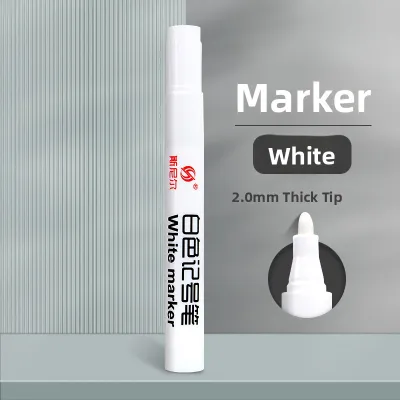
To understand the practical differences, consider the mechanics of solid paint markers. Solid paint markers, often referred to as solidified paint crayons, consist of real paint cured into a solid stick form. They do not require shaking, priming, or pumping to initiate flow, making them immediately ready for use in fast-paced fabrication environments. Because the paint is already in a semi-solid state, these markers excel at writing on rough, heavily textured, or oxidized steel surfaces where a liquid nib would quickly clog or fray. The mark left by a solid marker is thick, highly opaque, and capable of covering rust, scale, and dirt without losing visibility.
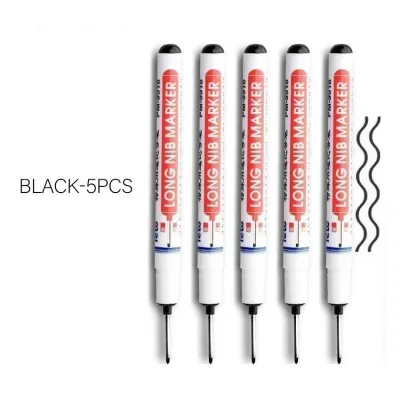
Liquid paint markers, on the other hand, utilize a valve-action mechanism or a squeezable body to deliver liquid paint through a fiber or plastic nib. Before use, these markers require shaking to mix the pigment and solvent, followed by pressing the tip down to open the internal valve and saturate the nib. This design allows for highly controlled, uniform lines that are ideal for precise layout work, fine measurements, and detailed part labeling. Liquid paint dries to a smooth, hard finish that resists smudging, but the liquid formula is more sensitive to surface contaminants like heavy grease or loose rust, which can contaminate the nib and block the flow of paint.
Products mentioned in this guide
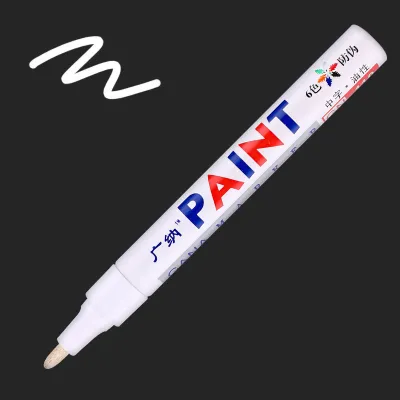
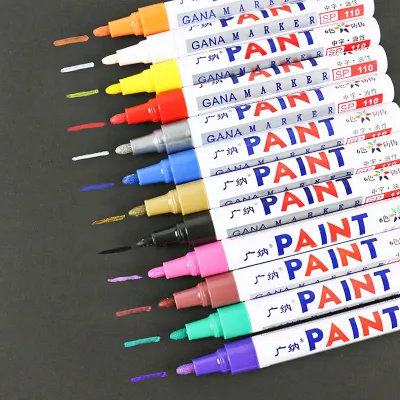
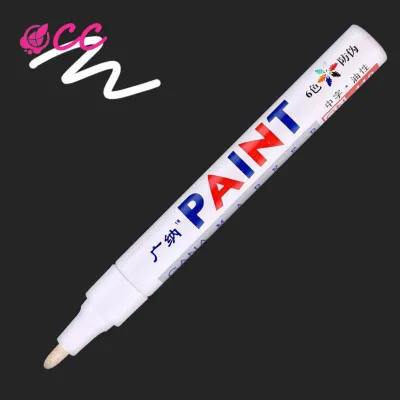
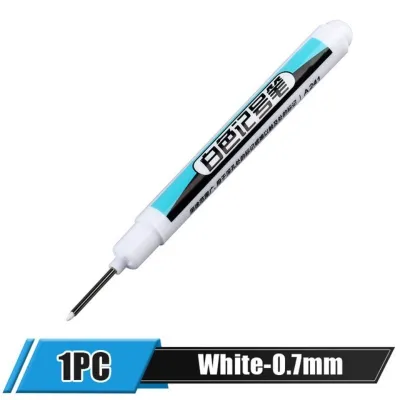
Prices are valid at publication and may change. Please refer to the product page for the latest price.
The drying mechanisms of these two types differ significantly and affect how they interact with bare versus treated steel. Solid paint markers dry slowly through oxidation, often taking several minutes to cure completely, which leaves a raised, tactile mark that remains legible even if covered by a thin layer of dust or water. Liquid paint markers dry rapidly through solvent evaporation, forming a thin, flat film within seconds to a couple of minutes. On bare, polished steel, liquid paint provides a clean, professional appearance with minimal risk of chipping, whereas on treated, primed, or painted steel, you must verify that the marker’s solvent does not dissolve or react with the underlying coating.
Portability and mess reduction represent another critical trade-off between these formulations. Solid markers are virtually leak-proof and can be carried in a pocket or tool belt without risk of accidental spills, even under the intense heat of a tropical workshop. However, they tend to wear down quickly, requiring the user to peel back protective paper wrapping or advance the stick manually, which can result in wider, less consistent lines over time. Liquid markers offer superior line consistency throughout their lifespan, but they carry a risk of leaking or dripping if the valve is pressed too aggressively or if the marker is subjected to extreme pressure changes.
Matching Ink and Tip Specifications to Surface Conditions
In busy metalworking shops, steel is rarely pristine; it is often coated in protective oils, condensation, or a layer of surface rust. When marking on oily or wet steel, standard inks will bead up and fail to adhere due to surface tension. To overcome this, look for markers specifically labeled as hydrophobic or oil-penetrating. These formulations contain specialized solvents that displace surface moisture and cut through light machine oils, allowing the pigment to bond directly to the underlying steel. For heavily rusted or scaled surfaces, solid paint markers are generally superior, as their thick, physical application fills the voids of the rough surface rather than sitting loosely on top of flaking rust.

High-heat environments, such as welding zones, heat-treating ovens, and plasma cutting tables, demand markers with verified temperature ratings. Standard paint will char, discolor, or completely vaporize when exposed to the extreme heat of a welding torch. When selecting a marker for these applications, inspect the product specifications for the maximum temperature resistance of the dry mark. Some specialized high-heat markers can withstand temperatures exceeding several hundred degrees Celsius without losing legibility or changing color. It is vital to distinguish between the application temperature (the temperature of the steel when you write on it) and the resistance temperature (the heat the dry mark can survive during subsequent processing).
Tip size and shape directly dictate the balance between visibility and precision in your layout work. Broad tips, often measuring 10mm or wider, are excellent for bold, high-visibility labeling on large structural steel beams, pipes, or shipping containers that must be identified from a distance across a yard. Chisel tips offer versatility, allowing you to write both thick lines for identification and thinner lines for alignment by altering the angle of the marker. Fine tips, typically 2mm or smaller, are indispensable for detailed fabrication layouts, scribe lines, and marking precise drill points where a thick paint line would introduce unacceptable dimensional errors.
When working in high-humidity environments typical of the Philippines, drying speed becomes a major factor in preventing smudging. High ambient humidity can slow down the evaporation of solvents in liquid paint markers, extending the wet window of the mark. If your workflow requires immediate handling of marked steel parts, prioritize fast-drying liquid formulations that cure in under a minute, or opt for solid markers if a raised, slow-drying mark is acceptable for your storage and handling sequence.
What to Verify on the Label Before Buying
Before purchasing steel markers in bulk for your workshop, a thorough review of the manufacturer’s label and technical data sheet is essential to avoid premature tool failure. Look for explicit compatibility statements regarding the types of metal the marker can handle, such as carbon steel, stainless steel, aluminum, or galvanized surfaces. For stainless steel applications, particularly in industries like food processing or marine fabrication, verify that the marker is certified as low-chloride or halogen-free. High levels of chlorides or halogens in marker ink can induce stress corrosion cracking or pitting on stainless steel surfaces over time when exposed to heat or moisture.
Safety compliance is another critical factor, especially when using solvent-based industrial markers in enclosed or poorly ventilated workshop spaces. Check the label for volatile organic compound (VOC) content and review the Safety Data Sheet (SDS) provided by the manufacturer. Solvent-based markers often utilize chemicals like xylene or toluene, which require specific personal protective equipment (PPE), such as organic vapor respirators and protective gloves, alongside adequate mechanical ventilation. If your workshop cannot accommodate heavy ventilation, look for water-based or alcohol-based industrial paint markers that offer lower odor and reduced chemical exposure risks.
Storage limits and shelf life are highly sensitive to environmental conditions, particularly in tropical climates where high ambient temperatures can accelerate solvent evaporation and paint separation. Inspect the label for recommended storage temperature ranges and batch or manufacturing dates. Avoid purchasing markers that have been stored in unconditioned warehouses for extended periods, as the pigments may have permanently settled or the valves may have dried out. A reliable manufacturer will clearly state the expected shelf life of an unopened marker and provide guidelines on how to identify if the paint has degraded beyond usability.
Priming, Storing, and Maintaining Your Markers
To maximize the lifespan and performance of your steel markers, establishing a proper maintenance routine is just as important as selecting the right tool. For valve-action liquid paint markers, the priming process must be executed with care to prevent ruining the nib or causing a messy spill. Begin by shaking the marker vigorously with the cap securely on; this ensures the internal mixing ball thoroughly redistributes the settled pigments. Next, remove the cap and press the tip straight down onto a scrap piece of metal or cardboard. Hold it down for a few seconds, then release. Repeat this pumping action gently until you see the paint begin to saturate the fiber nib. Avoid rapid, aggressive pumping, which can flood the valve and cause paint to pool and drip.
Storage orientation plays a decisive role in maintaining consistent ink flow and preventing premature drying. Liquid paint markers should generally be stored horizontally when not in use. This position keeps the solvent and pigment evenly distributed along the barrel and prevents the nib from either drying out or becoming completely oversaturated. If stored vertically tip-down, the pigment can settle into the valve mechanism, clogging it; if stored vertically tip-up, the solvent can drain away from the nib, requiring extensive re-priming before the next use. Solid paint markers are less sensitive to orientation but must be kept away from direct sunlight and high-heat sources to prevent the solid stick from softening or melting.
Routine maintenance after each use will prevent the marker tips from becoming unusable before the paint supply is exhausted. Always wipe the nib of a liquid paint marker on a clean rag if it has come into contact with oily or dusty steel, as these contaminants can travel up the fiber core and clog the internal valve. Ensure the cap is pushed on tightly until you hear a distinct click, which confirms an airtight seal that prevents the volatile solvents from evaporating. If a nib does become dry or clogged with dried paint, check if the marker model features replaceable nibs, which can be easily swapped out to extend the life of the marker body.
Frequently Asked Questions (FAQ)
Can standard permanent markers be used on steel surfaces?
Standard permanent markers, while convenient, are generally unsuitable for professional steel fabrication and industrial workshop environments. These markers typically use thin, alcohol-based dyes rather than opaque pigments, which lack the film strength to resist abrasion, UV exposure, and weather. When applied to bare steel, the dye is easily dissolved by light workshop oils, washed away by rain, or faded by sunlight. Furthermore, the fine plastic or felt tips of standard office markers are easily shredded by the rough, abrasive texture of raw steel, scale, or rust, rendering the marker useless almost immediately.
How do you remove paint marker lines from steel if a mistake is made?
Removing paint marker lines from steel depends on the chemical base of the marker and the surface finish of the metal. For solvent-based liquid paint markers, applying an organic solvent such as acetone, isopropyl alcohol, or mineral spirits to a clean cloth will typically dissolve the paint film without damaging the underlying steel. Solid paint marks, which leave a thicker, waxier residue, may require mechanical scraping with a plastic scraper or wire brush before applying a solvent to clean the remaining pigment. Always verify that the chosen removal solvent is compatible with any existing protective coatings or primers on the steel to avoid stripping the metal’s rust protection.
Community discussion
Share your experience or ask a question. Comments are reviewed before publication.