
Restoring white leather shoes and bags in the Philippines requires a specialized white leather paint formulated to withstand high flexing, friction, and tropical humidity. Unlike standard craft paints, the ideal restoration paint relies on a highly flexible acrylic-polyurethane binder that adheres deeply to leather fibers without cracking or peeling. To find the best option for your project, you must evaluate the paint’s formulation, opacity, yellowing resistance, and compatibility with your specific leather type. By focusing on professional-grade leather acrylics and executing thorough surface preparation, you can achieve a clean, factory-like white finish that survives both the daily commute and the wet season.
Understanding Leather Paint Types and Formulations
To choose the right white leather paint, you must first understand the chemical formulations available and how they interact with different leather items. Leather paints are generally categorized into water-based acrylics, solvent-based paints, and alcohol-based formulations. For consumer-level shoe and bag restoration, water-based acrylic leather paints are the industry standard. These paints utilize a suspension of acrylic polymer resins in water, which allows them to remain highly flexible when dry. This flexibility is crucial for high-wear, high-flex areas like the vamp of a sneaker or the folding corners of a soft leather tote bag.
Solvent-based leather paints rely on organic solvents as the carrier medium. While they offer exceptionally strong adhesion, they tend to dry much stiffer than water-based acrylics. This stiffness makes them less suitable for soft, pliable leather goods, though they are sometimes used for rigid edge painting on bags. Additionally, solvent-based paints emit strong volatile organic compounds (VOCs), requiring specialized safety equipment and highly ventilated workspaces.
Products mentioned in this guide
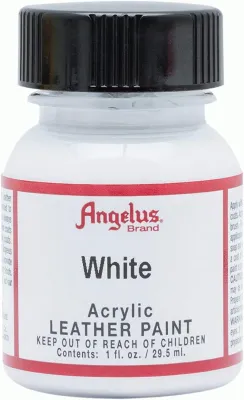


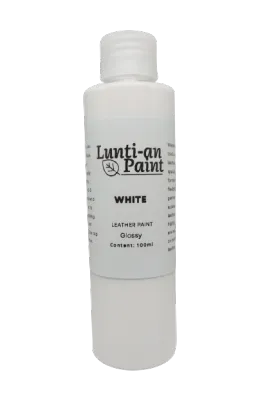
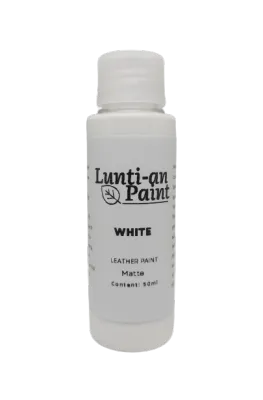
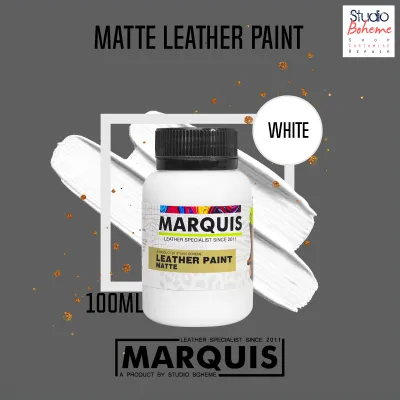
Prices are valid at publication and may change. Please refer to the product page for the latest price.
Alcohol-based products in the restoration market are almost exclusively dyes rather than paints. It is important to distinguish between a paint and a dye when working with white. Dyes are translucent and penetrate deep into the leather fibers to change the color from within. Because they are translucent, you cannot use a white dye to cover a dark or stained leather surface; white restoration always requires an opaque, pigment-based paint that sits on top of the leather surface while bonding with its fibers.
When shopping for restoration supplies, always check the manufacturer’s label for explicit “leather-specific” or “leather acrylic” designations. General-purpose craft acrylics, fabric paints, or multi-surface paints lack the specialized plasticizers and elastomeric resins required to stretch and compress with the leather. Using a non-specialized paint will inevitably lead to premature cracking, flaking, and peeling as soon as the item is flexed or exposed to moisture.
Key Evaluation Criteria for White Leather Paint
Selecting a white leather paint requires looking beyond the color on the bottle. Because white pigments have unique physical properties, you must evaluate several key performance criteria to ensure a successful, long-lasting restoration.

First, assess the paint’s opacity and pigment load. White paint typically relies on titanium dioxide as its primary pigment. The concentration of this pigment determines how many layers you will need to apply to cover scuffs, stains, or dark underlying leather. High-quality leather paints feature a dense pigment load, allowing you to achieve full coverage in three to four thin coats. Lower-grade paints with sparse pigment loads require six or more coats, which builds an excessively thick paint layer that is highly prone to cracking and peeling.
Second, verify the paint’s yellowing resistance. White pigments and their acrylic binders are highly susceptible to UV degradation, oxidation, and chemical reactions with environmental pollutants. In a tropical climate with intense sunlight, cheap binders can quickly degrade, turning your pristine white shoes a dull, amber-yellow. Look for products that explicitly specify UV-stable acrylic resins and non-yellowing formulas on their technical data sheets or labels.
Third, evaluate the paint’s flexibility and crack resistance. The paint film must behave like a second skin on the leather. You can verify this by performing an observable trial: apply a thin layer of the paint to a flexible scrap piece of leather or a thick cardstock, let it dry completely, and then bend it repeatedly at a sharp angle. A high-quality leather paint will stretch and compress without showing micro-cracks, chalking, or loss of adhesion.
Fourth, consider the available finish options and topcoat compatibility. Leather paints come in flat, matte, satin, semi-gloss, and high-gloss finishes. For most modern sneakers, a flat or satin finish provides the most natural, factory-original look, while structured luxury bags may require a satin or gloss finish. Because the final sheen and durability depend heavily on the exact material combination, you should always plan to apply a compatible clear topcoat or finisher from the same manufacturer. This ensures the paint layer is sealed against water, dirt, and friction without causing chemical reactions that lead to a sticky or cloudy surface.
Pre-Painting Preparation and Surface Checks
The secret to a professional-grade leather restoration lies almost entirely in the preparation phase. Applying even the highest-quality white leather paint to an unprepared surface will result in poor adhesion and rapid peeling.
Before starting, you must identify the exact type of leather you are working with. Natural, finished top-grain leather is highly receptive to painting once the factory sealant is removed. However, open-pored leathers like suede and nubuck cannot be painted with white leather paint, as the pigment will clog the delicate nap, turning it into a stiff, ruined crust. Synthetic leathers, such as polyurethane (PU) or polyvinyl chloride (PVC), require a completely different preparation approach because they are non-porous and do not absorb paint binders.
For finished genuine leather, the first step is cleaning and deglazing. Factory leather goods are coated with protective sealants, silicones, and waxes that repel moisture and paint alike. You must strip this factory finish using a specialized leather preparer and deglazer. Apply the deglazer to a clean microfiber cloth or abrasive pad and gently rub the surface until the shiny factory glaze is gone, leaving the leather looking matte and feeling slightly tacky. This process opens up the microscopic pores of the leather, allowing the paint’s acrylic binder to penetrate and form a mechanical bond.
Finally, assess the existing physical damage of the item. White leather paint is designed to restore color, not to repair structural defects. If your shoes or bags have deep cracks, gouges, or peeling synthetic coatings, applying paint directly over them will only highlight the uneven texture. Deep damage must be repaired first using a flexible leather filler. Apply the filler in thin layers, sand it smooth with fine-grit sandpaper (such as 800 to 1500 grit), and wipe away all dust before applying your first coat of paint.
Application Techniques and Curing Conditions
Achieving a smooth, streak-free white finish requires the right tools, proper layering techniques, and careful management of your working environment.
Your choice of applicator directly influences the texture of the finished surface. For detailed areas, seams, and small panels, high-quality synthetic flat brushes are ideal because they minimize brush strokes compared to natural hair brushes. For larger, flat panels on bags or shoes, a dense, fine-pored sponge (such as a cosmetic sponge) is highly effective. Dab the paint onto the surface in a light stippling motion to eliminate brush lines and mimic the natural texture of leather. If you require an absolutely flawless, factory-grade finish, an airbrush is the preferred tool, though it requires diluting the paint with a compatible neutral medium to prevent clogging the nozzle.
Regardless of the tool you choose, the golden rule of leather painting is to apply multiple paper-thin coats rather than one or two thick layers. Thick coats trap water beneath the surface, preventing the acrylic resins from coalescing properly, which leads to a weak, gummy paint film that cracks easily. Apply your first coat very thinly—it should look patchy and semi-translucent. Allow it to dry completely before applying the next layer. Repeat this process, alternating the direction of your brush strokes or stippling, until you achieve uniform, opaque white coverage.
Environmental conditions play a massive role in how leather paint dries and cures, especially in the tropical climate of the Philippines. High relative humidity slows down the evaporation of water from the paint, extending the dry time between coats. Always paint in a well-ventilated, indoor space with moderate temperatures. Avoid painting outdoors in direct sunlight or during heavy rainstorms, as extreme heat can cause the paint to dry too quickly on the surface and bubble, while high humidity can cause “blooming”—a phenomenon where trapped moisture turns the clear binder cloudy or white. Allow the painted item to dry for at least 24 hours, and wait a full 48 hours for the paint to cure completely before exposing it to outdoor wear.
Post-Restoration Care and Maintenance
Once your white leather shoes or bags are painted and cured, protecting that fresh surface is essential to prolonging the life of your restoration work.
Always seal your painted surface with a compatible acrylic finisher. The finisher acts as a sacrificial barrier, absorbing the friction, scuffs, and environmental moisture that would otherwise wear away the paint. Apply the finisher in two thin, even coats using a clean brush or sponge, ensuring you cover all painted seams and edges. For items exposed to heavy outdoor elements, applying a water-resistant protector spray after the finisher has fully cured provides an extra layer of defense against tropical downpours and muddy puddles.
When it comes to routine maintenance, treat your restored leather gently. Clean the surface using only a soft microfiber cloth dampened with water or a mild, pH-neutral leather cleaner. Avoid using harsh household detergents, bleach, rubbing alcohol, or abrasive scrubbing pads, as these solvents will dissolve the acrylic binder, stripping the white paint right off the leather.
Proper storage is equally critical in maintaining the integrity of the paint film. Store your restored shoes and bags in a cool, dry closet with adequate air circulation to prevent mold and mildew growth, which is common in humid regions. Use shoe trees or acid-free tissue paper stuffing to keep the items in their natural shape; this prevents deep creasing that can stress the paint bond over time. Never store painted leather items in direct contact with each other or in airtight plastic containers, as the paint films can stick together and peel when separated.
Frequently Asked Questions (FAQ)
Can I use regular white acrylic paint on leather?
No, you should not use standard craft or artistic acrylic paint on leather. Regular acrylic paints are formulated to dry into a rigid, plastic-like film suitable for stiff canvases or paper. When applied to flexible leather shoes or bags, these paints cannot stretch or bend with the material, causing them to crack, flake, and peel off almost immediately under normal wear. Specialized leather paints contain unique polyurethane-acrylic hybrid binders and plasticizers that allow the dried paint film to remain highly elastic and move with the leather.
How do I prevent white leather paint from turning yellow over time?
Preventing yellowing requires a combination of proper product selection and careful aftercare. Always choose high-quality leather paints that utilize pure, UV-stable acrylic resins and premium titanium dioxide pigments. Avoid cheap, generic paints that use low-grade binders prone to rapid oxidation. Additionally, seal your paint with a high-quality, non-yellowing acrylic finisher rather than solvent-based varnishes, and store your restored items in a cool, dry place away from prolonged exposure to direct sunlight and high heat.
Is it safe to paint synthetic leather or vegan leather bags?
Yes, it is safe to paint synthetic leather, such as polyurethane (PU) or vinyl (PVC), but the process requires different preparation than genuine leather. Synthetic materials are non-porous, meaning they do not absorb paint binders. To ensure proper adhesion, you must clean the surface gently with a mild detergent rather than harsh acetone-based deglazers, which can melt or warp the synthetic coating. Applying a specialized plastic primer or adhesion promoter before painting will help the white leather paint bond securely to the synthetic surface.
Community discussion
Share your experience or ask a question. Comments are reviewed before publication.