
Sourcing white long folders in bulk for businesses, educational institutions, or government offices in the Philippines requires a clear understanding of local paper standards, supplier capabilities, and environmental factors like high humidity. To secure a reliable supply of durable folders, buyers must navigate a diverse market that ranges from traditional wholesale districts to modern commercial printers and digital B2B networks. Success lies in defining precise technical specifications, requesting physical samples to test structural integrity, and comparing total landed costs rather than just the initial unit price.
By establishing a systematic procurement process, you can avoid common pitfalls such as purchasing folders that warp in tropical weather or buying sizes that do not fit standard local documents. This guide provides an actionable framework to help you identify reliable wholesale channels, evaluate key supplier metrics, and execute bulk orders with confidence.
Understanding White Long Folder Specifications for Bulk Orders
Before contacting any wholesale supplier, you must define the exact technical specifications of the folders you need. In the stationery industry, vague requests often lead to mismatched products, delayed timelines, and wasted budget.
Products mentioned in this guide
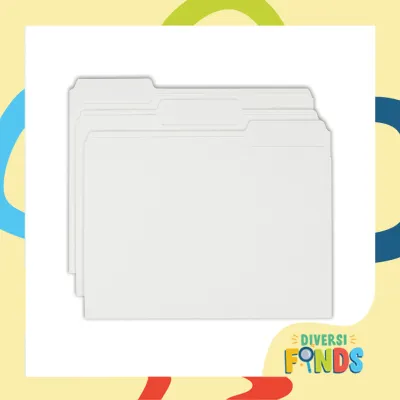
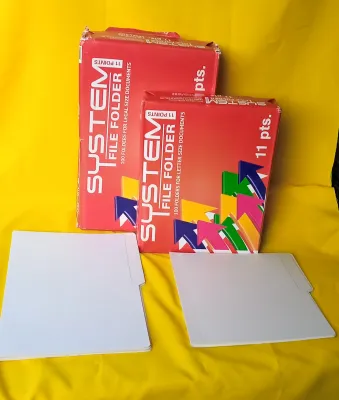
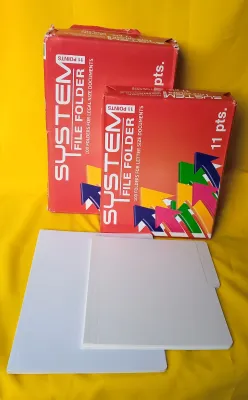
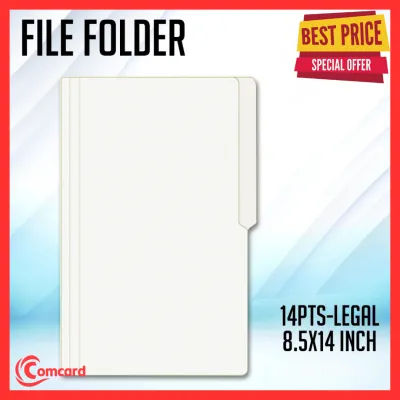
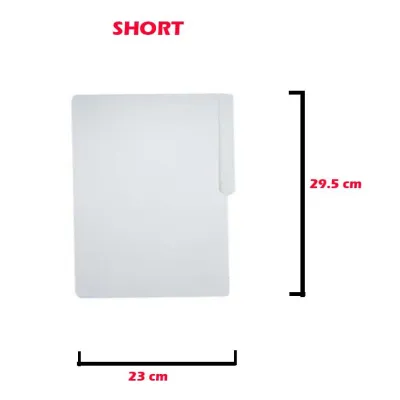


Prices are valid at publication and may change. Please refer to the product page for the latest price.
In the Philippines, the term “long” size has a specific local meaning that differs from international standards. While US legal paper measures 8.5 by 14 inches, the standard “long bond paper” used in Philippine offices, schools, and legal proceedings is typically folio size, measuring 8.5 by 13 inches. Consequently, a standard white long folder must measure approximately 9 by 14 inches or 9 by 14.5 inches. This extra space ensures that your documents are fully enclosed and protected, preventing the edges of the paper from fraying, bending, or gathering dust. Always verify these exact dimensions with your supplier rather than simply asking for “legal size,” which can cause confusion.
The material composition and paper weight, measured in grams per square meter (GSM) or points (pt) for thickness, directly dictate the folder’s durability and lifespan. White folders are commonly manufactured from tagboard, Bristol board, or heavy pressboard. Bristol board offers a smoother, brighter white finish that is excellent for high-quality printing and professional presentations. Tagboard is a more utilitarian, cost-effective option suitable for high-volume filing where aesthetics are secondary. For light office filing or single-use document submissions, a weight of 180 GSM to 220 GSM is generally sufficient. However, for archival storage, legal briefs, or files that undergo constant handling, opting for 290 GSM or higher is highly recommended. Heavier paperboard resists tearing at the folds and maintains its structural integrity when packed tightly into filing cabinets.
The tropical climate of the Philippines introduces unique storage challenges, particularly high humidity during the wet season. Low-quality paper products easily absorb ambient moisture, causing them to warp, soften, or develop mold. When sourcing in bulk, inquire if the supplier uses moisture-resistant coatings or high-density paperboard fibers. High-density fibers absorb less moisture, helping the folders remain flat and rigid even in non-air-conditioned storage rooms.
Structural features must also be clearly defined in your purchase specifications. Decide whether you require pre-punched holes for metal or plastic fasteners. Standard spacing for two-hole punches in the Philippines is typically 70 mm or 80 mm, which should match the office punchers used by your team. If your filing system relies on tab indexing, specify the tab cut and position—such as straight-cut, half-cut, or one-third cut tabs. For folders with built-in pockets or fasteners, verify how these components are attached. Glued pockets should use moisture-resistant adhesives that will not fail in warm storage rooms, while metal fasteners should be rust-resistant to prevent staining the white paperboard over time.
Primary Wholesale Channels for Sourcing Folders in the Philippines
Navigating the supply chain in the Philippines involves choosing between traditional physical hubs, specialized manufacturers, and digital procurement platforms. Each channel serves different order volumes, budgets, and customization needs.

Traditional wholesale districts, such as Binondo and Divisoria in Manila, remain primary hubs for ready-made office stationery. Local distributors in these areas carry massive inventories of standard white long folders, making them ideal for buyers who need immediate stock or have modest minimum order requirements. Sourcing from these distributors allows for face-to-face negotiation and immediate physical inspection of the goods. However, buyers must arrange their own logistics or work with local courier services, and stock levels can fluctuate during peak seasons like the start of the academic year.
For organizations requiring custom branding, specific paper weights, or unique structural designs, commercial printing companies and packaging manufacturers are the most suitable channel. These facilities possess die-cutting and offset printing machinery capable of producing folders tailored to precise corporate guidelines. While this route offers unmatched customization—such as debossed logos, custom pocket layouts, or specific GSM boards—it comes with higher minimum order quantities and longer production lead times.
Online B2B marketplaces and direct manufacturer networks provide a modern alternative for high-volume procurement. These platforms connect buyers directly with domestic factories or international suppliers, bypassing middleman markups. Sourcing digitally allows you to compare multiple quotes quickly and access a broader range of material specifications. The trade-off is the inability to inspect the physical product before ordering, making a rigorous sampling process essential before releasing any down payment.
When sourcing from online B2B marketplaces, pay close attention to shipping terms. Bulk paper shipments are heavy and voluminous, meaning shipping costs can quickly erode any savings on the unit price. Many buyers utilize local freight forwarders who specialize in consolidating cargo from manufacturing hubs and shipping them via sea freight to major ports in Manila, Cebu, or Davao. This method is significantly more economical than air freight, though it requires careful planning to account for longer transit times.
Key Factors to Compare When Choosing a Supplier
When evaluating potential suppliers for a bulk order, comparing unit prices alone can lead to poor procurement decisions. A structured comparison framework ensures you balance cost, quality, and operational reliability.
Analyze the Minimum Order Quantity (MOQ) and the corresponding tiered pricing structure. Suppliers often offer significant discounts as order volumes scale. For instance, a smaller order of 1,000 pieces will carry a higher unit price in Philippine Pesos (₱) compared to a high-volume order of 10,000 pieces where the supplier can amortize setup costs. Calculate the total cost of ownership, including storage costs, to determine if committing to a higher volume is financially viable for your organization.
Lead times and shipping logistics are critical, especially if you operate outside Metro Manila. Ask suppliers for clear timelines regarding production and delivery. Sourcing from a supplier with a slightly higher unit price but a warehouse closer to your location in Visayas or Mindanao may ultimately be cheaper and faster than shipping bulky, heavy boxes of paper from Luzon. Ensure the supplier has experience handling bulk paper shipments, as improper packing can lead to bent corners and moisture damage during transit.
Payment terms are another critical point of comparison. In the Philippine wholesale market, transactions are commonly settled via bank transfers through major local institutions like BDO, BPI, or Metrobank. For corporate accounts, some suppliers may offer credit terms such as net-30 days after a successful initial transaction. Be cautious of suppliers who demand 100% upfront payment without a proven track record or a formal contract, as this increases your financial risk.
Establish clear quality assurance protocols. Ask potential suppliers about their defect tolerance rates and replacement policies. A reputable supplier should offer a clear policy for replacing items that arrive damaged, misaligned, or with manufacturing defects. Inquire if they hold any material certifications, which can guarantee consistent paper sourcing and environmental compliance.
Step-by-Step Process for Placing a Bulk Folder Order
Executing a successful bulk purchase requires a systematic approach to minimize risks and ensure the final product meets your expectations.
Begin by drafting a detailed Request for Quotation (RFQ). This document should serve as your technical blueprint, leaving no room for ambiguity. Include the exact dimensions (e.g., 9 x 14.5 inches), the desired paper weight in GSM, the specific material type, tab configurations, fastener requirements, and the total quantity needed. Clearly state your target delivery date and request that the supplier break down all costs, including taxes, packaging, and shipping fees.
Once you receive initial quotes and narrow down your list of candidate suppliers, request physical samples. Never approve a high-volume production run based solely on digital mockups or photos. When the samples arrive, conduct practical tests: fold the paperboard repeatedly to check for cracking along the spine, insert standard long documents to verify the fit, and expose the folder to your typical office environment to observe how it handles local humidity. If you plan to print on the folders, run a sample through your office printer to check for ink bleeding or feeding issues.
With the sample approved, proceed to finalize the transaction terms. Standard wholesale transactions in the Philippines often require a down payment—typically 30% to 50%—with the balance settled upon delivery or within a net-30 billing cycle for established corporate accounts. Ensure these terms, along with the agreed-upon delivery schedule and quality standards, are formalized in a signed purchase agreement. This contract protects your investment and provides clear recourse if the delivered batch fails to match the approved sample.
When the bulk shipment finally arrives at your warehouse or office, do not accept the delivery blindly. Conduct a random spot-check of several boxes. Verify that the folders are packed in moisture-barrier wrapping to protect against rain during transit. Count the units in a few sample boxes to ensure the total quantity matches the packing list, and inspect the corners of the folders for any signs of impact damage. If you identify any discrepancies or defects, document them immediately with photographs and contact the supplier before signing the delivery receipt.
Frequently Asked Questions (FAQ)
Can I order custom-printed white long folders in bulk?
Yes, custom printing is highly feasible for bulk orders and is a common practice for corporate branding, school logos, or legal firm identification. Suppliers typically offer silkscreen printing for simple, single-color logos, which is highly cost-effective for medium-sized runs. For complex, multi-color designs or full-coverage prints, offset printing is preferred due to its sharp resolution and lower unit cost at high volumes. Keep in mind that custom printing introduces setup fees, such as plate charges, which can make small orders expensive but become negligible when spread across thousands of units.
What is the typical lead time for a bulk folder order?
The lead time depends heavily on whether you are purchasing ready-made stock or ordering custom-manufactured folders. Off-the-shelf white long folders can often be dispatched within 3 to 7 business days, depending on your location and the supplier’s delivery network. For custom orders involving printing, die-cutting, or specific paper weights, lead times generally range from 15 to 30 business days. Timelines can stretch during peak seasons, such as the back-to-school rush from June to August, or due to supply chain disruptions affecting raw paperboard imports.
Community discussion
Share your experience or ask a question. Comments are reviewed before publication.