
You can identify an original Aquaflask by examining its laser-engraved logo, testing its double-wall vacuum insulation, inspecting the seamless inner stainless steel wall, and verifying the packaging and purchase source. In the tropical heat of the Philippines, a reliable insulated water bottle is a daily necessity for keeping drinks cold. Because of the brand’s massive popularity, the local market has seen a surge of lookalikes and counterfeits sold in physical bazaars and online marketplaces.
While these fake bottles look remarkably similar to the genuine product at first glance, they fail to deliver the same performance and safety. Spotting a counterfeit requires looking closely at the physical markers, functional components, and packaging details. By following a systematic verification process, you can ensure your investment keeps your drinks cold and remains safe for daily use.
Why Checking Your Aquaflask's Authenticity Matters
Using an authentic insulated bottle directly impacts daily performance and personal safety. A genuine Aquaflask is engineered with double-wall vacuum insulation designed to keep beverages cold for up to 24 hours or hot for up to 12 hours. Counterfeit bottles often omit the vacuum layer entirely or use a poorly sealed double-wall construction. This structural failure leads to rapid temperature loss, causing the bottle to “sweat” or form condensation on the outside. In a humid climate, a sweating bottle can quickly ruin books, documents, or electronic devices inside your bag.
Products mentioned in this guide
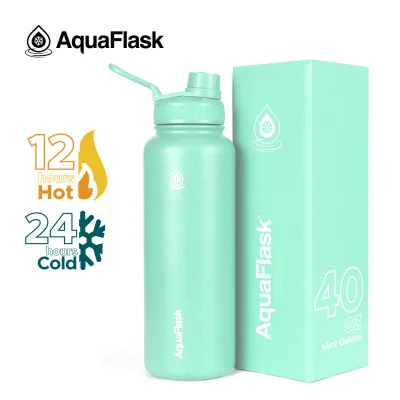
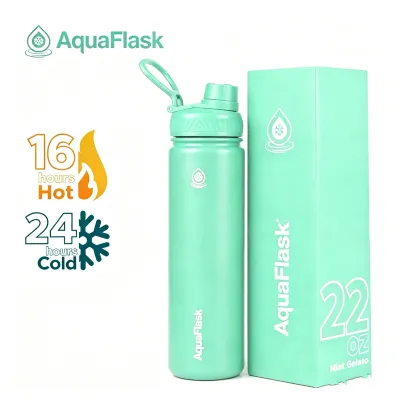
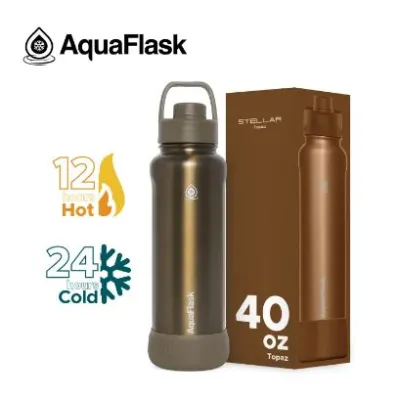
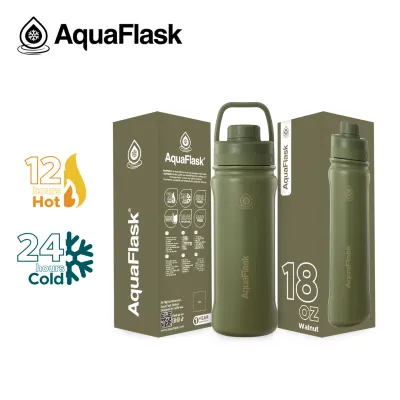
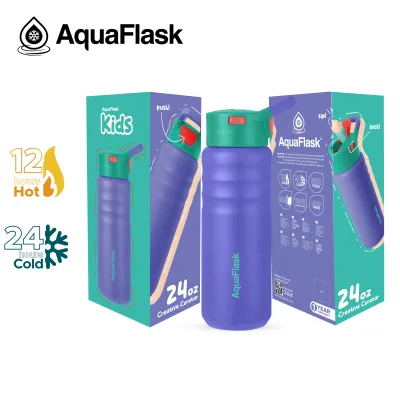
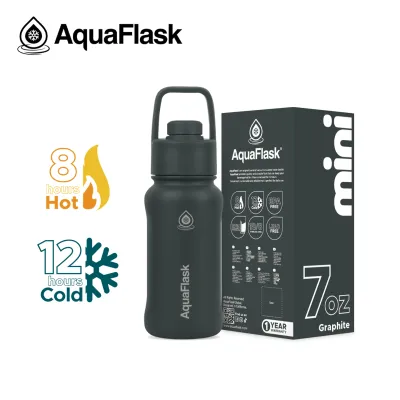
Prices are valid at publication and may change. Please refer to the product page for the latest price.
Furthermore, material quality is a significant concern. Genuine Aquaflask bottles are manufactured using food-grade 18/8 stainless steel, which resists rust, corrosion, and metallic odors. Counterfeits frequently utilize cheaper, lower-grade metals that are prone to rusting after only a few weeks of exposure to water. These substandard metals can leach metallic tastes or potentially harmful substances into your drinking water.
Finally, buying a genuine product gives you access to the manufacturer’s limited lifetime warranty. If you purchase a counterfeit, you have no recourse when the bottle stops performing or the lid breaks. Understanding how to verify your bottle protects your wallet, your belongings, and your health.
How to Inspect the Physical Markers of a Genuine Aquaflask
Evaluating the physical attributes of the bottle is the most direct way to determine its authenticity. Genuine manufacturing standards require high-precision machinery that counterfeiters rarely replicate due to the high cost of production. Inspecting these physical details requires no special tools, only a close eye and a tactile assessment of the bottle’s key features.

Logo, Engravings, and Print Quality
Begin by inspecting the branding elements on the bottle’s exterior. On an original Aquaflask, the logo is laser-engraved with absolute precision. The edges of the letters and the signature droplet emblem are incredibly sharp, clean, and perfectly aligned with the vertical axis of the bottle. If you run your fingers over the logo, you will feel a very clean, slight indentation where the laser has etched the powder coating.
Counterfeit bottles often use cheap silk-screen printing or low-quality decals to apply the logo. These printed logos feel flat or slightly raised, and they can be easily scratched off with a fingernail. Additionally, check the font weight and letter spacing carefully. Fake bottles frequently feature subtle design anomalies, such as letters that are unevenly spaced, slightly distorted, or printed in a font that is bolder or thinner than the official branding.
Build Quality, Materials, and Weight
The tactile feel of the bottle provides immediate clues about its origin. Genuine Aquaflasks feature a durable, evenly applied powder-coated finish. This coating provides a textured, non-slip grip that resists chipping and scratches, even when subjected to daily wear and tear in humid environments. If the exterior paint feels smooth, glossy, or shows uneven patches and bubbles, it is likely a counterfeit.
Next, look inside the bottle. The interior chamber of an authentic Aquaflask is constructed from a seamless piece of stainless steel. You should see a smooth, uniform surface without any visible weld lines or rough seams running down the inner wall. Counterfeits often use welded sheets of low-grade metal, leaving a distinct vertical seam inside the bottle that is highly susceptible to rusting.
The physical weight is another critical indicator. Because of the double-wall stainless steel construction and the vacuum insulation, an empty, genuine Aquaflask has a solid, noticeable heft. If the bottle feels unusually light or thin-walled, it indicates that the manufacturer skimped on the steel thickness or left out the vacuum insulation entirely. You should also check for odors; a genuine new bottle has a neutral, clean metallic smell, while a fake often emits a strong, chemical, or industrial oil odor.
Lid, Seal, and Straw Mechanisms
The functional components of the bottle are often where counterfeiters cut the most corners. Start by testing the thread compatibility and smoothness of the lid. When screwing the cap onto the neck, the threads should align effortlessly, allowing the lid to turn smoothly and lock securely with a tight seal. If the lid catches, cross-threads easily, or requires excessive force to close, the molding is substandard.
Inspect the silicone gasket inside the lid. Genuine gaskets are made of thick, flexible, food-grade silicone that fits perfectly within its designated groove to prevent leaks. In counterfeit bottles, these seals are often thin, loose, unevenly cut, or made of cheap rubber that emits a chemical odor.
If your bottle features a straw lid, examine the flip mechanism. The mouthpiece should operate smoothly, clicking firmly into both the open and closed positions. The plastic components must be rigid, BPA-free, and free from rough, unfinished edges. To verify standard compatibility, try fitting an official Aquaflask accessory, such as a replacement lid or silicone boot. Because genuine bottles adhere to strict dimensional standards, official accessories will fit perfectly. If an official accessory is too loose or cannot be installed, the bottle’s dimensions are off-spec, pointing to a fake.
Evaluating the Packaging and Included Accessories
The packaging and unboxing experience can reveal a counterfeit before you even touch the bottle itself. Genuine Aquaflask products are packaged in sturdy, high-quality cardboard boxes designed to protect the bottle during transport. The print quality on the box is crisp, featuring vibrant, accurate brand colors and high-resolution graphics.
Carefully read all the text printed on the box. Counterfeit packaging is notorious for typographical errors, grammatical mistakes, and awkward phrasing, particularly in the care instructions or product descriptions. Look closely for misspellings of basic terms such as “vacuum,” “insulated,” “stainless steel,” or even the brand name itself.
Inside the box of a genuine retail purchase, you should find a neatly printed care instruction card or a warranty leaflet. These inserts are printed on high-quality paper with sharp, legible text. Counterfeits often omit these materials entirely, or include poorly photocopied slips of paper with blurry text and misaligned graphics. Furthermore, check any standard accessories included in the box, such as silicone boots. Authentic boots are made of thick, flexible silicone that slides onto the bottle snugly and stays in place. Fake boots are often thin, stretch out easily, or collect dust and lint rapidly due to low-grade materials.
Using Serial Numbers and Official Verification Methods
Many consumers look for a serial number or QR code to verify authenticity. On the bottom of a genuine Aquaflask, you will typically find laser-engraved details indicating the brand name, bottle capacity (such as “22oz” or “32oz”), and material specifications (“18/8 Stainless Steel”). This engraving should be perfectly centered, clean, and easy to read.
Some product batches or special releases may feature specific serial numbers, batch codes, or QR codes on the packaging or the base of the bottle. If a QR code is present, scan it using your smartphone. A genuine code should direct you to the official Aquaflask website or an authorized product registration page. Be highly suspicious if the code leads to a broken link, a generic search engine, or an unrelated third-party website.
However, packaging designs, manufacturing batches, and engraving styles can evolve over time, and older inventory or specific regional releases might not feature scannable verification codes. Therefore, while a broken or suspicious link is a definitive red flag, the absence of a scannable registration code on an older bottle does not automatically mean it is counterfeit. It simply means you must rely more heavily on physical inspection and purchase source verification.
Choosing Safe Purchasing Channels for Genuine Products
The most effective way to guarantee you are getting an original Aquaflask is to control where you buy it. Purchasing from authorized channels eliminates the guesswork entirely.
Whenever possible, buy directly from official physical stores, authorized department store counters, or verified flagship stores on major e-commerce platforms. On online marketplaces, look for official brand badges, such as the “Mall” or verified brand indicators, which verify that the seller is the official brand owner or an authorized distributor.
Be extremely cautious of third-party sellers on social media marketplaces, classified ads, or unverified online shops offering prices that seem too good to be true. If a seller is offering a brand-new bottle at a fraction of the official retail price—such as ₱250 for a size that normally retails for ₱700 or more—it is almost certainly a counterfeit.
When shopping online, evaluate the seller’s profile. Check their overall rating and read recent customer reviews. Pay close attention to reviews that include photos and videos of the actual product received, as these provide a more accurate representation than stock images. Look for warning signs in the feedback, such as complaints about leaking, poor cold retention, or cheap packaging.
Steps to Take If You Receive a Suspected Counterfeit
If you suspect your Aquaflask is counterfeit, stop using it immediately. Counterfeit products do not undergo rigorous quality control and may contain materials that are unsafe for food contact. Do not fill the bottle with hot or acidic beverages, which can accelerate the leaching of chemicals or low-grade metals.
Next, perform a simple home test. Fill the bottle with ice water and let it sit. A genuine double-wall vacuum bottle will remain dry and room temperature on the outside. If the outer wall feels freezing cold or begins to sweat with condensation, the insulation has failed, confirming a counterfeit.
Document the evidence by taking clear, high-resolution photos and videos showing the physical discrepancies, such as the sweating exterior, blurry logos, rusted interior seams, or misaligned threading.
File a return or refund request immediately through the e-commerce platform’s buyer protection system. Choose the appropriate dispute reason, such as “Counterfeit item” or “Product not as described,” and upload your documented evidence. Do not complete the transaction or click “Order Received” until the platform has resolved your claim.
Frequently Asked Questions (FAQ)
Can a fake Aquaflask keep water cold?
While some counterfeit bottles might provide minimal insulation due to having a basic double-wall structure, they rarely feature a true vacuum seal. Consequently, they fail to maintain cold or hot temperatures for the duration promised by genuine models. You will typically notice the ice melting quickly and the outer wall sweating within a short period.
Is it safe to drink from a suspected fake bottle?
It is highly discouraged. Counterfeit manufacturers do not comply with strict food safety regulations. The inner lining may not be food-grade 18/8 stainless steel, which can lead to corrosion and chemical leaching. Furthermore, the plastic lids and silicone gaskets may contain BPA or other industrial chemicals that pose health risks over prolonged use.
Do all genuine Aquaflask bottles come in a box?
Standard retail purchases from official stores or authorized dealers almost always include a branded box. However, there are exceptions, such as corporate giveaways or open-shelf displays in physical retail outlets where the box might be omitted. In these specific scenarios, relying on physical inspection and verifying the credibility of the source is essential.
Community discussion
Share your experience or ask a question. Comments are reviewed before publication.