
Identifying authentic BTS photocards requires a systematic inspection of their physical and visual properties, as the secondary market contains a high volume of sophisticated counterfeits. While no single feature can guarantee authenticity on its own, examining a card’s print resolution, paper stock, and security details will help you confidently distinguish genuine merchandise from fakes. Collecting these cards carries significant emotional and financial value, making it essential to protect your investment by verifying every item before purchasing.
Because official photocards are manufactured under strict quality controls, counterfeits almost always exhibit minor structural or visual deviations. By familiarizing yourself with the exact manufacturing standards of official releases, you can spot these discrepancies even without specialized equipment.
How to Inspect the Material and Print Quality of Genuine Cards
Official BTS photocards are produced using high-end commercial printing presses and precise cutting machinery. Counterfeiters, by contrast, typically rely on consumer-grade digital printers or low-cost bulk printing services, which leave distinct physical clues.
Products mentioned in this guide
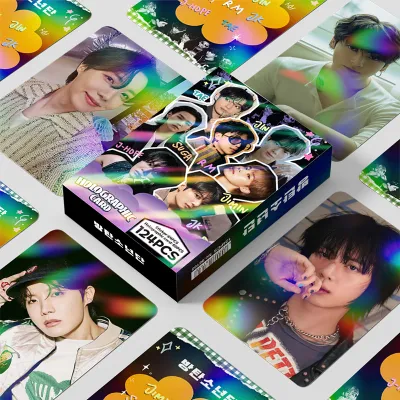

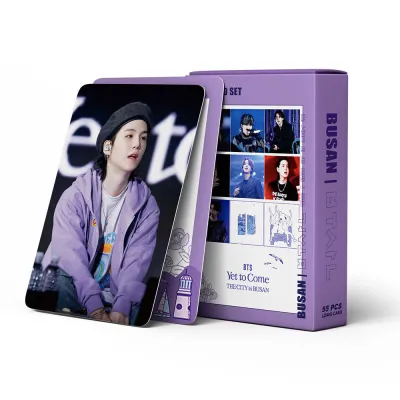
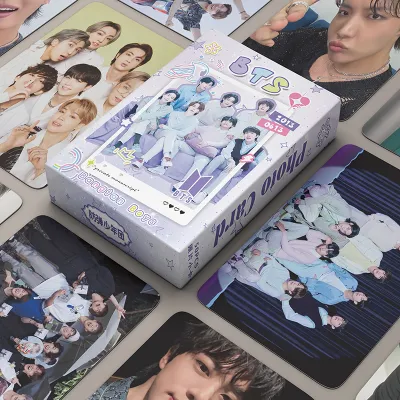
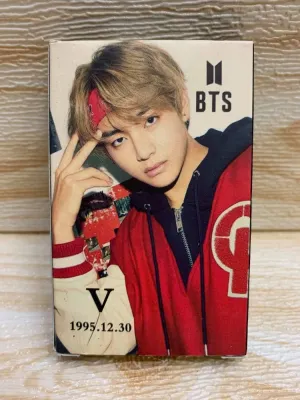
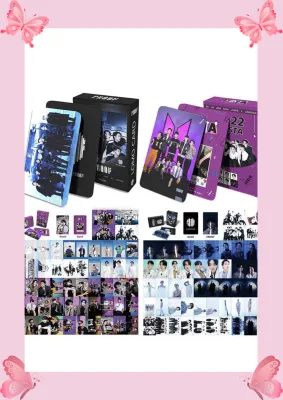
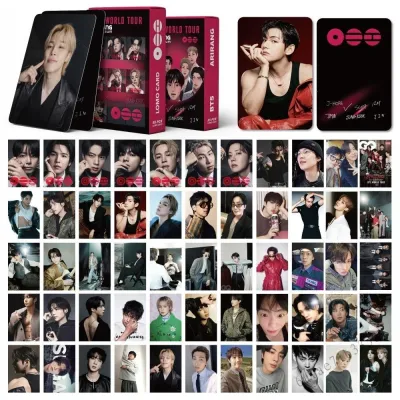
Prices are valid at publication and may change. Please refer to the product page for the latest price.
Print Resolution, Color Accuracy, and Edge Cutting
When examining a photocard, your first point of inspection should be the sharpness of the image. Official cards feature incredibly crisp details, particularly around the eyes, hair strands, and clothing textures of the members. Under magnification, the print pattern of an official card is composed of a clean, microscopic rosette pattern, whereas fakes often show messy, overlapping ink dots or a soft, out-of-focus appearance.
Color calibration is another critical indicator of authenticity. Genuine cards display rich, balanced color tones with natural skin gradients and deep, clean contrast. Counterfeit cards frequently suffer from poor color balance, resulting in images that look overly saturated, unnaturally red or orange, or washed out. These color shifts occur because counterfeiters must work from scanned images or digital copies rather than the original high-resolution master files.
Finally, inspect the outer edges and corners of the card. Official cards are die-cut with extreme precision, leaving perfectly smooth, rounded corners and clean borders. If you run your finger along the edges, you should not feel any rough paper fibers, fraying, or uneven margins. Many official cards also feature tiny, subtle cutting tabs or “nubs” on the edges—remnants of the sheet-cutting process—which occur at specific, uniform points depending on the album era.
Paper Stock, Thickness, and Surface Texture
Official photocards are printed on premium, heavy-weight cardstock that provides structural rigidity. The standard dimensions for most releases are approximately 55mm by 85mm, designed to fit standard protective sleeves. When held, a genuine card feels firm and does not easily warp or bend under gentle pressure. In the tropical climate of the Philippines, where high humidity can quickly soften low-grade paper, official cards maintain their shape much better than counterfeits due to their superior core density and protective coatings.
To verify the paper quality and surface texture, try these observable checks:
- Flex test: Gently hold the card by the edges and apply very light pressure. A genuine card will offer firm resistance, while a fake will feel flimsy, thin, or bend too easily.
- Texture check: Run your thumb across the surface. Official cards feature high-quality finishes—such as velvet matte, high-gloss, or semi-gloss coatings—that feel completely uniform. Counterfeit cards often feel sticky, excessively glossy, or rough to the touch.
- Edge-on inspection: Look at the card from the side. The paper layers of an official card are tightly compressed and sealed, whereas cheap replicas may show visible layering or begin to split at the corners over time.
Holograms, Foil Stamping, and Security Features
Specialized printing effects are highly effective for authentication because they are expensive and technically difficult for counterfeiters to replicate accurately. Many limited-edition BTS photocards, such as those from special events or specific album versions, incorporate holographic overlays or foil-stamped logos.
When inspecting a holographic card, tilt it slowly under a direct light source. The holographic pattern should shift cleanly and smoothly, displaying a vibrant spectrum of colors without any cloudiness or misalignment. On genuine cards, any foil stamping—such as reflective gold or silver text—is pressed flush into the cardstock. The foil should be perfectly crisp, with sharp edges, and must not peel, flake, or scrape off when gently touched.
Because security features change across different eras and album releases, you should always cross-reference the card with verified unboxing videos or online collector databases. For example, older albums released under Big Hit Entertainment use different branding and card styles compared to more recent HYBE or Weverse releases. Knowing what specific features belong to a particular era prevents you from misidentifying a genuine older card as a fake.
Common Visual Flaws and Red Flags in Counterfeit Cards
Counterfeiters must duplicate existing physical cards, a process that inherently introduces degradation. Recognizing these common manufacturing flaws will allow you to quickly filter out unauthorized replicas.

Blurry Details, Pixelation, and Scanning Artifacts
Because most counterfeits are created by scanning an official card, they suffer from generational loss. This loss of detail is most apparent in fine text, copyright symbols, and intricate background patterns. If the text on the back of the card looks blurry, thick, or difficult to read, it is highly likely a counterfeit.
Scanning also frequently introduces moiré patterns, which are wavy, grid-like distortions that occur when a digital sensor captures an already printed dot pattern. If you notice faint diagonal lines or a strange mesh pattern across the image under bright light, you are looking at a scan of a print. Additionally, look for color bleeding along high-contrast borders, such as where dark hair meets a light background; poor ink control on fake cards often causes these colors to run together.
Incorrect Fonts, Logos, and Copyright Text
The reverse side of a BTS photocard contains crucial branding elements that counterfeiters frequently get wrong. Official cards display highly detailed logos for HYBE, Big Hit Music, or Weverse, depending on the release date. These logos must have perfect proportions, precise spacing, and razor-sharp vector lines.
To spot text-based red flags, look for these specific issues:
- Font weight and style: Counterfeiters often use generic, pre-installed sans-serif fonts that do not match the proprietary typefaces used by official designers. Compare the thickness and shape of the letters side-by-side with a verified genuine card.
- Spelling and spacing: Carefully read the copyright disclaimer. Look for spelling mistakes, missing letters, or irregular spacing between words.
- Trademark symbols: Verify the presence and clarity of trademark symbols like ™ or ®. On fake cards, these tiny characters often blur into unreadable ink blobs.
Where to Buy Authentic BTS Photocards Safely
Minimizing your risk starts with choosing secure purchasing channels and verifying sellers thoroughly before any money changes hands.
To ensure authenticity, purchase albums and merchandise directly from official sources such as the Weverse Shop, or from authorized local music retailers in the Philippines that source directly from Korean distributors. When buying from secondary markets or online marketplaces, look for sellers who have established, long-standing reputations within the local collecting community. Check their ratings, read recent customer reviews that include physical photos of delivered items, and avoid listings that offer rare, highly sought-after cards at suspiciously low prices, such as a rare broadcast card listed for only ₱100.
Avoid buying from unverified social media accounts or third-party sellers who cannot or will not provide clear proof of purchase, such as original order receipts or photos of the card alongside its original album packaging. Before finalizing any transaction, always ask the seller to provide clear, well-lit, and unedited photos or videos of the card. Request that they place a piece of paper with their username and the current date next to the card to prove they actually possess the item and are not using stolen photos.
What to Do If You Suspect You Bought a Fake
If you receive a photocard and suspect it is counterfeit, you must act quickly to document the issue and seek a resolution.
Immediately record a continuous, unedited unboxing video showing the package being opened, followed by close-up, high-resolution photos of the specific flaws you identified, such as blurry text, incorrect fonts, or poor paper quality. Gather all relevant transaction details, including the original listing description, your conversations with the seller, and your proof of payment. This documentation is vital for filing a successful dispute.
Next, initiate a formal return or dispute through the buyer protection system of the ecommerce platform where the transaction took place. Present your photo and video evidence clearly, explaining the physical differences between the received item and an official release. Finally, never attempt to resell a card you suspect is fake; doing so harms the collecting community, violates platform terms of service, and can ruin your reputation as a trustworthy collector.
Frequently Asked Questions (FAQ)
Can I use a UV light to check if a BTS photocard is real?
While some official K-Pop merchandise utilizes UV-reactive ink for hidden security marks, this is not a universal standard for all BTS photocards. You must verify whether the specific card series you are evaluating officially features UV-reactive elements before relying on this test. Additionally, counterfeiters can easily apply cheap, aftermarket UV-reactive coatings, meaning a glowing mark alone does not guarantee authenticity.
Do all official BTS photocards have holographic stickers?
No, official BTS photocards do not always feature holographic stickers or foil elements. The use of these specialized finishes depends entirely on the specific album version, season’s greetings, or concert merchandise line. You should always consult official promotional images or verified collector databases to confirm the exact design specifications of the card you are inspecting.
Is it safe to buy unsealed BTS photocards from online marketplaces?
Buying unsealed or individual traded photocards always carries an inherent risk of encountering counterfeits. You should only proceed if the seller has a proven, verifiable track record of positive feedback within the collector community, provides comprehensive photographic proof of authenticity, and uses a platform that offers robust buyer protection. Always avoid making direct payments outside of secure, platform-mediated transaction systems.

Community discussion
Share your experience or ask a question. Comments are reviewed before publication.