
Identifying a genuine Deli oil pastel set is essential for artists, students, and parents who want to ensure safety and optimal performance. Genuine Deli products are highly regarded for their smooth application and vibrant colors, making them a staple in classrooms and art studios across the Philippines. However, the market has seen an influx of counterfeit sets that look strikingly similar on the surface but fail to deliver the same quality and safety standards.
To tell if a Deli oil pastel set is original or fake, you must perform a multi-layered inspection. This involves checking the print sharpness of the packaging, scanning official security QR codes, testing the physical texture and scent of the pastels, and ensuring the set was purchased from an authorized retail channel. Understanding these key indicators will protect your budget and keep your creative projects on track.
Why Counterfeit Art Supplies Are a Concern
Using counterfeit art supplies introduces significant performance frustrations that can easily ruin an art project. Fake oil pastels often utilize cheap wax fillers and low-grade binders instead of high-quality oils and finely ground pigments. Under the warm, humid tropical climate of the Philippines, these inferior binders degrade rapidly, causing the pastels to melt unevenly, become excessively sticky, or crumble under normal pressure. This leads to poor blending, patchy color laydown, and weak pigmentation that fails to adhere properly to drawing paper.
Products mentioned in this guide
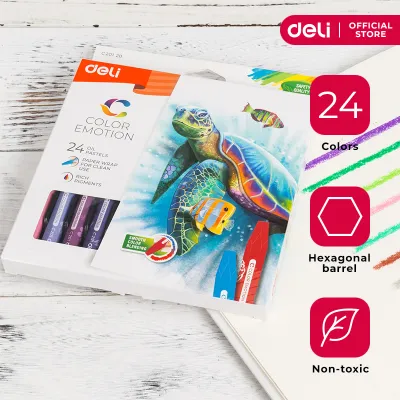
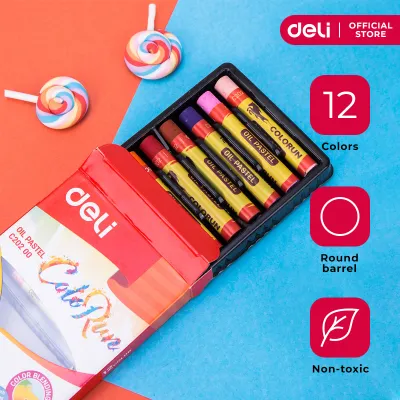
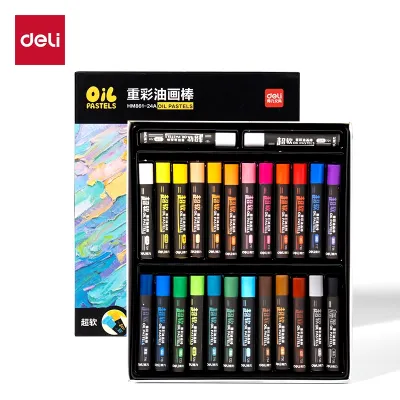
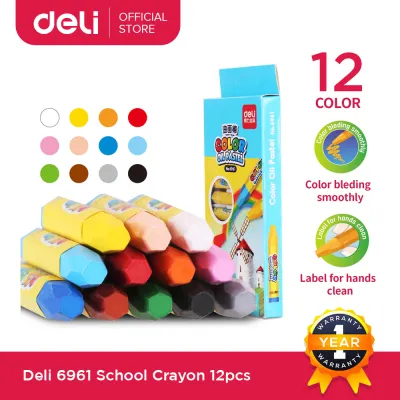
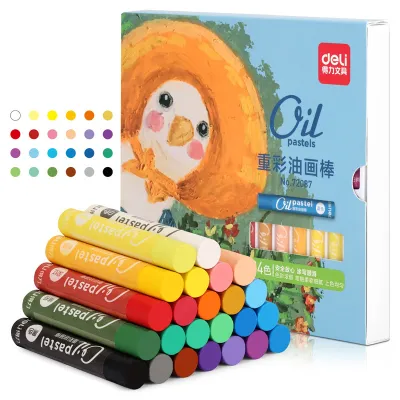
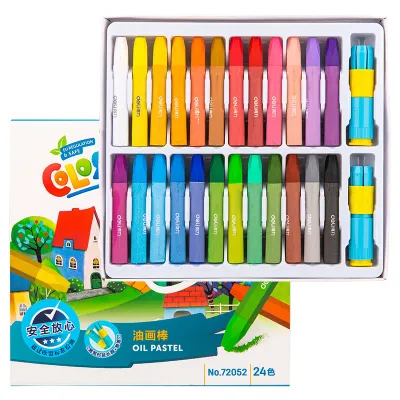
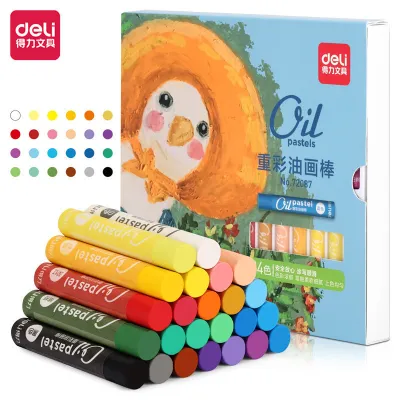
Prices are valid at publication and may change. Please refer to the product page for the latest price.
Beyond artistic frustration, safety is a paramount concern, especially when these supplies are used by children and students. Authentic Deli oil pastels undergo rigorous testing to comply with international non-toxic safety standards, ensuring they are free from harmful chemicals. Counterfeit manufacturers bypass these regulatory evaluations entirely, potentially exposing young artists to untested pigments, heavy metals, or hazardous volatile organic compounds. These chemical hazards often manifest as strong, irritating fumes that can trigger headaches or skin irritation during prolonged physical contact.
Key Differences Between Original and Fake Deli Oil Pastels
Distinguishing a genuine Deli oil pastel set from a counterfeit requires a close examination of several physical and sensory characteristics. By comparing packaging details, material textures, and included accessories, you can quickly spot the warning signs of a fake product.

Packaging and Labeling Details
The exterior box of a genuine Deli oil pastel set showcases high-resolution, professional printing. The Deli logo is sharp, the colors are vibrant, and there is no misalignment or color bleeding in the graphics. On the back of the box, the multi-language labels should feature clear, grammatically correct translations in English and other regional languages. Counterfeit packaging, conversely, often exhibits blurry text, faded colors, and obvious spelling mistakes on the labels.
You should also examine the barcode and safety certification marks printed on the packaging. Original sets display crisp, easily scannable barcodes and standard safety symbols, such as the CE mark or the EN71 non-toxic certification. While these symbols are meant to reassure buyers, counterfeiters frequently copy them directly onto fake boxes. Therefore, while a missing safety mark is a clear red flag, the presence of one should not be treated as an absolute guarantee of authenticity; it must be verified alongside other physical traits.
Pastel Texture, Scent, and Color Performance
The sensory experience of using the pastels is one of the most reliable ways to detect a counterfeit. Genuine Deli oil pastels are formulated to provide a buttery, smooth application. They glide effortlessly across various paper mediums—such as textured sketchbooks, heavy drawing paper, or cardboard—without requiring heavy hand pressure. The pigmentation is rich and opaque, allowing for smooth layering, blending, and scraping techniques with minimal dust or residue.
In contrast, fake oil pastels feel dry, hard, and excessively waxy to the touch. When applied to paper, they tend to scratch the surface rather than deposit a smooth layer of color. They crumble easily, leave behind heavy, uneven clumps of wax, and resist blending with adjacent colors. Furthermore, genuine pastels have a mild, neutral, or slightly waxy scent, whereas counterfeits often emit a harsh, pungent chemical smell reminiscent of cheap industrial solvents or kerosene.
Included Accessories and Inserts
Many Deli oil pastel sets, particularly larger student and artist-grade collections, include secondary accessories inside the box. These tools typically consist of plastic scraping tools, blending stumps, or printed paper color charts. In an original set, these accessories are manufactured with the same attention to quality as the pastels themselves. Plastic tools are cleanly molded without sharp, jagged edges, and paper inserts are printed on thick, high-quality cardstock with accurate color representations.
Counterfeiters often compromise heavily on these interior accessories to cut production costs. In a fake set, you are likely to find flimsy, easily bendable plastic scraping tools, poorly rolled blending stumps that unravel quickly, or color charts printed on thin, low-grade paper with faded, inaccurate swatches. In some cases, accessories listed on the outer box packaging may be completely missing from the inside of a counterfeit set.
Step-by-Step Verification Methods
To systematically confirm whether your Deli oil pastel set is original, you can perform a series of practical verification steps.
Inspect the Security Labels and Holograms Start by looking for official security seals or holographic stickers on the outer packaging. Genuine Deli products distributed in international markets often feature a dedicated security sticker containing a unique serial number or a scratch-off panel. Verify that the sticker is firmly adhered to the box and shows no signs of tampering, peeling, or re-application.
Scan and Verify QR Codes Carefully If the packaging includes a verification QR code, scan it using your smartphone. However, you must exercise extreme caution when evaluating the results. Counterfeiters frequently create fake landing pages that mimic the official Deli website design but use slightly altered domain names. Before entering any product codes, double-check the browser’s address bar to ensure the URL belongs to the official, verified Deli brand domain and not a deceptive third-party website.
Conduct an Observable Swatch Test Because smoothness, bleed resistance, drying speed, water resistance, and erasability depend heavily on the exact combination of pastel binders and paper surfaces, you should perform an observable trial on a scrap piece of textured drawing paper.
- Smoothness and Blendability: Draw a thick block of color. The pastel should lay down evenly without skipping or scratching. Rub the color with your finger or a blending stump; it should smudge smoothly without lifting off the paper.
- Water and Bleed Resistance: Lightly brush a small amount of water over the wax swatch. Genuine oil pastels are naturally water-resistant and should not bleed or dissolve. If the color runs or behaves like cheap watercolor, the formulation is counterfeit.
- Residue and Erasability: Observe the amount of loose dust generated during application. While oil pastels are not designed to be erased cleanly, authentic formulations allow for controlled scraping (sgraffito) with a clean plastic tool. A fake pastel will either smudge into an uncontrollable mess or flake off in large, dry chunks.
Apply a Multi-Factor Assessment Keep in mind that no single visual trait, packaging label, or surface feature can guarantee 100% authenticity on its own. Counterfeiters constantly refine their methods to mimic genuine packaging. To make an accurate decision, you must combine packaging analysis, physical performance tests, scent checks, and a review of your purchasing source.
Where to Buy Authentic Deli Oil Pastels
The most effective way to avoid counterfeit art supplies is to purchase your stationery from verified, reputable sources.
Prioritize Authorized Retailers and Flagship Stores In the Philippines, always purchase your art supplies from established, authorized physical stationery chains and major department stores that source directly from official distributors. If you prefer shopping online, restrict your purchases to official brand flagship stores on major e-commerce platforms. These official stores are typically marked with a “verified” or “mall” badge, which guarantees a direct supply chain from the manufacturer.
Watch Out for Pricing Red Flags Be highly skeptical of unusually low prices that defy standard market norms. For example, if a 36-color or 48-color Deli oil pastel set is priced at ₱50 to ₱80 online, while the standard retail price in authorized local stores is between ₱250 and ₱400, the product is almost certainly a counterfeit. Genuine manufacturing, non-toxic testing, and quality control require a baseline cost that counterfeiters bypass to offer impossibly low prices.
Evaluate Seller Profiles and Shipping Origins Before clicking the buy button, examine the seller’s profile history and customer reviews. Avoid shops with generic, random-character names, zero transaction history, or highly polarized review sections. Additionally, check the shipping origin of the product. While some genuine items are shipped internationally, a suspicious shipping origin combined with rock-bottom pricing is a strong indicator of a counterfeit warehouse distribution.
What to Do If You Receive a Counterfeit Set
If you suspect that the Deli oil pastel set you received is a counterfeit, you should take immediate action to protect your purchase and protect other buyers.
Document the Evidence Thoroughly Before using or discarding the product, document the unboxing process and all physical flaws with clear, high-resolution photos and videos. Capture close-up shots of blurry printing, spelling errors on the labels, or any physical defects in the pastels themselves. If you performed a swatch test that resulted in excessive crumbling or a strong, noxious chemical odor, record a short video demonstrating these performance failures as physical proof.
Initiate a Return and Refund Claim Contact the e-commerce platform or the retailer immediately to initiate a dispute. Most major online marketplaces have strict anti-counterfeit policies and offer comprehensive buyer protection programs. Submit your documented photos and videos to support your claim for a full refund. Do not mark the transaction as completed or click “Order Received” until the platform has resolved your dispute and processed your refund.
Report the Counterfeit Listing Flag the seller’s store and report the specific product listing to the e-commerce platform’s customer support. Reporting these fraudulent listings helps clean up online marketplaces, ensuring that other parents, students, and artists in the Philippines are not exposed to low-quality, potentially unsafe counterfeit art supplies.
Frequently Asked Questions (FAQ)
Can I use fake oil pastels if they seem to work fine?
It is highly recommended to avoid using counterfeit oil pastels, even if they appear to color acceptably at first. Fake art supplies often contain untested pigments and lack official non-toxic safety certifications, such as EN71 or AP. They may also have poor archival quality, meaning your drawings will fade, discolor, or degrade rapidly over time. For safety—especially when the pastels are used by children who have prolonged skin contact with the crayons—stick strictly to authentic, certified products.
Do all original Deli sets have a scratch-off security code?
No, not all genuine Deli oil pastel sets feature a scratch-off security code. Anti-counterfeiting measures vary depending on the specific product line, the manufacturing batch, and the regional distribution market. Some basic student-grade sets may rely solely on high-quality packaging graphics and barcode tracking, while premium or professional-grade sets are more likely to include advanced holographic seals. Because of this variation, the absence of a scratch-off code does not automatically mean a set is fake. You must perform a comprehensive inspection of the packaging quality, texture, and purchase source.
Community discussion
Share your experience or ask a question. Comments are reviewed before publication.