
To determine if a Lamy Pikachu pen is authentic, you must carefully examine the packaging quality, the precision of the engravings, the alignment of the pen body, and the performance of the nib. Because this limited edition collaboration is highly sought after, counterfeiters often replicate its yellow-and-red aesthetic, but they frequently fail to match the precise manufacturing standards of genuine German stationery. By conducting a systematic physical inspection and verifying your seller, you can confidently identify a genuine piece.
Understanding the Risk of Counterfeit Limited Editions
Limited edition stationery collaborations, especially those featuring globally recognized pop culture icons, are prime targets for unauthorized replication. The secondary market often sees an influx of counterfeit pens that mimic the visual appeal of these special releases to capitalize on collector demand. The Lamy Safari design, which serves as the canvas for the Pikachu collaboration, is particularly vulnerable because its molded ABS plastic construction is relatively easy for counterfeiters to copy using cheap injection molds.
When evaluating a collectible pen, relying on a single visual detail is rarely sufficient. Counterfeiters continuously update their manufacturing processes, meaning a fake pen might get one detail right while failing at several others. A reliable verification process requires a holistic approach, combining physical inspection, documentation review, and a careful assessment of the purchase history.
Products mentioned in this guide
Prices are valid at publication and may change. Please refer to the product page for the latest price.
Furthermore, the rise of “super fakes” means that some replicas can look remarkably convincing at first glance. These high-grade counterfeits might even include replicated packaging and accessories, making a detailed, step-by-step physical audit essential for any collector who wants to ensure they are getting a genuine product.
Physical and Visual Checks for Authenticity
A genuine limited edition pen is a precision-engineered writing instrument, whereas counterfeits are typically mass-produced with lower quality control. Examining the physical characteristics of the pen and its presentation materials is the most direct way to spot a replica.

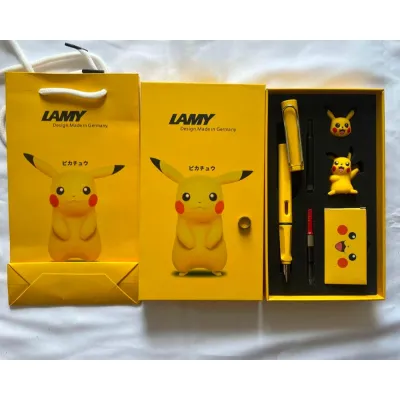
Start by observing the overall presentation. Genuine limited edition pens are packaged in custom-designed boxes with crisp graphics, accurate color matching, and high-quality materials. Any signs of blurry printing, flimsy cardboard, or misaligned logos on the box should immediately raise suspicion.
Next, inspect the pen body itself. The yellow finish should be uniform, smooth, and free from bubbles or rough patches. The red clip, which represents Pikachu’s tail or cheeks depending on the specific release year, must align perfectly with the cap and operate with a firm, springy tension rather than feeling loose or easily bent.
Finally, examine the nib and feed system. Genuine nibs feature clean, laser-etched or stamped brand markings and tip size indicators. The ink feed underneath the nib should be made of smooth, matte plastic without any visible plastic flashing, rough mold lines, or leftover manufacturing debris.
Inspecting Packaging and Documentation
The packaging of a genuine collaboration is often just as detailed as the pen itself. Authentic releases feature high-resolution printing with accurate color reproduction, matching the official brand guidelines. The cardboard should feel sturdy, designed to protect the collectible during transit and storage in humid tropical climates.
Look closely at the typography and text on the box. Counterfeit packaging often exhibits subtle spelling errors, unusual font weights, or poorly translated instructions. If the box includes official holographic stickers or specific limited edition numbering, check that these elements are cleanly applied and do not peel off easily.
Compare any included manuals, warranty cards, or promotional inserts against known official layouts. Genuine documentation is printed on high-quality paper with sharp, legible text. If the paper feels unusually thin, rough, or contains low-resolution images, the set may not be authentic.
Additionally, pay attention to the specific accessories included in the set. The Pikachu edition often comes with unique items like a Pokéball pen stand, themed clip ornaments, or a custom tin box. Check the weight and material of these accessories; genuine Pokéball stands are typically made of heavy, solid materials with a smooth finish, whereas counterfeits often use lightweight, poorly painted plastic that feels fragile.
Evaluating Build Quality and Engravings
The brand logo and model engravings on the pen body serve as excellent indicators of authenticity. On a genuine pen, these engravings are deep, clean, and feature perfectly defined edges. Counterfeits often use shallow laser etching that looks faint, uneven, or uses an incorrect font.
Assess the mechanical components of the pen. The cap should snap onto the body with a distinct, satisfying click, indicating a secure seal that prevents the ink from drying out. The overall weight of the pen should feel balanced in your hand, matching the specifications of standard ABS plastic models from the brand.
Inspect the seams where the plastic parts meet. Genuine manufacturing processes ensure that mold lines are virtually invisible and seams are perfectly flush. If you feel sharp edges along the section grip or notice uneven gaps where the barrel screws into the section, you are likely holding a counterfeit.
Another classic indicator for brand-new pens is the cardboard spacer ring. Genuine Lamy pens are shipped with a small brown cardboard ring placed between the section and the barrel. This ring prevents the pre-installed ink cartridge from being punctured during transit. Counterfeit pens often omit this ring entirely, or use a ring made of cheap, glossy paper instead of the standard textured cardboard.
Another critical area to check is the ink window on the barrel. On a genuine Lamy Safari-style pen, the ink window is perfectly cut with smooth, beveled edges, allowing you to see the ink level clearly. On fake models, this window may have rough edges, leftover plastic burrs, or may not align properly with the internal cartridge or converter.
Furthermore, verify the compatibility of the ink delivery system. Genuine pens are designed to fit proprietary Lamy T10 ink cartridges or Z28 converters perfectly. If you insert a genuine cartridge and it feels loose, leaks, or fails to puncture properly, the internal tolerances of the pen barrel are likely incorrect, pointing to a counterfeit build.
To verify the writing performance, conduct an observable trial on fountain pen-friendly paper. A genuine steel nib should glide smoothly across the page with consistent ink flow, without excessive scratching or skipping. While ink drying speed and bleed resistance depend on the specific paper and ink combination you use, a faulty feed system on a counterfeit pen will often cause immediate pooling or complete starvation of ink during normal writing strokes.
When examining the nib, look at the breathing hole and the slit. On a genuine nib, the slit is perfectly centered and cut cleanly, ending precisely at the circular breathing hole. The tip of the nib features a perfectly welded iridium pellet that is smooth and symmetrical. Counterfeit nibs often have misaligned slits, off-center breathing holes, or poorly finished tips that scratch the paper during writing trials.
In tropical climates like the Philippines, high humidity can affect low-quality materials. Counterfeit pens often use cheap metal alloys for the clip and internal parts, which can rust or tarnish quickly when exposed to moisture. Genuine Lamy clips are made of high-grade stainless steel with a durable, weather-resistant coating that maintains its color and springiness over time.
Official Verification Methods and Tools
Using official brand resources is a highly effective way to confirm the legitimacy of your writing instrument. Many manufacturers and authorized regional distributors provide online registration portals where you can input product details to verify authenticity.
Some limited edition packaging includes QR codes or security labels. While these can be helpful, be aware that sophisticated counterfeiters can clone QR codes to redirect your smartphone to a fake verification website. Always check the URL in your browser to ensure it belongs to the official brand domain rather than a lookalike address.
If you remain uncertain after performing a physical inspection, take clear, high-resolution photos of the pen from multiple angles. Focus on the nib, the engravings, the clip, and the packaging. You can submit these images along with your purchase receipt to the official customer support channel or an authorized distributor for professional evaluation.
In the Philippines, you can reach out to authorized distributors or visit official brand boutiques in major shopping malls. The staff in these physical stores are trained to recognize the subtle differences in weight, texture, and assembly that distinguish a genuine writing instrument from a replica.
Choosing Reliable Purchasing Channels
The most effective way to avoid counterfeit stationery is to buy from reputable sources. Prioritize official brand boutiques, authorized local stationery retailers, and verified flagship stores on major e-commerce platforms. These sellers source their inventory directly from the manufacturer, ensuring authenticity.
Be cautious when browsing third-party listings on online marketplaces. A price that is significantly below the standard retail value in ₱ is a major red flag, as genuine limited edition items rarely sell for a fraction of their original cost. Avoid listings that rely solely on stock photos or contain vague, generic product descriptions.
Before finalizing a purchase from a secondary seller, ask for original, high-resolution photos of the actual item in their possession. Request close-ups of the nib, the barrel engravings, and the packaging. A legitimate seller who is confident in their product’s authenticity will usually be willing to provide these details to secure a sale.
Additionally, check the seller’s return policy and customer feedback. Look for detailed reviews from other stationery collectors rather than generic, automated-looking ratings. If a seller has multiple listings for rare, out-of-print limited editions at suspiciously low prices, it is highly likely they are distributing bulk counterfeits.
Steps to Take If You Suspect a Counterfeit
If you suspect that you have purchased a counterfeit pen, act quickly to document the issue. Take clear, well-lit photos of the physical inconsistencies, focusing on the areas where the build quality falls short of genuine standards. Keep all original packaging, shipping labels, and receipts.
Initiate a return or dispute process immediately through the e-commerce platform or payment provider you used for the transaction. Clearly state that the item received is a counterfeit, and upload your photographic evidence to support your claim. Most reputable platforms have buyer protection policies that cover counterfeit goods.
Report the fraudulent listing to the platform to prevent other stationery enthusiasts from falling victim to the same seller. Additionally, you can notify the official regional distributor of the brand. Sharing information about counterfeit sources helps the brand take legal action and protects the local collector community.
Avoid attempting to modify or repair a suspected counterfeit pen, as altering the item may void your eligibility for a refund or dispute resolution through your payment provider. Keep the pen in its exact received condition until the dispute is fully resolved.
Frequently Asked Questions (FAQ)
Can I verify a Lamy Pikachu pen just by its serial number?
No, you cannot rely solely on a serial number to verify authenticity. While some limited edition releases feature unique serial numbers or production codes, counterfeiters can easily copy a valid number from a genuine pen and print it onto thousands of replica units. A serial number should only be used as one component of a comprehensive physical and documentation check.
Do authentic limited edition pens always come with a certificate of authenticity?
Not necessarily. The inclusion of a certificate of authenticity depends on the specific release, the target region, and the product tier. Some collaborations include elaborate certificates, while others rely on standard warranty cards and unique packaging. To set correct expectations, verify the standard accessories included with your specific model by checking official brand announcements or authorized distributor listings.
Community discussion
Share your experience or ask a question. Comments are reviewed before publication.