
Quick Answer: Which Pencil is Right for You?
Choosing between an infinite pencil and a regular graphite pencil depends on whether you prioritize a smooth, dark writing experience or the convenience of a maintenance-free tool. Traditional pencils remain superior for dark lines, smooth gliding, and clean erasing. Infinite pencils excel in durability, zero-maintenance portability, and resistance to smudging.
- Choose a regular pencil if you need deep, dark lines for sketching, standardized exam shading, or mathematical calculations that require frequent, clean erasing.
- Choose an infinite pencil if you need a reliable, travel-friendly tool for quick logging, field notes, or journaling where carrying a sharpener is inconvenient.
The Mechanism: Graphite vs. Metal Alloy
To understand why these two tools perform so differently, you must look at how they deposit marks onto a page. A traditional wooden pencil uses a core made of a baked mixture of graphite powder and clay binder. When you drag a regular pencil across a sheet of paper, the paper fibers act like a microscopic grater. This abrasive action shears off layers of carbon crystalline sheets from the graphite core, leaving a physical deposit of dark carbon particles trapped within the paper’s texture.

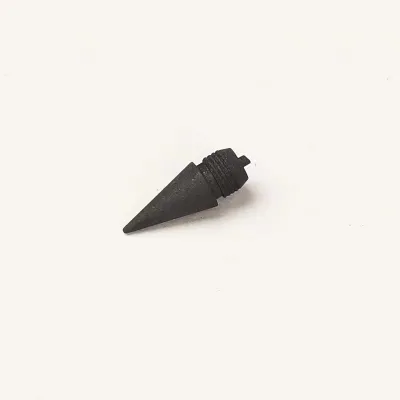
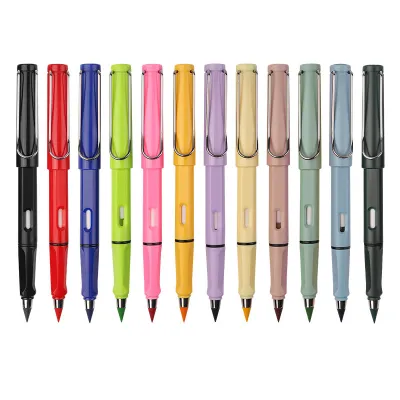
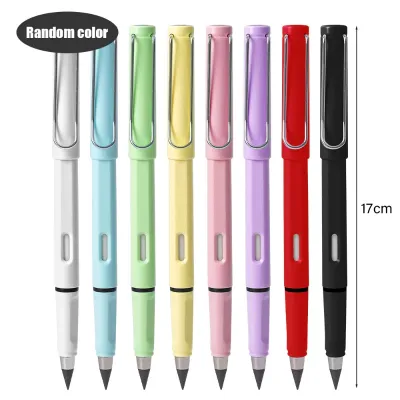
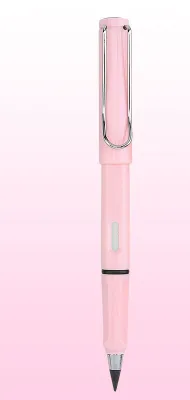
An infinite pencil, also known as an inkless metal pen, operates on an entirely different physical principle. It does not contain graphite. Instead, it features a tip crafted from a specialized metal alloy, often composed of tiny amounts of safe metal composites. When this metal tip rubs against the paper, the friction scrapes off microscopic particles of the alloy. These tiny metal fragments immediately oxidize upon contact with the air and the paper fibers, leaving behind a permanent grey mark that closely resembles pencil lead.
Products mentioned in this guide
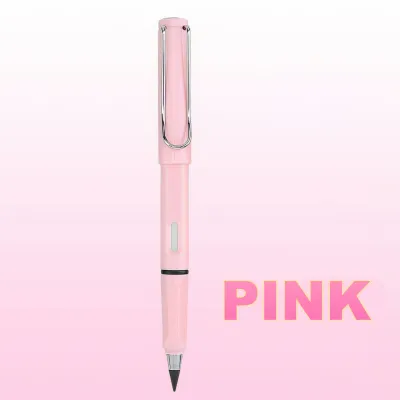
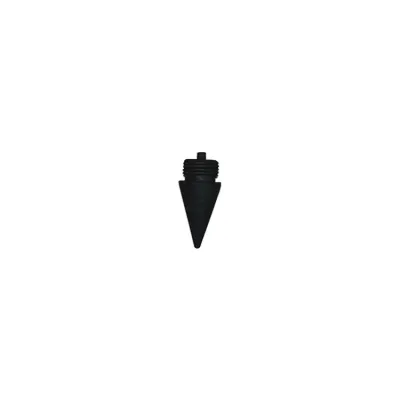
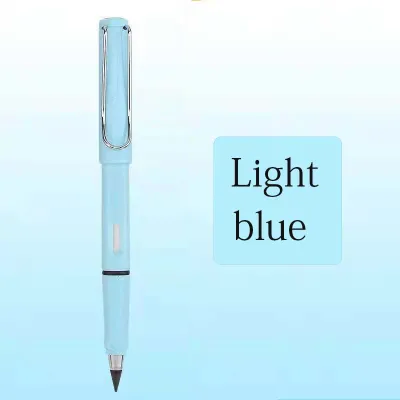
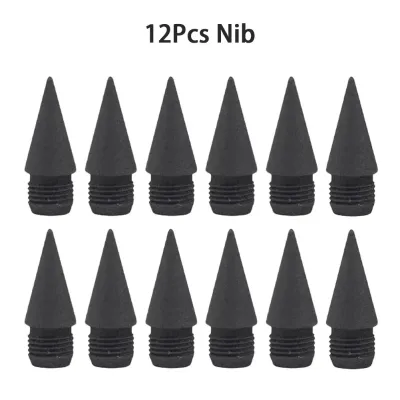
Prices are valid at publication and may change. Please refer to the product page for the latest price.
This mechanical divergence explains almost every difference in performance. Graphite is a soft, physical deposit that sits on top of the paper, while the metal alloy mark is a thin layer of oxidized metal bonded closely to the surface. Consequently, the feel, the darkness, and the way these marks interact with erasers are fundamentally distinct.
Tactile Writing Feel: Smoothness and Friction
The Gliding Sensation of Regular Pencils
Traditional graphite pencils offer a highly responsive writing experience because the graphite acts as a natural lubricant. As you write, the lead wears down smoothly, adjusting to your specific hand angle and creating a customized sweet spot on the tip. The friction is highly predictable and varies depending on the lead grade. Harder grades, such as H or 2H, provide a crisp, tactile feedback with a slight drag, while softer grades, like 2B or 4B, glide across the page with a buttery, near-effortless smoothness. This forgiving nature makes regular pencils comfortable for long writing sessions on almost any paper texture.
The Hard Feedback of Infinite Pencils
An infinite pencil provides a much stiffer, higher-friction writing sensation. Because the metal alloy tip is incredibly hard, it does not compress, deform, or wear down as you write. This results in a persistent “scratchy” feedback, similar to writing with a hard metal stylus or a very dry ballpoint pen. To get a highly legible line, you may find yourself instinctively applying more downward pressure or holding the pen at a steeper angle. Over extended writing sessions, this increased resistance and rigid feedback can cause noticeable hand fatigue and finger strain.
How Paper Texture Dictates the Experience
Paper choice plays a critical role in how both tools perform, especially in tropical climates like the Philippines where paper can absorb ambient humidity and change texture.
- Rough or Textured Paper: Standard school notebooks, recycled paper, and sketchpads have prominent fibers. This texture easily grates the metal alloy tip, making the infinite pencil write darker, but it also amplifies the scratchy, noisy feedback.
- Smooth or Coated Paper: High-end journals, thermal receipts, or glossy planner pages lack the abrasive surface needed to shear the metal alloy. On these surfaces, an infinite pencil may skip, slide without leaving a mark, or produce lines that are virtually invisible.
- Regular Graphite Adaptability: Traditional graphite remains highly adaptable, leaving clear, legible marks on both rough utility paper and ultra-smooth coated sheets without requiring extra pressure.
Line Quality: Darkness, Smudging, and Erasability
Darkness and Line Consistency
Traditional pencils offer an incredibly wide spectrum of darkness and line weight. By switching from a light, precise 4H pencil to a deep, velvety 6B, you can achieve a massive range of tones and shading depths. An infinite pencil lacks this versatility. It produces a single, uniform, relatively light grey line, typically equivalent to a hard H or HB graphite pencil. Pressing harder on an infinite pencil does not make the line significantly darker; instead, it is more likely to score, indent, or tear the paper fibers.
Smudge Resistance under Humid Conditions
Because traditional graphite deposits loose carbon particles on top of the paper, it is highly prone to smudging. In hot, humid environments, sweaty palms or a passing hand can easily smear a page of notes, leaving a messy grey haze across your notebook. This is a common pain point for left-handed writers whose hands drag across fresh writing.
An infinite pencil excels in smudge resistance. Because the alloy mark relies on a microscopic layer of oxidized metal bonded tightly to the paper fibers, it does not smear under your hand. Left-handed writers can write freely without worrying about getting grey graphite stains on their palms or smudging their previous lines.
The Reality of Erasability
Standard pink, plastic, or dust-free erasers are designed to lift loose carbon particles away from paper fibers using friction. Because graphite sits loosely on the page, a high-quality eraser can remove it almost completely, leaving a clean surface.
In contrast, infinite pencil marks are notoriously difficult to erase. Because the metal particles are partially bonded to the paper through oxidation, standard erasers struggle to lift them. Attempting to erase an infinite pencil mark usually results in a persistent “ghost mark” or a grey smear of metal oxide. If you rub aggressively to remove the mark, you are highly likely to tear or thin the paper fibers before the line fully disappears.
Practical Usability: Maintenance, Durability, and Portability
Maintenance and Environmental Vulnerabilities of Wood
Traditional wooden pencils demand constant upkeep. They must be sharpened frequently to maintain a fine point, which produces wood shavings and graphite dust. The internal graphite core is also relatively fragile; dropping a wooden pencil on a hard concrete floor can shatter the lead inside the casing, causing the tip to fall out repeatedly during subsequent sharpenings.
Furthermore, wood is an organic, hydroscopic material. In highly humid tropical climates, cheap wooden pencils can absorb moisture from the air, causing the wood casing to swell, warp, or split. This makes sharpening difficult and can cause the lead to misalign with the sharpener blade.
The Zero-Maintenance Promise of Metal Alloys
The primary appeal of the infinite pencil is its absolute lack of maintenance. It never needs to be sharpened, it does not produce shavings, and the solid alloy tip will not snap under heavy hand pressure. You can toss it into a bag, pocket, or glove compartment and trust that it will be ready to write instantly. It is completely immune to humidity, meaning the barrel will not warp, and the writing tip will not degrade in storage.
Portability Limitations and Drop Risks
While the infinite pencil is highly convenient, it has its own physical vulnerabilities. Although the alloy tip wears down at an incredibly slow rate—often marketed as lasting as long as dozens of traditional pencils—it is relatively brittle. If you drop an infinite pencil tip-first onto a hard tile or concrete floor, the alloy point can chip, crack, or break off entirely, rendering it unusable until you replace the tip.
Additionally, many infinite pencils feature heavy metal, brass, or thick plastic barrels to house the heavy alloy tip. While some users appreciate this premium, heavy-weight feel, others find it poorly balanced and tiring to hold compared to a feather-light cedarwood pencil.
Side-by-Side Comparison Table
| Feature | Regular Graphite Pencil | Infinite Pencil (Metal Alloy) |
|---|---|---|
| Writing Mechanism | Physical deposit of carbon/clay | Friction-induced metal oxidation |
| Line Darkness Range | Wide (9H to 9B; very light to deep black) | Narrow (Consistent light grey, approx. H/HB) |
| Erasability | Excellent; lifts cleanly with standard erasers | Poor; leaves ghost marks and risks tearing paper |
| Tactile Smoothness | High; glides smoothly with minimal drag | Low; scratchy, high-friction feedback |
| Maintenance Required | Frequent sharpening; produces waste shavings | None; writes continuously without sharpening |
| Smudge Resistance | Low; prone to smudging, especially in humidity | High; highly resistant to smearing and water |
| Ideal Use Case | Shading, sketching, exams, math calculations | Quick logging, field notes, travel, outdoor use |
| Durability | Fragile core; wood can warp in high humidity | Highly durable body; tip can chip if dropped |
| Average Lifespan | Short; consumed rapidly through sharpening | Extremely long; tip lasts for months or years |
Cost Efficiency and Long-Term Value
The Economics of Regular Pencils
Traditional wooden pencils have an incredibly low upfront cost. In local Philippine bookstores, a basic yellow pencil can cost as little as ₱5 to ₱15. However, they are rapid consumables. When you factor in the recurring cost of replacing worn-down pencils, purchasing high-quality sharpeners, and buying erasers to clean up graphite smudges, the long-term cost accumulates over years of heavy use. There is also a hidden cost in time and convenience spent sharpening and cleaning up shavings.
The Upfront Investment of Infinite Pencils
Infinite pencils require a higher initial investment. Depending on the build quality and brand, prices in the local market typically range from ₱50 for basic plastic-bodied models to over ₱500 for premium aluminum, brass, or wood-accented writing instruments.
However, the value proposition lies in the lifespan of the metal alloy tip. A single high-quality alloy tip can write continuously for thousands of meters, outlasting dozens of traditional pencils. This eliminates the need for ongoing purchases and reduces stationery waste, making it an environmentally friendly option.
Making the Right Value Assessment
To determine which tool offers better financial value for your specific situation, consider your personal habits:
- High-Loss Scenarios: If you frequently misplace your writing utensils at school, in the office, or on construction sites, buying an expensive infinite pencil is not cost-effective. Stick to bulk packs of affordable wooden pencils.
- Minimalist or Dedicated Setups: If you keep a dedicated journal at your desk, travel light, or maintain a strict everyday carry (EDC) setup, a single, durable infinite pencil offers excellent long-term value. It reduces clutter and ensures you always have a working writing tool on hand.
Final Verdict: How to Choose Your Ideal Writing Tool
When to Choose a Regular Pencil
You should stick to a traditional wooden or mechanical graphite pencil if your daily work demands high visual contrast, precise line weight control, or clean corrections.
- Standardized Testing: If you are preparing for board exams or school tests that use optical mark recognition (OMR) sheets, you must use a traditional 2B lead pencil. Infinite pencil marks are too light and do not contain the specific carbon density required for scanners to read them accurately.
- Artistic Work: If you draw, sketch, or shade, the varied grades of graphite are irreplaceable. You cannot achieve the rich gradients, soft blends, or deep shadows of graphite with a rigid metal alloy tip.
- Mathematics and Drafting: If you are solving equations, drafting blueprints, or doing any work that requires constant corrections, you need the clean, residue-free erasability of traditional graphite.
When to Choose an Infinite Pencil
You should transition to an infinite pencil if you prioritize physical durability, clean hands, and zero-maintenance convenience over deep line darkness.
- On-the-Go Note-Taking: If you are a field researcher, surveyor, delivery driver, or traveler who needs to jot down quick notes outdoors, the infinite pencil is an incredibly reliable companion. It will not break in your pocket, warp in the humid air, or require a sharpener.
- Journaling and Quick Logging: If you use a notebook for daily bullet journaling, quick task lists, or brainstorming sessions where you rarely need to erase, the smudge-resistant, long-lasting nature of the alloy tip is highly convenient.
- Heavy-Handed Writers: If you have a habit of pressing down hard and constantly snapping the delicate lead of traditional or mechanical pencils, the solid metal alloy tip will easily withstand your writing pressure.
Crucial Verification Steps Before Buying
Before purchasing an infinite pencil, perform a few simple checks to ensure it fits your existing stationery setup. First, verify your paper compatibility. If you primarily write in notebooks with highly coated, smooth, or glossy pages, test a small area first; the alloy tip requires a certain amount of surface friction to leave a legible mark. Second, check the manufacturer’s specifications to see if the tip is replaceable. Opting for a model with a standard screw-on thread allows you to replace a chipped or worn tip easily, ensuring the pen body lasts for years. Finally, if you are purchasing an infinite pencil for a young child, verify with the manufacturer that the alloy tip is certified non-toxic and lead-free, ensuring it is safe for prolonged daily contact.

Community discussion
Share your experience or ask a question. Comments are reviewed before publication.