
The writing experience of an infinite writing pencil differs significantly from traditional wood-cased pencils and gel pens, offering a unique tactile feel that sits somewhere between a hard graphite lead and a metal stylus. While standard pencils rely on physical graphite transfer and gel pens use liquid ink capillary action, an infinite pencil utilizes a specialized metal alloy tip that oxidizes paper fibers upon contact. Whether this tool can replace your daily writing instruments depends heavily on your specific paper choices, required line darkness, and tolerance for a distinct, slightly resistant writing feedback. This comparison explores how these tools perform under real-world conditions, helping you decide if making the switch fits your daily routine.
How Infinite Writing Pencils Actually Work
To understand the writing feel, you must first look at the mechanics of the alloy tip. Unlike a traditional pencil that wears down its clay-and-graphite core to leave a physical deposit on the page, an alloy-tipped pencil relies on friction to deposit microscopic metal particles that oxidize on the paper fibers. This chemical-physical reaction leaves a gray mark resembling a standard HB pencil line. Gel pens, by contrast, use a rolling ball to distribute water-based or pigment-based ink, which saturates the paper fibers directly.
The term “infinite” is a clever marketing concept rather than a literal scientific truth. While these metal tips wear down at an incredibly slow rate—often equivalent to dozens of traditional wood-cased pencils—they do eventually degrade, meaning you should check the manufacturer’s specifications for estimated lifespan and the availability of replacement tips. While a quality infinite pencil may require a higher upfront investment of around ₱100 to ₱300 compared to a cheap disposable pen, its long-term value depends on how long the tip remains usable without requiring replacement.
Products mentioned in this guide
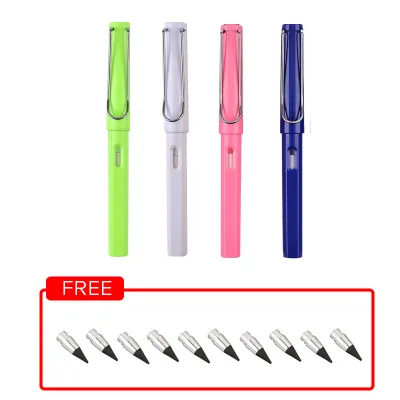
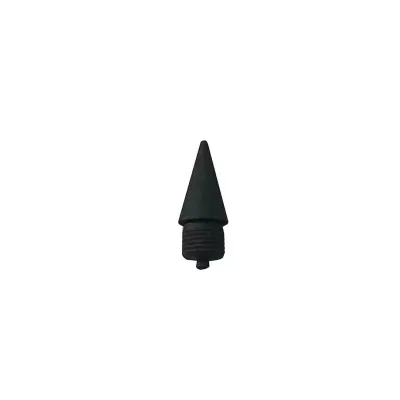
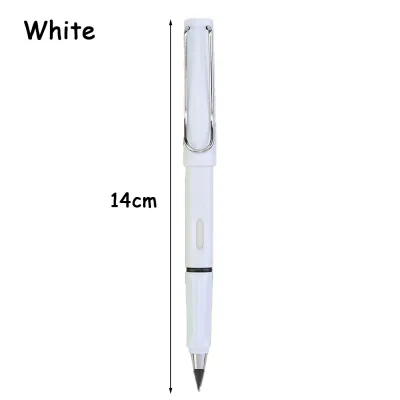
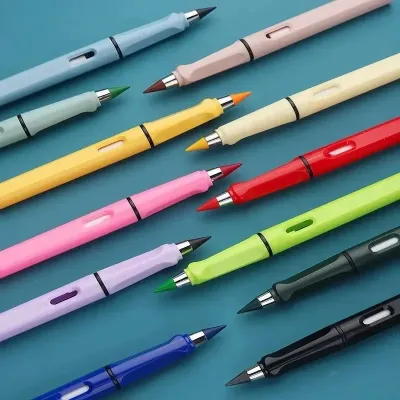
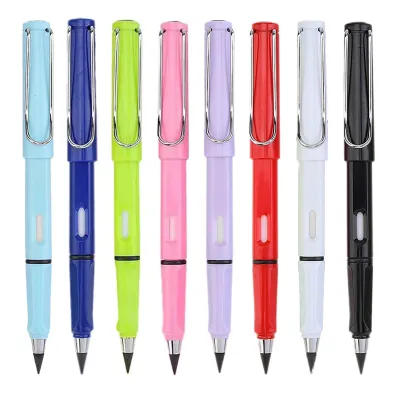
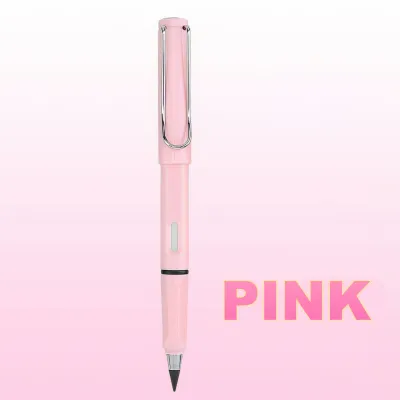
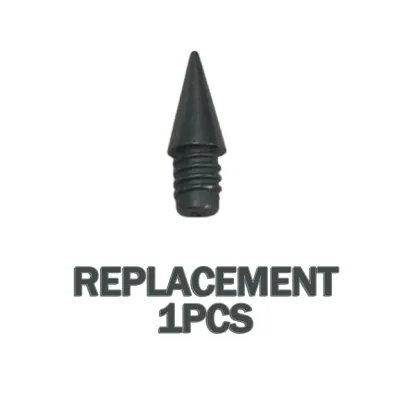
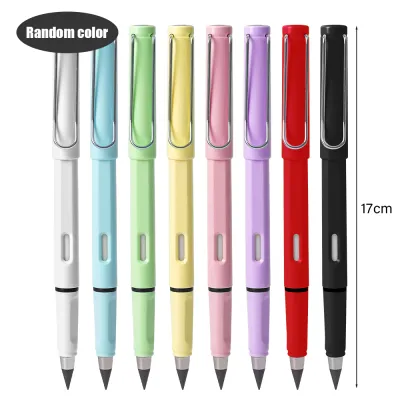
Prices are valid at publication and may change. Please refer to the product page for the latest price.
Because the mark relies on a precise friction-induced oxidation process, the angle at which you hold the pencil and the pressure you apply will directly dictate the consistency of your lines. Standard pencils and gel pens are highly forgiving of varied writing angles, but an alloy tip requires a more deliberate, upright posture and consistent pressure to maintain a steady mark.
Side-by-Side Writing Experience Comparison
Evaluating these writing instruments side-by-side requires looking at observable physical traits rather than relying on universal performance claims. Because alloy formulations and ink qualities vary wildly across different brands, your personal experience will depend on the specific products you choose to test.

To find the right fit for your desk, you must weigh how each tool handles tactile feedback, visual contrast, and environmental factors like humidity and moisture.
Smoothness and Writing Friction
Writing with an infinite pencil introduces a distinct tactile feedback that some users describe as slightly scratchy or metallic, especially when compared to the effortless glide of a gel pen. A gel pen uses liquid ink to lubricate the ball tip, allowing it to slide across the page with minimal resistance. Traditional graphite pencils offer a familiar, soft friction that changes gradually as the lead dulls, providing a dampening effect that many writers find comforting.
The smoothness of an alloy tip is highly dependent on the texture or “tooth” of your paper. On rougher paper surfaces, the metal tip can catch slightly, creating a drag that may tire your hand during long writing sessions.
If you are transitioning from gel pens, you will likely face a learning curve regarding writing pressure. Pressing too hard in an attempt to get a smoother, darker line can tear thin paper or damage the alloy tip itself, so adjusting your grip and pressure is essential.
Mark Darkness and Contrast
If you require deep, high-contrast lines for scanning, photocopying, or official documentation, the infinite writing pencil may fall short of your expectations. The oxidation process typically produces a lighter, muted gray line that closely mirrors a standard HB or H pencil. Unlike traditional pencils, where you can easily swap a hard lead for a soft, dark 2B or 4B variant, the darkness of an infinite pencil is physically limited by its alloy composition.
Gel pens excel in this category, delivering rich, saturated blacks and vibrant colors that remain highly legible under any lighting.
Before committing to an infinite pencil for school exams or office paperwork, check the product description for darkness ratings and test a sample page to ensure the contrast is sufficient for digital scanners or photocopiers.
Smudge and Water Resistance
In warm, humid climates where hands easily sweat, smudge resistance becomes a critical factor for clean notebooks. Infinite writing pencils offer an exceptional advantage here, as the oxidized metal marks do not smudge under normal hand friction, making them highly reliable for left-handed writers who drag their hands across the page. Traditional graphite, by contrast, smears easily when rubbed, often leaving dark smudges on both the paper and your skin.
Gel pens provide excellent contrast but are notorious for smearing if the ink has not fully dried, or if the page is exposed to high humidity and sweat.
While the marks left by an alloy tip resist water much better than standard graphite, they are not completely waterproof like specialized archival gel inks. Always verify the water-resistance claims on the packaging if you plan to use the tool for permanent records or outdoor journaling.
Paper Compatibility and Practical Limitations
The performance of an infinite writing pencil is deeply tied to the paper medium you use. Because the alloy tip requires friction to oxidize, very smooth, coated, or glossy papers—such as those found in some premium journals or thermal receipts—will not provide enough resistance, resulting in faint, skipped, or entirely invisible lines. Standard, uncoated copy paper or slightly textured notebook pages generally yield the best results.
Another critical limitation is erasability. While many infinite pencils are marketed as erasable and even come with built-in erasers, the oxidized metal mark is significantly harder to remove cleanly than standard clay-and-graphite lead. Attempting to erase heavy alloy marks often leaves a faint gray ghost image or scuffs the paper surface, making these pencils less than ideal for complex mathematics, drafting, or detailed sketching where frequent corrections are necessary.
Furthermore, you must consider line width consistency. A gel pen maintains a precise, engineered line width (such as 0.5mm or 0.7mm) until the ink runs out, and a traditional pencil can be sharpened to an ultra-fine point for detailed work. An alloy tip, however, gradually rounds off to a fixed, medium-width point that cannot be easily sharpened, limiting its utility for intricate technical drawings or very small handwriting.
Decision Framework: Which Writing Tool Should You Choose?
Selecting the right writing tool comes down to matching your daily tasks with the physical strengths of each instrument.
Choose an Infinite Writing Pencil if: You want a low-maintenance, long-lasting tool for quick note-taking, brainstorming, or journaling on standard, uncoated paper. It is an excellent option if you dislike the constant need to sharpen pencils or worry about ink leaking in your bag, and if you do not mind a lighter, gray line that does not need to be erased cleanly.
Choose a Regular Pencil if: Your work involves technical drawing, sketching, or mathematical calculations where clean erasability is non-negotiable. Traditional pencils are also ideal if you enjoy customizing your writing experience by switching between different graphite grades, from hard, light leads to soft, dark, and expressive ones.
Choose a Gel Pen if: You prioritize high-contrast, dark, and vibrant lines that are easy to read and scan. Gel pens remain the standard for signing official documents, writing in multi-colored formats, and enjoying a smooth, fluid glide that requires almost zero hand pressure.
Verify First if: You are purchasing tools for specialized tasks, such as left-handed writing in humid environments or archival record-keeping. Always check the specific brand’s packaging for smudge-dry times, paper compatibility guidelines, and return policies before investing in a complete set.
Community discussion
Share your experience or ask a question. Comments are reviewed before publication.