
Choosing the right writing instrument is a highly personal decision that directly impacts your daily productivity, whether you are jotting down notes in a humid classroom, sketching in a local cafe, or drafting technical layouts. There is no single best pencil for every task; the ideal choice depends entirely on whether you prioritize zero maintenance, customizable line widths, or consistent precision. To find your perfect match, you must evaluate how each option performs across three core areas: tactile writing feel, line consistency, and daily practicality. By understanding these differences, you can select a tool that aligns with your specific writing habits and environmental conditions.
Understanding the Core Mechanics of Each Pencil
To appreciate how these pencils perform on paper, it helps to understand the physical mechanisms that allow them to leave a mark. Each design relies on a completely different method of delivering material to the page, which directly influences its maintenance needs and physical lifespan.
Traditional wood-cased pencils utilize a solid core made of a mixture of graphite and clay, which is securely encased in protective wood. As you write, the friction of the paper wears away this core, depositing fine graphite particles onto the fibers. Because the core is consumed during this process, the tip gradually dulls and widens, requiring physical sharpening to expose a fresh, pointed writing surface.
Products mentioned in this guide
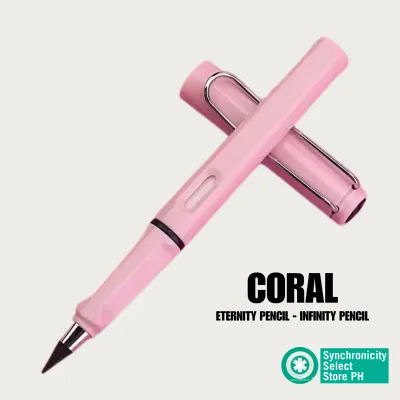
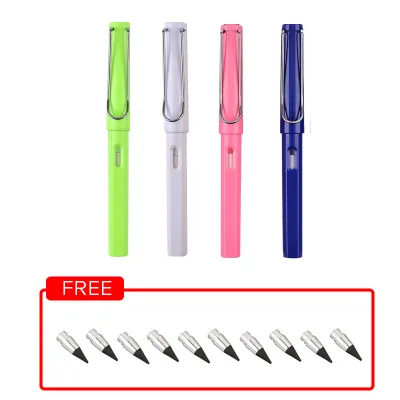
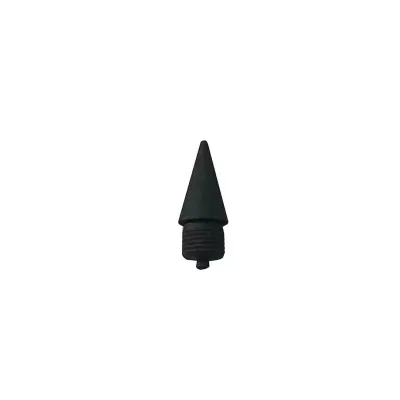
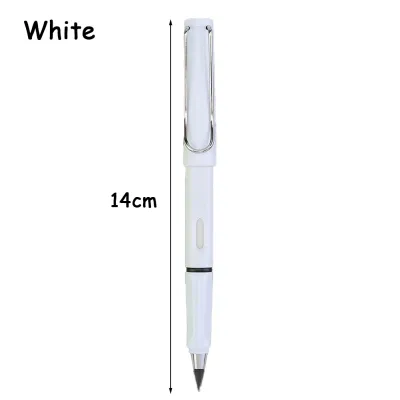
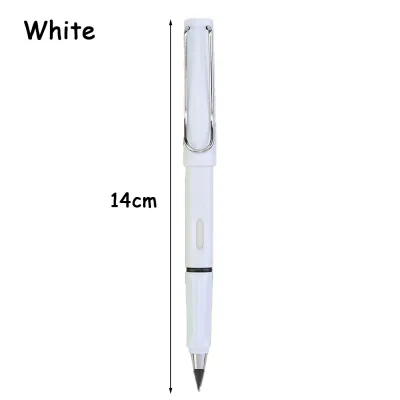
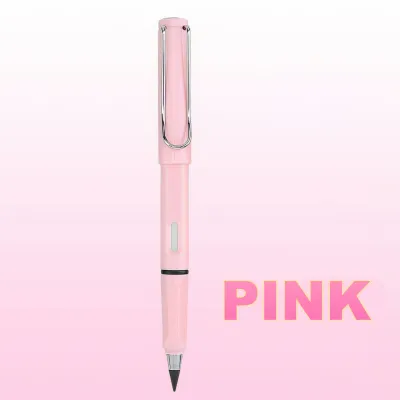
Prices are valid at publication and may change. Please refer to the product page for the latest price.
Mechanical pencils take a more modular approach by utilizing thin, pre-cut graphite leads that are housed inside a plastic or metal body. An internal clutch mechanism, usually activated by a push-button on the cap, advances the lead forward in precise increments. This design ensures that the writing tip remains incredibly thin and uniform, eliminating the need for a sharpener entirely, though it requires you to carry replacement leads.
An infinity pencil, often referred to as an inkless pencil, operates on a completely different chemical and physical principle. Instead of traditional graphite, it features a specialized metal alloy tip. When this alloy tip rubs against the paper, tiny metal particles rub off and oxidize on the surface, leaving a gray mark that closely resembles pencil lead. Because the metal alloy is extremely hard, it wears down at an incredibly slow rate, allowing you to write continuously without ever needing to sharpen the tip or insert refills.
Comparing Writing Feel and Line Consistency
The physical feedback you receive while writing plays a massive role in how comfortable you feel during long study sessions or workdays. Each pencil type offers a distinct tactile experience and visual output that you can easily observe during a quick trial.

Tactile feedback varies significantly between these three tools. Traditional wood-cased pencils are celebrated for their smooth, organic glide across the page, as the graphite-clay mixture acts as a natural lubricant against paper fibers. Mechanical pencils also offer a smooth glide, though the incredibly thin leads can feel slightly scratchy or dig into the paper if you apply too much vertical pressure. In contrast, an infinity pencil provides a much firmer, slightly metallic feedback that some users describe as writing with a very hard lead; it requires a bit more friction to deposit its mark, which can feel unique if you are accustomed to soft graphite.
Line darkness and consistency also follow very different patterns. A traditional pencil starts with a sharp, dark line that steadily widens and grows lighter as the tip flattens into a dull dome. Mechanical pencils excel at absolute uniformity, delivering a crisp, constant line width from the first word to the last. An infinity pencil produces a highly consistent line width because its tip shape changes so slowly, but the mark is typically much lighter than standard graphite—often resembling the pale gray of an H or HB grade pencil.
Smudging and erasability are critical factors to test, especially in warm, humid tropical climates where paper easily absorbs ambient moisture. Traditional graphite and mechanical pencil leads are prone to smudging if your hand brushes across the page, though they generally erase cleanly with a standard plastic eraser. Marks from an infinity pencil are highly smudge-resistant because the oxidized metal particles bond tightly to the paper fibers. However, this tight bond means they can be more difficult to erase completely, often leaving a faint, ghost-like shadow behind.
Weighing Practicality, Maintenance, and Daily Use
Beyond the immediate writing experience, you must consider how each pencil fits into your daily routine, commute, and long-term budget. Upkeep requirements, physical durability, and overall value over time will determine whether a tool remains a favorite or ends up forgotten in a drawer.
Maintenance is the most obvious point of divergence. Traditional pencils demand a reliable sharpener and generate wood shavings, which can be inconvenient when you are commuting or working in public spaces. Mechanical pencils eliminate shavings but require you to manage delicate lead refills and occasionally clear jams within the internal clutch mechanism. The infinity pencil is the ultimate low-maintenance option, requiring absolutely no sharpeners, refills, or spare parts to keep writing.
Durability under pressure is another essential consideration for daily use. The solid wood casing of a traditional pencil provides excellent protection for its inner core, making it highly resistant to drops, though the exposed tip can still snap. Mechanical pencils are prone to frequent lead breakage if you write with a heavy hand or extend the lead too far out of the sleeve. An infinity pencil is incredibly robust; its solid metal tip and sturdy body are virtually immune to snapping, making it an excellent companion for rough handling in a backpack.
When evaluating cost and value over time, look beyond the initial purchase price to consider ongoing expenses. While a basic wooden pencil costs only a few pesos, a high-quality mechanical pencil or an infinity pencil represents a larger upfront investment in ₱, though they save money on replacements over time. Traditional pencils are inexpensive upfront but must be replaced entirely once they become too short to hold comfortably. Mechanical pencils represent a moderate initial investment, with ongoing costs limited to inexpensive lead refills and replacement erasers. An infinity pencil typically carries a higher initial price tag, but because the alloy tip wears down so slowly, it can potentially replace dozens of standard pencils over years of continuous use.
Decision Framework: Which Pencil Fits Your Needs?
To choose the right tool for your desk, you should match the unique characteristics of each pencil to your specific writing environment, habits, and preferences.
You should choose an infinity pencil if you prioritize maximum convenience and zero maintenance. It is the perfect tool for keeping in your bag for quick notes, outdoor sketching, or filling out forms on the go where carrying sharpeners or fragile lead refills is impractical. If you frequently write in humid conditions where traditional graphite might smudge easily, the smudge-resistant alloy marks of an infinity pencil offer a reliable, clean alternative.
A traditional wood-cased pencil remains the ideal choice if you crave a classic, smooth writing feel and require rich, dark lines. Artists, sketchers, and writers who appreciate the tactile feedback of graphite and need to vary their line weights through shading will find the organic performance of wood-cased pencils irreplaceable. Just be sure to keep a quality sharpener nearby to maintain your preferred tip shape.
A mechanical pencil is your best option if your daily work demands absolute precision and neatness. It is highly recommended for technical drawing, mathematical equations, accounting, or keeping highly detailed journals where consistent line widths are essential. The ability to quickly click for more lead ensures you can maintain your focus without interrupting your train of thought.
Before making your final decision, perform a quick check of your writing habits and materials. If you are naturally heavy-handed, test a mechanical pencil with thicker lead options, such as 0.7mm or 0.9mm, to prevent constant breakage. If you plan to use an infinity pencil, try it out on your favorite notebook first; highly coated or glossy papers may not provide enough friction for the alloy tip to leave a clear, visible mark.
Frequently Asked Questions (FAQ)
Can you erase infinity pencil marks completely?
While you can lighten infinity pencil marks using a standard plastic or rubber eraser, they are generally more difficult to erase completely than traditional graphite. Because the alloy tip deposits microscopic metal particles that oxidize and bond with the paper fibers, erasing may leave a faint, light-gray ghost mark. If you require pristine, completely clean erasures for technical drawings or exams, a traditional or mechanical pencil remains the more reliable choice.
Do infinity pencils work on all types of paper?
No, infinity pencils rely on physical friction to transfer the metal alloy onto the writing surface. Standard matte paper, sketchbooks, and typical notebook pages provide excellent texture to shave off the microscopic particles needed to leave a mark. However, highly glossy, coated, or laminated papers lack the necessary abrasive texture, which can result in extremely faint lines or no mark at all. It is always best to test the pencil on your preferred paper brand to ensure adequate visibility.
Community discussion
Share your experience or ask a question. Comments are reviewed before publication.