
Choosing the right paper for your classes in the Philippines can feel like navigating an unwritten academic rulebook. If you are standing in the school supplies aisle of a local bookstore, staring at stacks of yellow pads and intermediate pads, you are likely wondering which one will actually get you through the semester. The quick answer is that it depends entirely on your course requirements and classroom environment: yellow pads are the standard for formal submissions, exams, and long-form problem solving, while an intermediate pad is the go-to choice for daily note-taking, quizzes, and tight lecture hall desks. Making the wrong choice can lead to rejected assignments or cramped writing spaces, so understanding their distinct roles is crucial before classes begin.
Understand the Core Differences Before You Buy
To make an informed decision, you must first understand what makes these two paper formats physically distinct. In the Philippine academic context, an intermediate pad is a highly specific stationery item. It is a mid-sized, top-bound paper pad that typically measures around 8 by 10.5 inches (approximately 200 mm by 260 mm), which is very close to the standard B5 paper size. It features white paper with blue horizontal ruling and a red vertical margin line on the left. Some specialty variants are available with light yellow or cream-colored paper, but the classic white sheet remains the most ubiquitous version in classrooms.
In contrast, a standard yellow pad—often referred to as a legal pad or yellow legal pad—is significantly larger. It typically comes in Letter size (8.5 by 11 inches) or Legal/Folio size (8.5 by 13 inches). The most defining characteristic of the yellow pad is its canary-yellow paper, paired with wide horizontal ruling and a double red margin line on the left side.
Products mentioned in this guide
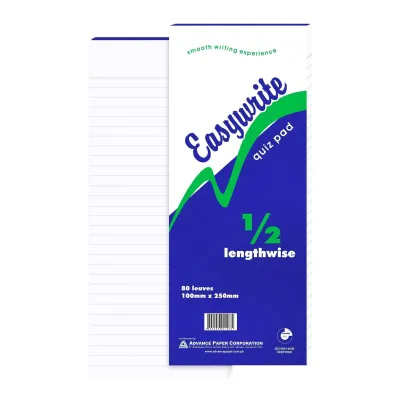
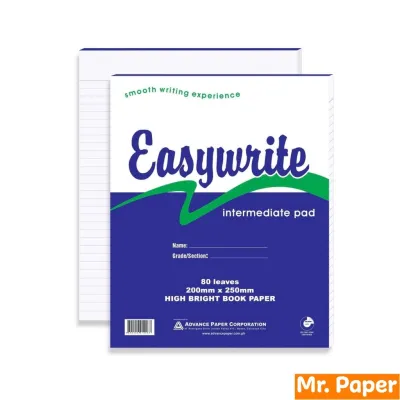
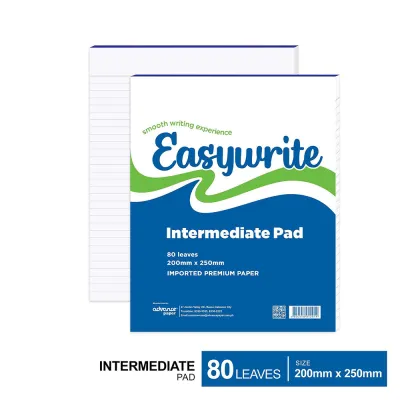
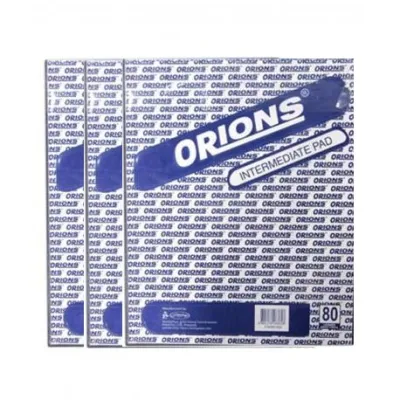
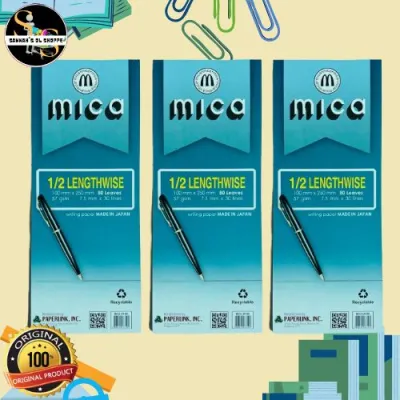
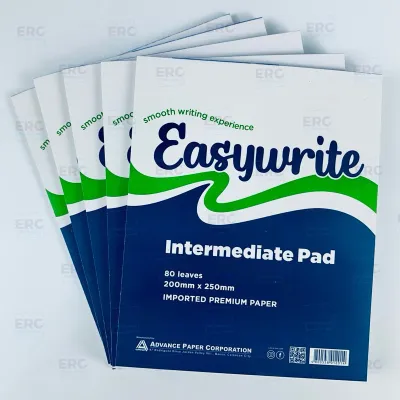
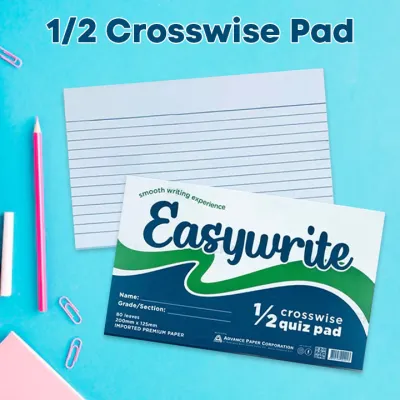
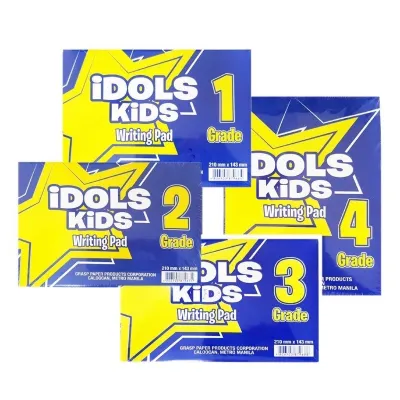
Prices are valid at publication and may change. Please refer to the product page for the latest price.
These differences in paper color and size are not merely aesthetic; they serve distinct functional purposes. The traditional yellow paper is specifically designed to reduce light glare and minimize eye strain during long hours of reading and writing under harsh classroom fluorescent lights. On the other hand, the clean white paper of a standard intermediate pad provides high contrast. This contrast makes your handwriting highly legible, which is particularly beneficial when teachers need to scan, photocopy, or quickly grade your work.
The binding style also plays a role in how you use these pads. Both options are top-bound with a strip of adhesive or staples, allowing you to flip pages upward or tear them out cleanly along a perforated edge. However, because the yellow pad is larger, its margins are often wider, giving you more space for teacher annotations, corrections, or your own side notes. Before purchasing your school supplies, it is highly recommended to physically check the packaging or measure your existing notebooks to ensure you are buying the exact dimensions required for your specific year level.
Check Your Syllabus and Teacher Requirements
While you might prefer the compact size of one pad over the other, the ultimate deciding factor is always your course syllabus and your teacher’s explicit instructions. In many Philippine universities and colleges, specific academic departments strictly mandate the use of yellow pads for graded activities. For example, law schools, engineering departments, and accountancy programs almost universally require standard yellow pads for exams, case digests, and long-form problem sets. This strict rule ensures uniformity across dozens or hundreds of student submissions, making it easier for professors and teaching assistants to stack, organize, and grade papers without dealing with mismatched sizes.

To avoid showing up unprepared on your first day, make it a habit to review your course syllabus, student handbook, or orientation materials as soon as they are uploaded or distributed. Look for specific keywords like “yellow pad only,” “intermediate pad for quizzes,” or exact size specifications. Some professors are highly particular about the paper color and size, and using the wrong format can result in immediate point deductions or a flat-out refusal to accept your work.
If the written requirements are ambiguous or were only mentioned verbally during the introductory lecture, do not hesitate to clarify. You can politely approach your professor or teaching assistant after class, or ask upperclassmen who have previously taken the course. A simple question such as, “Good day, Prof, is there a specific pad size or color required for our weekly quizzes?” can save you from buying the wrong supplies.
Always remember that institutional rules and teacher preferences override your personal aesthetic choices or convenience. Even if you find a smaller white pad easier to carry in your bag, keeping a fresh yellow pad on hand is a necessity if your instructor demands it for official submissions.
Match the Pad to Your Class Activities
When your instructors do not specify a paper type, you can choose your pad based on the actual tasks you will perform in class. Both pads have distinct strengths that make them better suited for different academic scenarios.
When a Yellow Pad is the Standard Requirement
The yellow pad excels in environments that demand extensive, uninterrupted writing. If you are enrolled in courses that require essay writing, essay-based examinations, or step-by-step mathematical derivations, the larger surface area of a yellow pad is invaluable. It allows you to map out complex ideas, draft long paragraphs, and solve multi-step accounting or physics problems without the constant disruption of turning pages.
In the Philippines, the yellow pad remains the traditional default for formal, in-class writing assessments. Because of its larger dimensions, it provides ample room for you to write clearly, leaving space for margins where instructors can write feedback or grade breakdowns. If you are preparing for midterm or final exams that involve essay prompts or comprehensive problem-solving, having a yellow pad ready is almost always a safe and practical choice.
When an Intermediate Pad is More Practical
For daily lectures, quick quizzes, and cramped learning spaces, the intermediate pad is often the superior option. One of the most practical challenges in Philippine classrooms is the limited desktop space of individual student armchairs. A large yellow pad often hangs off the edge of these small wooden or plastic writing tablets, making writing uncomfortable and increasing the risk of the paper tearing. The compact B5-like dimensions of an intermediate pad fit perfectly on standard student armchairs, allowing you to write comfortably even in crowded lecture halls.
An intermediate pad is also highly practical for subjects that involve concise note-taking, bullet points, vocabulary lists, or simple diagrams. If you are studying languages, history, or social sciences where you need to jot down quick facts rather than write long essays, the smaller page size keeps your notes compact and organized. Additionally, because intermediate pads are lighter and smaller, they are much easier to slip into a crowded backpack or tote bag without bending the corners of the paper.
Smart Buying and Testing Strategies for the Semester
To make the most of your budget and avoid wasting money on stationery that might go unused, you should approach your semester shopping strategically. It is highly advised not to buy paper pads in bulk before the first week of classes. Many students make the mistake of buying packs of five or ten pads during the pre-semester rush, only to find out that their professors require digital submissions or a completely different paper format. Instead, buy just one intermediate pad and one yellow pad to get you through the first week of orientation and syllabus reviews.
Once you have purchased your initial pads, perform an ink bleed and feathering test. Philippine tropical conditions often mean high relative humidity, which can affect how paper fibers interact with ink. High humidity can make paper more absorbent, causing gel pens, liquid ink rollers, or fountain pens to bleed through to the back of the sheet or feather outward, making your handwriting look messy. Take your preferred writing instruments—whether they are standard ballpoint pens, gel pens, or fine liners—and write a few test lines on the very last page of the pad. Observe how quickly the ink dries and check the reverse side of the page to see if there is any noticeable ink show-through. If the paper is thin and bleeds easily, you may need to switch to a quick-drying ballpoint pen or a finer pen tip (such as 0.5 mm or 0.38 mm) to keep your work neat.
When shopping, look for established local school cooperatives, campus bookstores, or trusted neighborhood stationery shops. These vendors are highly attuned to the specific requirements of the local schools and universities nearby, and they typically stock the exact sizes, rulings, and sheet counts mandated by local professors.
Lastly, always verify the sheet count printed on the pad’s cover. Pads are commonly sold in 50-leaf or 80-leaf configurations. Some professors require a minimum sheet count for major exams to ensure you do not run out of paper mid-test. Checking these small details beforehand ensures you are fully prepared for whatever the semester demands.
Frequently Asked Questions (FAQ)
Can I use a white pad if the professor strictly requires a yellow pad?
It is highly discouraged to use a white pad if your professor has explicitly requested a yellow pad. Doing so can be seen as a failure to follow simple instructions, which may result in penalized grades, deducted points, or your exam paper being rejected entirely. If a specific color is mandated, it is usually to maintain grading uniformity or to easily distinguish official exam sheets from personal review notes. Always stick to the requested color to protect your academic standing.
Is an intermediate pad the exact same size as a B5 notebook?
No, they are not identical, though they are very similar in overall feel. An intermediate pad is a regional stationery format in the Philippines that typically measures around 8 by 10.5 inches (203 mm by 267 mm). A standard B5 notebook follows strict ISO dimensions of 176 mm by 250 mm (approximately 6.9 by 9.8 inches). While both offer a compact, mid-sized writing experience compared to large legal pads, you should check the exact dimensions printed on the product packaging if your instructor specifies a precise paper standard.
How can I prevent ink from bleeding through yellow pad paper?
To prevent ink from bleeding through the relatively thin paper of standard yellow pads, try placing a thick sheet of paper or a plastic writing board (blotter) directly underneath the page you are writing on. This prevents ink from seeping onto the subsequent sheets. Additionally, consider switching from heavy-flowing gel pens or fountain pens to high-quality, oil-based ballpoint pens, which dry almost instantly and rarely bleed. Using a finer pen nib size, such as 0.5 mm or below, also reduces the volume of ink deposited onto the paper, ensuring clean and legible writing on both sides of the sheet.
Community discussion
Share your experience or ask a question. Comments are reviewed before publication.