
Quick Answer: The Core Decision on Erasable Ink
A friction highlighter is an excellent tool if you prioritize clean, mistake-free notes, temporary study guides, and flexible planning, but it is a poor choice for permanent archival documents, legal contracts, or environments exposed to extreme heat. This specialized stationery uses thermo-sensitive ink that becomes transparent when rubbed with a built-in rubber tip. While it offers unparalleled flexibility for active studying and drafting, the heat-sensitive nature of the ink means your markings can disappear if exposed to high temperatures. Deciding whether to make the switch comes down to balancing your need for clean, adaptable pages against the risk of accidental fading.
How Friction Highlighters Work (And Why It Matters)
To understand why these highlighters behave the way they do, you must look at the science behind the ink. Unlike traditional highlighters that use permanent dyes, friction highlighters are formulated with thermo-sensitive ink containing special microcapsules. These microcapsules hold a color developer, a color precursor, and a temperature-sensitive controller that react to thermal changes.

When you rub the paper with the hard rubber tip integrated into the pen’s body, the friction generates localized heat. Once this heat reaches a specific temperature threshold, the temperature-sensitive controller prevents the color developer and precursor from binding, causing the ink to become completely transparent. The ink is not physically lifted from the paper fibers; it simply loses its color.
Products mentioned in this guide
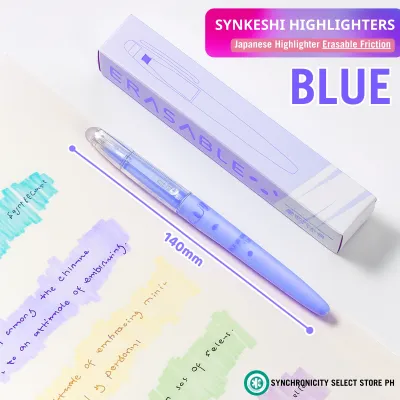
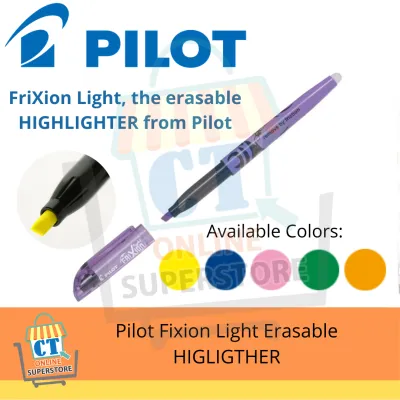
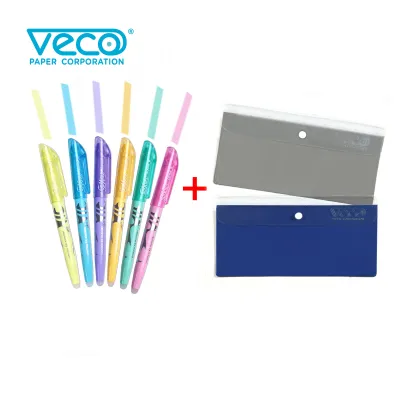
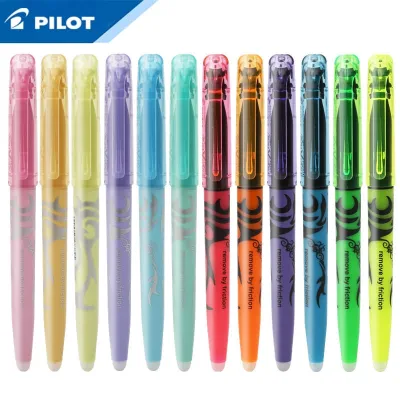
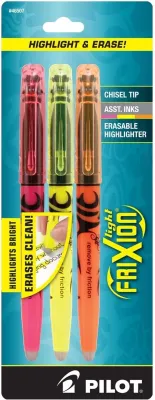
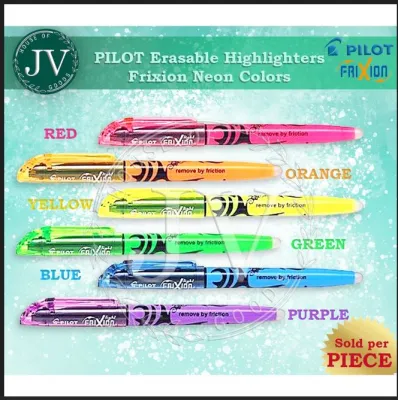
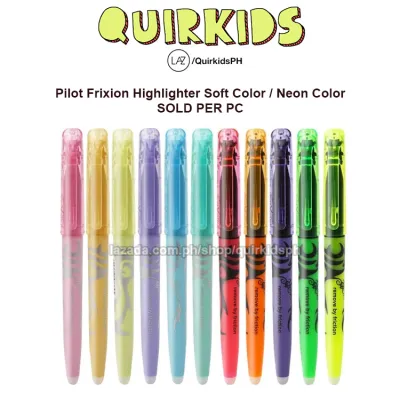
Prices are valid at publication and may change. Please refer to the product page for the latest price.
Because the ink remains on the page in a transparent state, the physical interaction with your paper is highly dependent on the paper’s weight and texture. Rubbing the rubber tip too vigorously on thin or low-quality paper can degrade the surface fibers, leading to pilling or tearing. Additionally, because the ink formulation requires these complex microcapsules, the color payoff is generally more muted and pastel compared to the vibrant, high-saturation neon dyes found in standard highlighters.
The Pros: Where Erasable Highlighters Excel
For students, educators, and professionals who manage shifting schedules, the benefits of erasable highlighting are substantial. The most obvious advantage is mistake-friendly studying. When you are learning a new language, solving complex multi-step math problems, or reviewing technical drafts, your understanding of what is “important” changes as you progress. A friction highlighter allows you to mark key terms during your first reading and erase them once you have fully committed the concepts to memory, leaving you with a clean page for future reviews.
This capability directly contributes to clean aesthetics. Traditional highlighters often leave behind a messy trail of overlapping colors, accidental marks on adjacent lines, or unsightly crossed-out sections when your focus shifts. With an erasable option, you can maintain a pristine, visually organized layout in your textbooks, bullet journals, and personal planners. If your hand slips or you highlight the wrong line, a quick rub with the eraser tip restores order instantly.
Furthermore, this tool promotes the reusability of expensive study materials. If you are working through physical test prep books, standardized exam workbooks, or rented textbooks, highlighting can drastically lower their resale value or prevent you from reusing the pages for practice. By using a friction highlighter, you can mark up a practice exam, study the highlighted sections, and then erase the entire page to test yourself again under realistic, unmarked conditions.
The Cons and Limitations You Must Know
Despite these advantages, the physical properties of thermo-sensitive ink introduce significant risks that you must carefully manage. The most prominent vulnerability is heat sensitivity. Because the ink turns transparent when exposed to heat, leaving your highlighted notebooks in warm environments can cause your hard work to vanish. In tropical regions like the Philippines, where ambient temperatures can soar, leaving your school bag inside a parked car, sitting near a sunny window, or resting on top of a warm electronic device can trigger the fading mechanism, leaving you with blank pages.
This heat sensitivity makes friction highlighters an absolute failure for archival purposes. You must never use them on official signatures, legal contracts, checks, tax documents, or any permanent records. If these documents are scanned, photocopied, or stored in warm filing cabinets, the critical highlighted portions could disappear, potentially compromising the validity of the document.
Another practical limitation involves ink opacity and paper compatibility. Because of the chemical makeup of erasable ink, it tends to sit differently on paper compared to standard water-based formulas. It often exhibits a lighter, more translucent appearance, which some users find less effective for quick scanning. Furthermore, on thin or highly absorbent paper, the ink can cause ghosting—where the shadow of the highlight is visible on the reverse side of the page. Because smoothness, bleed resistance, and drying speed depend entirely on the exact combination of your paper and the ink, you should always perform a small trial on an inconspicuous corner of your document before committing to full-page highlighting.
Self-Diagnosis Checklist: Should You Make the Switch?
To determine if a friction highlighter fits your daily routine, walk through this practical self-diagnosis checklist.
Environment Check
- Do you study or work primarily in air-conditioned spaces, or are you frequently exposed to high ambient heat?
- Do you commute with your stationery in a bag that might sit in a hot vehicle or under direct sunlight?
- If your storage areas are prone to high temperatures, traditional permanent highlighters are a safer bet to prevent accidental fading.
Document Type Check
- What percentage of your reading material consists of temporary study guides versus permanent reference books?
- Are you highlighting rented textbooks, personal planners, and daily to-do lists that have a short shelf life?
- If you are working with legal briefs, historical archives, or documents that must be preserved for years, stick to standard pigment-based highlighters.
Habit Check
- Do you find yourself frequently changing your mind about what information is critical as you read through a chapter?
- Does visual clutter, such as overlapping colors or accidental marks, distract you from studying?
- If you prefer a "write once, keep forever" approach and value high-contrast, vibrant colors, the lighter pastel shades of friction ink may not satisfy your visual preferences.
Paper Compatibility Check
- Do you primarily use thick, high-quality notebook paper, or do you work with thin, delicate newsprint and Bible paper?
- Friction erasing requires physical rubbing, which can easily damage thin, fibrous paper. If your materials are delicate, a non-contact digital or dry highlighting method is superior.
What to Use Instead If Friction Ink Isn't for You
If you realize that the limitations of thermo-sensitive ink outweigh its benefits for your specific workflow, several excellent alternatives can meet your needs.
For permanent, high-visibility marking where you cannot risk any fading, standard fluorescent highlighters remain the industry standard. These use water-based or pigment-based inks that bind permanently to paper fibers, offering maximum lightfastness and vibrant color payoff that stands the test of time.
If you still require erasability but want to avoid the risks of heat-induced fading, consider using mechanical pencils with colored lead or specialized erasable colored pencils. These tools rely on physical clay or wax binders that can be lifted cleanly from the page using a standard vinyl eraser, completely independent of temperature changes.
For those who want infinite flexibility without any physical wear and tear on paper, digital note-taking applications are the ultimate solution. Highlighting PDFs or digital notebooks on a tablet allows you to change colors, undo mistakes, and erase markings instantly with zero risk of ghosting, bleeding, or accidental heat damage.
Frequently Asked Questions (FAQ)
Can I use a friction highlighter on printed textbook pages?
Yes, friction highlighters are generally safe to use on standard coated and uncoated textbook paper. However, because paper finishes and ink formulations vary widely, you should always perform a quick patch test on a blank index page or a back corner first. This allows you to verify the drying speed and ensure the rubbing action does not smudge the underlying printed text. Keep in mind that the friction eraser will only affect the thermo-sensitive highlighter ink; it will not erase or damage the printed black ink of the textbook itself.
Will my highlighted notes disappear if I leave them in a hot room?
Yes, there is a distinct possibility that your highlights will fade or disappear entirely if exposed to elevated temperatures. Common risk scenarios include leaving your notebooks inside a parked car under the sun, placing them near a sunny window, or storing them close to heat-emitting electronic appliances. If your notes do fade, you can sometimes restore the ink by placing the affected notebook inside a sealed plastic bag and leaving it in a household freezer for several hours. However, this method has limitations: it will restore all the ink on the page, including any mistakes you previously erased, and the cold temperature can sometimes cause the paper to absorb moisture.
Do friction highlighters dry out faster than regular ones?
Friction highlighters can sometimes dry out more quickly than standard water-based highlighters if they are not maintained properly. The specialized chemical formulation of thermo-sensitive ink is highly sensitive to air exposure. To maximize the lifespan of your highlighters, always snap the cap on tightly immediately after use and store them horizontally. Storing them horizontally ensures that the ink remains evenly distributed throughout the reservoir and tip, preventing premature drying and maintaining a smooth, consistent flow during your study sessions.
Community discussion
Share your experience or ask a question. Comments are reviewed before publication.