
Quick Answer: Jumbo vs Regular Pencils at a Glance
Choosing the right writing tool is a balancing act between physical comfort and visual precision. While many people grow up using standard yellow school pencils without a second thought, switching to a larger format can fundamentally alter how your hand interacts with the page. When searching for an alternative to standard writing instruments, many users look for a big pencil to alleviate hand strain or help young learners develop early writing skills. The differences between these two categories go far beyond simple aesthetics, impacting everything from muscular tension to the neatness of your handwriting.
To make an immediate decision, you can evaluate your needs based on a few distinct physical and practical criteria:
- Jumbo Pencils excel in grip comfort, muscle relaxation, and line visibility. Their thicker barrels force a more open, relaxed hand position, making them highly suitable for early childhood learners, individuals with motor coordination challenges, or anyone prone to gripping standard pencils too tightly.
- Regular Pencils offer superior fine-motor agility, sharp line precision, and absolute compatibility with standard office accessories. Their slim profiles allow for rapid, minute adjustments, which are essential for detailed sketching, technical drawing, and writing in compact spaces.
Ultimately, neither option is universally superior. The ideal choice depends on your hand size, writing endurance, and the specific paper format you use for your daily work.
Products mentioned in this guide
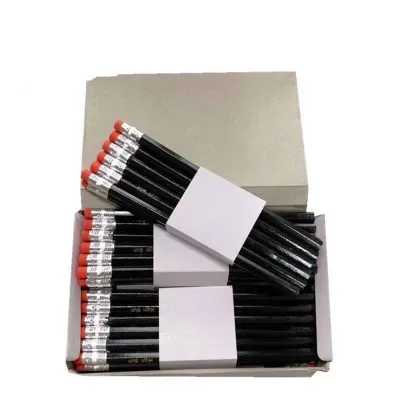
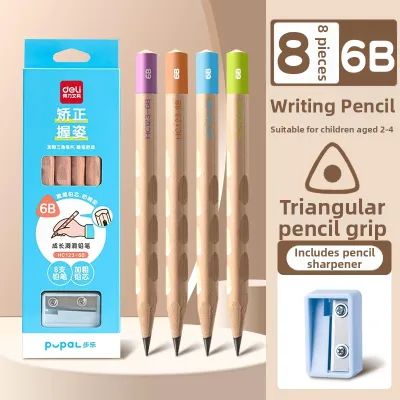
Prices are valid at publication and may change. Please refer to the product page for the latest price.
Grip Comfort: How a Big Pencil and Regular Barrel Thickness Change Your Hold
The physical diameter of a pencil barrel dictates the angle of your fingers and the amount of force required to maintain a secure hold. Standard wooden pencils typically feature a hexagonal or round barrel with a diameter ranging from 7 to 8 millimeters. This slim profile is designed for maximum material efficiency and suitability for average adult hands, but it requires a highly coordinated, tight tripod grip to keep the instrument stable during rapid writing.

In contrast, a jumbo or big pencil features an enlarged barrel diameter, usually measuring between 10 and 12 millimeters. This seemingly small increase in millimeter thickness significantly alters hand biomechanics. When you hold a thicker barrel, your fingers cannot close as tightly into the palm. This open hand posture naturally reduces the tendency to squeeze the pencil, distributing the holding pressure across a larger surface area of the finger pads.
To find the right fit, always check the exact millimeter specifications on product packaging, as different stationery manufacturers use varying definitions of “jumbo” or “oversized.” Some brands offer intermediate “midi” sizes around 9 millimeters, which serve as a middle ground for older children and adults with medium-sized hands.
For writers living in tropical climates like the Philippines, humidity and hand sweat can make slim, painted wooden pencils incredibly slippery. When your fingers slide down a standard pencil, you naturally compensate by squeezing harder, which rapidly accelerates muscle fatigue. A thicker wooden barrel provides more physical surface area for your fingers to rest against, reducing slippage and allowing for a more secure, dry grip even during warm afternoon writing sessions.
Writing Control: Fine Details vs Broad Strokes
The physical size and weight distribution of a pencil directly influence your fine-motor agility and the neatness of your work. Regular pencils are lightweight and highly responsive to micro-movements of the wrist and fingers. This agility is crucial when writing small characters, filling out dense forms, or executing intricate cross-hatching in a sketch. Because the barrel is thin, it does not block your line of sight, allowing you to see exactly where the graphite point meets the paper fibers.
Jumbo pencils, due to their increased wood volume and thicker graphite cores, carry more physical mass. This extra weight shifts the balance of the pencil, often making it feel slightly front-heavy. While this weight helps stabilize the hand for broad, sweeping strokes, it can make rapid, precise directional changes feel cumbersome. The bulk of the barrel can also partially obstruct your view of the paper, which can make writing in tight margins or narrow-ruled lines more difficult.
Your choice should align with the ruling of the paper you use most frequently. Standard school intermediate pads and narrow-ruled notebooks common in offices feature line spacings of 5 to 6 millimeters. Navigating these tight spaces with a thick pencil can be frustrating, as the physical bulk of the tool limits your ability to make tiny, controlled movements. However, if you are working on wide-ruled paper, primary school writing pads with 10-millimeter spacing, or large-format drawing pads, the stability of a jumbo pencil becomes a distinct advantage.
Line Quality: Core Size, Boldness, and Sharpening
The performance of a pencil is ultimately judged by the mark it leaves on the page, which is determined by the diameter and composition of its inner graphite core. Standard pencils typically contain a graphite core that is roughly 2 to 2.2 millimeters in diameter. This thin core is highly concentrated, allowing it to hold a fine, needle-like point for a relatively long writing duration before requiring a turn in the sharpener.
Jumbo pencils house much thicker graphite cores, often measuring between 3.8 and 4.5 millimeters. This substantial core lays down a wider, bolder line with minimal downward pressure. For sketching, shading, or creating highly visible marks, this thick lead is exceptionally efficient. However, because the contact area between the graphite and the paper is much larger, the point blunts quickly. Continuous writing with a jumbo pencil will cause your lines to thicken rapidly, requiring frequent maintenance to keep your handwriting legible.
This frequent blunting introduces practical maintenance trade-offs. Sharpening a jumbo pencil removes a larger volume of both wood casing and graphite core during each session. This accelerated wear means a jumbo pencil will often have a shorter overall lifespan than a standard pencil used for the same volume of writing.
When evaluating line quality, it is critical to verify the graphite hardness grade printed on the pencil barrel, such as HB, B, or 2B. Line darkness and smudging are primary functions of this graphite grade rather than the physical thickness of the core. For example, a jumbo HB pencil will write lighter and resist smudging better than a standard-sized 2B pencil, despite having a much larger core. Always check the grade to ensure the graphite performance matches your paper type and writing style.
Hand Fatigue: Managing Cramps During Long Writing Sessions
Muscle fatigue and hand cramps during extended writing sessions are usually caused by excessive grip tension rather than the weight of the writing instrument itself. When using a standard, slim pencil, many writers unconsciously employ a “pinch grip,” squeezing the barrel tightly between the thumb, index, and middle fingers. This prolonged isometric muscle contraction restricts blood flow and strains the small intrinsic muscles of the hand, particularly the thenar eminence at the base of the thumb.
Because a jumbo pencil prevents your hand from closing into a tight fist, it naturally discourages this pinch grip. By forcing your hand into a more open, relaxed posture, the larger barrel helps prevent the painful cramping associated with long essay writing or extended note-taking sessions. This ergonomic benefit is why many educators recommend oversized pencils for early learners who are still developing hand strength and coordination.
However, the added weight of a jumbo pencil introduces a different kind of physical fatigue. While it reduces finger cramping, the heavier wood casing requires more effort from your wrist and forearm muscles to steer the pencil across the page. Over hours of continuous use, this extra weight can lead to a dull ache in the wrist or the top of the forearm, especially for writers who prefer a fast, cursive style.
To determine which pencil format suits your hand anatomy, you can perform a simple 15-minute writing test:
- Set a timer for 15 minutes and write continuously on standard lined paper using a regular pencil, maintaining your normal writing speed.
- Note where you feel tension, focusing on the thumb web space, the index finger joint, and the wrist.
- Allow your hand to rest completely for a few hours, then repeat the test using a jumbo pencil.
- Compare the results: if the regular pencil caused sharp finger cramps while the jumbo pencil caused mild wrist fatigue, the jumbo format is likely the better option for your grip style.
If you find that you prefer the lightweight agility of a regular pencil but still suffer from finger cramping, adding a separate, soft silicone grip to a standard pencil can provide a practical middle ground. These slide-on accessories increase the grip diameter to mimic a jumbo pencil without adding the heavy wood weight of a larger instrument.
Practical Logistics: Sharpeners, Cases, and Compatibility
Beyond the physical writing experience, incorporating a pencil into your daily routine requires considering the ecosystem of stationery accessories. Regular pencils enjoy universal compatibility. They fit effortlessly into standard pencil case loops, desk organizers, backpack slots, and every standard pencil sharpener on the market, whether manual, hand-cranked, or electric.
Jumbo pencils present several logistical challenges due to their non-standard dimensions. A standard pencil sharpener opening is designed for barrels measuring 7 to 8 millimeters. Attempting to force a 10-millimeter or 12-millimeter jumbo pencil into a standard opening will strip the outer paint, crush the wood casing, or snap the graphite core. In some cases, the pencil can become permanently jammed inside the sharpener mechanism.
To use jumbo pencils successfully, you must ensure you have access to a compatible dual-hole sharpener. These specialty sharpeners feature one standard 8-millimeter hole and a second, larger opening that typically accommodates barrels up to 12 millimeters. High-quality dual-hole sharpeners generally range from ₱80 to ₱150 in local stationery stores, representing a minor but necessary additional investment.
Storage is another common issue. Jumbo pencils will not fit into the tight elastic loops of zippered pencil cases or the pre-molded slots of standard school boxes. If you plan to carry multiple jumbo pencils to school or the office, you will need a spacious, open-compartment pouch rather than a structured organizer. Keep these accessory requirements in mind before purchasing jumbo pencils in bulk packs.
Final Verdict: How to Choose the Right Pencil for You
Selecting the right pencil size is a personal decision that depends on your physical comfort, writing tasks, and accessory preferences. You can use the following conditional guidelines to make an informed choice:
Choose Jumbo Pencils if:
- You frequently experience finger joint pain or severe hand cramping when using standard writing tools.
- You are teaching young children who are still developing their fine-motor skills and hand strength.
- You prefer laying down bold, highly visible lines for sketching, layout design, or marking up documents.
- You have larger hands and find standard 7-millimeter barrels uncomfortable to hold for more than a few minutes.
Choose Regular Pencils if:
- Your daily work involves writing small characters, filling out compact forms, or doing detailed technical drawings.
- You prefer a lightweight, agile writing instrument that responds quickly to subtle finger movements.
- You want absolute compatibility with standard pencil sharpeners, desk organizers, and zippered cases.
- You prefer a fine, sharp point that lasts for a long time without requiring frequent sharpening.
Because hand sizes and grip pressures vary widely, personal comfort should always guide your final decision. Buying a single pencil or a small starter pack of both sizes is the most practical way to test these differences before committing to a larger supply for your home, school, or office.
Frequently Asked Questions (FAQ)
Can I use a regular sharpener on a jumbo pencil?
No, you cannot use a standard pencil sharpener on a jumbo pencil. Standard sharpeners are engineered with an opening of 7 to 8 millimeters, whereas jumbo pencils have a barrel diameter of 10 to 12 millimeters or more. Forcing a larger pencil into a standard sharpener will damage the wood casing, break the thick graphite core, or jam the blades. Always use a dedicated dual-hole sharpener that explicitly states it can accommodate larger barrel diameters.
Are jumbo pencils better for people with arthritis or joint pain?
Yes, jumbo pencils are generally much better for individuals dealing with arthritis, joint pain, or limited hand mobility. The thicker barrel prevents the fingers from closing into a tight, strained pinch grip, which significantly reduces pressure on the finger joints. However, because jumbo pencils are heavier, some users may experience wrist fatigue over long sessions. If the weight becomes uncomfortable, a lightweight standard pencil paired with a wide, soft silicone grip is an excellent alternative.
Community discussion
Share your experience or ask a question. Comments are reviewed before publication.