
Entering the world of fountain pens is an exciting journey, and choosing your very first instrument often leads to a highly celebrated classic: the Kakuno. This friendly pen is widely appreciated for its reliability and ease of use, making it an excellent entry point for students, professionals, and hobbyists alike. However, before you can start writing, you must make a crucial decision: selecting the right nib size.
There is no single, universally ideal nib size for every beginner. The right choice depends on your personal handwriting size, the quality of the paper you use daily, and your typical writing speed. If you have tiny, detailed handwriting or frequently write on thin paper, the Extra Fine (EF) nib is highly suitable. For those who need a versatile, balanced writer for daily notes and standard school notebooks, the Fine (F) nib serves as an excellent middle ground. If you prefer a smooth, gliding feel, write with larger letters, or want to sign documents with bold lines, the Medium (M) nib offers a wetter, more expressive experience.
Understanding the Kakuno Nib Sizes (EF, F, M)
To understand how these three options differ, it helps to look at the physical construction of the nib. At the very tip of each stainless steel nib is a tiny ball of wear-resistant alloy. The physical size and shape of this tipping material determine how much ink is deposited onto the page and how wide the resulting line will be. The Extra Fine nib features a highly pointed, microscopic tip, while the Fine nib has a slightly larger rounded tip. The Medium nib possesses a visibly larger, rounder ball of tipping material.
Products mentioned in this guide
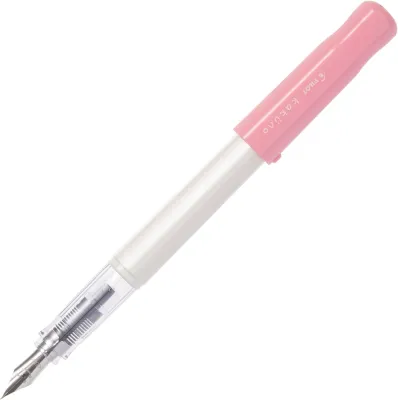
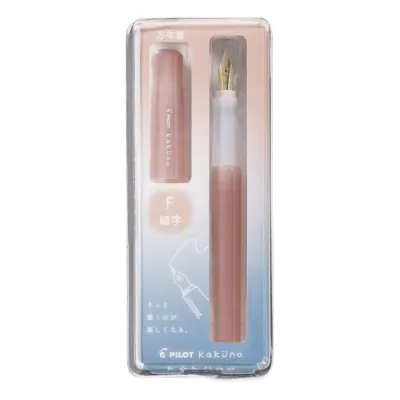
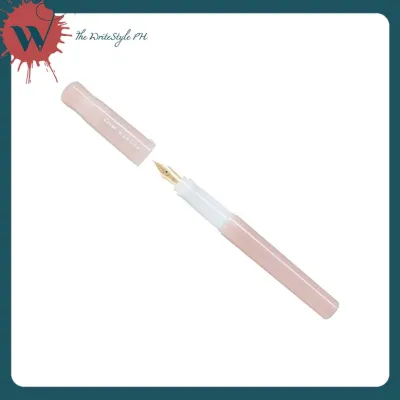
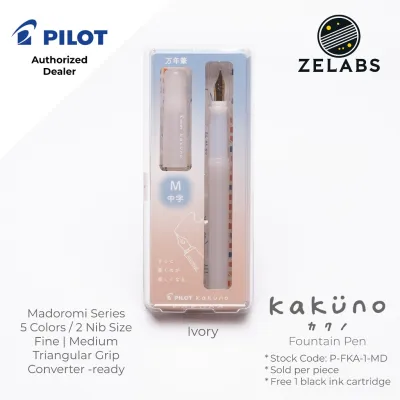
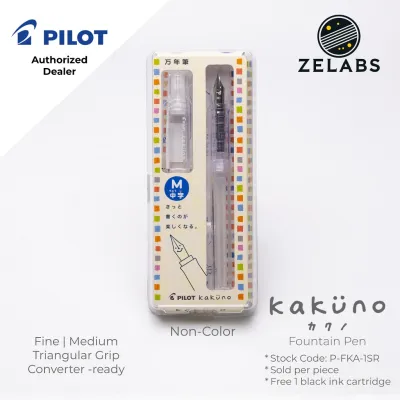
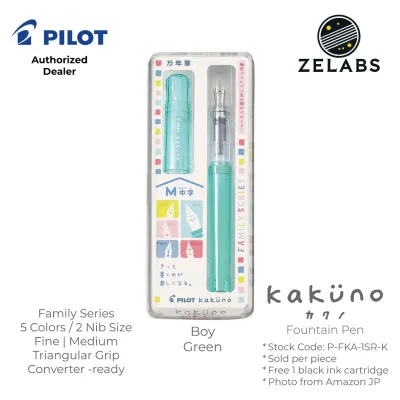
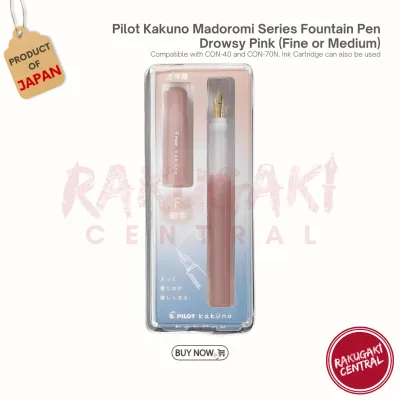
Prices are valid at publication and may change. Please refer to the product page for the latest price.
This physical variation directly correlates with ink flow volume. A smaller tip restricts the flow of ink, resulting in a thinner, drier line that dries almost instantly. A larger tip allows a more generous volume of ink to flow through the feed, creating a wider, wetter line.
However, manufacturer specifications only provide a baseline for line width. In practice, the actual performance of your pen is heavily influenced by external factors like paper quality, ink type, and even environmental conditions. In humid tropical climates, such as in the Philippines, paper fibers tend to absorb moisture from the air. This makes standard paper more absorbent, which can cause ink to spread out more than it would in a dry environment. Consequently, a Fine nib might write more like a Medium on damp paper, making your choice of nib size and paper pairing incredibly important.
Side-by-Side Comparison of Writing Characteristics
Evaluating how each nib behaves in daily writing scenarios helps clarify which one fits your routine. The Extra Fine nib is designed for maximum precision, producing a very thin line with minimal ink flow. Because it deposits so little ink, you will notice very little line variation or ink shading, which is the beautiful tonal contrast where ink pools in certain parts of a letter. The Fine nib offers a balanced middle ground, providing a clean, consistent line with a moderate flow that works reliably across various tasks. The Medium nib delivers a rich, wet line that allows the natural characteristics of your ink, such as shading and sheen, to become visible on the page.

The physical size of the tipping also dictates the tactile sensation of writing, often referred to as feedback. Because the Extra Fine nib has a very small contact point with the paper, it produces a noticeable pencil-like drag. This feedback is not necessarily scratchiness, but rather a tactile connection to the page that some writers enjoy for control. The Fine nib reduces this feedback significantly, offering a smoother feel while maintaining enough resistance to keep your handwriting neat. The Medium nib glides effortlessly across the page with very little resistance, providing a glassy, smooth writing experience.
Drying time is another critical factor, especially for fast-paced note-taking or left-handed writers. The dry flow of the Extra Fine nib means the ink dries almost immediately, minimizing the risk of smudging. The Fine nib also dries relatively quickly, making it highly practical for rapid writing. The Medium nib, with its generous ink flow, requires a longer drying time. In humid conditions or on coated papers, this can lead to accidental smudges if you are not careful.
The following table summarizes these key characteristics to help you compare the three options at a glance:
| Nib Size | Ink Flow | Feedback Level | Paper Sensitivity | Ideal Use Case |
|---|---|---|---|---|
| Extra Fine (EF) | Low / Dry | High (Pencil-like) | Low (Resists bleeding) | Small handwriting, grid planners, thin paper |
| Fine (F) | Medium / Balanced | Moderate | Medium | General note-taking, school work, daily journaling |
| Medium (M) | High / Wet | Low (Very smooth) | High (Prone to bleeding) | Large handwriting, signatures, smooth paper |
Matching the Nib to Your Writing Style and Needs
Selecting the right nib is ultimately about matching the pen to your physical writing habits and daily tasks. The Extra Fine nib is highly recommended for individuals with very small, compact handwriting. If you find yourself writing complex characters, filling out dense forms, or organizing your day within the tiny grids of a pocket planner, the precision of the EF nib is invaluable. It allows you to write clearly in tight spaces without the letters running together.
The Fine nib is the most versatile option for general use. It is well-suited for students taking lecture notes on standard intermediate pads, office workers jotting down quick reminders, and anyone who wants a reliable daily writer. The F nib provides enough line definition to keep your writing legible, while still offering a comfortable, smooth feel that does not fatigue your hand during long writing sessions.
The Medium nib is ideal for those who write with large, sweeping strokes or prefer a bold visual presence on the page. It is an excellent choice for signing documents, writing personal letters, or creative journaling. If you enjoy using colorful or specialty fountain pen inks, the M nib is an excellent vehicle to showcase their unique properties, as the heavier ink deposit brings out the true depth of the color.
Your writing angle and grip pressure also play a significant role in how these nibs perform. Unlike ballpoint pens, which require downward pressure to roll a metal ball, fountain pens rely on capillary action to draw ink onto the paper. They perform best when held at a relaxed angle of approximately 45 degrees, using only the weight of the pen itself to write. If you tend to press down hard out of habit, an EF nib may dig into the paper and feel scratchy. Developing a light, relaxed grip is essential for enjoying the smooth qualities of any fountain pen, particularly the finer nib sizes.
Paper and Ink Compatibility Checks
To get the most out of your pen, you must consider the paper and ink you pair with it. Fountain pen ink is water-based, meaning it behaves very differently from the thick oil-based ink found in ballpoints. When a wet nib like the Medium is used on thin, highly absorbent paper—such as cheap copy paper or low-grade school notebooks—the ink will often feather, which is when it spreads outward along the paper fibers, or bleed through to the other side of the page.
To prevent these issues, wetter nibs require higher-quality paper with a heavier weight or a specialized coating that slows down ink absorption. Conversely, the drier Extra Fine nib is highly forgiving. Because it deposits a minimal amount of ink, you can write on almost any paper, including thin newsprint or standard office documents, without worrying about bleed-through.
Ink viscosity also affects your writing experience. Some inks are formulated to flow very freely, often called wet inks, while others flow more slowly, known as dry inks. Pairing a wet ink with a Medium nib on standard paper will amplify feathering, whereas pairing a dry ink with an Extra Fine nib might make the pen feel overly dry or prone to skipping.
Before committing to a full page of writing, always perform a simple compatibility check. Find an inconspicuous area, such as the back page of your notebook, and draw a series of quick crosshatches and solid circles. Observe how quickly the ink dries and check the reverse side of the page. If you notice significant ghosting, where the writing is highly visible from the back, or actual bleeding, you may need to switch to a finer nib, a drier ink, or a more fountain-pen-friendly notebook.
How to Make Your Final Decision
When you are ready to purchase your pen, use this straightforward framework to guide your choice:
Choose the Extra Fine (EF) nib if you write with very small letters, frequently use thin or low-quality paper, need ink to dry almost instantly, and do not mind a bit of tactile feedback while writing.
Choose the Fine (F) nib if you want a highly versatile daily writer, have average-sized handwriting, use a mix of standard and high-quality paper, and want a balanced blend of smoothness and precision.
Choose the Medium (M) nib if you write with large letters, prioritize a glassy, smooth writing sensation, primarily use high-quality or coated paper, and want to showcase the vibrant colors and shading of your inks.
If you are still undecided, starting with the Fine (F) nib is generally the safest and most reliable baseline for any beginner. Because this model is designed to be an accessible and affordable entry-level pen, many writers eventually find value in owning more than one. You might start with a Fine nib for your daily school or office work, and later acquire a Medium nib to explore different ink colors and creative writing styles as your collection grows.
Frequently Asked Questions (FAQ)
Can I change the Kakuno nib size after buying the pen?
Yes, you can physically swap the nib and feed of a Kakuno, although the manufacturer does not sell individual replacement nibs. To change your nib size, you will need to harvest a compatible nib from another pen in the same brand family.
To perform the swap, first ensure the pen is completely clean and flushed with water to avoid getting ink on your hands. Firmly grip the sides of the metal nib and the plastic feed together using your thumb and forefinger. Pull them straight out of the pen body with a steady, firm motion without twisting. To insert the new nib, align the flat sides of the feed with the internal guide rails inside the pen section, place the metal nib securely on top of the feed, and push them straight back in until they sit flush.
Always exercise caution during this process. Never use metal tools like pliers, which can easily scratch the steel nib or crush the delicate plastic fins of the feed. If the assembly feels stuck, soaking the section in warm water for a few minutes can help loosen any dried ink residue that might be holding it in place.
Do Kakuno nibs write differently from other entry-level Pilot pens?
The Kakuno shares its steel nib and feed design with several other entry-level models from the same manufacturer, including the Metropolitan, Prera, and Explorer. Because these pens use the exact same nib unit, the physical line width and ink flow characteristics remain highly consistent across the different models.
However, the overall writing experience can feel quite different due to the physical design of each pen body. The Kakuno is constructed from lightweight resin and features a hexagonal, triangular-guided grip designed to help beginners maintain the correct writing angle. In contrast, a model like the Metropolitan features a heavier brass body. The added weight of a metal pen applies more natural downward pressure onto the paper, which can make the same Fine or Medium nib feel slightly wetter or smoother than it does on the lightweight Kakuno.
Community discussion
Share your experience or ask a question. Comments are reviewed before publication.