
Managing long-format documents on the go presents a unique set of challenges, especially when working outside a traditional office environment. Standard legal-size documents, which are longer than typical letter-size sheets, easily bend, crease, or flap around when unsupported. A long foldable clipboard offers a practical solution by combining a rigid, full-length writing surface with a collapsible design that fits neatly into a bag or briefcase. However, finding a model that truly accommodates these longer sheets without sacrificing stability requires looking closely at specific structural features.
To make an informed choice, you must evaluate how the clipboard handles the extra length of legal paper, how the folding mechanism behaves under writing pressure, and how the materials hold up against daily wear and environmental factors like humidity. By focusing on key specifications such as exact board dimensions, hinge locking systems, material durability, and clip tension, you can select a tool that keeps your documents secure and your writing surface perfectly flat.
Verifying Dimensions for Legal and Oversized Documents
When shopping for a long foldable clipboard, the first step is to verify that the physical dimensions of the board actually match the paper sizes you use daily. Standard US legal-size paper measures 8.5 by 14 inches (215.9 by 355.6 mm). In many regions, including the Philippines, professionals also frequently handle “long bond” paper, which typically refers to folio or F4 size, measuring 8.5 by 13 inches (215.9 by 330.2 mm). A clipboard labeled generically as “long” or “legal” might be designed for one but not the other, making it essential to check the exact measurements provided by the manufacturer.
Products mentioned in this guide
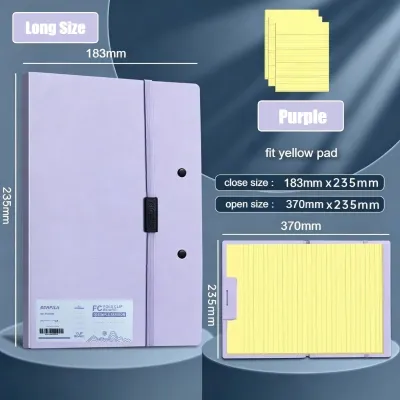
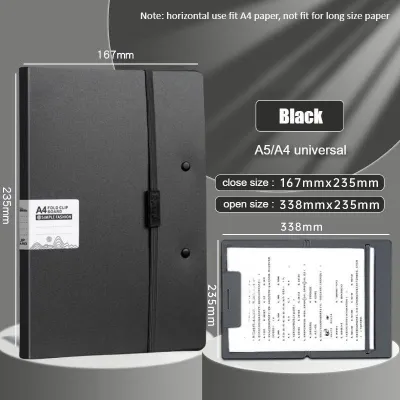
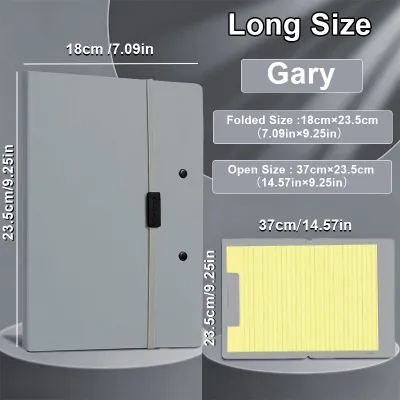
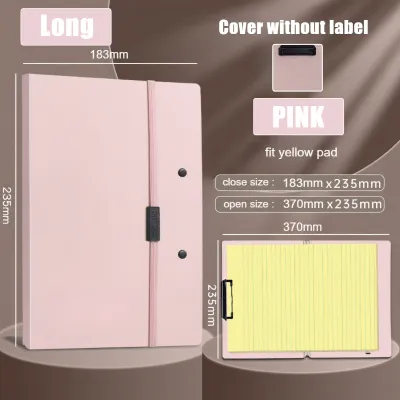
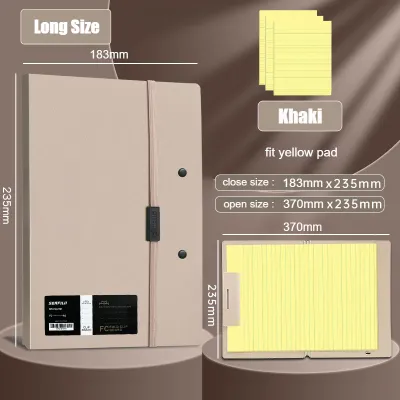
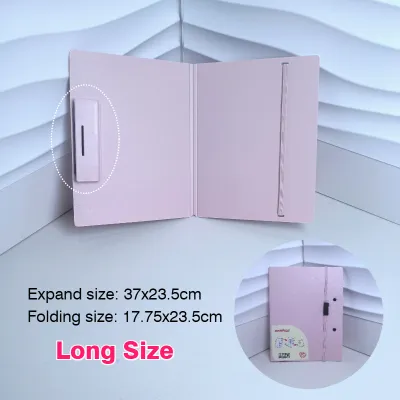
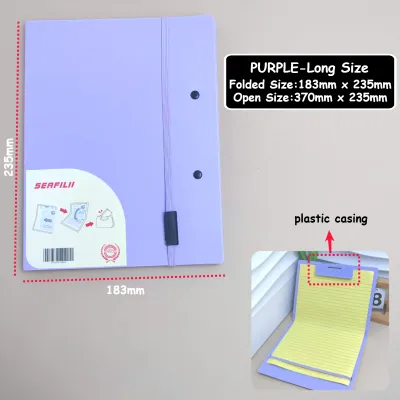
Prices are valid at publication and may change. Please refer to the product page for the latest price.
To ensure your documents do not overhang the edges, you must distinguish between the external dimensions of the clipboard and its internal usable board space. The metal clip at the top of the board typically occupies 1 to 1.5 inches of vertical space. If a clipboard’s total external length is exactly 14 inches, a standard US legal document will inevitably hang off the bottom edge because the clip pushes the paper downward. For complete protection, look for a clipboard with an external length of at least 15 to 15.5 inches when fully unfolded, ensuring the bottom edge of your paper remains fully supported and protected from dog-eared corners.
Additionally, consider the width of the board. While legal paper is 8.5 inches wide, the clipboard should ideally measure 9 to 9.5 inches across. This extra margin provides a protective border that shields the edges of your documents from friction when you carry the board or slide it into a bag. If you occasionally handle oversized architectural prints or custom ledger sheets, verify whether the board’s folding seams or side borders will obstruct these wider formats. Always review the product specifications on online marketplaces or stationery catalogs rather than relying solely on category labels, as sizing standards can vary significantly between brands.
Choosing the Right Folding Mechanism for Portability
The primary appeal of a foldable clipboard is its portability, but the folding design directly impacts how stable the board feels when you write on it. The most common designs are bi-fold and tri-fold configurations. A horizontal bi-fold splits the board in half, reducing a 15-inch clipboard to a manageable 7.5-inch footprint that easily slides into standard backpacks, messenger bags, or vehicle compartments. Tri-fold designs fold into three distinct sections, collapsing into an even more compact, pocket-sized shape, though they introduce more seams and hinges that can affect the smoothness of your writing surface.

To prevent the clipboard from collapsing or sagging while you write mid-air, a reliable locking mechanism is essential. Look for clipboards equipped with slide locks, friction detents, or rigid hinge braces that secure the board in a completely flat position when unfolded. A high-quality folding clipboard should feel like a single, solid piece of material once opened. If the hinge lacks a secure lock, the board may flex or fold inward under the pressure of your pen, resulting in uneven handwriting and physical hand fatigue during extended use.
Furthermore, evaluate the durability of the hinges themselves. In folding stationery, the hinge is the most common point of failure. Molded plastic “living hinges”—which rely on a thin, flexible strip of plastic to bend—are lightweight but can fatigue, crack, and split over time, especially when exposed to warm, tropical climates. Metal piano hinges secured with rivets or heavy-duty reinforced mechanical joints offer much greater longevity. When browsing stationery suppliers, check close-up product images to ensure the hinge assembly is robust and flush with the board’s surface so it does not create a bump under your paper.
Selecting Materials for Durability and Document Protection
The materials used to construct your clipboard determine how well it protects your documents and how long it survives daily use. For the core board material, rigidity is paramount. Heavy-duty aluminum, high-impact polypropylene (hard plastic), and medium-density fiberboard (MDF) are the most common choices. Aluminum is exceptionally rigid, lightweight, and highly resistant to bending, making it an excellent choice for field use, though it can become hot to the touch if left under direct sunlight. High-impact plastic offers excellent water resistance and flexibility, while MDF is highly rigid but prone to swelling and warping if exposed to moisture or high humidity.
In tropical environments where humidity is consistently high, material selection becomes even more critical. High humidity naturally softens paper, making a perfectly rigid backing indispensable for legible writing. If you work outdoors or travel frequently, a clipboard with a protective outer cover made of nylon, PVC, or polyurethane (PU) leather is highly beneficial. These covers shield your documents from sudden rain showers, sweat, and accidental spills. However, be aware of material trade-offs: while PVC is highly waterproof, it can sometimes cause “toner transfer” in warm weather, where printed ink sticks to the plastic cover and peels off the page. Treated nylon or high-grade PU leather typically offers a safer, more professional alternative.
Weight is another key trade-off to consider. A heavy-duty aluminum clipboard provides unmatched stability for writing while standing, but it adds noticeable weight to your bag if you carry it all day. Conversely, a lightweight plastic or thin cardboard-core clipboard is easy to transport but may flex too much when you write near the folding seams. Assess your typical working environment—whether you are primarily standing on a construction site, moving between hospital wards, or sitting in a climate-controlled legal office—to find the right balance between lightweight portability and structural rigidity.
Evaluating Clip Strength for Secure Paper Handling
A clipboard is only as good as its clip, and this is especially true when managing long, heavy legal documents. Because legal paper has more surface area than standard letter paper, it is more susceptible to catching the wind or sliding out of alignment when you move. The clipping mechanism must exert enough tension to hold a single sheet of paper securely, while also accommodating thicker stacks of documents—such as multi-page contracts, land titles, or inspection reports—without slipping.
When evaluating clip designs, you will generally choose between low-profile clips and heavy-duty wire or spring clips. Low-profile clips lie nearly flat against the board, making the clipboard much easier to slide into tight bag compartments without snagging on other items or scratching your bag’s interior. However, they often have a lower paper capacity. Heavy-duty spring clips offer a wider jaw opening and stronger grip tension, making them ideal for holding thick stacks of paper, though they add bulk to the clipboard’s folded profile. Choose the clip style that aligns with the volume of paperwork you handle on a typical shift.
To protect important legal documents from damage, check if the clip features non-marring pads or rubberized grips. Bare metal clips with sharp teeth can easily crease, dent, or tear paper, especially under high spring tension. Rubberized or vinyl-coated grips distribute the clamping force evenly across the top of the page, preventing slipping while keeping your documents pristine. This is a small but vital detail when handling official records, certificates, or legal filings that must remain free of unsightly marks and tears.
Building Your Shortlist Based on Your Workflow
To finalize your purchase, match the clipboard’s features to the specific demands of your daily workflow. Different professions require different balances of durability, aesthetics, and functionality. By identifying your primary working environment, you can narrow down your options to the most practical choices.
- Field Professionals (Inspectors, Surveyors, Logistics Officers): If your work keeps you outdoors, prioritize weather resistance and maximum durability. Look for an anodized aluminum or heavy-duty polypropylene bi-fold clipboard with a secure mechanical slide lock. A weather-resistant cover is highly recommended to protect your paperwork from sudden downpours and wind.
- Office, Legal, and Medical Professionals: If you primarily work indoors or move between meeting rooms, professional aesthetics and bag compatibility are key. A sleek PU leather bi-fold clipboard in a neutral color provides a polished appearance during consultations or court hearings. Prioritize a low-profile clip and a smooth, continuous writing surface that folds flat enough to slide effortlessly into a slim briefcase or tote bag.
Before making your final purchase from an online marketplace or local stationery supplier, run through a quick verification checklist. Double-check the seller’s detailed product description for the exact unfolded and folded dimensions to ensure it fits both your legal paper and your favorite gear bag. Review user feedback specifically regarding hinge stiffness and clip tension, as these mechanical parts are difficult to judge from photos alone. Finally, confirm the seller’s return policy so you can easily exchange the clipboard if the hinge alignment or writing smoothness does not meet your professional standards.
Frequently Asked Questions (FAQ)
Can I use a legal-size foldable clipboard for standard letter-size paper?
Yes, you can easily use standard letter-size paper on a legal-size foldable clipboard. Because letter-size paper (8.5 by 11 inches) shares the same width as US legal paper, it will align perfectly with the sides of the board. The only difference is that you will have an extra three inches of exposed board space at the bottom. The top clip will secure the shorter paper just as effectively, making a legal-size clipboard a highly versatile option if you frequently switch between different document formats.
How do I clean and maintain the folding hinges on my clipboard?
To keep the folding mechanism operating smoothly, periodically wipe the hinges with a dry microfiber cloth to remove dust, lint, and pocket debris that can accumulate during travel. Avoid using harsh chemical solvents or soaking the clipboard in water, as moisture can trap itself inside mechanical joints and lead to rust on metal rivets or springs. If a metal hinge begins to squeak or feel stiff, apply a single drop of dry silicone-based lubricant directly to the pivot points, wiping away any excess immediately to prevent it from staining your paper documents.

Community discussion
Share your experience or ask a question. Comments are reviewed before publication.