
Choosing between the 0.5mm and 0.7mm Kuru Toga Advance comes down to your personal writing pressure, handwriting size, and the typical paper you use daily. While both models feature the signature rotating engine designed to keep your lead sharp, they deliver distinct writing experiences. The 0.5mm model is tailored for precision, making it ideal for compact handwriting and detailed diagrams. Conversely, the 0.7mm model offers a bolder line and greater structural durability, which suits heavy-handed writers and rougher paper surfaces. Understanding how these two sizes interact with your writing habits will help you choose the perfect tool for your school or office setup.
In tropical climates like the Philippines, environmental factors also play a subtle role in your stationery choice. High humidity can soften paper fibers, making pages slightly damp and more prone to catching or tearing under the point of a fine pencil. A thicker lead can glide more easily over moisture-softened sheets, whereas a finer lead offers unmatched clarity on crisp, dry paper. By evaluating your daily writing environment alongside your physical writing style, you can select the lead diameter that keeps your notes clean, legible, and smudge-free.
Core Differences in Line Thickness and Writing Feel
The most immediate difference between the 0.5mm and 0.7mm Kuru Toga Advance is the visual weight of the line. A 0.5mm lead produces a crisp, thin line that allows for high text density. On standard ruled paper, such as local intermediate pads, the 0.5mm size lets you write small, neat characters within a single line without cluttering the page. This makes it highly efficient for structured note-taking where maximizing space is a priority.
Products mentioned in this guide
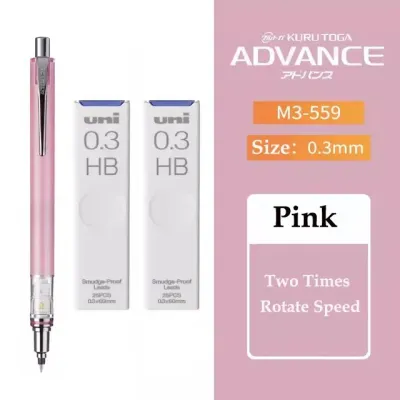
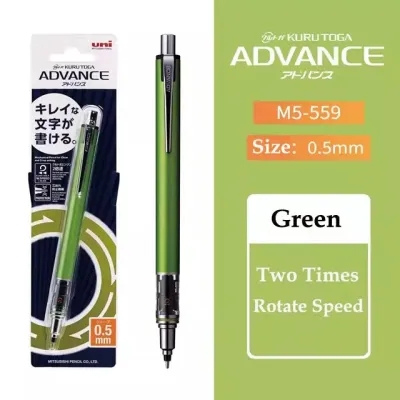
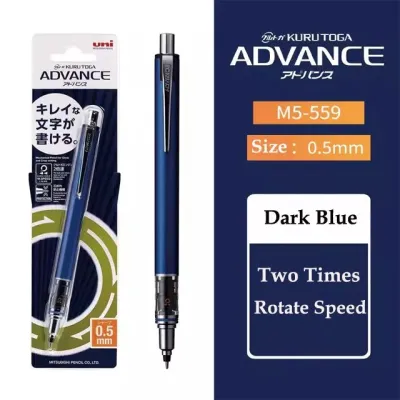
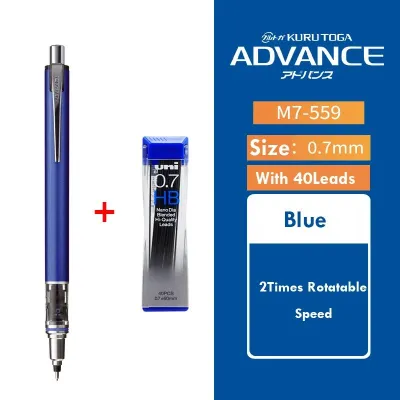
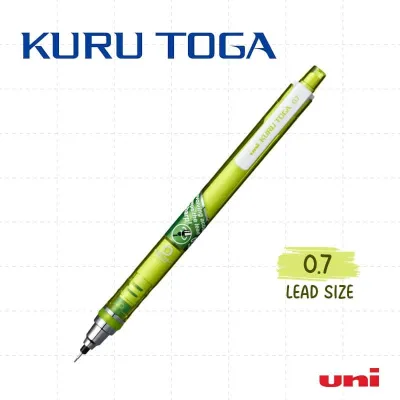
Prices are valid at publication and may change. Please refer to the product page for the latest price.
In contrast, the 0.7mm lead produces a thicker, more prominent line that is easily readable from a distance. While this bolder line is excellent for emphasis and quick reading, it can cause small, cramped handwriting to look like a series of dark smudges. If your natural writing style involves large, sweeping letters, the 0.7mm size will accommodate your hand movements beautifully, providing a satisfying visual presence on the page.
Tactile feedback also differs significantly between the two sizes. Because a 0.5mm lead has a smaller surface area contacting the paper, it creates more concentrated friction, resulting in a higher level of tactile feedback or “tooth.” Some writers enjoy this feeling, as it offers a sense of control and precision. The 0.7mm lead distributes the writing pressure over a larger surface area, which naturally reduces friction and creates a smoother, gliding sensation across the paper.
It is important to note how the Kuru Toga Advance mechanism influences this experience. The Advance model features a specialized engine that rotates the lead slightly every time you lift the pencil from the page. This continuous rotation prevents the lead from wearing down at an angle, maintaining a uniform conical tip. While this mechanism keeps both sizes sharp, the baseline physical thickness of the lead remains different. The 0.5mm will always produce a needle-sharp point, while the 0.7mm will maintain a clean, rounded point that is consistently bold without becoming flat or uneven.
Matching Lead Size to Your Daily Tasks
Best Scenarios for the 0.5mm Version
The 0.5mm Kuru Toga Advance is the go-to choice for tasks demanding high precision. Students and professionals working with complex mathematical formulas, scientific notations, or detailed technical drawings benefit greatly from the fine line. When writing subscripts, exponents, or intricate symbols, a thicker lead can easily blur details. The 0.5mm ensures every stroke remains distinct.

This size is also highly suited for annotating textbooks or writing in tight margins. If you prefer highly organized, dense notes, the 0.5mm allows you to pack more information into a smaller area. However, it is best suited for those with a light writing grip who apply minimal downward pressure. Users who glide their pencil across the page with minimal force will find that the 0.5mm lead performs beautifully without the risk of frequent snapping.
Best Scenarios for the 0.7mm Version
The 0.7mm Kuru Toga Advance excels in fast-paced environments where speed and durability are more important than microscopic precision. If you take rapid dictation, brainstorm during meetings, or sketch broad layouts, the thicker lead keeps pace with your thoughts. The bolder line is also highly beneficial for sharing hand-written notes, as the text stands out clearly.
Another major advantage is its performance on varied paper qualities. In school or office settings where you might write on rough exam sheets or paper softened by ambient humidity, a fine 0.5mm tip can easily dig into the fibers and tear. The 0.7mm lead distributes force, gliding smoothly over low-grade paper. For heavy-handed writers, the structural strength of the 0.7mm lead prevents constant, frustrating breaks.
Lead Hardness and Paper Compatibility
The overall writing experience is not determined by lead diameter alone; it is a direct result of how the lead size, lead hardness, and paper texture interact. Mechanical pencil leads are graded on a scale from hard and light (such as H or HB) to soft and dark (such as B, 2B, or 4B). Choosing the right combination is essential for achieving smooth writing and preventing smudges.
Softer leads like 2B are highly popular because they require very little pressure to produce a dark, rich line. However, soft lead wears down much faster and produces more loose graphite powder. If you pair a soft 2B lead with a 0.5mm Kuru Toga Advance, the lead will wear down rapidly. Even with the fast-rotating Advance mechanism, you may find yourself clicking the cap frequently to advance more lead. In contrast, using a 2B lead in a 0.7mm pencil provides an incredibly smooth, dark writing experience, but the wider line increases the risk of smudging, especially if you are left-handed or writing in a humid environment where graphite does not adhere as cleanly to the paper.
Paper weight and texture also dictate how your pencil behaves. Standard copy paper (typically 70gsm to 80gsm) generally works well with both sizes. However, rougher sketchbooks or textured drawing paper will act like sandpaper on your pencil lead. A 0.5mm lead will wear down at an accelerated rate on rough paper, requiring constant advancement. For textured or heavy-weight paper, the 0.7mm size is far more practical as it resists rapid wear and maintains its structural integrity.
Before committing to a bulk purchase of lead refills, it is wise to perform a simple trial with your preferred notebooks. You can use this practical checklist to evaluate your setup:
- Write a few sentences using your normal grip and observe if the lead flexes or breaks under your natural pressure.
- Rub your finger lightly over the written text to check for smudging, especially if you use softer lead grades like 2B.
- Examine the back of the page to ensure the pencil pressure has not left deep, permanent indentations in the paper.
- Test the erasability of the lead on your specific paper to ensure it lifts cleanly without leaving ghost images or tearing the sheet.
The Kuru Toga Advance Mechanism Across Sizes
To fully appreciate how these pencils perform, it helps to understand the engineering behind the Kuru Toga Advance mechanism. Standard mechanical pencils wear down on one side as you write, creating a flat, slanted tip. This “chisel tip” results in a line that gradually becomes thicker and fuzzier, and it can cause the lead to snap easily when you change your writing angle.
The Kuru Toga Advance addresses this issue with its W-Speed engine. This internal gear system is designed to rotate the lead by 18 degrees every time the pencil is pressed down and lifted from the paper. This means the lead completes a full 360-degree rotation in just 20 strokes, which is twice as fast as the standard Kuru Toga model. This rapid rotation ensures that the lead tip is constantly shaved into a perfect, symmetrical cone.
The impact of this mechanism varies between the two lead sizes. For the 0.5mm model, the rotation is critical. Because a 0.5mm lead is thin and fragile, maintaining a perfect conical point prevents the sharp edges that lead to sudden breakage. The mechanism essentially maximizes the inherent strength of the thin lead. For the 0.7mm model, which is already physically robust, the rotation mechanism serves a different aesthetic purpose. It prevents the 0.7mm line from spreading out and becoming excessively thick, ensuring that your bold writing remains neat, sharp, and highly legible throughout long writing sessions.
When purchasing, always verify the specific mechanism details on the product packaging. The “Advance” branding indicates the presence of the faster W-Speed engine and a sliding lead sleeve that retracts as you write to provide extra protection against breakage. Ensure you are selecting the correct model to experience these specific engineering benefits.
Decision Framework: Which One Should You Buy?
Making your final decision comes down to matching your daily writing environment with the strengths of each lead size. Use this simple framework to guide your purchase:
Choose the 0.5mm Kuru Toga Advance if:
- Your handwriting is naturally small, neat, or highly detailed.
- You primarily write mathematical formulas, scientific equations, or intricate characters.
- You use high-quality, smooth paper and prefer a clean, high-contrast look with minimal smudging.
- You have a light writing grip and rarely break pencil leads.
Choose the 0.7mm Kuru Toga Advance if:
- You have a heavy hand and frequently break thinner 0.5mm leads.
- Your handwriting is large, bold, or fast-paced.
- You often write on rough, low-grade, or moisture-absorbent paper.
- You prioritize a smooth, gliding feel over microscopic line precision.
If you are still unsure which size fits your style, verify your preference first before investing. Find a basic, inexpensive mechanical pencil in both 0.5mm and 0.7mm sizes. Write a few paragraphs with each on the specific notebooks you plan to use for school or work. Observe which line width feels more comfortable to your eyes and which size accommodates your natural writing speed. Once you have identified your preferred diameter, you can confidently check local stationery stores or online marketplaces to compare current stock, color options, and pricing in ₱ to make a lasting investment in your daily writing toolkit.
Frequently Asked Questions (FAQ)
Can I use 0.7mm lead in a 0.5mm Kuru Toga Advance?
No, lead sizes are strictly non-interchangeable due to the precise engineering of the pencil’s internal components. The metal clutch, lead guide tube, and tip sleeve of a 0.5mm Kuru Toga Advance are designed specifically to hold and advance 0.5mm lead. Attempting to insert a 0.7mm lead will cause a severe jam that can permanently damage the internal rotation gears. Conversely, using 0.5mm lead in a 0.7mm pencil will result in the lead slipping through the clutch entirely or snapping instantly upon contact with the paper. Always purchase refills that match your pencil’s specified size exactly.
Which lead size is less likely to break for heavy-handed writers?
The 0.7mm version is significantly more resistant to breakage under heavy writing pressure. Its larger physical diameter provides greater structural integrity, allowing it to withstand strong downward and lateral forces. If you tend to write with a heavy hand, pair your 0.7mm pencil with a harder lead grade, such as HB, which resists crumbling better than softer grades like 2B. Additionally, verify that your Kuru Toga Advance packaging highlights the sliding sleeve feature, which retracts as you write to shield the lead from excessive pressure, providing an extra layer of break protection.
Community discussion
Share your experience or ask a question. Comments are reviewed before publication.