
Laid paper is a premium specialty paper distinguished by its unique, textured surface of fine parallel ribs. This classic, tactile finish is a direct result of the traditional papermaking mould, where wet pulp settles over a grid of parallel wires. While modern manufacturing has evolved to replicate this look on high-speed machines, the fundamental visual and physical characteristics remain a hallmark of heritage, craftsmanship, and sophisticated design.
The Defining Characteristics of Laid Paper
To identify genuine laid paper, look closely at its structural pattern of “laid lines” and “chain lines.” Laid lines are the closely spaced, fine parallel ribs running across the sheet that give the paper its primary texture. Perpendicular to these are the chain lines, which are spaced much wider apart—typically around 20 to 25 millimeters—and appear as faint vertical bands. Together, these lines form a subtle grid embedded in the paper’s fiber structure.
Verify this pattern by holding the sheet up to a light source to observe it through transmitted light. The areas where the pulp settled over the wires appear slightly thinner and more translucent, making the grid stand out clearly. In contrast, viewing the paper under reflected light highlights the physical, three-dimensional ridges and valleys of the ribbed texture.
Products mentioned in this guide
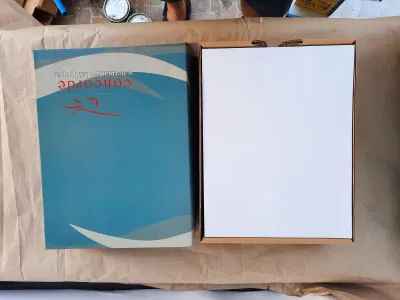
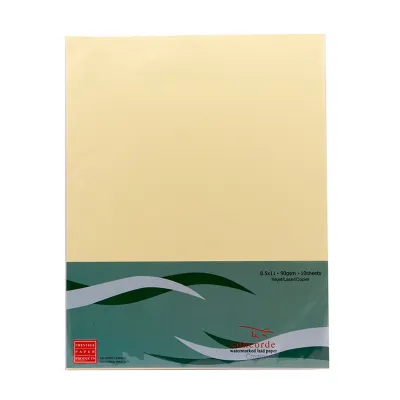
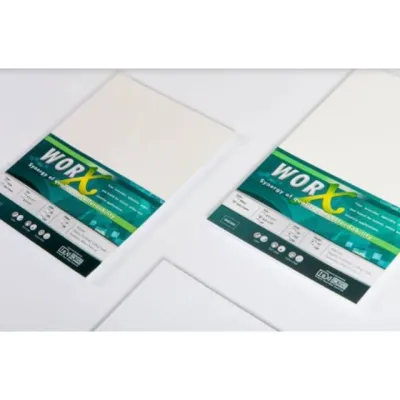
Prices are valid at publication and may change. Please refer to the product page for the latest price.
Compared to standard wove paper, which has a completely smooth, uniform surface, laid paper offers a rich tactile experience. Wove paper is formed on a finely woven wire screen that leaves no visible pattern. Laid paper possesses a distinct visual depth and a slightly toothy feel under your fingertips, changing how ink sits on the surface to create an organic look that smooth papers cannot replicate.
How the Ribbed Texture Is Created
The origin of laid paper’s texture lies in traditional hand papermaking using a laid mould. This wooden frame supports a screen of tightly spaced parallel wires held together by thicker, widely spaced crosswires. When dipped into a vat of water and suspended fibers, the water drains through, leaving a wet mat of fibers on top. Because the fibers settle more thinly over the raised wires, the paper dries with a permanent, physical impression of the wire grid.

Modern industrial papermaking replicates this texture using a specialized metal cylinder known as a dandy roll. As the wet slurry of paper pulp travels along a moving wire belt, the dandy roll presses onto the damp paper web before drying. The wire pattern wrapped around the dandy roll displaces the wet fibers, embossing the classic laid and chain lines into the sheet.
This physical indentation alters the paper’s surface topography, creating alternating ridges and valleys. When light hits the textured surface, it casts microscopic shadows across the ridges, giving the paper a matte, organic appearance. The slight variation in fiber density along these lines causes the paper to absorb and reflect light unevenly, enhancing its visual texture without compromising structural integrity.
Evaluating Laid Paper for Your Projects
Best Uses and Visual Appeal
Laid paper is highly valued for projects where the tactile presentation must convey prestige, history, or personal care. It is an exceptional choice for formal corporate stationery, certificates, high-end wedding invitations, and personal letterheads. In artistic applications, the textured surface provides an excellent “tooth” for dry media, making it a favorite for charcoal sketching, pastel drawings, and graphite illustrations.
Receiving a physical document printed on laid paper immediately signals importance and deliberate craftsmanship. The subtle ridges suggest heritage and authenticity, making it ideal for brands, legal firms, or individuals who want to establish a memorable, tactile connection with their audience.
Practical Limitations and Handling Checks
While laid paper offers exceptional aesthetic appeal, its textured surface introduces specific handling considerations. For digital printing, check your printer manufacturer’s specifications regarding textured media. Laser printers rely on heat and pressure to fuse dry toner; deep physical ridges can prevent toner from adhering evenly in the valleys, resulting in patchy text. Inkjet printers may experience minor ink pooling in the depressions if the ink volume is too high, softening the sharpness of fine details.
For calligraphy or fountain pen writing, perform a quick test on a sample sheet first. Physical ridges can catch fine metal nibs, causing ink splatters or uneven line weights. Because surface density varies, some inks may feather or bleed along the laid lines. Testing different ink formulations and nib shapes will help you find a combination that glides smoothly.
In tropical climates like the Philippines, high humidity can soften paper fibers, making the ribbed texture prone to warping or causing printer jams. Store your laid paper in its original packaging or an airtight container until use, and run a test sheet to verify drying speed and ink absorption under local environmental conditions.
Finally, identify the paper’s grain direction before folding or binding. Folding against the grain on a textured sheet can rupture surface fibers, leading to jagged creases. For clean folds, always fold parallel to the grain direction, or use a bone folder to score the paper gently beforehand.
How to Verify and Select Laid Paper
When sourcing materials, review packaging labels and product descriptions carefully. Manufacturers of premium stationery often use specific terminology like “laid,” “ribbed,” or the traditional French term “vergé.” If you are shopping on an online marketplace or at a local specialty stationery shop, these keywords will help you filter out standard smooth or linen-textured papers.
Whenever possible, inspect physical sample sheets before committing to a large purchase. Examine the sample under both direct and transmitted light to evaluate the clarity and uniformity of the laid and chain lines. Feel both sides of the sheet; some machine-made laid papers have a more pronounced texture on one side (the wire side) than the other (the felt side) due to how the dandy roll presses the fibers.
Finally, match the paper’s weight, measured in grams per square meter (GSM), and physical dimensions to your project needs. Lightweight laid papers around 80 to 100 GSM are ideal for multi-page letters and matching envelopes, as they fold easily and feed reliably through standard office printers. For certificates, invitations, or art prints, opt for heavier cardstock weights of 200 GSM or higher. Always verify that your printer can handle your chosen GSM and that the sheet dimensions fit standard envelope sizes without requiring excessive trimming.
Frequently Asked Questions (FAQ)
Is laid paper the same as watermarked paper?
No, laid paper and watermarked paper are not the same, though they share a similar manufacturing heritage. Laid paper refers to a continuous, sheet-wide texture of parallel lines created by the wire pattern of a mould or dandy roll. A watermark, on the other hand, is a localized design, logo, or text symbol pressed into a specific area of the paper to indicate authenticity or brand identity. While many premium laid papers also feature a watermark, the two elements serve different purposes: laid lines provide an overall tactile texture, while watermarks act as a localized security or branding mark.
Can I print high-resolution photos on laid paper?
Printing high-resolution photographs on laid paper is generally not recommended if you require sharp, true-to-life image reproduction. The physical ridges and valleys of the ribbed texture can disrupt fine photographic details, break up smooth color gradients, and cause ink to pool unevenly in the depressions. For high-resolution photos, smooth wove, matte, or glossy photographic papers are much more suitable. Laid paper is far better utilized for text-heavy documents, minimalist graphic designs, line art, and illustrations where the texture enhances the artwork rather than competing with it.
Community discussion
Share your experience or ask a question. Comments are reviewed before publication.