
Choosing the right drawing tool for your child often comes down to a balance between creative freedom, convenience, and household order. Parents frequently find themselves choosing between modern LCD writing boards and traditional paper-based sketch pads. While both tools encourage artistic expression, they serve vastly different developmental and practical needs.
Neither option is universally superior; the ideal choice depends on your child’s developmental stage, your family’s lifestyle, and your tolerance for creative messes. An LCD writing board offers a modern, digital-style interface without the typical drawbacks of high-stimulus screens, making it highly portable and reusable. Conversely, a traditional sketch pad provides a rich, tactile experience that is essential for fine motor development and advanced artistic exploration.
To help you decide which tool best fits your home, consider this quick decision framework:
Products mentioned in this guide
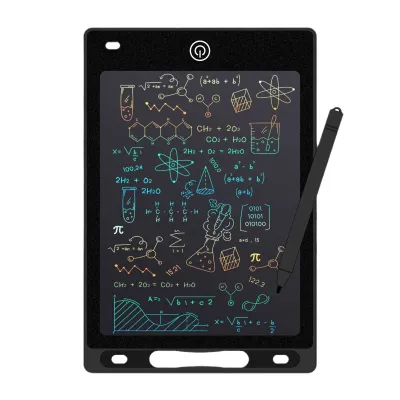
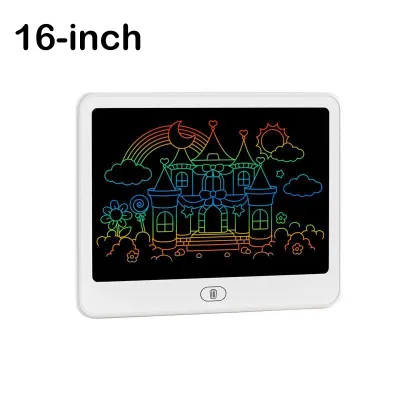
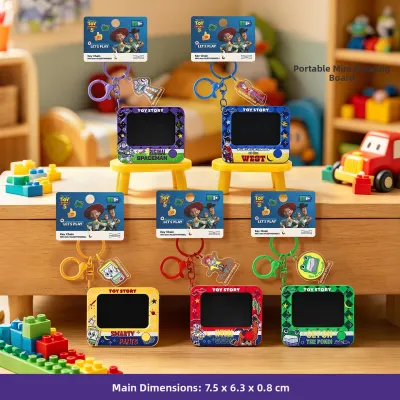
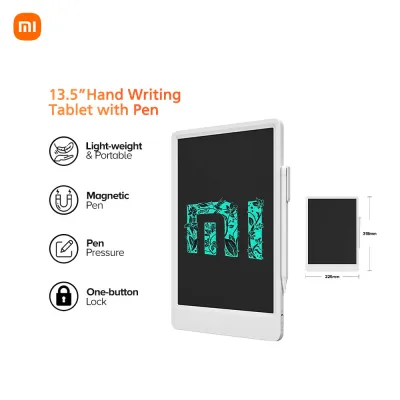
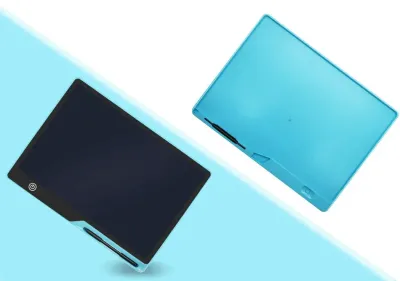
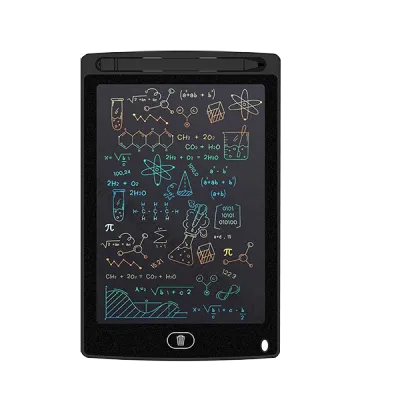
Prices are valid at publication and may change. Please refer to the product page for the latest price.
Choose an LCD writing board if:
- You need a completely mess-free drawing solution for travel, car rides, or dining out.
- Your child is a toddler who is just beginning to explore basic mark-making and scribbling.
- You want a reusable, low-cost-per-use surface for quick handwriting practice, spelling drills, or math scratchwork.
- You want to eliminate the constant clutter of loose paper and broken crayons in your living space.
Choose a traditional sketch pad if:
- Your child is actively developing fine motor skills and needs to practice varying hand pressure with physical mediums.
- Your child wants to experiment with a wide range of colors, blending techniques, and mixed media like watercolors or pastels.
- You and your child enjoy keeping a permanent, physical portfolio of their creative progress over time.
- You want to foster a deeper connection to traditional art techniques that require patience and deliberate effort.
Many households find that a hybrid approach works best. Using an LCD writing board for on-the-go entertainment and keeping a high-quality paper sketch pad at home for dedicated art sessions provides the best of both worlds.
Creative Development: Freedom of Expression vs. Tactile Experience
The medium a child uses to draw plays a significant role in their sensory and cognitive development. Traditional paper and digital-style LCD surfaces engage a child’s senses in entirely different ways, shaping how they perceive their own creative process.
Traditional Sketch Pads: Texture, Color, and Mixed Media
Traditional sketch pads offer an unmatched tactile experience that is crucial for young children. When a child draws on paper, they feel the physical resistance, or “tooth,” of the paper fibers against their drawing instrument. Whether they are using a graphite pencil, a wax crayon, or a fiber-tip marker, this friction provides immediate sensory feedback. This feedback helps children develop fine motor skills, hand-eye coordination, and the ability to control their grip strength and hand pressure.
Furthermore, paper allows for an infinite variety of colors and mediums. Children can layer colored pencils, blend oil pastels, or apply light watercolor washes to a single page. This freedom to mix media teaches basic color theory, spatial awareness, and experimental problem-solving.
There is also psychological value in the permanence of paper. When a child completes a drawing on a sketch pad, that artwork exists physically. It can be torn out, displayed on the refrigerator, gifted to grandparents, or saved in a portfolio folder. Seeing their work preserved builds self-esteem and allows children to look back and observe their own improvement over months and years.
LCD Writing Boards: Instant Erasing and Line Variation
LCD writing boards use a pressure-sensitive liquid crystal surface that reacts to the touch of a plastic stylus or even a fingernail. While high-quality boards mimic the friction of a pen on paper, the physical sensation remains relatively uniform. The plastic-on-plastic glide lacks the varied textures of traditional art tools, which may offer less sensory stimulation for children who thrive on tactile feedback.
Color options on LCD boards are also highly structured. Most standard models feature either a monochrome display (typically bright green lines on a dark background) or fixed multi-color zones. In multi-color boards, the colors are baked into the screen in horizontal or diagonal gradients; a child cannot choose to paint a blue sky at the top and green grass at the bottom unless those colors align with the screen’s pre-set zones. Blending, shading, and layering are not possible on these screens.
However, the instant-erase button on an LCD board offers a unique psychological benefit. Because a single click clears the entire screen, the stakes are incredibly low. This design removes the fear of making mistakes, which can sometimes paralyze perfectionist children. It encourages rapid experimentation, quick doodling, and continuous drafting. The trade-off is that once the erase button is pressed, the artwork is gone forever, meaning there is no physical keepsake to mark their progress.
Mess, Portability, and Household Convenience
Beyond creative development, parents must consider the daily logistics of managing art supplies. Cleanliness, portability, and how materials react to the local climate are essential factors in maintaining a stress-free household.

LCD writing boards excel in providing a completely mess-free experience. Because they do not use ink, graphite, paint, or wax, there is zero risk of your child drawing on walls, staining furniture, or getting pigment on their clothes. There are no pencil shavings to sweep up, no dried-out markers to throw away, and no caps to lose. This makes the LCD board an exceptional travel companion, easily fitting into a backpack or car seat pocket for use during long road trips, flights, or quiet restaurant visits.
Traditional sketch pads require a supporting cast of tools, including pencils, erasers, sharpeners, or a case of markers. Managing these items on the go can be challenging, as pencils roll under seats and marker caps easily go missing.
In the humid tropical climate of the Philippines, traditional paper presents specific maintenance challenges. High humidity causes paper fibers to absorb moisture from the air, leading to warped, wavy pages and a loss of structural integrity. Damp paper is also highly susceptible to ink bleeding, marker feathering, and smudging when using graphite or colored pencils. Over time, stored sketchbooks can develop musty odors or attract paper-eating pests like silverfish. LCD writing boards, constructed from sealed plastic and liquid crystal panels, are entirely unaffected by ambient moisture, making them highly durable and easy to store in tropical environments.
In terms of physical durability, both tools have different failure points. An LCD board is lightweight and often features a drop-resistant plastic frame, but the internal liquid crystal layer can crack or develop permanent dead zones if stepped on or subjected to heavy pressure. Traditional sketch pads can bend, crease, or tear, but they remain completely usable even after rough handling or accidental drops.
Cost, Longevity, and Environmental Impact
Evaluating the financial commitment and environmental footprint of each drawing tool helps parents make sustainable, budget-friendly decisions over the long term.
LCD writing boards require a higher initial upfront cost. In the local market, basic 8.5-inch models typically range from ₱150 to ₱300, while larger 12-inch versions with advanced features can cost ₱500 or more. However, this is a one-time investment. A single LCD board can be erased tens of thousands of times, effectively replacing reams of drawing paper and hundreds of pencils over its lifespan.
Traditional sketch pads have a very low entry barrier, with basic pads costing as little as ₱50. However, the recurring costs of paper refills, colored pencils, markers, and erasers accumulate quickly. For a child who draws daily, a single sketch pad may only last a few weeks, leading to continuous household expenditure on stationery supplies.
From an environmental perspective, the comparison involves distinct trade-offs:
- Paper Waste vs. E-Waste: LCD boards significantly reduce domestic paper waste and preserve trees by replacing disposable paper. However, they are electronic devices. At the end of their lifecycle, they become electronic waste (e-waste) containing plastic housings, liquid crystal components, and coin-cell batteries that do not biodegrade and require specialized recycling.
- Biodegradability: Traditional paper sketchbooks and wooden pencils are biodegradable and easily recyclable, provided they are not heavily coated in plastic laminates or synthetic glues. If your family prioritizes using sustainably sourced, acid-free paper and non-toxic wooden pencils, the environmental impact of traditional sketching can be kept relatively low and circular.
Eye Health and "Screen Time" Concerns
Many parents are hesitant to introduce any device with “LCD” in the name, fearing it will contribute to the digital eye strain, blue light exposure, and attention issues associated with smartphones and tablets. It is important to understand the underlying technology of these drawing tools to make an informed decision.
Unlike tablets, e-readers, or smartphones, standard LCD writing boards do not have active backlighting. They do not emit high-energy blue light, nor do they have a refreshing display panel that flickers. Instead, they rely entirely on reflected ambient light to make the drawn lines visible, operating on the exact same optical principle as traditional paper.
Because there is no light source shining directly into your child’s eyes, using an LCD writing board does not cause the digital eye strain, dry eyes, or sleep disruption associated with active screens. It is a passive visual medium that is safe for prolonged use, even for very young children.
To ensure optimal eye health and comfort when using either an LCD board or a traditional sketch pad, keep these practical guidelines in mind:
- Provide Adequate Room Lighting: Because both mediums rely on ambient light, drawing in a dimly lit room will force your child to squint, leading to eye strain. Ensure the study or play area is well-lit with soft, overhead lighting or natural window light.
- Avoid Harsh Glare: LCD writing boards have a smooth plastic screen cover that can reflect bright light sources. Avoid using them in direct, harsh tropical sunlight, as the resulting glare can obscure the drawings and cause visual discomfort.
- Encourage Visual Breaks: Remind your child to look away from their drawing every 20 minutes to focus on an object at least 20 feet away, helping to relax their eye muscles.
Side-by-Side Comparison: LCD Boards vs. Paper Sketch Pads
To help you quickly compare the primary features of both drawing tools, this side-by-side table outlines how they perform across key categories:
| Feature | LCD Writing Board | Traditional Sketch Pad |
|---|---|---|
| Medium & Tools | Plastic stylus on pressure-sensitive screen | Pencils, crayons, markers, or paints on paper |
| Color & Blending | Monochrome or fixed multi-color zones; no blending | Unlimited color palette; easy blending and layering |
| Mess Factor | Zero mess; no dust, ink, or pigment stains | Potential for graphite dust, paint spills, and marker stains |
| Permanence | Temporary; cleared instantly with a button press | Permanent; drawings can be saved, framed, or gifted |
| Power Requirement | Requires a coin-cell battery (lasts several months) | No power source or batteries required |
| Climate Resistance | Highly resistant to tropical humidity and moisture | Paper can warp, curl, or degrade in high humidity |
| Best Use Case | Travel, quick spelling practice, toddler scribbles | Developing fine art skills, color theory, and portfolios |
Final Verdict: How to Match the Tool to Your Child's Needs
When deciding between an LCD writing board and a traditional sketch pad, the best choice is the one that aligns with your child’s current developmental stage and your immediate household needs.
If you have a toddler who is prone to drawing on walls, or if your family travels frequently and needs a lightweight, mess-free entertainment option, the LCD writing board is an excellent choice. It is also a highly efficient tool for older children to use as scratch paper for homework, math equations, and spelling practice.
If your child is showing a deep interest in art, enjoys experimenting with color, or needs to develop their fine motor skills and grip strength, a traditional sketch pad is irreplaceable. The tactile feedback of paper and the ability to preserve their creations are essential for fostering long-term artistic growth.
Before making a purchase, use this practical specification checklist to ensure you select a high-quality product:
For LCD Writing Boards:
- Screen Size: Opt for an 8.5-inch screen if portability is your main priority, or a 12-inch screen if your child needs more space for detailed drawings.
- Erase Lock Switch: Verify that the board has a physical slide lock on the back or side. This prevents accidental clearing of drawings while your child is still working.
- Battery Accessibility: Ensure the battery compartment (usually housing a CR2025 or CR2032 coin-cell battery) is secured with a safety screw to prevent young children from accessing it.
- Stylus Tether: Look for models that include a lanyard hole or a stylus clip to prevent the drawing pen from getting lost.
For Traditional Sketch Pads:
- Paper Weight (GSM): Check the grams per square meter (GSM) rating on the cover. Use 70–80 GSM for basic pencil sketching, 100–120 GSM for colored pencils and light markers, and 200+ GSM (such as watercolor paper) if your child plans to use wet mediums.
- Binding Type: Choose spiral-bound pads if you want the book to lay completely flat on a table, which is especially helpful for left-handed children. Choose glue-bound pads if you prefer to easily tear out pages without leaving messy edges.
- Paper Texture: Select smooth (hot-pressed) paper for fine-tip markers and detailed ink drawings, or medium-texture (cold-pressed) paper to give crayons and colored pencils better grip and color saturation.
By assessing your child’s creative habits and matching them to these specific features, you can choose the drawing tool that will bring the most joy and developmental benefit to your home.
Community discussion
Share your experience or ask a question. Comments are reviewed before publication.