
Choosing between an LCD writing case and a traditional paper sketchbook depends entirely on your immediate creative intent, your preferred artistic medium, and your long-term goals. If your primary objective is to practice complex shading, build a physical portfolio, or experiment with wet media like ink and light watercolor washes, a traditional paper sketchbook remains the superior and irreplaceable choice. Conversely, if you need a lightweight, mess-free tool for quick doodles, temporary brainstorming, or practicing basic line work without wasting physical sheets, an LCD writing case offers unmatched convenience.
The fundamental trade-off lies between digital-adjacent reusability and the tactile, archival versatility of physical paper. While one offers an instant, single-button reset for infinite practice sessions, the other preserves the physical evolution of your artistic journey. Understanding how these tools perform under different conditions will help you select the right companion for your creative workflow.
Drawing Experience: Line Quality, Shading, and Corrections
Line Quality, Shading, and Texture
The tactile feedback of drawing is where these two mediums diverge most dramatically. When you draw in a traditional paper sketchbook, the interaction between your drawing tool and the paper surface creates a distinct tactile response known as “tooth.” Paper is manufactured in various standard dimensions (such as A4, A5, or pocket sizes) and weights ranging from lightweight 80 gsm sketching paper to heavy 300 gsm mixed-media sheets. This physical texture allows graphite pencils, charcoal, and colored pencils to catch on the fibers, enabling a vast spectrum of artistic techniques. You can achieve deep, rich values through layering, create soft gradients with a paper blending stump, or execute precise cross-hatching. The thickness and darkness of your lines are controlled naturally by the grade of your pencil (from hard H grades to soft, dark B grades) and the angle of your hand.
Products mentioned in this guide
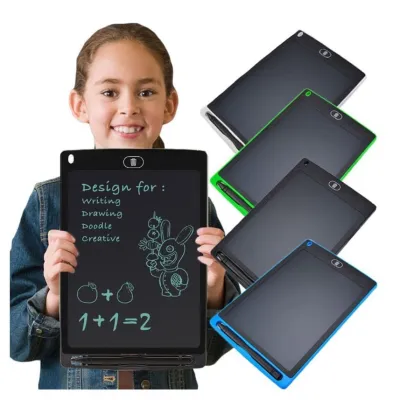
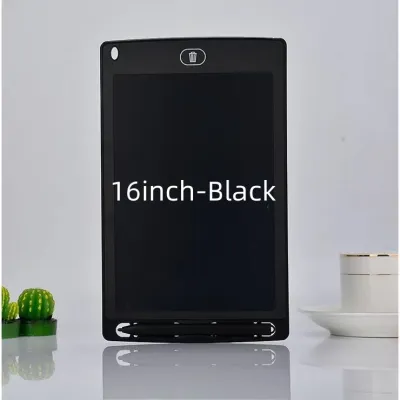
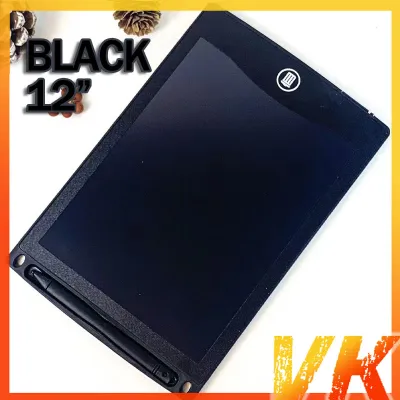
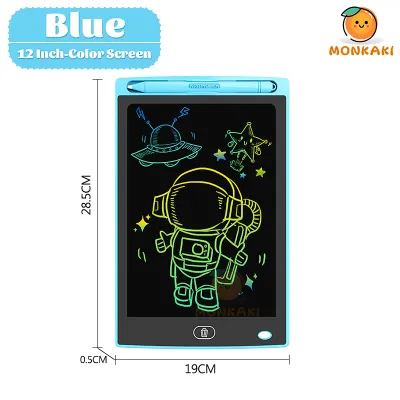
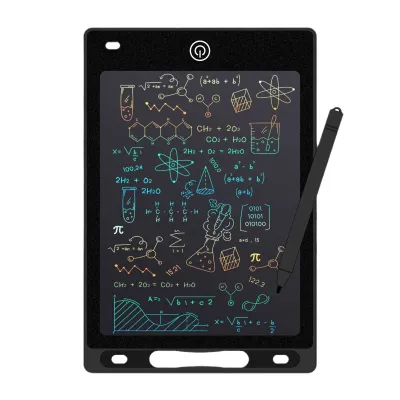
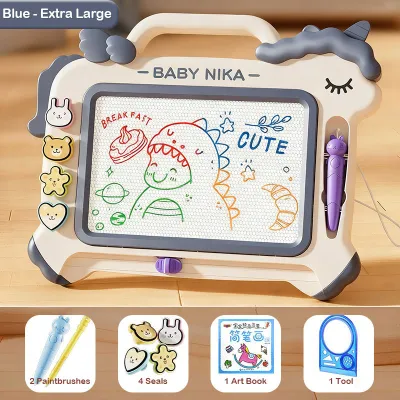
Prices are valid at publication and may change. Please refer to the product page for the latest price.
An LCD writing case operates on an entirely different mechanical principle. These devices feature a thin liquid crystal layer sandwiched between protective plastic sheets. When you press the plastic stylus against the screen, the crystals realign to reflect ambient light, revealing a colored line. While many modern LCD writing cases feature pressure sensitivity—meaning a firmer press produces a thicker line—the variation is purely mechanical and limited by the flexibility of the screen surface. There is no true way to shade, smudge, or blend on a standard LCD screen. The lines are binary: they are either present or absent. If you require subtle tonal shifts or complex textures, you will find the LCD surface highly restrictive. When shopping, it is crucial to verify the manufacturer’s specified pressure sensitivity levels and inspect the stylus nib type, as hard plastic nibs can feel slippery compared to the natural resistance of graphite on paper.
Erasing, Correcting, and Saving Work
The workflow for correcting errors highlights another stark contrast in usability. In a traditional sketchbook, erasing is a highly selective and creative process. You can use kneaded erasers to gently lift graphite and create highlights, plastic erasers for clean lines, or mono-zero erasers for microscopic corrections. If a line is slightly off, you can smudge it out, draw over it, or apply a fixative spray to seal layers and continue working on top. This selective correction allows your drawing to evolve organically, turning mistakes into structural guidelines. Smoothness, bleed resistance, and erasability depend on the exact material combination of your paper and drawing utensils, which you can easily verify with a quick trial stroke in the corner of your page.
In contrast, standard LCD writing cases are designed with a single-button erase mechanism. Pressing this button sends a small electrical pulse through the screen, instantly resetting all the liquid crystals to their default state and clearing the entire canvas. This means you cannot undo a single mistaken line; if you make an error near the end of a complex sketch, your only options are to live with the mistake or erase the entire screen and start over. While some premium LCD models offer a “partial erase” feature or a lock switch to prevent accidental deletion, these features are often less precise than a physical eraser on paper. Furthermore, basic LCD screens do not have internal memory or wireless connectivity to save your work. Once you press that clear button, your drawing is permanently gone. If you wish to preserve a sketch from a basic LCD board, you must take a photo of the screen with your smartphone, which often introduces glare and distorts the original proportions.
Portability and Everyday Use: Travel, Power, and Durability
Weight, Size, and Travel Convenience
When it comes to carrying your creative tools on the go, the physical footprint of your gear dictates how often you will actually use it. An LCD writing case is incredibly slim, often measuring less than 10 millimeters in thickness, and weighs significantly less than even a pocket-sized hardcover sketchbook. Because the stylus clips directly into the casing, it is a completely self-contained drawing system. You do not need to pack a pencil case, a sharpener, multiple lead grades, or erasers. This makes it an exceptionally convenient companion for daily commutes, quick brainstorming sessions in a local cafe, or keeping children entertained during long transit rides.

Traditional sketchbooks, particularly those with heavy-duty paper or durable spiral bindings, are inherently bulkier. A standard A5 or A4 sketchbook requires a dedicated bag, and you must also carry your drawing instruments. If you use graphite or charcoal, you must also contend with the physical mess of pencil shavings and charcoal dust. However, paper sketchbooks do not require delicate handling in the same way electronic screens do. While an LCD writing case is highly portable, its plastic screen is vulnerable to sharp objects in your bag. Heavy pressure from keys, pens, or coins can scratch the outer protective layer or cause permanent “LCD bleeding,” where the liquid crystals remain permanently activated in specific spots, ruining the drawing surface.
Power Requirements and Screen Durability
The operational longevity of each medium determines its reliability over time, especially in varying environmental conditions. LCD writing cases are incredibly energy-efficient because they only consume power when the screen is being cleared. They typically run on a single, replaceable CR2025 or CR2032 coin cell battery, which can last for tens of thousands of erase cycles—often translating to several years of daily use. However, because these screens rely on reflecting ambient light rather than backlighting, they can suffer from significant glare under direct sunlight. Over years of continuous use, the screen may also experience “ghosting,” where faint residual lines from previous drawings fail to clear completely, reducing the contrast of your new sketches.
Paper sketchbooks require absolutely no electrical power, making them infinitely reliable. You can open a sketchbook in the middle of a remote trail or a dimly lit room and begin drawing immediately. The pages do not suffer from screen degradation or electronic failure. However, physical paper is highly sensitive to environmental threats, particularly in humid tropical climates like the Philippines. High humidity can cause paper pages to warp, lose their structural tension, or develop foxing (brown spots caused by mold growth). Graphite drawings can also smudge if the pages rub together during transit, requiring the use of protective glassine sheets or fixative sprays to keep your work pristine.
Cost and Long-Term Value: Upfront Price vs Ongoing Supplies
Analyzing the financial investment of both options reveals a clear trade-off between immediate costs and long-term recurring expenses. An LCD writing case represents a highly affordable, one-time purchase. Basic models are widely available across online marketplaces and stationery stores in the Philippines, ranging from budget-friendly options to mid-tier devices. Once purchased, the only ongoing cost is the occasional replacement of the coin cell battery, which costs very little. For parents, students, or casual hobbyists, this makes the LCD writing case an incredibly cost-effective way to practice basic line work, hand lettering, or quick layouts without constantly purchasing packs of printing paper or school notebooks.
Traditional sketching, on the other hand, involves a continuous cycle of consumption. A high-quality sketchbook with acid-free, heavy-weight paper (such as 150 gsm or higher) is a recurring expense. As you fill the pages, you must purchase new books. Furthermore, you must continuously replenish your drawing media: graphite pencils wear down and need replacing, charcoal sticks break, blending stumps become saturated, and high-quality erasers wear away. If you want to protect your finished work from smudging, you must also invest in aerosol fixative sprays.
However, this recurring financial commitment must be weighed against the intrinsic value of what you produce. An LCD writing case has zero archival value; it cannot preserve a physical masterpiece, and its drawings cannot be framed, gifted, or sold. A traditional sketchbook serves as a physical archive of your artistic growth over months or years. The pages hold the actual texture of your physical touch, preserving your work for decades if kept in dry, cool conditions. For serious artists, the ability to flip through past pages, feel the paper, and see the actual graphite marks provides an irreplaceable sense of accomplishment and a tangible portfolio that digital-adjacent toys simply cannot replicate.
Final Verdict: How to Choose the Right Sketching Tool
To make the best decision for your creative workflow, evaluate your personal drawing goals against the practical strengths of each medium. Use the following decision framework to guide your purchase:
- Choose an LCD Writing Case if:
- You want a completely mess-free, ultra-lightweight tool for quick, temporary sketches, daily brainstorming, or drafting layouts.
- You are looking for a portable companion to practice basic line confidence, hand lettering, or anatomical gestures without wasting physical paper.
- You need a durable, kid-friendly drawing surface that eliminates the risk of pencil marks on walls or furniture.
- You want to reduce your environmental footprint by minimizing the use of disposable paper for temporary notes and doodles.
- Choose a Traditional Sketchbook if:
- You want to practice advanced drawing techniques, including smooth shading, blending, charcoal rendering, or cross-hatching.
- You plan to use a variety of media, such as graphite, colored pencils, fine-liners, or light ink washes, which require specific paper weights and textures.
- You want to build a physical, archival art portfolio that preserves your creative journey and can be physically shared, framed, or stored.
- You enjoy the tactile, sensory experience of drawing on paper, where the friction of the pencil tip against the page's tooth guides your hand.
- Neither may fit if:
- You are looking for a professional digital illustration experience. If you need layers, a full color palette, pressure-sensitive brush engines, precise vector lines, and the ability to export high-resolution digital files, neither a basic LCD case nor a paper sketchbook will suffice. In this scenario, you should invest in a dedicated digital drawing tablet with an active stylus, or a pen display connected to a computer.
- Verify first if:
- You are purchasing an LCD writing case specifically for advanced features like partial erasing, multi-color displays, or smart app connectivity (which allows you to sync your drawings to a smartphone). Standard, budget-friendly LCD boards do not support these features. Always check the manufacturer's user manual, product specifications, and device compatibility lists to ensure the model you choose matches your technical expectations.
Frequently Asked Questions (FAQ)
Can I use an LCD writing case for professional art portfolios?
No, standard LCD writing cases are not suitable for professional art portfolios. These devices are designed for temporary note-taking, drafting, and casual doodling rather than high-fidelity art creation. They lack the contrast, resolution, and color range required for professional work. Furthermore, because basic models do not have internal storage or digital export capabilities, the only way to save your work is by taking a photo of the screen, which results in poor image quality, glare, and distorted colors. For a professional digital portfolio, you should use a dedicated graphics tablet or a pen display. For a physical portfolio, a high-quality paper sketchbook with acid-free pages is the industry standard.
Do LCD writing cases work well in bright outdoor sunlight?
LCD writing cases rely on ambient light reflection rather than an active backlight to display your drawings. While this design is highly beneficial for reducing eye strain during long drawing sessions, it presents challenges in extreme lighting conditions. In bright, direct outdoor sunlight, the reflective plastic screen can suffer from intense glare, making it difficult to see your lines clearly. Additionally, the contrast between the dark background and the reflective lines may appear washed out under harsh tropical light. If you plan to sketch outdoors frequently, a matte paper sketchbook is much more reliable as it does not reflect light harshly. If you must use an LCD case outdoors, look for models that specifically feature anti-glare screen treatments.

Community discussion
Share your experience or ask a question. Comments are reviewed before publication.