
Lengthwise pad paper is a specialized, vertically oriented writing pad widely used in schools and offices across the Philippines. It typically measures approximately 8.5 inches by 13 inches (216 mm by 330 mm), aligning closely with the traditional long or folio paper size, though exact dimensions can vary slightly by manufacturer. Unlike standard loose sheets, it is bound at the top shorter edge and features pre-punched holes along the top margin, making it highly suitable for vertical, sequential note-taking and easy filing in standard binders or folders.
Understanding Lengthwise vs. Crosswise Pad Paper
Lengthwise pad paper is designed in a portrait orientation, meaning the longer sides run vertically while the shorter sides run horizontally. The binding adhesive or staple line sits at the very top, allowing you to flip pages upward as you write. Punch holes are typically positioned along this top margin, allowing the sheets to be secured in top-binding folders or clipboards.
In contrast, crosswise pad paper uses a landscape orientation. The binding is still at the top, but the paper is wider than it is tall, which changes the flow of writing. Crosswise pads are often selected for shorter, wider entries, such as mathematical equations, ledger entries, or vocabulary lists, whereas lengthwise pads excel at long-form essays, step-by-step solutions, and continuous paragraphs.
Products mentioned in this guide
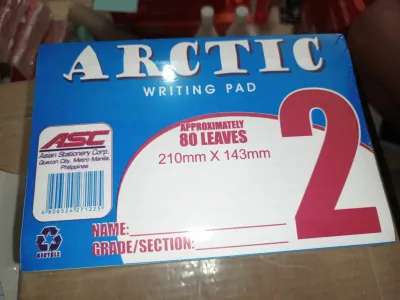
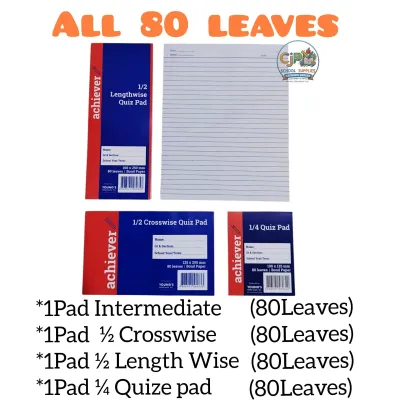
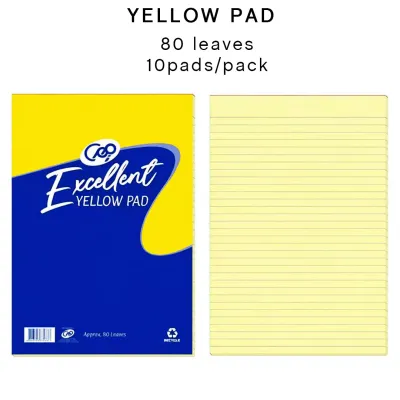
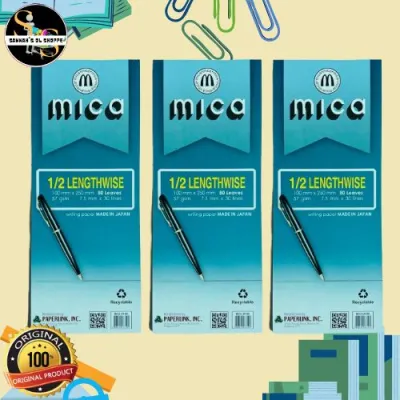
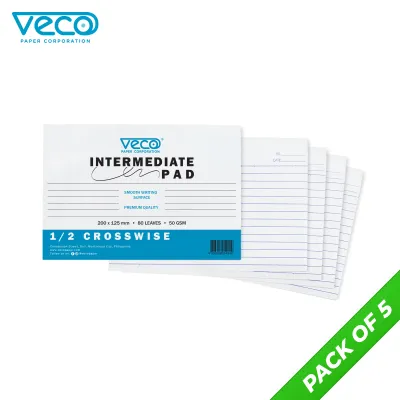
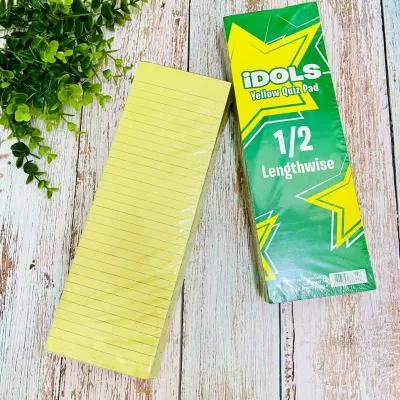
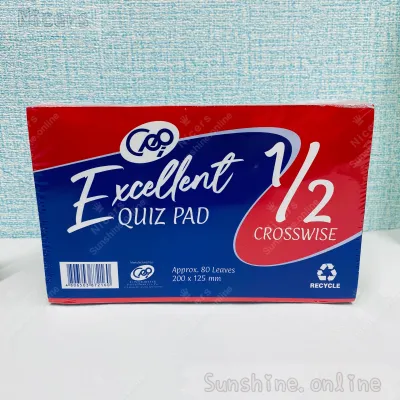
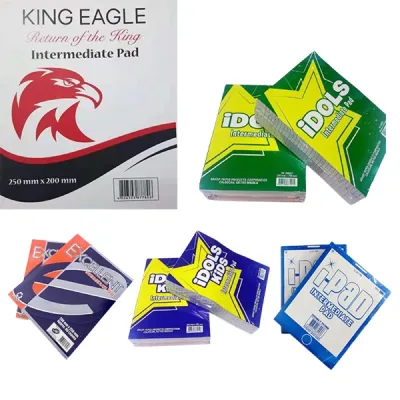
Prices are valid at publication and may change. Please refer to the product page for the latest price.
In classrooms, these formats serve distinct academic purposes. Teachers often specify lengthwise paper for essay exams, spelling tests, or comprehensive problem-solving because the vertical layout accommodates multiple lines of text without frequent page flips. The margins on lengthwise paper are usually wider on the left and right, giving teachers ample space to write corrections, grades, or feedback.
Before starting your work, you can quickly verify your paper format with a simple visual checklist. Hold the pad naturally: if the ruled lines run parallel to the binding edge at the top, you are holding a crosswise pad. If the ruled lines run perpendicular to the top binding edge, you have a lengthwise pad ready for vertical writing.
Standard Dimensions and How to Verify Exact Sizes
While lengthwise pad paper is commonly associated with the traditional long or folio paper size of 8.5 by 13 inches, actual dimensions can fluctuate depending on the brand and manufacturing batch. Some brands produce pads that align closer to US Letter size (8.5 by 11 inches) but retain the top-bound, lengthwise ruling. Because there is no single universal standard across all stationery producers, relying solely on the term “lengthwise” can lead to purchasing errors.

To ensure your paper fits your folders or binders securely, always inspect the product packaging for exact metric or imperial specifications. Manufacturers usually print the dimensions in millimeters (such as 216 mm x 330 mm) or inches on the front cover or the backing cardboard. If you are buying loose sheets or unlabelled pads, keeping a small ruler handy allows you to verify the width and length before committing to a bulk purchase.
When measuring your pad paper, it is important to distinguish between the total sheet size and the actual usable writing area. The total sheet size includes the top binding margin, which is often perforated for clean tearing, as well as any pre-punched binder holes. The usable writing area starts below the perforation line and is bounded by the printed red or blue margins on the sides. Measuring from the perforation line to the bottom edge gives you the true space available for your pen strokes.
Comparing Pad Paper to Bond Paper and Other Common Sizes
Pad paper and standard bond paper serve entirely different roles in school and office environments, resulting in distinct physical properties. Pad paper is typically manufactured with a lighter weight, often ranging from 50 to 60 grams per square meter (gsm), which makes it highly receptive to standard ballpoint pens and easy to tear away. It also comes pre-ruled and often pre-punched, whereas bond paper is heavier (usually 70 to 80 gsm), unruled, and optimized to feed smoothly through printer rollers without jamming.
The aspect ratio of local lengthwise pad paper also differs significantly from international standards like A4 paper. An A4 sheet measures 210 mm by 297 mm, presenting a narrower and slightly shorter profile than a standard 13-inch folio lengthwise pad. If you attempt to align a torn sheet of lengthwise pad paper with an A4 document, you will notice the pad paper extends further at the bottom, which can make neat stacking difficult.
These dimensional differences can cause practical storage challenges when organizing your school or office files. Mixing lengthwise pad sheets with standard A4 or Letter documents in a single folder often leads to uneven edges, which are prone to bending, tearing, or gathering dust. To prevent this, ensure your binders, clear books, and envelopes are rated for long or folio sizes rather than just A4, allowing the longer lengthwise sheets to sit fully protected inside the cover.
Choosing the Right Paper Format for Your Tasks
Selecting the most appropriate paper format depends heavily on the nature of your daily tasks. For long-form essays, narrative drafts, and meeting minutes, the vertical flow of lengthwise pad paper keeps your thoughts organized in a traditional, easy-to-read layout. If your work involves complex mathematical calculations, structural diagrams, or horizontal charts, a crosswise pad or unruled bond paper may offer a more practical canvas.
Before purchasing your stationery supplies in bulk, always verify the specific requirements of your school or office. Some institutions mandate a specific margin width or a precise number of punch holes to match their standardized filing systems. Checking these guidelines beforehand prevents the frustration of having to manually punch holes or trim pages to fit institutional folders.
Additionally, pay close attention to the paper weight indicated on the packaging, especially if you use gel pens, fountain pens, or highlighters. Lighter pad paper is highly susceptible to ink bleed-through and ghosting, where the writing on one side is visible on the other. If you plan to write on both sides of the sheet or use wet inks, look for premium pads with a higher gsm rating, and perform a quick spot test in the corner of a page to observe how the paper handles your chosen pen.
Frequently Asked Questions (FAQ)
Can I print on lengthwise pad paper?
Printing on lengthwise pad paper is generally not recommended due to the physical characteristics of the sheets. The lightweight nature of pad paper, combined with pre-punched binder holes and perforated top edges, makes it highly prone to tearing and causing paper jams inside standard printer feed mechanisms. Additionally, the ink from inkjet printers may bleed excessively on thin pad paper; for clean, professional prints, it is more reliable to use standard bond paper.
Why do some lengthwise pads have different numbers of holes?
Lengthwise pads feature different punch hole configurations to accommodate various filing and binding systems used in offices and schools. A single-hole or two-hole design is typically optimized for standard metal fasteners or top-binding clipboards, allowing quick vertical archiving. Three-hole configurations, on the other hand, are designed to align precisely with standard three-ring binders, ensuring your loose sheets remain secure without needing manual reinforcement.
Community discussion
Share your experience or ask a question. Comments are reviewed before publication.