
Quick Diagnostic: Which Air-Dry Clay Fits Your Project?
Choosing the right air-dry clay depends on your project’s final weight, structural detail, and desired finish. The three primary types of air-dry clay—lightweight, stone-based, and paper-based—each offer distinct physical properties that behave differently during the sculpting and curing processes. Selecting the incorrect type can lead to structural collapse, cracking, or an incompatible surface for painting.
To match your specific project goals with the correct material, consider this rapid selection checklist:
- Choose lightweight clay if you are crafting hanging ornaments, delicate jewelry pieces, cosplay armor, or school projects where keeping the weight to an absolute minimum is essential.
- Choose stone-based clay if you are sculpting highly detailed figurines, miniature pottery, or decorative items that require a heavy, rigid, ceramic-like weight and a sandable, ultra-smooth surface.
- Choose paper-based clay if you are building complex sculptures over wire or foil armatures, repairing cracks in other dried mediums, or working on mixed-media craft projects.
Assess Your Project Requirements Before Choosing
Before purchasing your sculpting materials, analyze the structural demands of your planned design. A self-standing sculpture with thin, protruding elements requires a clay that can cling to internal supports without sagging. Heavy clays can easily collapse under their own weight during the drying phase if they lack a sturdy internal frame, whereas lighter clays place less stress on delicate joints.
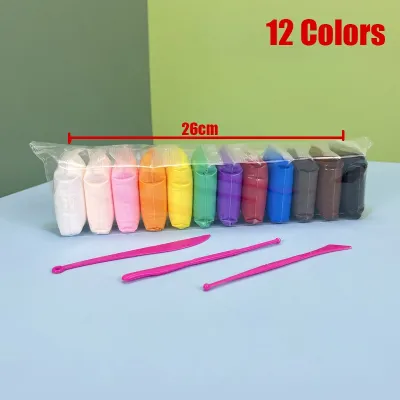
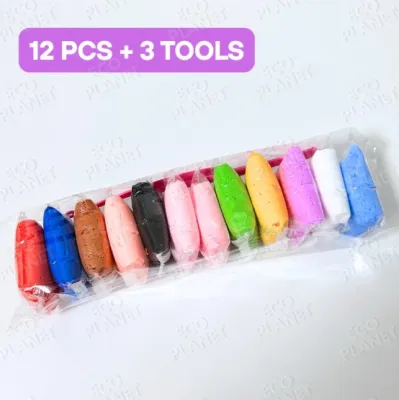
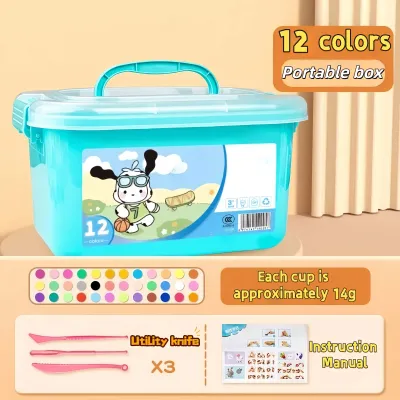
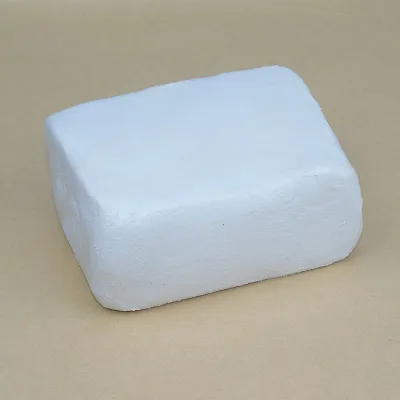
Products mentioned in this guide
![Jovi Air Dry Clay White 500g [2285]](https://img.lazcdn.com/g/p/8b82dde3d75fbe85d2fefe503294dab3.jpg_400x400q80.jpg_.webp)
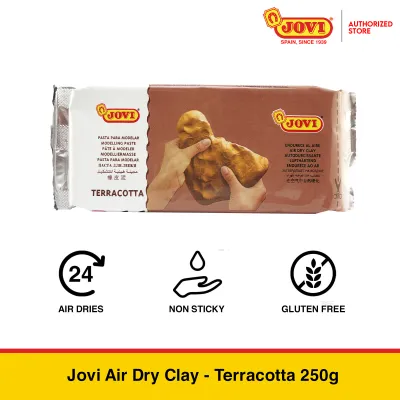
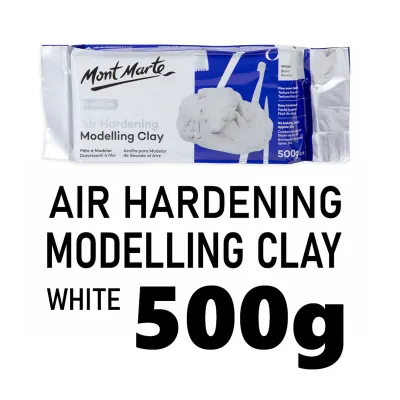
Prices are valid at publication and may change. Please refer to the product page for the latest price.

Evaluate the weight constraints of the finished piece in its intended environment. A heavy stone-clay ornament can easily snap a delicate tree branch or pull down a hanging display. Conversely, a lightweight clay figurine might feel too cheap or unstable on a desk, tipping over at the slightest breeze. Matching the density of the clay to the functional use of the object ensures both durability and a premium feel.
Consider your desired surface finish and post-drying modifications. If you plan to carve intricate details, sand away fingerprints, or paint fine details with acrylics, you need a material that cures to a hard, carvable state. Some clays dry to a slightly flexible, spongy texture that resists sanding and carving, while others cure to a brittle, stone-like hardness that handles post-processing beautifully.
Workspace conditions play an influential role in your success, particularly in tropical climates like the Philippines. High relative humidity can significantly extend drying times, sometimes taking twice as long as the manufacturer’s packaging indicates. If you work in a humid environment, you must plan for slower curing cycles and choose clays that are less prone to trapping moisture, which can lead to structural weakness or mold.
Lightweight Air-Dry Clay: Best for Volume and Hanging Crafts
Lightweight air-dry clay is characterized by its exceptionally low density and airy, marshmallow-like texture. When wet, it is highly pliable, soft, and clean to work with, leaving minimal residue on your hands or tools. Because it contains synthetic micro-balloons or lightweight polymers, it experiences almost no shrinkage as the water evaporates, allowing your finished piece to retain its original sculpted volume.
This type of clay is the premier choice for large-scale items that must remain easy to handle and transport. Cosplayers frequently use it to build oversized armor plates, horns, and prop weapons that would otherwise be too heavy to wear. It is also ideal for hanging wall art, mobile elements, and classroom activities where quick, mess-free cleanups are highly valued.
However, lightweight clay has distinct limitations when it comes to structural strength and fine detailing. It lacks the rigidity required to support heavy loads, and thin, unsupported pieces will bend or droop under pressure even after curing. Furthermore, because it dries to a slightly flexible, foam-like consistency, it cannot be sanded, filed, or carved with hobby knives without tearing the surface.
When working with lightweight clay, always check the product label for specific curing instructions, as thickness directly dictates drying speed. In humid conditions, a thick block of lightweight clay can remain soft at the core for days. To ensure an even cure, build your project in layers no thicker than one centimeter, allowing each layer to dry partially before applying the next.
Stone-Based Air-Dry Clay: Best for Durability and Smooth Finishes
Stone-based air-dry clay, often formulated with natural stone powder and binders, offers a dense, substantial weight that closely mimics kiln-fired ceramic. When wet, it has a smooth, plastic-like feel that allows for exceptionally fine detailing, sharp edges, and precise facial features. Once fully cured, it transforms into a rock-hard, rigid medium that feels solid and premium in the hand.
This material is highly favored by ball-jointed doll makers, miniature artists, and jewelry designers. Its rigidity allows you to sand the surface with fine-grit sandpaper to eliminate seams, fingerprints, and minor imperfections. You can also use carving tools, drills, or hobby knives on the dried clay to refine intricate details, carve out hollows, or create interlocking joints without fear of the material crumbling.
Despite its strength, stone clay is prone to cracking if applied in thick, solid blocks. The outer layer dries faster than the interior, creating surface tension that pulls the clay apart as it shrinks. To prevent cracking, always build your sculpture over a tightly packed foil or wire armature, keeping the clay layer under one centimeter in thickness to ensure uniform drying.
Because stone-based clay is highly porous, it will readily absorb moisture from the air, especially during the humid rainy season. Always check the manufacturer’s instructions regarding sealing, as air-dry clays are not waterproof. Applying a protective acrylic varnish, gesso, or polyurethane topcoat is essential to shield the finished piece from atmospheric humidity and prevent softening over time.
Paper-Based Air-Dry Clay: Best for Armatures and Mixed Media
Paper-based air-dry clay incorporates processed wood pulp or cellulose fibers into a clay base, resulting in a unique fibrous texture. This fiber network gives the clay remarkable wet-strength and flexibility during the sculpting process. It also exhibits a very low shrinkage rate, as the interlocking fibers help hold the clay’s shape as water escapes, reducing the risk of warping.
The standout feature of paper clay is its superior adhesion to non-porous surfaces. It easily clings to wire, aluminum foil, glass bottles, plastic bottles, cardboard, and wood, making it the ultimate choice for mixed-media assemblages and complex armatures. Additionally, you can mix paper clay with water to create a paste-like “slip” that works beautifully for repairing cracks in dried sculptures or joining separate clay pieces.
The primary drawback of paper clay is its natural surface texture, which dries to a slightly rough, paper-like finish. While it can be sanded, it rarely achieves the porcelain-like smoothness of stone clay without significant effort. For a clean paint job, you will typically need to apply several layers of gesso primer to fill in the micro-textures of the paper fibers.
Before starting a large-scale project, perform a simple adherence test on your chosen base material. Apply a small patch of paper clay to the armature or mixed-media surface and let it dry completely. Observe whether it lifts, curls, or peels away at the edges, which will help you determine if the base requires sanding or a primer coat to improve mechanical grip.
Side-by-Side Comparison Matrix
To help you finalize your selection, the table below summarizes the core differences between the three primary types of air-dry clay based on their physical properties and ideal applications.
| Clay Type | Weight & Density | Surface Finish | Shrinkage Tendency | Best For |
|---|---|---|---|---|
| Lightweight Clay | Extremely low; foam-like | Matte, slightly spongy | Minimal | Hanging ornaments, cosplay props, school crafts |
| Stone-Based Clay | High; heavy and solid | Porcelain-smooth, sandable | Moderate | Fine figurines, jewelry, detailed sculptures |
| Paper-Based Clay | Moderate; fibrous | Slightly rough, paper-like | Low | Armatures, mixed media, structural repairs |
Frequently Asked Questions (FAQ)
Can I mix different types of air-dry clay together?
Mixing different clay bases—such as blending lightweight foam clay with stone-based clay—is generally not recommended for structural parts. Because each type has a different shrinkage rate, water content, and drying mechanism, mixing them can cause severe warping, cracking, or structural weakness as they cure. If you want to combine their properties, it is safer to use them in separate, fully dried layers, or use paper clay slip to join distinct components. Always test a small batch first to verify compatibility.
How do I know if my air-dry clay project is fully dry?
You can verify if your air-dry clay is fully cured by checking three observable signs: color, temperature, and hardness. Fully dry clay will have a uniform, lighter color with no dark or damp spots, especially in deep crevices. When touched, it should feel room temperature rather than cool, as evaporating water makes damp clay feel cold. Finally, the surface should be completely hard and yield no indentation when gently pressed with a fingernail. Never apply paint or sealant until these conditions are met, as trapped moisture will cause mold and ruin your project.
Community discussion
Share your experience or ask a question. Comments are reviewed before publication.