
Choosing the right long clipboard requires matching the physical dimensions of your paper to a board that offers at least a half-inch margin on all sides. For standard Philippine long paper (8.5 x 13 inches), a standard long clipboard is ideal, whereas US Legal paper (8.5 x 14 inches) requires a slightly longer board to prevent the bottom edge from hanging over. Oversized documents like A3 sheets (11.7 x 16.5 inches) demand dedicated A3 boards to ensure full structural support, especially in humid tropical climates where limp paper easily sags and damages.
Quick Guide: Matching Your Clipboard to Paper Dimensions
To keep your documents pristine, you must look beyond generic product labels. Many boards sold as a “clipboard long” are designed for specific regional standards, meaning a board labeled “long” might fit one document type perfectly while leaving another to hang over the edge.
The most critical distinction to make is between the outer board dimensions and the inner clamping capacity. The outer dimensions represent the total physical size of the clipboard, while the clamping capacity is the actual usable area below the metal clip. If the board is exactly the same length as your paper, the clip mechanism will push the paper downward, causing the bottom edge to overhang.
Products mentioned in this guide
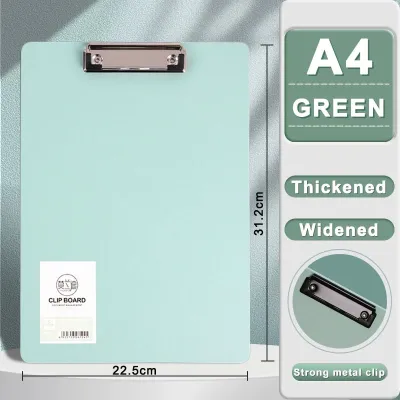
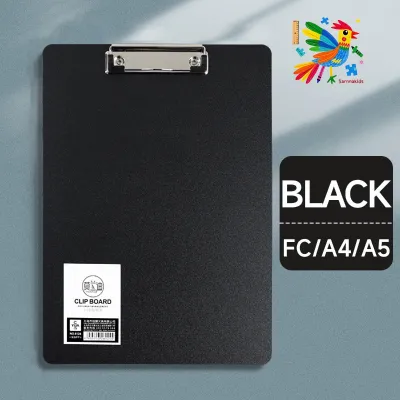
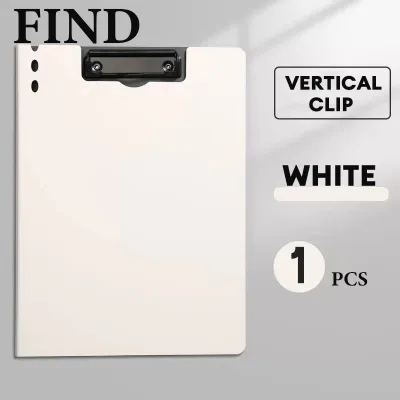
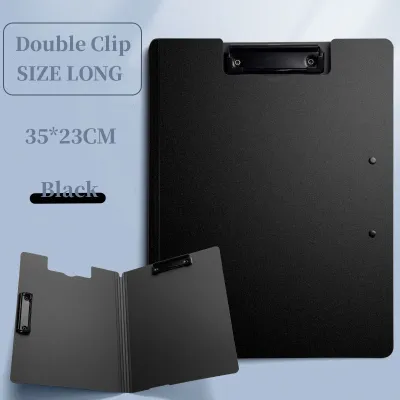
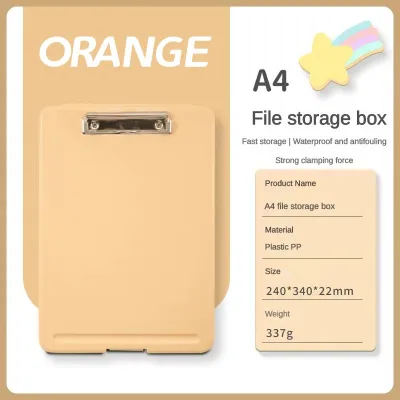
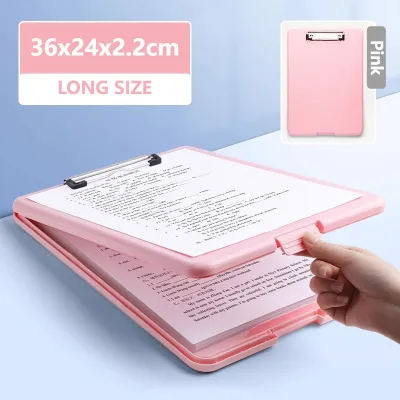
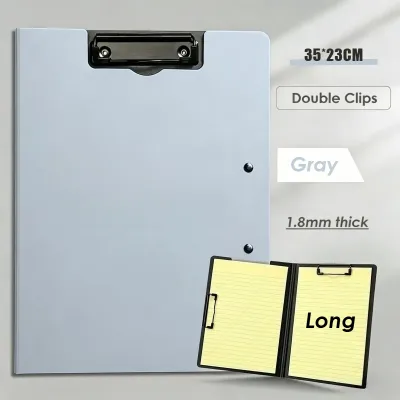
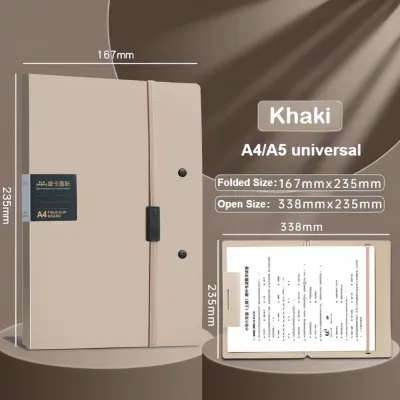
Prices are valid at publication and may change. Please refer to the product page for the latest price.
As a general rule of thumb, choose a clipboard that provides at least a 0.5-inch (12.7 mm) border clearance around the entire sheet of paper. This extra margin acts as a protective buffer, shielding the edges of your documents from getting crumpled, torn, or soiled during transport.
Before making a purchase on any online marketplace, always verify the exact physical measurements listed in the manufacturer’s specifications. Relying solely on generic terms like “long” or “legal” can lead to sizing mismatches, as these terms are often used interchangeably by different brands.
Understanding "Long", Legal, and A3 Paper Measurements
In the Philippines, paper sizing has unique local conventions that differ from international standards. The most common source of confusion is the difference between local “Long” bond paper and standard US Legal paper.

Philippine “Long” paper, traditionally used in schools and offices, measures 8.5 x 13 inches (216 x 330 mm). In contrast, true US Legal paper measures 8.5 x 14 inches (216 x 356 mm). If you try to clip a US Legal sheet onto a clipboard designed strictly for Philippine long paper, the bottom inch of your document will hang off the edge, leaving it vulnerable to damage.
For larger formats, A3 paper measures 11.7 x 16.5 inches (297 x 420 mm). This size is twice the area of an A4 sheet and requires a significantly larger clipboard. Because A3 paper is wide and heavy, it demands a board that can support its entire surface area to prevent the corners from drooping.
To find the perfect fit for custom or non-standard paper lengths, always measure your document with a physical ruler before shopping. Add at least 1.5 inches to the total length of your paper to account for the space occupied by the clip mechanism at the top, ensuring the entire page remains supported.
Step-by-Step: Selecting the Right Long Clipboard
When selecting your clipboard, the first step is to account for the physical space taken up by the clip mechanism. The metal clip typically occupies 1 to 1.5 inches of space at the top of the board, which reduces the usable writing area. Ensure the board’s total length is long enough to accommodate both this mechanism and your paper.
Next, evaluate whether you need specialized features like a raised lip, edge guards, or rubberized corner protectors. In high-humidity environments, paper absorbs moisture from the air and loses its natural stiffness. Corner protectors on the clip help grip the paper securely without tearing, while edge guards prevent the damp paper from curling around the sides of the board.
Finally, consider the trade-off between portability and desk stability. An oversized A3 clipboard provides an excellent, stable surface for sketching or reviewing blueprints on-site, but it is bulky to carry in a standard backpack. For daily mobile use, a board tailored precisely to Philippine long or US Legal dimensions offers a more practical balance of protection and portability.
Checking Board Rigidity and Clip Tension for Large Formats
Larger paper formats require much more structural support than standard letter-sized sheets. An A3 document, for instance, has a large surface area that is highly susceptible to bending under its own weight, especially when used outdoors or in humid tropical conditions.
When evaluating a clipboard, look for observable signs of insufficient rigidity. If you hold the board by one end and it flexes, warps, or sags, it will not provide a stable writing surface. The unsupported edges of your paper will droop, making it difficult to write legibly and increasing the risk of the paper creasing.
To ensure reliable performance, check the backing material stiffness and the tension of the spring clip. The backing should be made of dense, non-flexing material like heavy-duty plastic, aluminum, or high-density fiberboard. The clip must have strong spring tension to hold multiple sheets firmly, but it should feature rubberized grips to distribute that pressure evenly and prevent the metal from tearing the damp paper.
Frequently Asked Questions (FAQ)
Can I use an A3 clipboard for Legal or Long paper?
Yes, you can physically place smaller paper on a larger board, but it comes with practical trade-offs. An A3 clipboard is significantly heavier and bulkier, making it cumbersome to carry around for daily office or field use. Additionally, if the clip is designed for wide A3 sheets, a single narrow sheet of Long or Legal paper might slide around if the clip tension is not perfectly uniform across the center.
What if my paper size falls between standard Long and A3?
If your paper size falls between standard Long and A3, always size up to the next standard board size. Sizing up prevents document overhang and protects the edges of your custom-sized paper from getting bent or frayed. You should also look for clipboards with wider clamping areas or dual clips to secure the non-standard width evenly across the top.
Community discussion
Share your experience or ask a question. Comments are reviewed before publication.