
Quick Answer: Choosing Between Loose-Leaf and Bound Formats
Selecting the ideal paper format for your studies is not a matter of finding a universally superior product. Instead, the decision depends entirely on your personal organizational style, daily academic schedule, and how you process information.
Loose-leaf binders are highly suited for students who manage multiple subjects simultaneously, value the ability to reorganize pages, and frequently need to integrate printed handouts, syllabus sheets, or modular assignments directly into their notes. This format acts as a dynamic, customizable archive that can grow and adapt throughout the school year.
Bound notebooks are the preferred choice for students who prioritize a lightweight carry, value a chronological record of their lectures, and want a durable, ready-to-write surface. They are ideal for single-subject focus, creative sketching, or linear note-taking where pages must remain permanently secure and intact.
Products mentioned in this guide
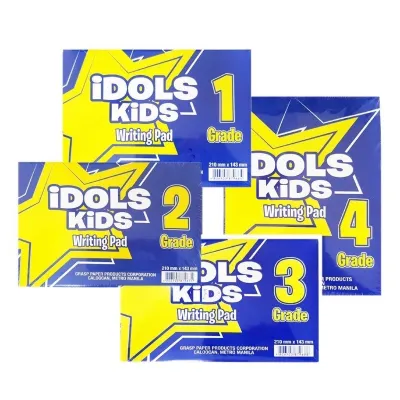
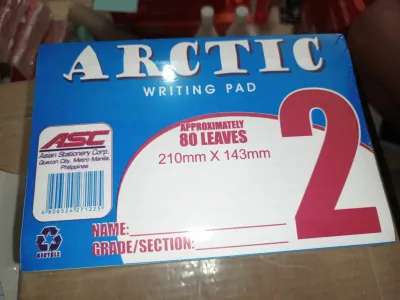
Prices are valid at publication and may change. Please refer to the product page for the latest price.
Note Organization and Flexibility: Rearranging Your Pages
The fundamental difference between loose-leaf and bound formats lies in how they handle page layout and order. Loose-leaf systems utilize opening and closing ring mechanisms, which grant you total control over the structure of your binder. You can insert color-coded tabbed dividers, slide in newly printed lecture slides, or move a set of study notes from week five back to week one without disrupting the surrounding material. This flexibility is particularly useful in modular university courses where topics frequently overlap or require continuous updates.

In contrast, bound notebooks—whether thread-bound, glued, or case-bound—enforce a strict chronological sequence. Once you write on a page, its position is permanently fixed between the preceding and succeeding sheets. While spiral-bound notebooks allow you to tear pages out along perforated lines, they offer no clean way to reinsert those pages or change their order. This linear structure is highly beneficial for subjects that follow a strict timeline, such as history or sequential mathematical proofs, where maintaining a clear timeline of lessons is critical.
These physical differences directly influence your cognitive processing and study habits. The modular nature of loose-leaf paper supports active learning strategies like mind-mapping, concept clustering, and thematic grouping. You can spread multiple sheets out on a desk to view an entire unit at a glance, then reassemble them into a personalized textbook. Writing on a single, detached sheet also eliminates the physical discomfort of resting your wrist on bulky binder rings or thick notebook spines.
Bound formats, on the other hand, encourage a continuous narrative flow. They minimize the distraction of organizing, archiving, and filing, allowing you to focus purely on the act of writing. For many students, the unalterable nature of a bound book reduces the anxiety of losing loose sheets and provides a satisfying, tangible record of academic progress. It forces you to adapt your note-taking to a structured space, which can help strengthen linear thinking and memory retention.
Daily Portability: Managing Weight and Bag Space
When packing your backpack for a long day on campus, the physical footprint of your stationery becomes a major consideration. A multi-subject loose-leaf binder can hold hundreds of pages, allowing you to carry material for five or six different classes in a single volume. However, this convenience comes with substantial bulk. Thick plastic or metal ring binders occupy a large amount of space and can quickly become heavy, putting unnecessary strain on your shoulders during long walks between classrooms.
Bound notebooks offer a highly modular alternative for daily travel. Instead of carrying a massive master binder, you can pack only the specific, lightweight notebooks required for that day’s classes. A slim, softcover B5 or A5 bound notebook takes up minimal space and slides easily into any backpack sleeve. This allows you to travel light, leaving unnecessary subjects at home and keeping your bag organized and manageable.
Your daily commute also plays a critical role in this decision. Squeezing into crowded public utility vehicles, such as jeepneys, buses, or packed train coaches in the Philippines, subjects your backpack to constant pressure and friction. In these tight spaces, an overstuffed binder is highly vulnerable. If the rings accidentally pop open under pressure, your pages can crumple, tear, or scatter. Furthermore, high humidity levels can soften paper fibers, making loose-leaf sheets more susceptible to tearing at their punched holes when pulled or flipped quickly.
Bound notebooks provide superior physical protection for your notes during transit. Hardcover options and notebooks with rounded corners resist wear and tear much better than loose sheets of paper. The bound spine keeps all pages securely locked together, preventing them from sliding around and getting damaged by other items in your bag. If you face a demanding daily commute, the structural integrity of a bound book offers peace of mind that your hard work will arrive at school undamaged.
Long-Term Usability: Exam Review and Archiving
As the academic year progresses, your notes transition from daily records into essential study tools for midterms and final exams. The way you archive and access this information can significantly impact your review efficiency. Loose-leaf systems excel during intensive study sessions because they allow you to extract only the relevant chapters or diagrams needed for a specific exam. You can pin these sheets to a study board, arrange them across a desk, or carry a slim folder containing just one week’s worth of review material, keeping your study space clean and focused.
Once an exam is over, loose-leaf pages can be transferred to a storage binder at home, freeing up space in your daily binder for the next unit. However, this system relies heavily on the physical durability of the paper’s punch holes. Over time, frequent page-turning can cause the paper around the rings to wear down, tear, or pull free entirely. To prevent this, you may need to invest in adhesive reinforcement rings, which can be tedious to apply to hundreds of pages.
Bound notebooks require you to carry the entire volume throughout the semester, even if you only need to review a small fraction of the pages. This can add unnecessary weight to your bag as the term nears its end. Despite this, bound books offer a distinct psychological advantage during exam preparation. Flipping through a continuous, bound volume allows you to see the natural progression of the curriculum, helping you connect early foundational concepts with later, more complex topics.
Additionally, bound spines are highly durable and keep your notes safe from loss or misplacement over several years. While cheap, glued bindings can crack and drop pages if flexed too hard, high-quality thread-bound notebooks are designed to withstand years of use. In tropical climates with high humidity, loose sheets stored in binders can warp or absorb dampness more quickly than the compressed pages of a closed bound book. For long-term archiving across multiple school years, bound notebooks generally require less maintenance to keep your notes readable and intact.
Cost and Maintenance: Paper Refills and Local Availability
Evaluating the financial and logistical aspects of each format is essential for budget-conscious students. The initial investment for a loose-leaf system is typically higher. A durable, high-quality multi-ring binder made of sturdy plastic or metal, along with index dividers and an initial pack of paper, can cost anywhere from ₱150 to ₱500. However, this is a one-time purchase. Once you own the binder, the ongoing cost is limited to paper refills, which are highly economical when bought in bulk.
Bound notebooks require a lower upfront cost. You can purchase individual utility notebooks for as little as ₱30 to ₱150 depending on the brand, page count, and paper quality. While this is highly affordable at the start of the semester, the cumulative cost can add up quickly if you fill multiple notebooks per subject and must replace them entirely throughout the academic year.
When purchasing paper, it is crucial to verify specifications like paper weight, which is measured in grams per square meter (gsm). Because students frequently use gel pens, rollerballs, and highlighters, thin paper (under 70gsm) is highly prone to ink bleeding and ghosting. This issue is often amplified by humid weather, which slows ink drying times and causes paper fibers to expand. Opting for high-quality 80gsm or 100gsm paper ensures a smooth writing experience and prevents ink from ruining the reverse side of your pages.
Logistically, bound notebooks are widely available in local stationery shops and school supply stores across the country. Loose-leaf refills, however, require careful verification of hole compatibility before purchase. Standard loose-leaf paper comes in various hole configurations, including US standard 2-hole or 3-hole systems, and Japanese multi-hole standards like 20-hole for A5 or 26-hole for B5. If you purchase a proprietary binder, you must ensure that compatible refills are readily available in your local stores or online marketplaces to avoid being left with an unusable binder mid-semester.
Decision Framework: Matching the Format to Your Study Style
To make an informed purchasing decision, evaluate your daily routine, course structure, and writing preferences against this practical comparison framework.
Choose Loose-Leaf If:
- You manage modular subjects: Your courses involve separate modules, frequent handouts, and worksheets that need to be filed alongside your handwritten notes.
- You prefer active reorganization: You like to rearrange, color-code, and group your notes by theme or topic rather than the date they were written.
- You want to travel light: You prefer to carry a single binder with only active lessons, leaving completed chapters safely archived at home.
- You dislike writing over spines: You prefer to remove a single sheet of paper, write on a perfectly flat surface, and return it to the binder afterward.
Choose Bound Notebook If:
- You value simplicity and speed: You want a grab-and-go system that requires no maintenance, filing, or sorting of loose pages.
- Your subjects are chronological: Your classes follow a strict, linear progression where lessons build directly on the previous day's work.
- You have a demanding commute: You travel on crowded public transit where your bag is compressed, making page security and cover durability a top priority.
- You prefer a permanent archive: You want a secure, unalterable book that preserves your entire semester's work in one place for future reference.
Verify First If:
- Professors have specific requirements: Some instructors require physical notebook submissions for grading or portfolio checks, where bound formats are usually preferred to prevent lost sheets.
- Refills are easily accessible: Check if your local stationery shops or preferred online marketplaces stock the exact size (A4, B5, or A5) and hole configuration your binder requires before committing to a system.
- Paper quality matches your pens: Conduct a quick trial with your favorite gel pens or highlighters on a single sheet to check for bleed-through and drying speed before buying paper in bulk.
Frequently Asked Questions (FAQ)
Can I use a hole puncher to convert bound notebook pages into loose-leaf?
While you can physically punch holes into pages torn from a bound notebook, this DIY approach has several practical limitations. Tearing pages out of a standard bound notebook often leaves messy, jagged edges that can snag on binder rings. Additionally, standard bound notebooks do not have the wide inner margins required for hole punching, meaning you will likely punch through your written notes. For a clean, professional, and efficient system, it is highly recommended to purchase dedicated loose-leaf paper designed specifically for your binder’s ring configuration.
Are spiral-bound notebooks considered loose-leaf or bound?
Spiral-bound notebooks are a hybrid format that functions primarily as a bound notebook. Although many spiral notebooks feature micro-perforated pages that allow you to tear sheets out cleanly, they do not allow you to reinsert or rearrange those pages once removed. They also lack the ability to integrate tabbed index dividers or printed handouts directly into the binding. For organizational and study purposes, spiral-bound notebooks should be treated as linear, chronological bound systems rather than flexible loose-leaf binders.

Community discussion
Share your experience or ask a question. Comments are reviewed before publication.