
Choosing the right markers set depends entirely on how you plan to put ink to paper. Whether you are sketching a tropical landscape, organizing a daily planner, or highlighting notes for an exam, the shape and flexibility of the marker tip dictate your control, line variation, and overall comfort. Selecting a set with the correct nib configuration ensures your lines remain crisp, your hand stays comfortable, and your paper remains intact.
Understanding the Core Marker Tip Shapes
To find the right markers set, it helps to understand the physical design of the four primary nib shapes. Each shape is engineered for a specific style of ink delivery and hand movement.
Bullet Tip: This classic tip features a rounded, cone-like shape that delivers a highly consistent line width regardless of the angle at which you hold the marker. Because it is rigid and predictable, the bullet tip is excellent for general writing, drawing uniform borders, and filling in small, defined areas without accidentally coloring outside the lines.
Products mentioned in this guide
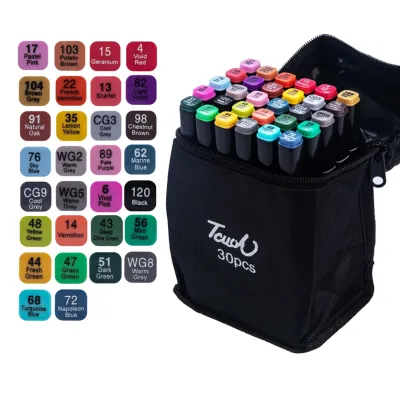
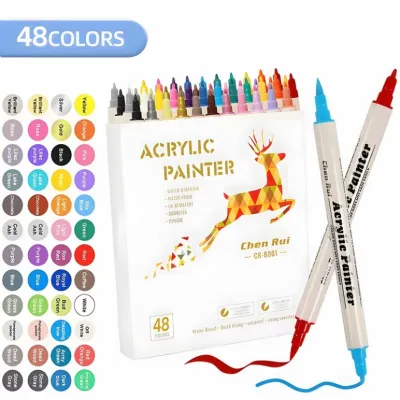
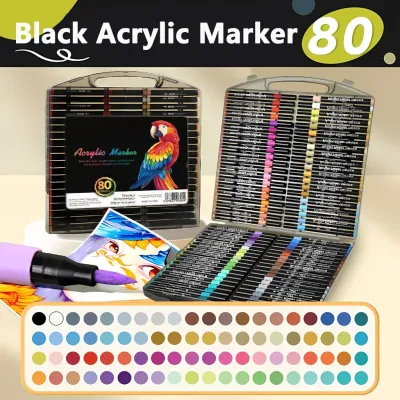
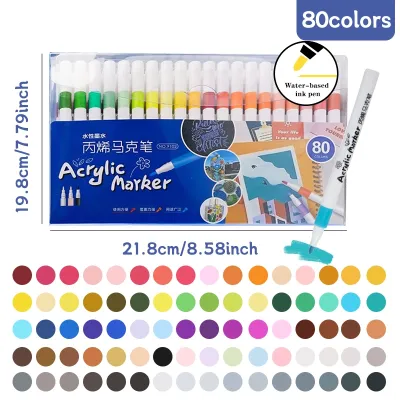
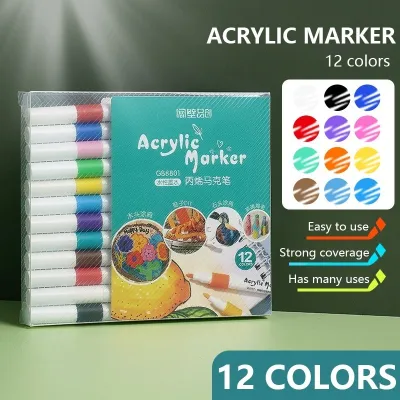
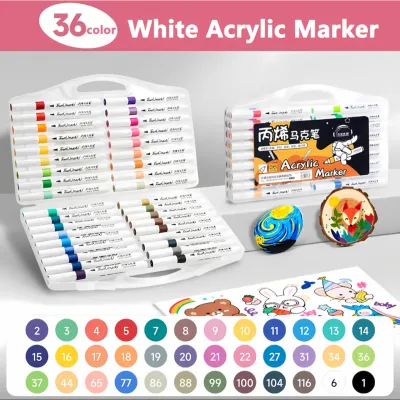
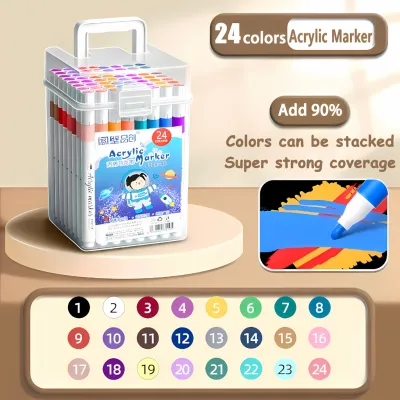
Prices are valid at publication and may change. Please refer to the product page for the latest price.
Chisel Tip: Characterized by its angled, flat edge, the chisel tip is a highly versatile option. By rotating the marker in your hand, you can transition from a broad, sweeping stroke using the flat edge to a sharp, narrow line using the pointed corner. This dual-purpose design makes it the standard choice for highlighting text and creating bold, blocky lettering.
Fine Tip: Designed for ultimate precision, the fine tip features a thin, rigid point. It is engineered to lay down a very narrow line of ink, making it ideal for intricate details, technical drawings, and tight outlines. The rigid structure prevents the tip from splaying, which helps keep your fine lines sharp and prevents ink from spreading into unwanted areas of your paper.
Brush Tip: Mimicking the behavior of a traditional paintbrush, the brush tip is made of flexible felt or individual synthetic bristles. This flexibility allows you to create dynamic line variations simply by adjusting the pressure of your hand. A light touch produces a whisper-thin line, while pressing down spreads the tip to create a rich, broad stroke.
Matching Marker Tips to Your Specific Use Cases
Matching your creative or professional tasks to the correct tip shape prevents frustration and ensures your markers set performs exactly as expected.

Detailed Illustration and Manga: If your work involves character design, detailed sketching, or smooth color transitions, look for a markers set that features both fine and brush tips. Fine tips allow you to ink clean outlines and render tiny details like hair or eyes. Brush tips are indispensable for shading and seamless blending, as their flexible fibers lay down ink smoothly without leaving harsh, overlapping lines.
Calligraphy and Hand Lettering: For expressive lettering, brush and chisel tips are the standard choices. The flexible brush tip is perfect for modern calligraphy, where you need thick downstrokes and delicate, thin upstrokes. If you prefer classic, structured gothic or italic lettering, a chisel tip provides the sharp angles and flat edges necessary to create clean, geometric letterforms.
General Highlighting and Office Work: For studying, organizing documents, or color-coding files, chisel and bullet tips are highly efficient. A chisel tip allows you to cover entire lines of text in a single swipe, while a bullet tip is excellent for writing margin notes or checking off tasks. These rigid tips distribute ink evenly, helping you highlight legibly without oversaturating or tearing standard office paper.
Bullet Journaling and Planning: Keeping a personal planner or bullet journal requires a balance of neat writing and creative decoration. A markers set combining fine tips and bullet tips is ideal for this workflow. Fine tips keep your daily logs and habit trackers neat and readable, even in tight grid spaces, while bullet tips allow you to draw simple icons, banners, and small doodles without bleeding through the page.
Beyond the Tip: Other Specs to Check in a Markers Set
While the tip shape determines your line style, other physical specifications influence how that tip interacts with your paper and how long your markers set will last.
Ink Base (Alcohol vs. Water-Based): The chemical composition of the ink changes how it behaves on paper. Alcohol-based inks dry incredibly fast—a helpful feature in the humid climate of the Philippines where wet ink can easily smudge—and blend together beautifully without streaking. However, they are highly prone to bleeding through standard notebook paper. Water-based inks dry slightly slower but are much gentler on thin paper, making them the safer choice for double-sided journaling and standard school notebooks.
Paper Compatibility and Bleed-Through: To get the best performance from your marker tips, you must match them to the correct paper weight. Standard printer paper or cheap notebook pages (often around 70 to 80 gsm) will easily saturate and bleed when exposed to heavy ink flow from brush or chisel tips. For heavy coloring or alcohol markers, look for specialized marker paper or thick cardstock of at least 120 gsm to prevent ink from ruining the pages underneath. Because bleed resistance and drying speed depend entirely on the exact combination of your marker’s ink and your paper’s fibers, always perform a quick test stroke on an inconspicuous corner or a scrap sheet of the same paper before starting your project.
Nib Durability and Replaceability: Flexible brush tips and ultra-fine plastic tips are susceptible to wear. Applying too much pressure on a rough paper surface can cause fine tips to bend or brush tips to fray, permanently ruining their line quality. When budgeting for a premium markers set, which can range from a few hundred to several thousand pesos (₱), check the manufacturer’s specifications to see if they offer replaceable nibs, which can save you from replacing the entire marker when only the tip is worn.
Frequently Asked Questions (FAQ)
Can I use a brush tip marker for regular writing?
While you can use a brush tip marker for everyday writing, it is generally not ideal for long writing sessions. Because the tip is highly flexible, you must constantly control your hand pressure to keep your handwriting legible and uniform. This continuous adjustment can lead to hand fatigue, and your writing may look inconsistent compared to the steady, rigid lines produced by a bullet or fine tip marker.
How do I know if a marker tip is ruined or just dry?
To diagnose your marker, inspect the nib closely under bright light. If you observe physical fraying, splitting, or a permanently bent tip, the nib itself is physically ruined and needs replacement. If the tip looks perfectly intact but refuses to write, the ink reservoir is likely dry. You can try storing the marker horizontally or tip-down for a few hours to see if gravity restores the ink flow to the nib.
Community discussion
Share your experience or ask a question. Comments are reviewed before publication.