
Selecting the right pencil grade depends on balancing line darkness, core hardness, and the specific task at hand. Whether you are sketching a portrait, drafting a technical plan, or writing notes, matching the graphite grade to your paper and environment ensures clean, legible, and expressive results. The Mars Lumograph range offers a wide spectrum of grades designed to meet these diverse needs, but finding your ideal match requires understanding how these grades behave under different conditions.
By learning how the graphite-to-clay ratio affects performance, you can easily determine which pencil to reach for. This guide breaks down the grading scale, matches specific grades to common tasks, and provides practical tips for maintaining your pencils in challenging environments.
Understanding the Graphite Grading System
To choose the right Mars Lumograph pencil, you must first understand the standard European grading system printed on the end of each pencil. This scale uses the letters H and B to indicate the hardness and blackness of the core. The core itself is a mixture of graphite, which provides darkness and lubrication, and clay, which acts as a binding agent to provide structure and hardness.
Products mentioned in this guide
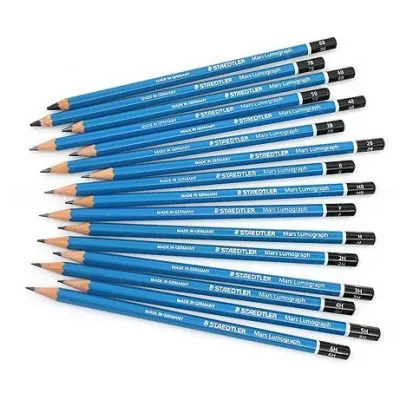
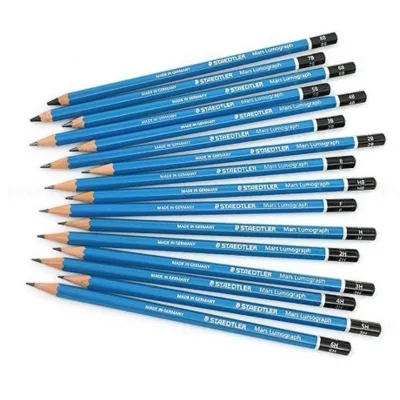
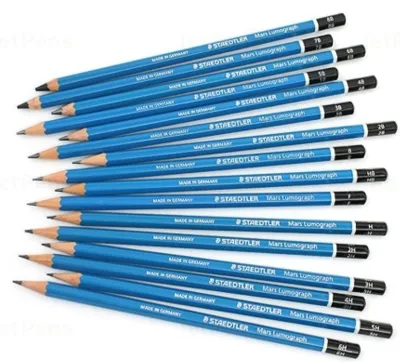
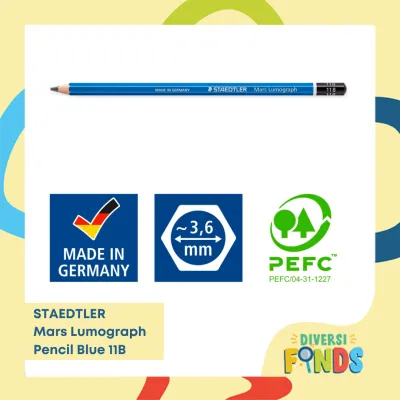
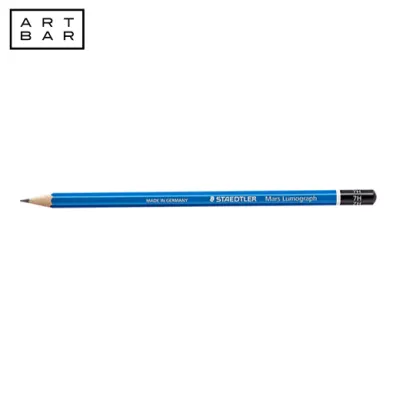
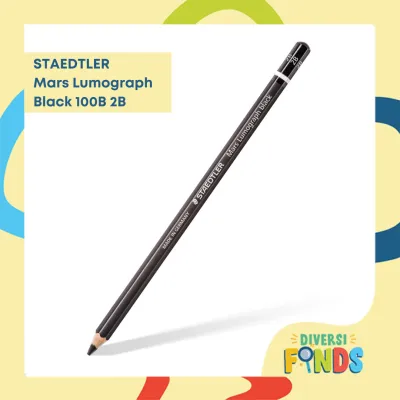
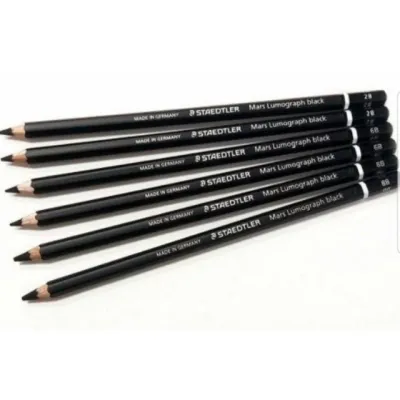
Prices are valid at publication and may change. Please refer to the product page for the latest price.
The H series stands for “Hard.” Pencils in this category contain a higher proportion of clay, resulting in a firm core that wears down slowly. Higher numbers next to the H indicate a harder lead that produces lighter, thinner, and highly precise lines. These grades are excellent for work that requires absolute accuracy and minimal smudging.
The B series stands for “Black.” These pencils contain more graphite and less clay, creating a softer core that glides smoothly across the page. As the numbers next to the B increase, the lead becomes softer and darker, making it easier to lay down deep, rich tones and broad strokes. However, these softer cores wear down quickly and require more frequent maintenance.
Between these two series lie the HB and F grades, which serve as the middle-ground standards. HB balances hardness and darkness, making it the universal baseline for general use. The F grade, which stands for “Fine,” is slightly firmer than HB and is formulated to hold a sharp, fine point for longer periods of time without wearing down.
While the grading system is standardized, slight variations in hardness and darkness can occur between different manufacturers. For consistent results, it is best to rely on the specific brand’s labeling and establish a familiar workflow within their product line.
Matching Mars Lumograph Grades to Your Specific Tasks
Matching your pencil grade to your specific task prevents frustration and improves the quality of your work. Different applications demand different physical properties from the graphite core.

For everyday writing and note-taking, HB or F grades are highly recommended. These middle-ground pencils offer optimal clarity and minimal smudging on standard notebook paper. Because the core is firm enough to resist rapid wear, you will not need to sharpen your pencil constantly during long writing sessions, keeping your notes clean and legible.
Technical drawing and drafting require the precision of the H series, such as H or 2H. These grades allow you to draw thin, consistent guidelines that do not smear under rulers or triangles. Furthermore, the light marks left by harder leads are easily erasable, allowing you to clean up construction lines without damaging the paper surface.
Artistic sketching and shading call for the expressive qualities of the B series, particularly 2B, 4B, and 6B. These softer grades allow you to achieve deep tonal variations, smooth gradients, and rich shadows. They respond beautifully to changes in hand pressure, allowing you to transition from delicate lines to bold, dark fills with ease.
The final result on your page depends heavily on several decision variables, including paper texture, or “tooth,” and your individual hand pressure. Rougher paper pulls more graphite from the core, making lines appear darker and wearing the pencil down faster. It is always wise to cross-reference the manufacturer’s intended use guide on the packaging to align your tools with your creative goals.
Practical Tips for Testing and Maintaining Your Pencils
To get the most out of your Mars Lumograph pencils, you should establish a routine for testing their performance and maintaining their physical condition.
Before starting any major project, perform a simple swatch test on a scrap piece of your target paper. Draw a series of small blocks, gradually increasing your hand pressure to evaluate the darkness, smoothness, and erasability of each grade. This quick test helps you verify how the graphite interacts with that specific paper texture before you commit to your final work.
Your sharpening habits should also adjust according to the grade of the pencil. Softer cores, such as 4B or 6B, are structurally weaker and require gentler handling. When sharpening soft leads, use a sharp, high-quality blade and aim for a shorter, blunter exposed tip rather than a long, needle-like point, which is highly prone to snapping under pressure.
Environmental factors can also play a significant role in how your pencils perform. In the high humidity of the Philippines, paper fibers absorb moisture from the air, becoming softer and slightly damp. This moisture alters the paper surface, causing softer B grades to smudge more easily and transfer onto your hands. To combat this, store your drawing paper in sealed plastic folders, and always place a clean, dry sheet of scrap paper or a blotter sheet under your hand to protect your work from moisture and skin oils.
Frequently Asked Questions (FAQ)
Is a 2B pencil better than an HB for everyday school writing?
While a 2B pencil provides a darker and more visible line with less hand pressure, it is generally less practical than an HB for everyday school writing. The softer core of a 2B pencil wears down rapidly, requiring constant sharpening, and is highly prone to smudging on standard notebook paper when pages rub together. HB remains the standard recommendation for schoolwork because it balances durability and cleanliness, though 2B is often required for standardized test forms that use optical scanners.
Do softer Mars Lumograph grades break more easily when dropped?
Yes, the internal graphite cores of softer B grades are inherently more fragile than those of harder H grades. Because soft leads contain more graphite and less clay binder, they lack the structural rigidity of harder pencils. While the protective wood casing absorbs minor impacts, a severe drop can fracture the core in multiple places inside the wood, leading to frustrating breaks every time you try to sharpen the pencil. Storing your pencils in a padded case or a dedicated pencil roll can help prevent this internal damage.
Community discussion
Share your experience or ask a question. Comments are reviewed before publication.