
Choosing between Midori’s MD Paper, Traveler’s Notebook, and Cotton Paper lines depends on your writing environment, your preferred writing instruments, and how you plan to use your notebook. If you want a minimalist, lay-flat notebook for daily desk writing, the classic MD Paper is an exceptional choice. If you need a highly portable, modular system that ages beautifully and adapts to travel, the Traveler’s Notebook is the right fit. For those who prioritize archival-grade preservation, heavy ink applications, or a softer texture, the Cotton Paper line offers the necessary thickness and fiber blend.
In the humid tropical climate of the Philippines, paper selection also involves managing moisture absorption and ink drying times. High humidity can cause paper to absorb ambient moisture, which in turn affects how ink behaves on the page. Each of these three lines handles ink, humidity, and daily wear differently. By understanding their physical properties, binding styles, and paper compositions, you can select the exact notebook that matches your fountain pens, gel pens, and daily routine.
Quick Comparison: MD Paper, Traveler's, and Cotton Lines
To understand these three lines, it helps to look at their physical construction and design philosophies. Midori designs each line with a distinct binding style and cover material to serve different writing habits.
Products mentioned in this guide
![[100% Authentic] DESIGNPHIL Midori Travelers Notebook Refill Pad Passport Size MD Paper Grid 002 14369006 ships from Japan](https://img.lazcdn.com/g/p/fa23a7fbbf1addfc6c93f4b739bb5d1a.jpg_400x400q80.jpg_.webp)
![[100% Authentic] DESIGNPHIL Midori Travelers Notebook Refill Pad Passport Size MD Paper Free Diary Monthly 006 14326006 ships from Japan](https://img.lazcdn.com/g/p/f8f50fc788487f049cdcfff71402e1f0.jpg_400x400q80.jpg_.webp)
![[100% Authentic] DESIGNPHIL Midori Travelers Notebook Refill Pad Passport Size MD Paper Cream Blank Unlined 013 14404006 ships from Japan](https://img.lazcdn.com/g/p/fa1fe034cd2f3f41a6cdb9d97b684a68.jpg_400x400q80.jpg_.webp)
Prices are valid at publication and may change. Please refer to the product page for the latest price.
The classic MD Paper line features an exposed thread-stitch binding with a simple paper cover, emphasizing a minimalist aesthetic that stays flat on a desk. The Traveler’s Notebook uses a modular system centered around a durable leather cover, secured by elastic bands and a brass clasp, allowing you to swap out multiple paper refills. The Cotton Paper line, often available in bound formats or specialized pads, uses a blend containing cotton fibers to create a softer, more absorbent surface.
These physical differences dictate how each notebook behaves in daily use. While the MD Paper line is built for structured, distraction-free desk work, the Traveler’s Notebook is designed for dynamic, on-the-go journaling. The Cotton Paper line caters to users who want a premium, archival-grade medium for sketching, heavy ink washes, or formal record-keeping.
Midori MD Paper: Minimalist Design for Daily Writing
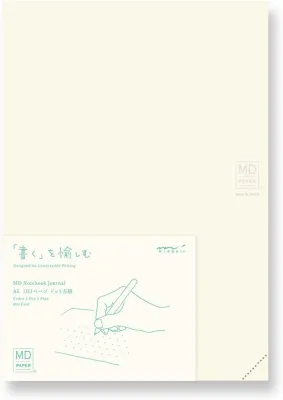
The Midori MD Paper line is built on the concept of functional beauty, stripping away unnecessary design elements to focus entirely on the writing experience. One of its most notable physical features is the exposed thread-stitch binding, also known as Smyth sewn binding. This design allows the notebook to open completely flat, eliminating the annoying curve near the spine that often disrupts your hand while writing.

The paper itself has a distinct cream color that is gentle on the eyes under bright study lamps or natural sunlight. It features a slight texture, often described as a “tooth,” which provides subtle tactile feedback as your pen glides across the page. This texture makes it highly satisfying for pencil users and fountain pen enthusiasts who prefer a bit of resistance rather than a slippery surface.
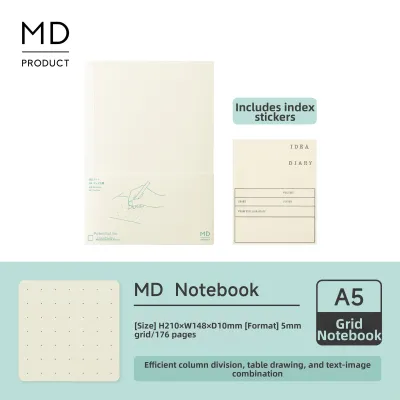
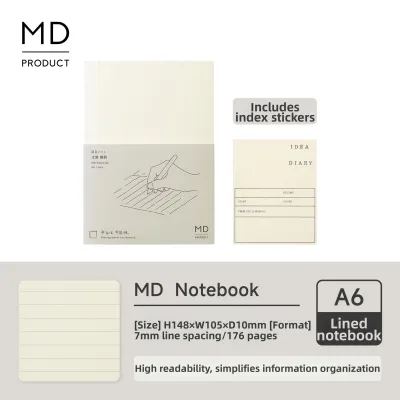
For daily journaling, rapid logging, or structured note-taking, the MD Paper line offers clean layouts, including blank, lined, and grid formats. The grid and lined versions use subtle, light-colored markings that guide your writing without cluttering the page. Because the covers are made of lightweight cardstock, many users choose to pair them with clear vinyl or paper covers to protect them from dirt and moisture, especially during daily commutes in humid environments.
Traveler's Notebook: Modular Customization for Journaling
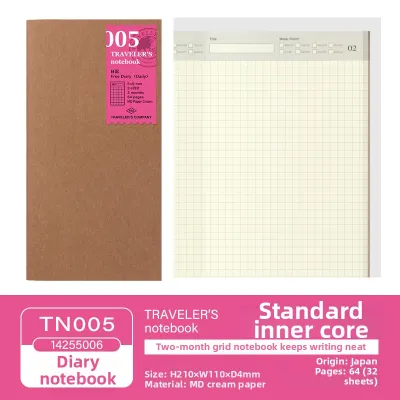
The Traveler’s Notebook is a highly customizable system built around a thick, raw leather cover paired with refined paper refills. The mechanical system is simple yet effective: a central elastic band holds one or more paper inserts in place, while an outer elastic band and a small brass clasp keep the entire notebook securely closed.
A key appeal of this system is how the leather cover ages. Over time, handling the leather transfers natural oils from your hands, creating a unique patina, while daily scuffs and scratches add individual character. This makes the notebook feel like a personal companion rather than a mass-produced stationery item. In humid climates, the natural leather requires occasional airing to prevent moisture buildup, but its durability remains unmatched.
Inside the leather cover, you can mix and match different paper types and formats to build a personalized setup. You can combine a weekly planner insert with a blank sketch insert and a lightweight paper refill all within a single cover using silicone connecting bands. This modularity is highly practical for managing multiple projects, tracking travel itineraries, or keeping separate sections for personal reflections and professional tasks. The slim, vertical format fits comfortably in one hand, making it easy to write while traveling or sitting in a local cafe.
Cotton Paper: Archival Quality for Fountain Pens and Records
The Cotton Paper line is designed for writers and artists who require a more substantial, durable medium. By incorporating cotton fibers into the paper pulp—typically a blend of 20 percent cotton and 80 percent wood pulp—Midori creates a sheet that is noticeably softer and thicker than standard wood-pulp paper. This composition gives the pages a high level of opacity and a luxurious, fabric-like texture.
This physical structure makes Cotton Paper highly suitable for wet inks, fountain pens, and light watercolor washes. The cotton fibers absorb ink deeply, which helps prevent pooling and reduces the likelihood of ink bleeding through to the other side of the page. However, because cotton paper is more absorbent than standard MD paper, ink drying times can vary. In humid tropical climates, it is important to test your specific ink and pen combinations, as high humidity combined with absorbent fibers can slightly increase drying times and affect line crispness.
The archival quality of cotton paper ensures that your records, sketches, and personal histories remain intact for years without yellowing or deteriorating. This makes the line an excellent choice for formal journals, legacy records, and detailed art journaling where long-term preservation is a priority.
How to Match Your Pens and Habits to the Right Paper
Selecting the right Midori line requires matching your favorite writing instruments to the physical traits of the paper. Standard MD Paper works exceptionally well with fine-tip gel pens, ballpoints, and medium-to-fine fountain pens. Its surface coating resists feathering and ghosting, though very wet inks may take a moment to dry. Cotton Paper, with its high absorbency, is excellent for broad fountain pen nibs, calligraphy inks, and sketching pencils, as it absorbs the ink quickly and provides a rich, matte finish.
Portability and environmental durability are also critical factors. If you frequently carry your notebook in a backpack or bag, the Traveler’s Notebook offers superior protection. The thick leather cover shields the inner paper inserts from crumpled edges and light moisture. In contrast, the minimalist MD Paper and Cotton Paper notebooks have soft cardstock covers that are more vulnerable to wear and tear unless protected by an aftermarket cover.
Finally, consider your preferred size and layout. The MD Paper line is widely available in standard book sizes like A5, B6 Slim, and A6, which are perfect for desk use and standard shelving. The Traveler’s Notebook uses proprietary sizes—Regular (a tall, narrow format) and Passport—which require specific refills. If you enjoy standard paper sizes, the MD line is easier to fit into standard covers, whereas the Traveler’s system requires committing to its unique dimensions and elastic binding method.
Final Verdict: Which Midori Line Fits Your Needs?
Choose the MD Paper line if you prefer a minimalist, clean aesthetic, write primarily at a desk, and want a notebook that lays completely flat. This line is perfect for daily journaling, structured note-taking, and users who appreciate a slight tactile feedback from their pen tips.
Choose the Traveler’s Notebook if you want a modular, highly portable system that you can customize with different paper types. This is the ideal choice for travel journaling, managing multiple projects in one place, and those who appreciate the natural aging process of genuine leather.
Choose the Cotton Paper line if you use wet fountain pens, calligraphy inks, or light watercolors, and want a thick, archival-grade paper that preserves your work for the long term.
Verify first if your preferred notebook sizes and refills are readily available from authorized stationery retailers in the Philippines. Because high humidity can affect paper behavior, it is always wise to perform a small ink test on a back page to check drying times and ensure your specific pen and ink combination performs exactly as expected.
Community discussion
Share your experience or ask a question. Comments are reviewed before publication.