
Quick Answer: Is the Miracle Works Acrylic Marker Right for You?
If you are looking for an affordable, highly accessible way to explore paint-marker art, the miracle works acrylic marker is an excellent entry-point option. Generally positioned in the Philippine market as a budget-friendly choice, these markers are widely available in local craft stores and online marketplaces, making them popular among students, casual hobbyists, and teachers. They allow you to experiment with vibrant, opaque colors on various surfaces without the steep upfront investment required by high-end art supplies.
However, your ultimate choice should depend on your specific project requirements, your canvas, and your budget. While budget-friendly options like Miracle Works offer outstanding value for everyday crafts, rock painting, or school posters, they may not meet the strict demands of professional gallery work. Fine artists often require specialized features such as certified lightfastness, highly consistent color matching across different production batches, and replaceable nib systems. For high-volume, low-stakes creative projects, an accessible marker set is often the most practical and satisfying choice.
Key Comparison Dimensions for Acrylic Markers
To determine how the miracle works acrylic marker measures up against other options on the market, it is helpful to look past marketing buzzwords and focus on physical, observable performance metrics. Acrylic markers are complex tools that combine paint chemistry with mechanical delivery systems. A marker that works beautifully on smooth cardstock might clog on rough wood or pill on thin paper.
Products mentioned in this guide
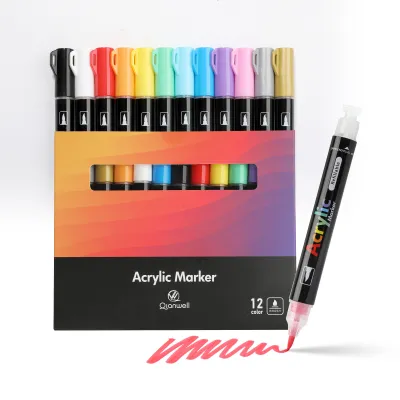
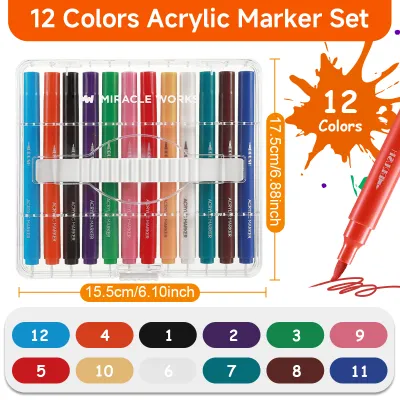
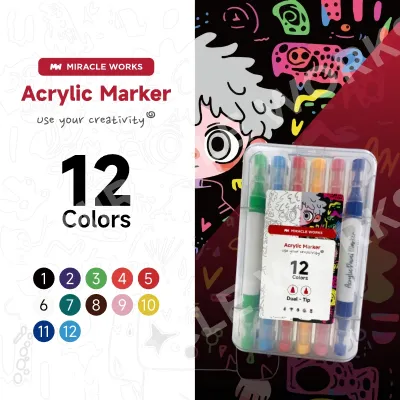
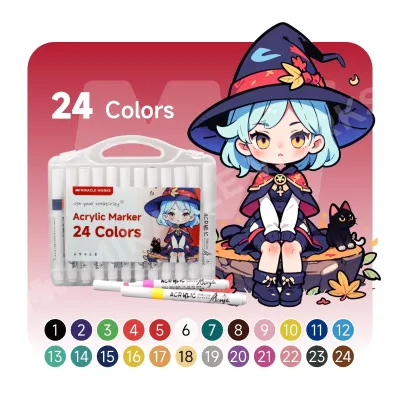
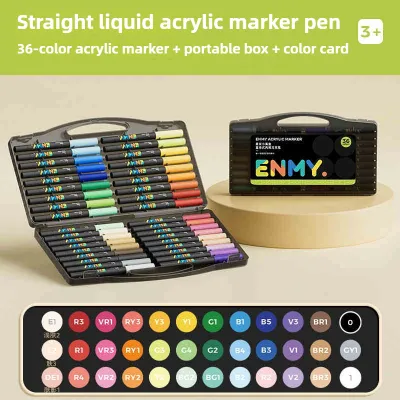
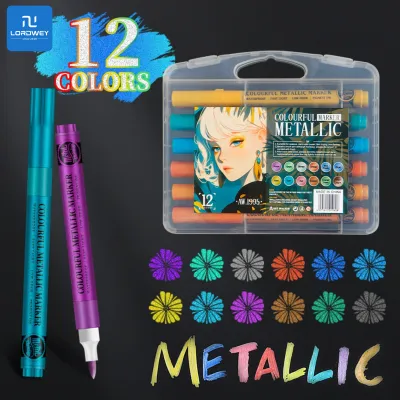
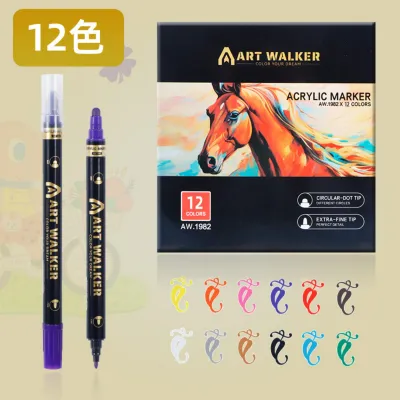
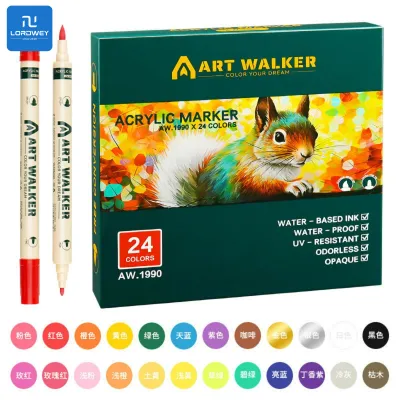
Prices are valid at publication and may change. Please refer to the product page for the latest price.

Evaluating these markers requires analyzing three key dimensions: the behavior of the ink itself, the physical durability of the nib, and how well the paint adheres to different materials. Because actual performance depends heavily on the specific combination of marker brand and surface material, conducting a small, controlled test is always the most reliable way to select your tools. Let us break down these critical dimensions so you can make an informed decision.
Ink Opacity, Flow, and Finish
The heart of any paint marker is its ink formulation, which dictates how smoothly the paint flows and how cleanly it covers your surface. Opacity refers to the marker’s ability to completely mask the color underneath it, which is especially important when working on dark or highly patterned backgrounds. While many brands advertise “one-coat coverage,” the reality is that opacity is highly pigment-dependent; lighter colors like white, pastel yellow, or light pink often require two or more coats to achieve a solid, streak-free finish, regardless of the brand.
Flow consistency is another vital factor to observe during use. High-quality markers utilize a valve-action mechanism that releases a controlled amount of ink when the nib is depressed, preventing sudden blobs or dry, scratchy lines. In the tropical climate of the Philippines, where high relative humidity can slow down the evaporation rate of water-based solvents, ink flow behaves differently than in dry environments. If an ink formula is too thin, the excess moisture in the air can cause the paint to remain tacky for longer, increasing the risk of smearing or bleeding into adjacent colors.
The dried finish of the paint also varies across brands, ranging from flat matte to satin or high gloss. To verify how a marker behaves on your specific medium, draw a simple two-inch square on a scrap piece of the material. Observe how smoothly the ink lays down, check if it bleeds through the paper fibers, and note how long it takes to dry completely. This hands-on test will give you a realistic baseline of the marker’s capabilities before you begin your main project.
Nib Types and Durability
The nib, or tip, is the mechanical gateway of the marker, and its shape and material directly influence your drawing style and line quality. Standard acrylic markers typically offer several nib configurations, including bullet tips for general drawing, chisel tips for broad strokes and calligraphy, brush tips for expressive linework, and extra-fine tips for intricate detailing. When comparing brands, look closely at the tip dimensions (such as 0.7mm for ultra-fine work or 3mm to 5mm for medium bullet tips) to ensure they match the scale of your canvas.
Nib material is equally critical to the marker’s longevity. Rigid plastic or hard acrylic tips are highly durable and hold their shape well on rough surfaces like stone or raw wood, but they can sometimes scratch delicate papers. Conversely, synthetic felt or fiber nibs offer a smoother glide on paper but are prone to fraying if used on abrasive surfaces. Some brands feature reversible nibs—allowing you to pull the tip out and flip it around if one side becomes worn—or offer replaceable nibs, which can drastically extend the life of the marker barrel.
For detailed illustrations or fine lettering, a flexible brush nib provides excellent line-weight variation but requires a gentle hand to prevent the paint from splattering. If your project involves structured geometric patterns or sharp, uniform lines, a rigid bullet or chisel tip will offer much more reliable control. Always match the nib material and shape to both your artistic style and the texture of your working surface.
Surface Compatibility and Adhesion
Acrylic paint markers are celebrated for their multi-surface versatility, but their adhesion properties vary significantly depending on whether the surface is porous or non-porous. Porous materials—such as canvas, raw wood, heavy watercolor paper, unglazed terracotta, and fabric—absorb the water-based binder of the paint, creating a strong, permanent mechanical bond once dry. On these surfaces, most decent acrylic markers will resist scratching and fading without requiring extensive preparation.
Non-porous surfaces—such as glass, glazed ceramics, polished metals, and smooth plastics—present a much greater challenge. Because the paint cannot penetrate these materials, it sits entirely on the surface, making it highly vulnerable to scratching, peeling, or washing off. While some specialized formulas claim to be permanent on glass, most standard craft acrylic markers require specific preparation, such as thoroughly degreasing the surface with rubbing alcohol, lightly sanding smooth plastics to create physical grip, or applying a protective clear sealant after the paint dries.
It is important to remember that the word “permanent” on a marker label usually assumes application on a porous, indoor surface. Always consult the manufacturer’s specific instructions regarding washability, heat curing, or scratch resistance. For instance, if you are customizing ceramic mugs, you will likely need to bake the finished piece in a home oven to cure the paint, or accept that the design must be gently hand-washed rather than placed in a dishwasher.
Decision Framework: Choosing the Right Brand for Your Needs
Navigating the wide array of acrylic markers available in the Philippines requires balancing performance expectations against your budget. To help you decide whether to purchase the miracle works acrylic marker or invest in a premium alternative, let us look at how different brands align with specific user profiles, project scopes, and environmental conditions.
Choose Miracle Works (or similar accessible brands) if: You are a student, beginner, or hobbyist looking for a cost-effective way to explore paint markers without spending a fortune. In the Philippines, budget-friendly sets typically range from ₱150 to ₱500 for a multi-color pack, making them highly accessible for classroom projects, DIY rock painting, or casual canvas art. These markers are ideal if you want a wide variety of colors immediately and do not require archival-grade longevity.
They are also excellent for high-volume, low-stakes crafting where the primary goal is fun and experimentation. If you are customizing a pair of canvas shoes for a season, painting holiday decorations, or working on school posters, these markers provide plenty of vibrant pigment to get the job done beautifully. Because they are highly affordable, they are also a low-risk option for children’s art classes or community workshops where markers are shared and occasionally left uncapped.
Choose Premium/Professional Brands if: You are a professional illustrator, fine artist, or commercial designer whose livelihood depends on the archival quality and physical consistency of your work. Premium brands—where a single marker can cost anywhere from ₱150 to ₱300 or more—offer certified lightfastness ratings, meaning your artwork will resist fading even when exposed to sunlight over several decades. This is a non-negotiable requirement if you sell original paintings to collectors or exhibit your work in galleries.
Professional-grade markers also offer strict batch-to-batch color consistency, ensuring that if you run out of a specific shade of blue mid-project, the replacement marker you buy will match the existing paint perfectly. Furthermore, premium brands often feature refillable ink reservoirs and easily replaceable nibs, which reduces long-term plastic waste and allows you to customize your color mixes. If your work requires extremely precise line weights, specialized nib shapes, or guaranteed chemical stability, investing in a professional system is well worth the cost.
Neither may fit if: Your project demands highly specialized, non-standard physical properties that standard craft acrylics simply cannot provide. For example, if you are decorating plates, bowls, or utensils that will come into direct contact with food, standard acrylic markers are not safe; you must seek out specialized, food-grade ceramic markers that are certified non-toxic and oven-safe. Similarly, if you are working in high-heat industrial environments, marking metal pipes, or creating outdoor signage exposed to intense tropical downpours and UV rays, you should bypass craft markers entirely in favor of oil-based industrial paint markers or specialized weather-resistant outdoor paints.
Verify first if: You are working on high-wear, high-exposure, or safety-sensitive items, such as children’s toys, outdoor murals, or frequently washed clothing. Before starting, always check the product packaging for specific safety certifications, such as the AP (Approved Product) seal, which indicates the material is non-toxic and safe for studio use. Additionally, check the label for washability ratings and sealing requirements. If you are painting on fabric, verify whether the ink must be heat-set with an iron to survive the laundry, and always run a test wash on a scrap piece of fabric to ensure the design does not crack or fade.
Practical Tips for Testing and Maintaining Your Markers
Regardless of the brand you choose, proper preparation and maintenance are essential to keep your acrylic markers performing smoothly and to prevent them from drying out prematurely. Water-based acrylic paint is prone to settling and drying if neglected, but a few simple habits will ensure your markers last as long as possible.
Priming Your Markers: When you first open a new acrylic marker, the nib will be completely dry and white because the paint is sealed inside the barrel. To prime the marker, shake it thoroughly for at least 30 seconds with the cap securely on; you should hear the internal mixing ball rattling, which helps blend the heavy pigments with the liquid binder. Next, place a piece of scrap paper on a flat surface, remove the cap, and gently press the nib down vertically until it retracts slightly into the barrel, then release. Repeat this pumping motion slowly and patiently—do not press down aggressively or pump too rapidly, as this can overwhelm the valve, causing a sudden flood of paint that can ruin your artwork or create a messy pool on your desk.
Proper Storage Habits: To maintain consistent ink flow, store your acrylic markers horizontally when not in use. Storing them vertically can cause the heavy paint pigments to settle either at the very bottom of the barrel (making the ink too thin when you write) or directly inside the nib (which can clog the tip and make it impossible to prime). Horizontal storage keeps the paint evenly distributed along the length of the marker, ensuring that the next time you pick it up, the ink is well-mixed and ready to flow with minimal shaking.
Nib Maintenance and Cleaning: If you leave your marker uncapped for too long, or if you use it on a dusty surface like raw wood or plaster, the nib can become clogged with dried paint or debris. Fortunately, most acrylic marker nibs are removable and highly resilient. If the tip becomes stiff or clogged, gently pull the nib out of the plastic housing using your fingers or a pair of tweezers. Rinse the nib under warm running water, gently squeezing it to wash away the dried acrylic paint, then blot it dry with a paper towel before reinserting it into the barrel. Never use harsh chemical solvents like acetone or paint thinner to clean the nib or the marker body, as these chemicals can dissolve the synthetic fibers of the tip and melt the plastic barrel.
Frequently Asked Questions (FAQ)
Can I mix Miracle Works acrylic markers with other brands?
Yes, you can generally layer and mix different brands of water-based acrylic markers on your canvas or paper, provided you allow each layer to dry completely first. Because most craft acrylic markers share a similar water-based polymer chemistry, they will adhere to one another without peeling or cracking. However, you should never attempt to mix different chemical bases—such as layering water-based acrylics over oil-based paint markers—as the water-based paint will fail to adhere to the oily surface, leading to rapid peeling and cracking. Additionally, avoid attempting to mix different liquid inks directly inside the marker barrels, as varying viscosities and preservative formulations can cause the paint to coagulate, permanently clogging the nib and ruining the marker.
Do I need to seal my acrylic marker artwork?
Whether you need to seal your artwork depends entirely on the finished item’s intended use and environment. For indoor artwork on paper, sketchbook pages, or stretched canvas, a sealant is generally unnecessary because the paint is not subjected to physical wear or moisture. However, if you are customizing high-touch items like phone cases, shoes, or mugs, or if your artwork will be displayed outdoors under the intense sun and heavy rain of the Philippine climate, applying a clear protective sealant is highly recommended. You can use a spray-on or brush-on acrylic varnish (available in matte, satin, or glossy finishes); always ensure the paint is completely dry before sealing, and test the varnish on a small scrap piece first to ensure it does not cause the marker ink to bleed or cloud.
Community discussion
Share your experience or ask a question. Comments are reviewed before publication.