
Choosing the right acrylic marker can transform your creative projects, whether you are customizing a pair of canvas shoes, painting rocks, or detailing a fine art canvas. The market is filled with options ranging from highly accessible budget sets to expensive professional-grade paint pens. Miracle Works acrylic markers have gained popularity as an affordable, user-friendly choice, but how do they hold up against established premium and mid-tier brands?
The ideal acrylic marker for your toolkit depends entirely on your project scope, the surfaces you paint on, and your budget. Miracle Works markers are generally favored for their affordability, decent opacity, and accessibility, making them an excellent choice for student projects, casual crafting, and hobbyists. However, professional artists who require certified lightfastness, highly specialized nibs, or archival-quality pigments will find that premium brands remain necessary. This comparison evaluates the key performance metrics of these markers to help you decide which brand best fits your creative needs.
Key Comparison Dimensions for Acrylic Markers
Tip Quality and Mechanism
Acrylic markers generally utilize one of two delivery systems: valve-action (also known as pump-action) or capillary action. Valve-action markers feature an internal spring-loaded valve that opens when you press the nib down, allowing liquid paint to flow from the main reservoir into the tip. This design keeps the paint fresh and highly saturated but requires careful priming and shaking before use. Capillary-action markers, on the other hand, use a pre-saturated fiber core similar to standard felt-tip pens, offering a more immediate but sometimes less opaque ink flow.
Products mentioned in this guide
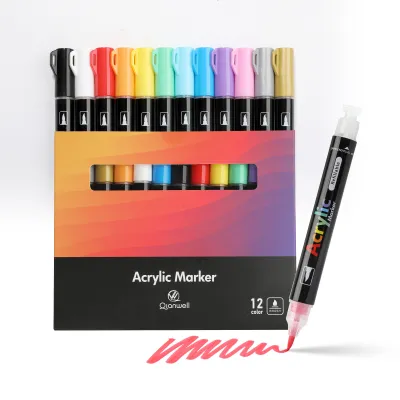
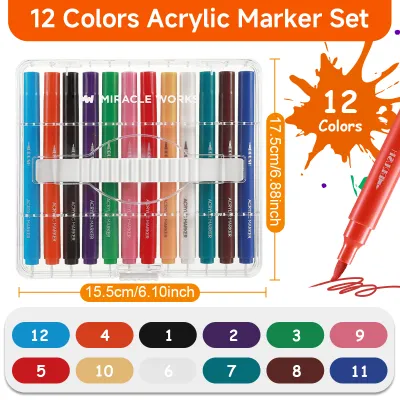
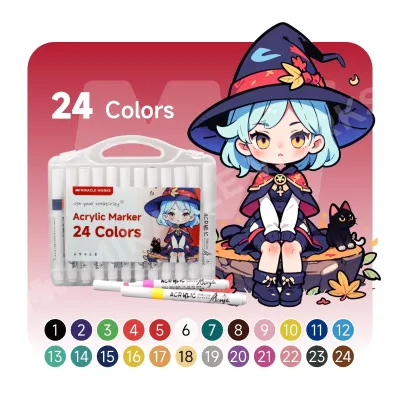
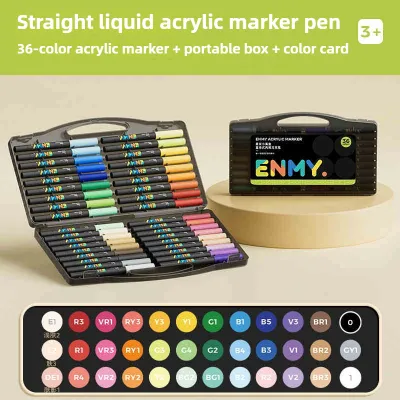
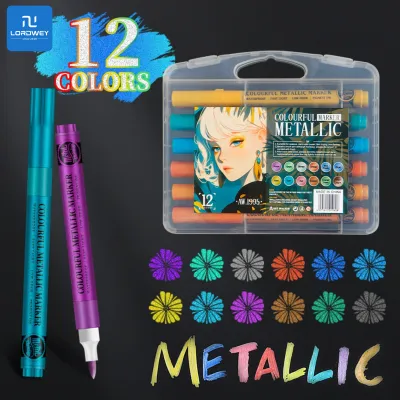
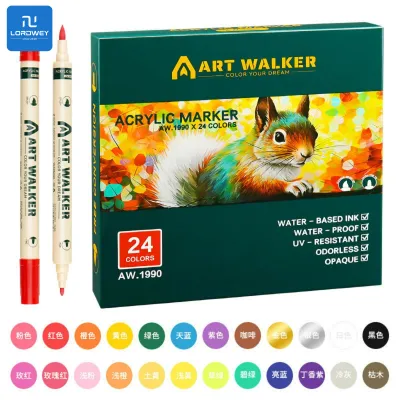
Prices are valid at publication and may change. Please refer to the product page for the latest price.
The durability of the nib material is just as critical as the flow mechanism. Nibs are typically constructed from compressed polyester, nylon, or acrylic fibers. Rough surfaces like unsealed wood, terra cotta, or concrete can quickly fray softer felt nibs, resulting in fuzzy, inconsistent lines. When choosing a marker, look for brands that offer replaceable nibs or dual-tip options (such as a chisel tip on one end and a fine bullet tip on the other) to maximize the lifespan of your set.
Color Vibrancy and Pigment Load
The visual impact of an acrylic marker depends on its pigment load, which refers to the concentration of finely ground pigment suspended in the acrylic polymer binder. High-pigment markers deliver rich, saturated color in a single pass, even when applied over dark or highly textured backgrounds. Budget-friendly options often compensate for lower pigment concentrations by using more liquid binder and water, which can result in a more translucent finish.
To evaluate vibrancy, observe how the paint behaves as it dries. Some formulations dry to a slightly darker shade, while others maintain their wet hue perfectly. If you are working on mixed-media projects, look for markers that do not require multiple layers to achieve a true, bright color payoff, as excessive layering can warp thin paper or create a thick, rubbery texture that is prone to peeling.
Opacity and Coverage
Opacity determines how effectively a marker can cover underlying colors or dark surfaces without letting the background show through. A highly opaque marker allows you to paint white highlights over a black background with minimal streaking. Achieving this level of coverage requires a balanced water-to-acrylic ratio; if the paint is too thin, it will pool and run, whereas paint that is too thick will clog the nib and leave visible brush-like streaks.
For large-scale coloring or background work, coverage consistency is paramount. Some budget formulations require three or four coats to achieve a completely solid, streak-free surface, which consumes more paint and increases your overall project time. Premium formulations are engineered to settle evenly as they dry, minimizing the appearance of overlapping stroke lines.
Surface Compatibility and Adhesion
Acrylic paint is celebrated for its versatility, but its adhesion properties vary significantly across different materials. Porous surfaces like raw wood, heavy watercolor paper, and canvas naturally absorb the binder, creating a strong mechanical bond. Non-porous surfaces like glass, glazed ceramics, plastics, and metals present a greater challenge, as the paint film simply sits on top of the smooth surface and can easily scratch or peel off.
Because paint chemistry varies by brand, always check the manufacturer’s label for specific surface preparation and priming requirements. For smooth or non-porous surfaces, you may need to lightly sand the material, apply a specialized primer, or use a protective clear sealant after the paint dries. Conducting a small test patch on an inconspicuous area is the most reliable way to verify adhesion before committing to a full project.
Miracle Works vs. Premium Professional Brands
Build Quality and Ink Flow
Premium professional brands, such as Posca or Molotow, are engineered with highly precise valve systems designed to prevent common paint pen headaches like leaking, pooling, and splattering. These pens maintain a highly consistent flow of paint during long, continuous drawing sessions, requiring minimal re-priming. The internal mixing ball in a premium marker is typically heavier, allowing it to thoroughly redistribute settled pigments with just a few quick shakes.

In contrast, budget-friendly options like Miracle Works may require more frequent shaking and careful pressure control. If you press down too forcefully on a budget valve-action tip, you run a higher risk of releasing a sudden puddle of paint onto your artwork. While Miracle Works markers perform admirably for general crafting, they demand a gentler hand and more patience to maintain a steady, uniform line weight.
Lightfastness and Archival Properties
For professional artists who sell their original work, lightfastness—the ability of a pigment to resist fading under UV light exposure—is a non-negotiable requirement. Premium brands often provide certified lightfastness ratings based on international standards (such as ASTM D-4236) directly on the pen barrel or color chart. They use high-grade, fade-resistant pigments that ensure your artwork remains vibrant for decades.
Budget and mid-tier markers, including Miracle Works, rarely undergo this rigorous, expensive testing. If you use mid-tier or budget brands for fine art, you must verify UV resistance and longevity claims directly on the product packaging. For temporary crafts, school posters, or items kept indoors away from direct sunlight, the lack of certified lightfastness is rarely an issue, but it remains a critical divider for professional gallery work.
Color Range and Special Finishes
Premium marker lines boast incredibly extensive color palettes, sometimes offering over 60 distinct shades that include precise pastel tones, rich metallics, and highly specialized fluorescent colors. These professional lines also sell individual open-stock markers, allowing you to replace a single worn-out color without purchasing an entire new set. They also offer a vast array of nib sizes, ranging from ultra-fine 0.7mm detailing tips to massive 15mm block chisel tips.
Miracle Works and similar budget brands are typically sold in fixed multi-packs of 12, 24, or 36 colors. While these sets cover all the essential primary and secondary hues, they offer fewer subtle gradient shades or specialized finishes. Additionally, finding individual replacement markers for budget brands can be difficult, meaning you may have to buy a whole new set once your favorite colors run dry.
Best Use Cases for Premium
Investing in premium professional markers is highly justified when your livelihood or the permanence of your work is on the line. If you are painting outdoor murals, customizing high-end sneakers for clients, creating gallery-ready canvases, or executing highly detailed technical illustrations, the reliability and archival quality of premium pens are worth the higher price point. The replaceable nibs and refillable ink reservoirs of professional systems also offer better long-term value for high-volume professional users.
Miracle Works vs. Other Budget and Mid-Tier Alternatives
Ink Formulation and Drying Time
In the tropical, highly humid climate of the Philippines, the drying behavior of water-based paints can vary significantly. High humidity slows down the evaporation of water, which can extend the drying time of acrylic markers and make wet layers more susceptible to smudging. Some budget alternatives use a thinner, highly watery ink formulation that takes longer to cure and can result in a slightly tacky finish.
Miracle Works markers feature a relatively balanced water-based acrylic formula that dries to a clean matte finish. Compared to other budget brands found in local stationery shops, they dry reasonably fast, minimizing the risk of accidental smearing. However, it is important to monitor how quickly the paint dries on the nib itself during active use; in hot, dry indoor areas, budget nibs can clog more quickly than those of mid-tier competitors.
Nib Options and Versatility
When comparing Miracle Works to other budget-friendly options on the market, the available nib styles play a major role in user preference. Many budget brands have adopted dual-tip designs, featuring a flexible nylon brush tip on one end and a fine bullet tip on the other. This dual-tip configuration is incredibly versatile for hand lettering, bullet journaling, and filling in both large shapes and fine details with a single marker.
Miracle Works markers are most commonly available in standard single-tip bullet configurations, usually around 2mm in width. While this bullet tip is highly durable and excellent for outlining, writing, and general coloring, it lacks the expressive line-weight variation of a brush tip. If your artistic style relies heavily on sweeping calligraphy strokes or delicate organic curves, you may want to compare Miracle Works against budget brands that specifically offer brush nibs.
Consistency and Quality Control
One of the biggest challenges when purchasing affordable multi-packs is quality control. It is not uncommon for low-cost sets to contain one or two markers that are dry right out of the box due to imperfect cap seals during manufacturing or long transit times. High-quality budget brands combat this by individually shrink-wrapping their markers or utilizing secure, heavy-duty click-lock caps that prevent air exposure.
Miracle Works generally maintains solid quality control standards for its price tier, but buyers should always inspect their markers immediately upon purchase. Check that the caps fit tightly and snap securely into place. When storing your markers, always keep them horizontal; this simple practice prevents the pigment from settling entirely at the back of the barrel or overloading the nib, ensuring consistent performance across the entire color set.
Best Use Cases for Budget Brands
Budget-friendly acrylic markers like Miracle Works are the smartest choice for everyday crafting, educational settings, and recreational hobbies. They are perfect for rock painting, customizing affordable plastic or wooden toys, school poster projects, and practicing basic illustration techniques. Because they are highly cost-effective, they allow students, children, and beginners to experiment freely with the medium of acrylic paint without the fear of wasting expensive professional supplies.
Evaluating Price and True Value for Your Projects
Cost Per Marker vs. Ink Volume
When shopping for art supplies, it is easy to focus solely on the upfront sticker price of a set. A comprehensive set of 24 Miracle Works markers typically costs a fraction of what you would pay for a similar set of premium professional paint pens. To find the true value, however, you must look at the cost per marker and the actual ink volume contained within each pen barrel.
Some ultra-cheap markers contain as little as 1.5 to 2 milliliters of paint, meaning they will run dry after only a few medium-sized projects. Premium and high-quality mid-tier markers often contain 4 to 6 milliliters of highly concentrated paint, and some professional models are fully refillable. While Miracle Works offers an incredibly low cost per marker, keep in mind that they are disposable; once the paint is gone, the entire plastic pen must be discarded.
Bundle and Set Pricing
For most hobbyists in the Philippines, buying markers in a curated bundle or set offers the best initial value, with prices often ranging from ₱300 to ₱800 depending on the color count. These sets provide a broad spectrum of colors to kickstart your projects. However, consider your usage patterns: if you primarily use black and white for outlining and highlighting, you will empty those specific markers long before the neon pink or bright yellow are even half-used.
Premium brands solve this issue by selling individual markers (open stock) for around ₱150 to ₱250 each, allowing you to replace only what you use. If you choose a budget brand like Miracle Works, you may eventually need to supplement your set by purchasing standalone black and white markers from other brands, as budget lines rarely offer individual replacement pens.
Longevity and Shelf Life
The shelf life of an acrylic marker is heavily influenced by its cap design and how well it seals out air. In tropical environments, high ambient temperatures can accelerate the drying process inside the pen barrel if the cap is not perfectly airtight. A poorly sealed marker can dry out on your shelf within a few months of its first use, rendering the remaining paint useless.
To maximize the longevity of your markers, always store them horizontally in a cool, dry place away from direct sunlight. Storing them vertically can cause the pigment particles to settle at the bottom of the pen (if stored tip-up) or completely clog the valve mechanism (if stored tip-down). If you maintain your markers properly, even budget-friendly options like Miracle Works can deliver reliable performance for a year or more.
Purchasing Safely
To ensure you receive fresh, high-performing markers rather than old, dried-out stock, always purchase from authorized local stationery shops or highly rated sellers on reputable online marketplaces. Carefully read recent customer reviews, paying close attention to any complaints regarding dried-out pens upon delivery or damaged packaging. Buying from established art supply retailers guarantees that the stock has been stored in climate-controlled environments, preserving the quality of the acrylic emulsion.
The Decision Framework: Which Brand Should You Buy?
Choose Miracle Works if…
You are a hobbyist, student, parent, or DIY crafter looking for a highly affordable, colorful set of paint pens for casual, high-volume projects. If you enjoy rock painting, decorating school poster boards, customizing phone cases, or working on simple home decor crafts where absolute archival permanence is not required, Miracle Works offers excellent coverage, vibrant colors, and outstanding everyday value.
Choose Premium Professional Brands if…
You are a professional artist, freelance illustrator, or craft business owner whose work is sold to clients or displayed in galleries. If you require guaranteed lightfastness, precise line control, replaceable nibs, refillable paint reservoirs, and a massive range of highly specific color gradients, investing in a professional system like Posca or Molotow is the correct choice for your career.
Choose Other Budget Alternatives if…
You specifically require a dual-tip design (such as a flexible brush tip for calligraphy), specialized high-gloss or metallic finishes, or the ability to purchase individual open-stock replacement markers in your local market. Comparing different budget brands will help you find the exact physical tip style that matches your drawing technique.
Verify First if…
You plan to paint on highly unconventional, high-wear, or outdoor surfaces such as outdoor wooden signs, glassware that requires washing, or wearable cotton fabrics. Always check the specific product label for surface compatibility, curing instructions, and sealing requirements. Before starting a large, time-consuming project, perform a trial application and scratch test on a scrap piece of the same material to ensure the paint adheres perfectly and does not smear.
Frequently Asked Questions (FAQ)
How do I revive a dried-out acrylic marker?
If your acrylic marker’s nib has dried out or become clogged with hardened paint, you can often revive it through a few simple, reversible steps. First, gently press the nib down on a piece of scrap paper to see if fresh paint is released from the valve. If the nib itself is completely caked with dry acrylic paint, carefully pull the nib out of the marker barrel and soak it in warm water or a specialized acrylic flow medium for a few minutes, provided the manufacturer’s instructions allow it. Once the dried paint has softened, gently wipe the nib clean, let it dry completely on a paper towel, reinsert it into the barrel, and shake the marker thoroughly to re-prime the paint flow.
Do I need to seal my acrylic marker artwork?
Whether you need to seal your artwork depends entirely on the surface material and how the finished item will be used. For indoor decorative items on porous surfaces like paper, canvas, or raw wood, a sealant is generally optional. However, for non-porous surfaces (like glass, plastic, and metal) or items that will be handled frequently or exposed to the elements (such as painted rocks, custom shoes, or outdoor signs), applying a protective clear acrylic sealant is highly recommended. Always allow the paint to cure completely for at least 24 hours, and test your chosen spray or brush-on sealant on a small scrap piece first to ensure it does not reactivate, smear, or dissolve the specific brand of acrylic ink you used.
Can I use acrylic markers on fabric or clothing?
While standard water-based acrylic paint can adhere to fabric, it tends to dry stiffly and can crack or peel when the garment is bent or washed. If you wish to use acrylic markers on clothing, canvas bags, or shoes, check the product packaging for explicit fabric compatibility and washability claims. Some markers are formulated to work on textiles but require heat-setting with an iron or the application of a fabric medium to ensure the design remains flexible and permanent through multiple wash cycles. Always wash the fabric beforehand without fabric softener to remove any manufacturing starches that could prevent the paint from bonding with the fibers.
Community discussion
Share your experience or ask a question. Comments are reviewed before publication.