
Choosing the right pencil grade is essential for clean, legible writing and hassle-free school or office work. When comparing the Mongol 150 and the Mongol 152, your choice depends on whether you prioritize clean, long-lasting lines or dark, high-contrast marks. For standard daily writing, note-taking, and tasks where smudging must be minimized, the Mongol 150 is the ideal choice due to its firmer core. Conversely, for high-contrast tasks, shading multiple-choice answer sheets, or sketching, the Mongol 152 offers a softer, darker lead that delivers maximum visibility. However, because manufacturer formulations and packaging details can change over time, you should always verify the exact grade printed on the physical barrel before making a final purchase.
Understanding Pencil Grades and the Mongol Numbering System
To make an informed decision between these two classic writing instruments, it helps to understand the science behind pencil lead. The core of a modern pencil is not actually made of lead; rather, it is a carefully calibrated mixture of natural graphite and clay. The ratio of these two ingredients determines how the pencil behaves on paper. A higher proportion of clay produces a harder core that leaves a lighter, thinner line, while a higher proportion of graphite results in a softer core that deposits a darker, thicker layer of carbon.
The global stationery market uses two primary systems to classify these characteristics. The alphanumeric scale, widely used in Europe and Asia, ranges from H (hardness) to B (blackness), with HB serving as the balanced middle point. In contrast, the numeric scale, which is highly popular in the Philippines, uses numbers from 1 to 4. In this system, a No. 1 pencil is soft and dark, a No. 2 pencil represents the standard medium-soft utility grade, and a No. 3 or No. 4 pencil features a very hard, light-writing core.
Products mentioned in this guide
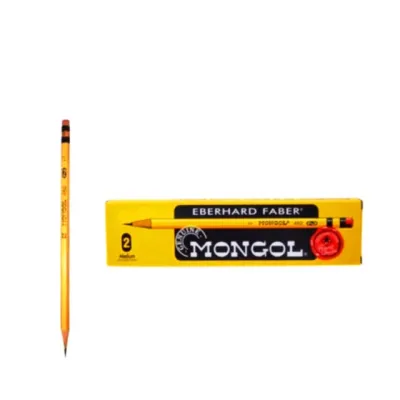
![WS★12pcs Medium Mongol Pencil #2 [B2]](https://img.lazcdn.com/g/p/dcfca68784375cf8e887a16f44c76696.jpg_400x400q80.jpg_.webp)
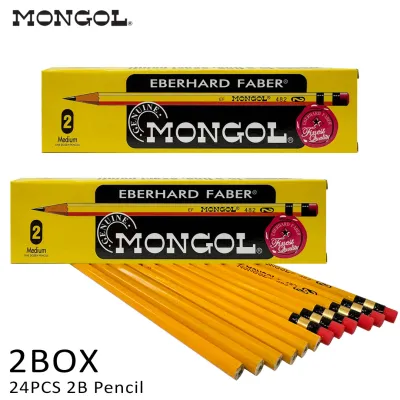
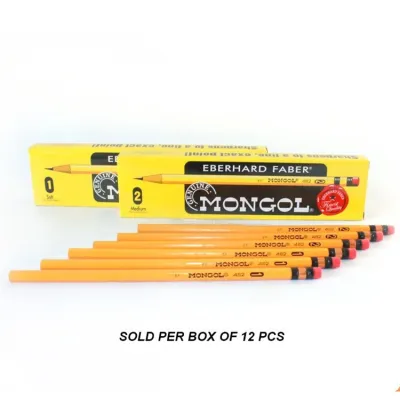
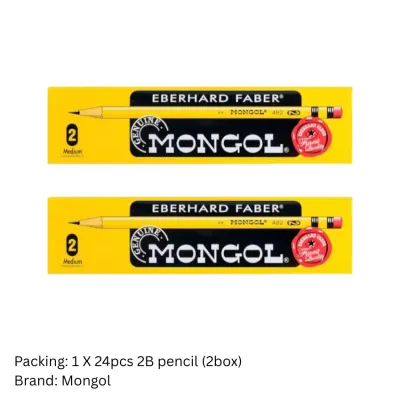
Prices are valid at publication and may change. Please refer to the product page for the latest price.
The Mongol brand utilizes specific model numbers like 150 and 152 to designate different product lines within its catalog. While both models are iconic yellow wooden pencils, they are engineered to cater to different writing preferences and tasks. Because manufacturing standards and product lines can shift, looking closely at the physical barrel printing and the packaging is the most reliable way to confirm the exact hardness grade of the pencil you are holding.
When to Use Mongol 150 for Everyday School and Office Tasks
The Mongol 150 is designed as a workhorse for high-volume writing. If your daily routine involves taking pages of lecture notes, drafting essays by hand, or managing administrative paperwork, this variant is highly suitable. Its core is formulated to resist rapid wear, meaning you can write continuously without the tip quickly flattening into a dull, thick wedge. This excellent point retention saves time and extends the overall lifespan of the pencil, as you will not need to use a sharpener nearly as often.

Another significant advantage of the Mongol 150 is its high resistance to smudging. Because the firmer core deposits less loose graphite powder onto the paper, the risk of accidental smearing is greatly reduced. This is a crucial consideration in the tropical climate of the Philippines, where high humidity can soften paper fibers and make them highly receptive to graphite transfer. Using a firmer pencil ensures that your written work remains crisp and legible, even if your hand brushes across the page or if you stack multiple sheets of paper in a binder.
Furthermore, the Mongol 150 offers excellent compatibility with standard notebook paper, intermediate pads, and low-cost newsprint. The firmer lead glides smoothly across these surfaces without digging too deeply into the paper fibers, which prevents accidental tearing or deep indentations. When you need to make corrections, the lighter mark left by the 150 is easily lifted by a standard eraser, leaving behind minimal ghosting or gray shadows. This makes it a highly forgiving tool for mathematics, accounting, and detailed drafting tasks.
When to Choose Mongol 152 for Exams, Art, and High-Contrast Needs
The Mongol 152 is engineered for tasks that demand maximum visual impact and deep contrast. Featuring a softer graphite formulation, this pencil is designed to lay down a rich, dark line with minimal physical pressure. If you are sketching initial layouts, shading forms in an art class, or creating bold diagrams, the 152 allows for smooth tonal transitions and deep, expressive shadows that a harder pencil simply cannot achieve.
One of the most common and critical applications for the Mongol 152 is filling out optical mark recognition (OMR) sheets. These sheets are widely used in standardized national examinations, college entrance tests, and professional licensure exams in the Philippines. Because OMR scanning machines rely on light sensors to detect the presence of graphite, a dark, solid mark is essential for accurate grading. The soft lead of the 152 fills in the bubbles quickly and completely, ensuring that the scanner registers your answers without error.
However, the softer core of the Mongol 152 requires a few practical trade-offs. Because the lead is softer, it wears down much faster than the 150, requiring frequent sharpening to maintain a fine point for writing. This rapid wear also produces more loose graphite dust on the paper surface. In humid conditions, this dust can easily smudge if you drag your hand, a ruler, or a page turner across the sheet. Additionally, if you apply heavy pressure while writing, the soft lead can indent the paper deeply, making it difficult to erase the marks completely without leaving a physical groove or tearing the page.
Side-by-Side Comparison and Decision Framework
To help you choose the right tool for your specific needs, the following table summarizes the observable performance characteristics of both pencil models based on standard usage conditions:
| Performance Attribute | Mongol 150 | Mongol 152 |
|---|---|---|
| Core Hardness | Firmer / Medium-Firm | Softer / Medium-Soft |
| Mark Darkness | Medium Gray | Dark Gray to Deep Black |
| Point Retention | High (Stays sharp longer) | Moderate (Requires frequent sharpening) |
| Smudge Resistance | High (Clean, crisp lines) | Moderate (Prone to smearing under friction) |
| Erasability | Excellent (Leaves minimal ghosting) | Moderate (Can leave faint shadows if pressed hard) |
| Primary Use Case | Daily note-taking, math, and forms | Exams, shading, sketching, and art |
When deciding between these two options, apply a simple decision framework based on your primary task. Choose the Mongol 150 if your priority is clean, long-lasting text that resists smudging during long writing sessions. This is the best option for daily schoolwork, journaling, and office bookkeeping. Choose the Mongol 152 if you need dark, highly visible marks that are easy to read or scan, such as when shading exam sheets or creating high-contrast drawings.
Keep in mind that neither option may fit your needs if you are engaged in highly specialized tasks. For instance, professional technical drafting often requires specialized H-grade drawing pencils that produce ultra-fine, non-smudging lines, while watercolor painting requires water-resistant ink or specialized watercolor pencils. Additionally, always verify first if you are preparing for a standardized national exam; some testing centers strictly mandate a certified No. 2 pencil, so you must check the specific exam guidelines to ensure your chosen pencil matches the required specification exactly.
What to Check When Buying Pencils in the Philippines
To ensure you get the best performance from your stationery, it is important to inspect your pencils carefully before purchasing. The local market features a wide variety of school supplies, and taking a few moments to verify the quality of your tools can prevent frustration in the classroom or office.
First, inspect the physical wood casing of the pencil. High-quality pencils typically use straight-grained wood that sharpens smoothly without splintering. Look closely at the cut end of an unsharpened pencil; the wood should have a consistent color and texture. Next, check the alignment of the graphite core. The lead must be perfectly centered within the wood casing. An off-center core is a common manufacturing defect that causes the lead to break repeatedly whenever you try to sharpen it, quickly wasting the pencil.
Second, examine the metal ferrule and the eraser. The ferrule—the metal band holding the eraser to the wood—should be securely crimped without any wobbling or loose edges. The eraser itself should feel soft, pliable, and slightly tacky to the touch. Avoid pencils with hard, glossy, or dried-out erasers, as these will smudge the graphite and tear the paper rather than lifting the marks cleanly. Finally, always look for crisp, legible gold or black foil stamping on the barrel, and purchase your supplies from established school supply stores or official online mall channels to ensure you are buying genuine products.
Frequently Asked Questions (FAQ)
Can I use a Mongol 152 for standard machine-graded exams?
Yes, the Mongol 152 is highly suitable for machine-graded exams because its softer core produces the dark, solid marks required by optical mark recognition (OMR) scanners. However, you must always verify the specific guidelines provided by the exam administrators, as some tests strictly mandate a certified No. 2 pencil. When using the 152, take extra care to erase any stray marks completely and avoid smudging the graphite, as loose dust can cause scanning errors.
How do I prevent my darker pencil marks from smudging?
To prevent darker graphite marks from smudging, you can place a clean sheet of scrap paper under your writing hand to act as a barrier as you move across the page. Additionally, try to use high-quality notebook paper with a slightly textured surface, which helps lock the graphite particles in place. If you are working on an art project or a sketch, applying a light coat of artist’s fixative spray can permanently secure the graphite to the paper.
Community discussion
Share your experience or ask a question. Comments are reviewed before publication.