
Quick Answer: Is the Mongol #2 Pencil the Best for Everyday Use?
Deciding whether the classic yellow pencil with the green and gold ferrule is the absolute best choice for your daily writing depends entirely on your specific tasks, writing pressure, and paper choices. For generations of students and office workers in the Philippines, the Mongol #2 has remained the default standard. It represents a highly reliable, cost-effective option that performs consistently across standard school notebooks, office forms, and machine-graded examinations.
However, the term “best” is subjective when comparing budget-friendly workhorses with premium international alternatives. While Mongol excels in accessibility and everyday utility, high-end pencils from specialized stationery brands often provide a smoother glide, superior break resistance, and more refined wood casings. If your daily routine involves hours of continuous, fatigue-free writing or detailed sketching, investing in a premium alternative may be worth the extra cost. For bulk supplies and general note-taking, the Mongol #2 remains incredibly difficult to beat in terms of sheer value.
The #2 (HB) Standard: How the Monggol 2 Pencil Compares to the Competition
To understand how different pencils perform, it is essential to look at the grading system that defines them. The “#2” designation belongs to the American numbering scale, which directly corresponds to the “HB” (Hard Black) grade used in the European and Asian systems. This classification is determined by the specific ratio of graphite to clay binder inside the pencil core.
Products mentioned in this guide
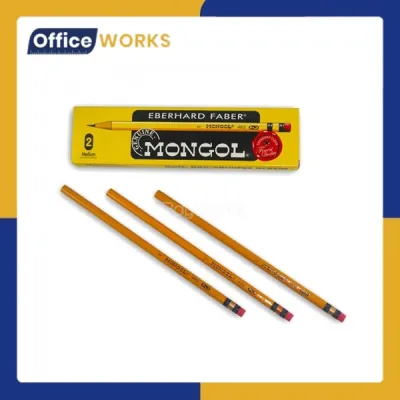
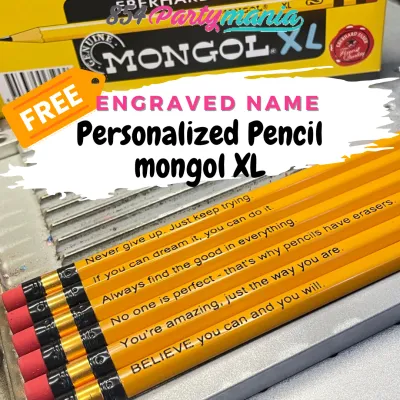
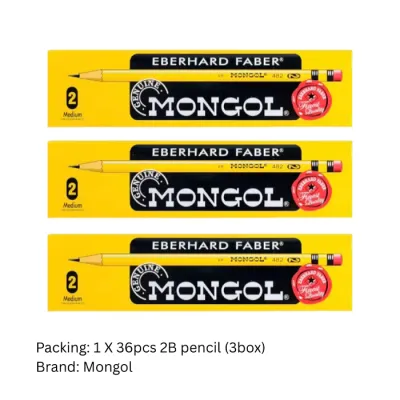
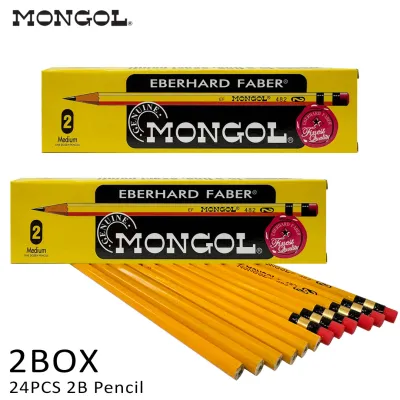
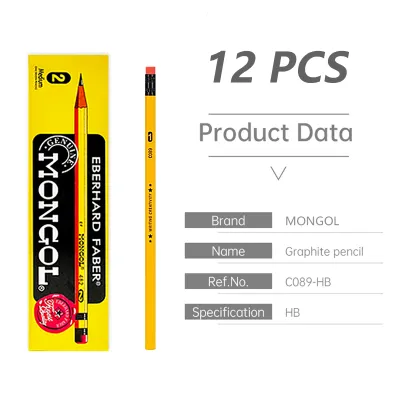
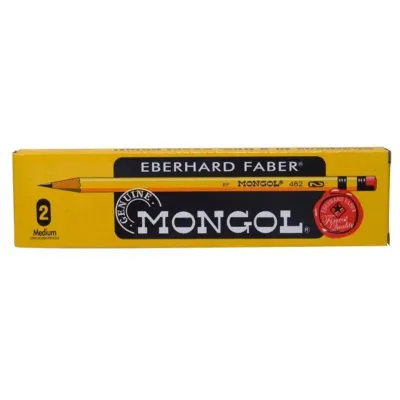
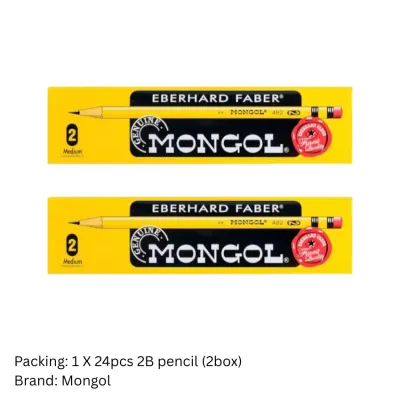
Prices are valid at publication and may change. Please refer to the product page for the latest price.

When a pencil core contains a higher concentration of clay, the lead becomes harder. This results in lighter, thinner lines that hold a sharp point for a long time, typical of #3 (H) or #4 (2H) pencils. Conversely, a higher concentration of graphite produces a softer lead, such as a #1 (B) or 2B pencil, which delivers dark, rich lines but wears down rapidly and smudges easily. The monggol 2 pencil sits at the exact midpoint of this spectrum, offering a balanced formulation designed to provide clear legibility without requiring constant sharpening.
This balance is precisely why the #2 standard is universally required for standardized tests and board examinations. The carbon-rich marks left by a #2 pencil are dark enough to block light inside Optical Mark Recognition (OMR) grading scanners, ensuring your answers are read accurately. Harder pencils leave marks that are too faint for the scanners, while softer pencils smudge across the page, potentially ruining the document.
Although the #2 standard is theoretically uniform, manufacturing tolerances and proprietary formulas vary widely between brands. A standard budget pencil may feel slightly harder or scratchier than a premium European or Japanese HB pencil, even though both carry the same grade. These subtle differences in the refining process of the graphite and the quality of the clay binder are what ultimately define your daily writing experience.
Core Performance Comparison: Smoothness, Darkness, and Durability
Evaluating a pencil’s performance requires looking beyond its iconic yellow paint. By assessing key physical attributes under real-world writing conditions, you can determine which pencil best suits your hand and paper preferences.
Writing Smoothness and Graphite Feel
Writing smoothness is primarily determined by the purity of the graphite and how finely it is ground before being mixed with the clay binder. Natural graphite naturally contains microscopic impurities, such as silica. If these impurities are not meticulously refined during manufacturing, they can cause a scratchy, abrasive sensation when they contact paper fibers.
Premium pencil manufacturers often invest in extensive washing and milling processes to ensure their graphite is completely uniform. This results in a buttery, gliding sensation on the page, requiring very little downward pressure to leave a clear mark. Budget-friendly options, while highly functional, may occasionally catch or drag on the paper due to minor variations in the core mixture.
Your choice of paper also plays a significant role in how smooth a pencil feels. In the warm, humid climate of the Philippines, paper fibers in standard school notebooks can absorb ambient moisture from the air. This moisture softens the paper surface, making it more susceptible to friction and tearing under a scratchy pencil tip. If you regularly write on standard ruled notebook paper, a smoother, more refined graphite core will help prevent hand fatigue and protect the paper surface from gouging.
To evaluate writing smoothness at home, write a series of continuous, rapid cursive loops on your typical writing paper. Pay close attention to the feedback traveling up your hand. A high-quality core will glide consistently without sudden changes in resistance or audible scratching sounds.
Line Darkness and Smudge Resistance
While all genuine #2 pencils must meet a baseline darkness for readability, the quality of the binding agent dictates how well that graphite adheres to the paper. When you write, the pencil deposits tiny flakes of graphite onto the paper fibers. If the binder is weak, these flakes remain loose on the surface, making them highly susceptible to smearing.
Smudging is a particular challenge in high-humidity environments, where hand sweat and damp air can easily loosen graphite particles. Left-handed writers are especially familiar with this issue, as their writing hand naturally trails across the freshly written text. A pencil with excellent smudge resistance keeps the graphite locked securely within the paper grain, preserving clean, legible pages.
To check a pencil’s smudge resistance, you can perform a simple “swipe-and-rub” test on your preferred paper:
- Draw a small, solid square on the page, shading it in heavily to saturate the paper fibers.
- Wait approximately five seconds to let the graphite settle.
- Drag your clean index finger firmly across the shaded square in a single, outward swipe.
- Observe the resulting trail. A highly smudge-resistant pencil will leave a clean page with almost no grey shadow, while a weaker formula will leave a dark, smeared streak across the paper.
Wood Casing and Break Resistance
The structural integrity of a pencil depends heavily on its wooden casing and how the graphite core is secured inside it. Premium pencils typically utilize genuine incense cedar, a straight-grained wood that protects the inner core from impact and sharpens into clean, continuous ribbons without splintering. More economical pencils often use alternative softwoods or composite materials that, while functional, can sometimes split unevenly when paired with a dull sharpener.
Furthermore, high-quality manufacturers employ advanced core-bonding technology, often referred to as SV or complete lead bonding. This process glues the graphite core to the wooden casing along its entire length. In contrast, cheaper manufacturing methods may only secure the lead at specific points. If a pencil lacks full-length bonding and is dropped onto a hard floor, the graphite core can shatter into multiple pieces inside the wood, leading to a frustrating cycle of broken tips every time you attempt to sharpen it.
Before purchasing pencils in bulk, you can easily inspect their build quality through a quick visual check. Look closely at the unsharpened end of the pencil to examine its cross-section. The dark graphite core must be perfectly centered within the wooden hexagon. If the core is off-center, one side of the wood casing will always be thinner than the other during sharpening. This imbalance leaves the exposed graphite tip unsupported on one side, causing it to snap immediately under normal writing pressure.
Spotting the Real Deal: How to Verify a Genuine Mongol Pencil
Because the Mongol #2 is incredibly popular in the local market, counterfeit versions occasionally find their way onto retail shelves and online marketplaces. Using a counterfeit pencil can lead to a highly frustrating writing experience, characterized by scratchy lead, frequent breakage, and erasers that smudge rather than clean the page. Verifying the authenticity of your pencil before use ensures you get the reliable performance you expect.
First, examine the gold stamping on the side of the pencil. A genuine Mongol pencil features clean, crisp, and deeply embossed gold lettering that is perfectly aligned. Counterfeit versions often have blurry, shallow, or off-center stamping where the gold foil easily flakes off when rubbed with a fingernail.
Second, inspect the ferrule—the metal band that holds the pink eraser in place. A genuine Mongol pencil features its signature brass ferrule with distinct green and gold stripes, securely crimped to both the wood and the eraser. On counterfeit pencils, this metal band is often loosely attached, made of thin, easily bent metal, or lacks the clean, vibrant painted stripes of the original.
Finally, test the eraser itself. Genuine Mongol erasers are formulated to be soft, pliable, and highly effective at lifting graphite without tearing the paper. Counterfeit erasers are often hard, slick, or plastic-like to the touch. When used, these fake erasers will smear the graphite across the page, leaving a dark smudge, and can easily rip thin notebook paper.
Mongol #2 vs. Premium Alternatives: Value and Build Quality
When comparing the Mongol #2 to premium international alternatives, the primary trade-off centers on cost versus refined performance. Mongol is positioned as an incredibly accessible, budget-friendly option. It is widely available in almost every local neighborhood store, school canteen, and major bookstore chain across the Philippines, typically retailing for a very low price per piece.
Premium alternatives, such as those from German brands like Staedtler (e.g., the Noris or Mars Lumograph series) or Faber-Castell (e.g., the Castell 9000), and Japanese brands like Tombow (e.g., the Mono series), operate in a significantly higher price category. These pencils can cost several times more than a standard Mongol pencil. For this higher investment, you receive meticulously refined graphite that virtually eliminates scratchiness, premium incense cedar casings that sharpen effortlessly, and superior core-bonding technology that prevents internal breakage.
For the vast majority of everyday tasks—such as taking quick lecture notes, filling out delivery receipts, or shading exam sheets—the Mongol #2 provides all the performance you actually need. Its graphite is sufficiently dark, its wood is reasonably easy to sharpen, and its overall reliability is excellent for its price point. Purchasing premium pencils for bulk classroom use or general office stock is rarely cost-effective.
However, if your daily work requires continuous writing for hours at a time, investing in a premium pencil can drastically improve your comfort. The smoother glide of refined graphite reduces the physical strain on your hand, while the superior break resistance means you spend less time at the sharpener and waste less of the pencil’s length over time. For students preparing for intense, multi-day professional licensure board exams, the added confidence of a break-resistant, ultra-smooth premium pencil can easily justify the higher upfront cost.
Final Verdict: Which #2 Pencil Should You Choose?
To make your final decision, consider your daily writing volume, your budget, and how much you value a premium tactile experience.
Choose Mongol #2 if:
- You need cost-effective bulk supplies: It is the ideal choice for stocking classrooms, equipping a busy office, or preparing school supply kits for children.
- You want maximum accessibility: You need a reliable pencil that you can easily purchase at any local convenience store or bookstore in the Philippines.
- You are preparing for standard exams: It offers the dependable, scanning-compatible performance required for OMR answer sheets without unnecessary expense.
Choose Premium Alternatives if:
- You write continuously for long periods: The highly refined graphite minimizes friction, reducing hand fatigue during long essay-writing or note-taking sessions.
- You demand high break resistance: You tend to write with heavy hand pressure or frequently drop your writing tools, making bonded premium wood casings highly beneficial.
- You want a superior sharpening experience: You prefer straight-grained incense cedar that sharpens cleanly without splintering or clogging your sharpener.
Verify first if:
- You are purchasing from a reputable seller: Ensure you are buying genuine pencils by checking the gold stamping, ferrule color, and eraser texture, especially when purchasing in bulk online.
- Your sharpener is in good condition: Even the finest premium pencil will break and splinter if paired with a dull, rusty sharpener blade that twists the core instead of cutting the wood.
Frequently Asked Questions (FAQ)
Can I use a Mongol #2 pencil for board exams and standardized tests?
Yes, you can confidently use a genuine Mongol #2 pencil for board exams, civil service exams, and college entrance tests in the Philippines. These standardized tests use Optical Mark Recognition (OMR) machines to scan and grade answer sheets. Because the Mongol #2 meets the exact hardness and darkness specifications of the universal #2 (HB) standard, it leaves a dark, carbon-rich mark that blocks light inside the scanner, ensuring your answers are read accurately. Always make sure your pencil is genuine and that you shade the circles completely and firmly.
Why does my #2 pencil keep breaking inside the wood when I sharpen it?
Frequent internal breakage is typically caused by three common issues: a dropped pencil, an off-center core, or a dull sharpener. When a pencil is dropped onto a hard floor, the impact can shatter the graphite core inside the wooden casing, especially if the pencil lacks full-length adhesive bonding. Additionally, if the graphite core was not perfectly centered during manufacturing, one side of the wood will be too thin to support the tip during sharpening. Finally, a dull sharpener blade will pull and twist the wood rather than shaving it cleanly, snapping the weakened lead. To prevent this, use a sharp manual sharpener and inspect the pencil’s end to ensure the core is centered.
Community discussion
Share your experience or ask a question. Comments are reviewed before publication.