
The Mongol No. 2 is a household name in the Philippines, serving as a reliable companion for generations of students, artists, and professionals. When comparing this classic yellow pencil to other HB pencils on the market, the writing experience reveals distinct differences in tactile feedback, line consistency, and structural durability. While some premium alternatives offer a buttery, low-friction glide, the Mongol No. 2 provides a characteristic paper feedback that many writers rely on for precise control. Choosing the right pencil depends on your specific writing environment, paper choices, and whether you need to prepare for high-stakes examinations.
Understanding the HB Standard and Baseline Expectations
The HB grading scale is the universal standard for measuring the hardness and blackness of pencil lead. The letters “HB” stand for Hard Black, representing a middle-ground formulation where the core contains a balanced ratio of graphite to clay binder. A higher proportion of clay produces a harder, lighter lead (such as H or 2H), while more graphite yields a softer, darker mark (such as B or 2B).
Standard HB pencils, including the Mongol No. 2, are designed as general-purpose instruments. They are hard enough to hold a sharp point for extended writing sessions but dark enough to be easily read by human eyes and optical mark recognition (OMR) scanners. This balance makes them the default choice for standardized testing, everyday note-taking, and basic sketching.
Products mentioned in this guide
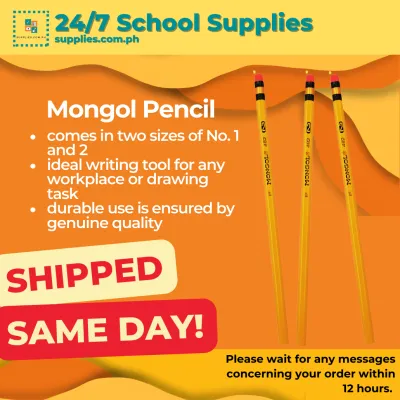
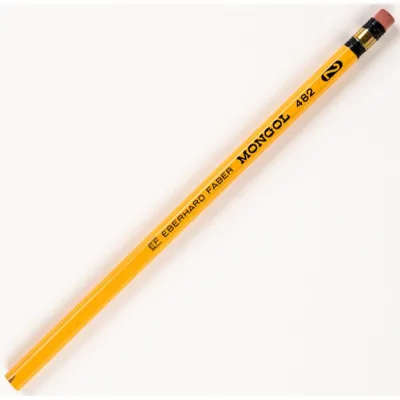
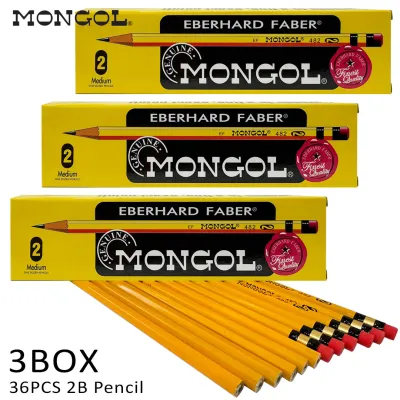
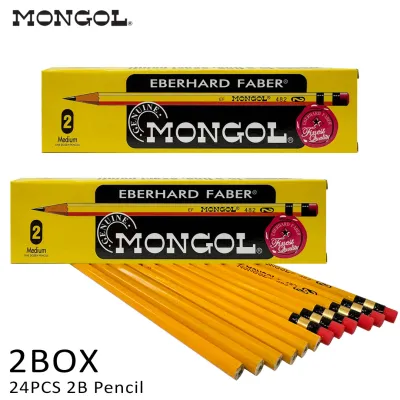
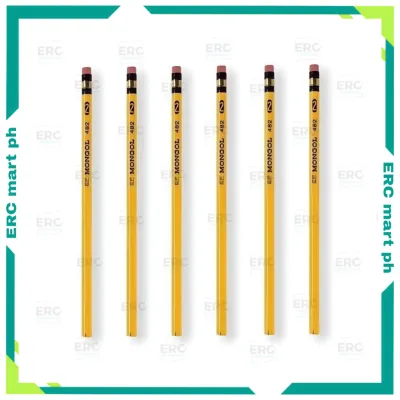
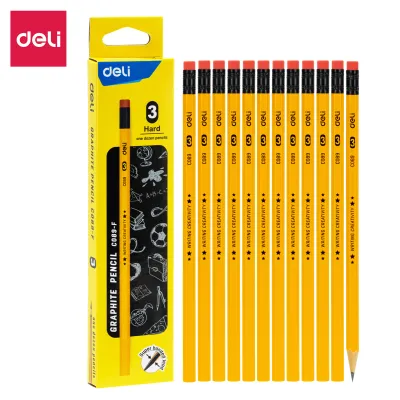
Prices are valid at publication and may change. Please refer to the product page for the latest price.
To verify the lead grade on your pencil, inspect the stamped markings near the eraser end. A standard Mongol pencil uses the number “2” designation, which corresponds directly to the medium-grade HB standard. Other manufacturers may stamp their casings with “HB” or “2/HB” to indicate this exact level of hardness and darkness.
Comparing Core Writing Dimensions
Evaluating the writing experience of different HB pencils requires looking beyond brand reputation to focus on physical performance. Because writing is a tactile activity, the feel of a pencil is highly subjective and heavily influenced by the texture of the paper, the pressure of your hand, and your preferred grip style.

To make an objective comparison, you can establish a simple testing matrix at home using a single sheet of standard paper. By testing different pencils side-by-side under identical conditions, you can observe differences in friction, line density, and core wear without relying on marketing claims.
Smoothness and Paper Feedback
The smoothness of a pencil core is determined by the quality and refinement of its graphite and clay mixture. When a pencil feels scratchy, it is often because the core contains microscopic impurities or an unevenly distributed clay binder that catches on the paper fibers.
To test for smoothness, write a series of continuous loops on standard office paper while paying attention to both the physical resistance and the sound produced. A premium HB pencil often glides with minimal acoustic feedback, whereas a standard Mongol No. 2 typically provides a distinct, tactile feedback that many writers prefer for precise control.
Varying your writing pressure during this test will reveal how the core behaves under different hand strengths. Some softer HB formulations feel incredibly smooth under light pressure but can crumble slightly when pressed firmly, while harder cores maintain their structural integrity at the cost of a more pronounced drag.
Darkness and Line Consistency
Line consistency and darkness are critical for legibility and scanning accuracy. To evaluate this, draw a series of parallel lines and solid shading blocks using consistent hand pressure, then observe the uniformity of the graphite deposit across the page.
While all these pencils share the HB designation, visual variations in darkness are common due to differences in manufacturing tolerances and regional graphite sources. Some alternative HB pencils may deposit a slightly darker, more carbon-rich line, whereas the Mongol No. 2 is formulated to deliver a highly consistent, medium-dark gray that resists sudden shifts in tone.
This consistency is particularly vital for optical mark recognition (OMR) sheets used in major examinations in the Philippines. The scanner relies on a solid, uniform layer of graphite to block light, making a dependable, non-patchy line essential for accurate grading.
Durability and Break Resistance
A pencil’s durability is not just about the hardness of the lead, but how well the core is protected inside the wooden barrel. High-quality pencils use a full-bonding process, where the graphite core is glued securely to the wood casing along its entire length to prevent internal fracturing.
You can identify weak core bonding by listening for a subtle rattling sound when you gently tap the pencil against a hard surface, or by observing if the lead snaps repeatedly in the sharpener. Pencils with poor bonding will lose entire chunks of lead during sharpening, whereas a well-bonded core remains stable even when subjected to heavy writing pressure.
Accidental drops are the primary cause of internal lead breakage. While a robust wood casing can absorb some of the impact, pencils with superior internal bonding are far more likely to survive a fall from a school desk without suffering hidden fractures that ruin the core.
Smudge Resistance and Erasing Cleanliness
In the warm and humid climate of the Philippines, smudge resistance is a major consideration for students and professionals alike. High humidity can soften paper fibers and cause sweaty hands to smear graphite across the page, turning neat notes into illegible smudges.
To perform a simple smudge test, write a sentence and immediately drag your finger across the text with moderate pressure. Left-handed writers will particularly benefit from this test, as their writing hand naturally follows the pen or pencil path, making a fast-setting, low-smudge graphite core highly desirable.
The texture and tooth of your paper play a significant role in how well graphite adheres to the surface. Rougher paper grabs more graphite, which can lead to darker lines but also increases the risk of loose particles smudging unless the pencil formulation is designed to cling tightly to the fibers.
Erasing cleanliness is equally important, especially during exams where stray marks can confuse optical scanners. To ensure a clean lift-off, pair your HB pencil with a high-quality vinyl or dust-free eraser, and test whether the graphite lifts away completely without leaving a dark ghost image or tearing the delicate paper surface.
Wood Casing, Sharpening, and Build Quality
The physical construction of a pencil dictates how easy it is to maintain and how comfortable it feels during long writing sessions. Premium pencils often utilize genuine incense cedar, which sharpens smoothly into continuous, clean ribbons and emits a pleasant, natural woody scent.
In contrast, budget-friendly options may use alternative softwoods that are more prone to splintering or crumbling when paired with a dull sharpener. When examining a pencil, look closely at the wood grain; a straight, tight grain generally indicates that the pencil will sharpen evenly without catching or splitting.
Another critical quality check is the centering of the lead core within the wooden casing. If the core is off-center, one side of the wood will always remain thicker than the other during sharpening, leaving the fragile lead tip unsupported and highly susceptible to snapping under normal writing pressure.
Finally, consider the overall weight balance and the quality of the exterior lacquer finish. A well-applied, smooth paint finish prevents slipping in humid conditions, while a balanced weight distribution reduces hand fatigue during extended writing tasks, such as essay writing or board exam preparation.
How to Choose the Right HB Pencil for Your Needs
Selecting the perfect pencil involves matching your specific writing environment with the unique characteristics of each brand. Use this conditional framework to guide your next purchase at local school supply stores or online marketplaces.
Choose Mongol No. 2 if you need a highly reliable, cost-effective option for bulk everyday writing, classroom activities, or standard OMR exams. Its familiar tactile feedback, consistent medium-dark line, and widespread availability make it an unmatched staple for general use in the Philippines.
Choose alternative premium HB pencils if you prioritize an exceptionally smooth, buttery glide for long drafting sessions, require maximum break resistance for heavy-handed writing, or prefer premium cedar casings that sharpen effortlessly without splintering.
Verify first if you are preparing for specific professional board exams administered by the Professional Regulation Commission (PRC) or other testing bodies. Always consult the latest official examinee guidelines to confirm if there are strict mandates regarding pencil brands, or if any standard No. 2/HB pencil is acceptable.
When purchasing your supplies, check current stock and bulk packaging options on reputable online marketplaces or at established local bookstores to ensure you are getting genuine products at the best value.
Frequently Asked Questions (FAQ)
Is Mongol No. 2 strictly required for board exams in the Philippines?
While Mongol No. 2 is the most famous and widely recommended pencil for licensure exams in the Philippines, most official guidelines specify the required graphite grade rather than a single brand. Typically, the instructions mandate a standard No. 2 or HB pencil to ensure the optical mark recognition (OMR) scanners can read the shaded answer sheets accurately. Always review your specific examinee handbook or official advisory prior to exam day to verify if any brand-specific restrictions have been implemented.
How can I tell if an HB pencil is authentic or a counterfeit?
Counterfeit pencils often perform poorly, featuring brittle leads and low-quality wood that splinters easily. To spot a fake, inspect the pencil for visual red flags such as misspelled brand names, blurry or off-center gold foil stamping, and a poorly glued eraser ferrule. Authentic pencils will have a clean, centered core, a smooth lacquer finish, and a characteristic wood scent. To guarantee authenticity, purchase your stationery from authorized distributors, well-known local bookstores, or verified flagship stores on major e-commerce platforms.
Does the type of paper affect the writing experience of HB pencils?
Yes, the paper surface significantly alters how any HB pencil feels and performs. High-tooth paper has a rougher texture that acts like a file, scraping more graphite off the core to produce a darker line, though this also wears down the pencil point faster and increases the risk of smudging. Conversely, smooth, high-density paper reduces friction for a faster writing speed, but it may result in lighter lines and require slightly more hand pressure to achieve the desired darkness. Testing your pencil on a sample of your intended paper before committing to a bulk purchase is always recommended.

Community discussion
Share your experience or ask a question. Comments are reviewed before publication.