
Choosing the right writing instrument is a highly personal decision that directly impacts your daily productivity, comfort, and creative expression. When exploring the minimalist catalog of MUJI, the choice typically narrows down to two distinct writing technologies: the reliable, fast-paced gel ink pen and the classic, deliberate fountain pen. Both instruments are celebrated for their clean design language, but they serve fundamentally different writing habits, paper types, and maintenance preferences.
To find the ideal tool for your desk, you must evaluate how you write, where you write, and how much time you are willing to dedicate to pen care. This guide breaks down the mechanics, performance characteristics, and practical trade-offs of MUJI gel and fountain pens to help you make an informed decision for your daily writing needs.
Quick Decision Guide: MUJI Gel vs. Fountain Pens
MUJI gel pens are designed for immediate, high-speed utility. They represent the pinnacle of plug-and-play convenience, offering a highly consistent ink flow, rapid drying times, and a vast array of vibrant colors. They require zero preparation or maintenance, making them the ultimate tool for busy professionals, students, and anyone who needs to capture thoughts instantly without worrying about mechanical upkeep.
Products mentioned in this guide
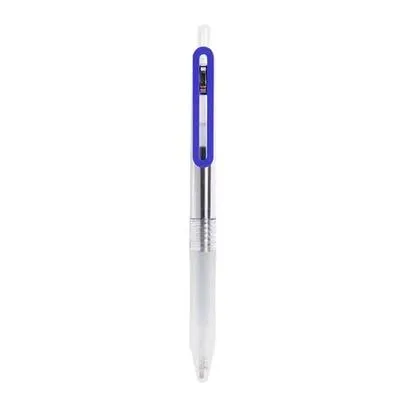
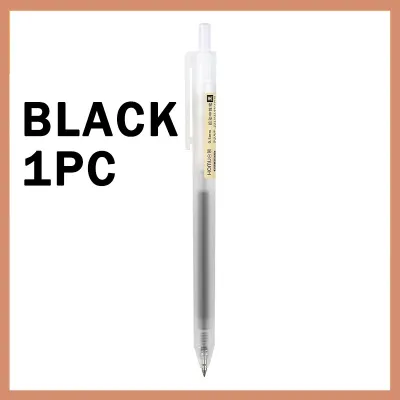
![Muji Smooth Gel Ink Ballpoint Pen KNOCK TYPE (0.3mm 0.5 mm) [AVAILABLE IN 16 COLORS]](https://img.lazcdn.com/g/p/a80555818fd134293c2dc3ed2b151efb.jpg_400x400q80.jpg_.webp)
Prices are valid at publication and may change. Please refer to the product page for the latest price.
In contrast, MUJI fountain pens offer a more deliberate, tactile, and mindful writing experience. Utilizing a metal nib and liquid ink, these pens provide unique physical feedback against the paper, allowing for subtle line variation and personalized ink choices. They encourage a slower writing pace and require a basic level of care, appealing to journalers, sketchers, and stationery enthusiasts who view writing as a ritual rather than a quick chore.
- Choose a MUJI Gel Pen If: You prioritize speed, write on standard office paper, require instant ink drying, prefer a lightweight pen, and want a maintenance-free tool that you can toss into a bag without a second thought.
- Choose a MUJI Fountain Pen If: You enjoy the physical feedback of a metal nib, want to reduce hand fatigue during long writing sessions, prefer a heavier or more structured pen body, and are willing to perform occasional cleaning to use custom bottled inks.
MUJI Gel Pens: Speed and Convenience for Daily Tasks
MUJI gel pens utilize a water-based gel ink that strikes a balance between the smooth glide of a rollerball and the controlled flow of a ballpoint. The ink is suspended in a viscous gel that becomes liquid under the shearing force of the rotating ball at the tip. This chemical formulation ensures that the pen lays down a rich, highly saturated line with minimal downward pressure, allowing your hand to glide across the page.

For left-handed writers and fast note-takers, ink drying speed is a critical factor. MUJI’s standard gel ink flows generously, which can result in slight smudging if you drag your hand across fresh writing. However, MUJI also offers specialized quick-dry gel variants that utilize a rapid-absorption formula, significantly reducing the risk of smearing during high-speed writing sessions.
The line consistency of MUJI gel pens is exceptionally uniform. Available in precise tip sizes such as 0.38mm, 0.5mm, and 0.7mm, these pens produce a predictable line width from the first stroke to the last drop of ink. On standard 70 GSM or 80 GSM office copy paper, the finer 0.38mm and 0.5mm tips perform beautifully, delivering crisp text without significant feathering or bleed-through.
In terms of maintenance, MUJI gel pens are entirely hands-off. They are available in both capped and retractable (knock-type) designs, both of which effectively prevent the ink tip from drying out when not in use. When a pen runs out of ink, you simply unscrew the body, discard the empty chamber, and slide in a fresh refill. This simple process makes them highly reliable for everyday carry (EDC) in busy environments.
Despite their convenience, gel pens do have inherent limitations. They offer virtually no line variation, meaning your writing will maintain a uniform, mechanical look regardless of the angle or pressure applied. Additionally, because gel ink is highly viscous and flows quickly, a single gel refill has a relatively short lifespan compared to traditional ballpoint ink or a full converter of bottled fountain pen ink, requiring more frequent replacements if you write in high volumes.
MUJI Fountain Pens: Experience and Control for Daily Tasks
MUJI fountain pens, particularly the popular aluminum model, offer a stark contrast in design and operation. These pens feature a durable, lightweight aluminum body with a textured grip and a stainless steel nib, usually ground to a Fine (F) or Medium (M) specification. Unlike the rolling ball of a gel pen, a fountain pen nib glides on a microscopic pool of liquid ink delivered via capillary action through a plastic feed.
The writing feel of a MUJI fountain pen is characterized by its tactile feedback. It is not scratchy, but it does not possess the frictionless, slippery feel of a gel pen. Instead, the steel nib provides a controlled, pencil-like feedback that allows you to feel the texture of the paper beneath your hand. This resistance gives you greater control over your letterforms, making it highly satisfying for cursive and print writing alike.
Ink compatibility is a major strength of the fountain pen system. Out of the box, MUJI fountain pens are designed to accept standard international short cartridges, which are widely available worldwide. For those who want to customize their writing, the pen can be fitted with a standard international converter. This small, refillable plunger system allows you to draw ink directly from bottles, opening up thousands of color options, archival formulations, and shading inks.
Owning a fountain pen requires a commitment to regular maintenance. To keep the ink flowing smoothly, you should flush the nib and feed with room-temperature tap water every four to six weeks, or whenever you change ink colors. Capping discipline is also essential; leaving a fountain pen uncapped for more than a minute or two can cause the ink on the nib to dry, resulting in a “hard start” where the pen refuses to write until the nib is moistened.
The primary daily use cases for a MUJI fountain pen center around deliberate, long-form writing. It is an exceptional tool for journaling, creative writing, and signing important documents where the elegance of a liquid ink line adds personal character. Because the pen relies on capillary action, you do not need to press down at all; the weight of the pen itself is sufficient to write, which drastically reduces hand fatigue during multi-page writing sessions.
However, this fluid ink delivery system comes with trade-offs. Liquid fountain pen ink is highly water-based and thin, meaning it will readily soak into cheap, porous papers. If you write on low-quality notebook paper or standard copy paper, you are likely to experience feathering (where the ink spreads sideways like a spiderweb) and bleed-through (where the ink leaks through to the opposite side of the page).
Head-to-Head Comparison: Gel Ink vs. Fountain Pen Performance
To help you weigh the practical trade-offs between these two writing systems, the table below compares them across five critical performance dimensions:
| Performance Dimension | MUJI Gel Pen | MUJI Fountain Pen |
|---|---|---|
| Drying Speed | Fast to moderate (Quick-dry options available) | Slow to moderate (Depends on ink and paper) |
| Paper Compatibility | High (Works well on cheap and premium paper) | Low to moderate (Requires fountain-pen-friendly paper) |
| Maintenance Level | None (Plug-and-play refill replacements) | Moderate (Requires regular flushing and capping discipline) |
| Long-term Consumable Cost | Moderate (Frequent purchases of individual refills) | Low (Bottled ink offers exceptionally low cost per milliliter) |
| Writing Feel | Smooth, low-friction gliding | Tactile, controlled feedback with zero hand pressure |
When writing in tropical and highly humid climates, such as in the Philippines, environmental factors play a significant role in ink performance. High relative humidity slows down the evaporation of water from paper and ink alike. For gel pens, this means that broader tips (like 0.7mm) may take noticeably longer to dry on coated paper, increasing the risk of accidental smudges. For fountain pens, high humidity can prolong drying times even further, making fine nibs and absorbent, high-quality papers the preferred combination for local writers.
The concept of “smoothness” is highly subjective and differs between the two pens. A MUJI gel pen offers a frictionless glide that feels effortless, which is ideal if you want your pen to disappear in your hand as you write at maximum speed. A MUJI fountain pen, on the other hand, offers a grounded, tactile connection to the page. It requires you to pay attention to your writing angle, rewarding proper form with a consistent, expressive line that feels deeply satisfying.
From a financial perspective, the long-term cost structures of the two systems diverge over time. A MUJI gel pen body is highly affordable, but if you write several pages a day, you will find yourself purchasing refills (ranging from ₱50 to ₱80 each) quite frequently. A MUJI aluminum fountain pen requires a higher initial investment for the pen body (typically around ₱700 to ₱1,200), but once you purchase a converter and a single 50ml bottle of high-quality fountain pen ink, that bottle can easily last a year or more of daily writing, bringing your cost per milliliter of ink down to a fraction of gel ink costs.
Matching the Right MUJI Pen to Your Specific Tasks
Fast Note-Taking and Meeting Minutes
For rapid-fire note-taking during corporate meetings, university lectures, or phone calls, the MUJI gel pen is the undisputed champion. In these scenarios, you cannot afford to wait for ink to dry, nor do you have the focus to maintain a precise writing angle. A retractable gel pen can be deployed with a single click of one hand, writes instantly at almost any angle, and uses ink that dries quickly enough to allow you to turn pages rapidly without transferring wet ink to the facing sheet.
Journaling and Mindful Writing
When you sit down at the end of the day to reflect, write in a diary, or draft a creative piece, the MUJI fountain pen provides a superior experience. Journaling is as much about the physical process of writing as it is about the words themselves. The weight of the aluminum fountain pen encourages a relaxed, ergonomic grip, while the lack of required writing pressure allows you to write for hours without cramping. The natural shading of fountain pen ink—where the ink pools slightly at the end of a stroke—creates a beautiful, organic look that makes your journal entries feel uniquely yours.
Professional Signing and Document Work
For professional environments, the choice depends on the specific document type. If you are signing certificates, contracts, or high-quality guestbooks, a MUJI fountain pen adds a layer of prestige, authority, and personal flare to your signature. However, if your daily tasks involve filling out multi-part carbon copy forms, checking off boxes on standard office printouts, or writing on glossy labels, a MUJI gel pen is highly superior. The rolling ball can withstand the heavy downward pressure required to transfer ink through carbon sheets, and the pigmented gel ink offers excellent archival stability on a wider variety of office mediums.
Pre-Purchase Checklist: Paper, Refills, and Ergonomics
Before finalizing your purchase at a local MUJI store or through an official online marketplace, run through this practical checklist to ensure your new pen integrates seamlessly into your daily routine:
- Paper Verification: Take a look at the notebooks and paper pads you use most frequently. If your daily workflow relies on standard, thin copy paper (70 GSM or lower) provided by your workplace, a MUJI gel pen (specifically in 0.38mm or 0.5mm) will give you a clean, bleed-free experience. If you own high-quality, coated, or high-GSM notebooks (such as MUJI’s own high-quality paper series), you can fully enjoy the benefits of a MUJI fountain pen without worrying about ink feathering.
- Refill Availability: Consider your long-term supply chain. MUJI gel pen refills are widely stocked in physical retail outlets across major Philippine shopping hubs and official online storefronts, making them incredibly easy to source. If you choose the fountain pen, verify whether your local store regularly stocks international standard cartridges, or plan to purchase a converter and bottled ink from a specialty stationery seller to ensure you are never left with a dry pen.
- Ergonomics and Weight: Assess your physical comfort preferences. MUJI’s polycarbonate gel pens are exceptionally lightweight, making them ideal for quick, repetitive tasks and easy carrying in a pocket. The MUJI aluminum fountain pen has a metallic, industrial aesthetic with a distinct knurled or smooth grip section and a heavier, more balanced chassis. If you prefer a pen that feels substantial and guides your hand with its own weight, the aluminum fountain pen is the better ergonomic fit.
Frequently Asked Questions (FAQ)
Can I use fountain pen ink in MUJI gel pens?
No, you cannot use fountain pen ink in MUJI gel pens. Gel pens are precision-engineered to use a highly viscous, water-based gel ink that relies on a rolling ball mechanism to meter and distribute the ink. Fountain pen ink is a highly fluid, low-viscosity liquid designed to flow via capillary action through a plastic feed and a split metal nib. Attempting to inject liquid fountain pen ink into a gel pen casing will result in immediate, uncontrollable leaking and will permanently ruin the pen mechanism.
How does humid weather affect MUJI gel pen drying times?
High relative humidity, which is common in tropical climates like the Philippines, slows down the evaporation of water from wet surfaces. Because MUJI gel ink is water-based, high humidity can noticeably extend the time it takes for the ink to dry completely on the page, especially when writing on smooth, coated, or non-porous papers. To minimize the risk of smudging in humid conditions, opt for finer tip sizes like 0.38mm, which lay down less ink, or use specialized quick-dry gel refills designed for rapid absorption.
Are MUJI fountain pens suitable for beginners?
Yes, MUJI fountain pens are widely considered to be excellent entry-level choices for beginners. The stainless steel nib is relatively stiff and durable, meaning it can tolerate the slightly heavy-handed writing pressure common among those transitioning from ballpoint pens. Additionally, its compatibility with standard international cartridges simplifies the ink-loading process for first-time users. While beginners must still learn basic fountain pen hygiene, such as regular flushing and keeping the pen capped when not in use, the learning curve is gentle and highly rewarding.

Community discussion
Share your experience or ask a question. Comments are reviewed before publication.