
Choosing the right receipt with duplicate system is a foundational decision for managing daily transactions, tracking sales, and maintaining clear financial records. For businesses operating in warm, humid climates, selecting between No Carbon Required (NCR) and traditional carbon paper duplicate receipt books directly impacts operational speed, customer satisfaction, and long-term costs. While NCR books offer a clean, modern, and highly efficient workflow suitable for high-volume operations, traditional carbon paper books remain a viable, budget-friendly option for low-volume, manual setups. Balancing the upfront purchase price against daily labor, legibility, and storage conditions will help you determine the most practical format for your business.
How NCR and Carbon Paper Duplicate Receipts Work
To make an informed choice, it is essential to understand the physical and chemical mechanisms that allow these two paper types to duplicate written text. Traditional carbon paper relies on a physical transfer method. This system uses a separate sheet of paper coated with a layer of dark, waxy ink or carbon pigment, which is interleaved between the original receipt and the duplicate copy. When you write on the top sheet, the physical pressure of your pen transfers the pigment from the carbon sheet onto the page below, leaving a dark impression.
In contrast, NCR paper—often referred to as carbonless paper—eliminates the need for an interleaved sheet by utilizing a chemical reaction. The sheets within an NCR book are treated with specialized microscopic coatings. The underside of the top sheet is coated with micro-encapsulated dye, while the top side of the receiving sheet is coated with a reactive clay. When pressure is applied to the top sheet with a pen or an impact printer, the micro-capsules rupture, releasing the dye. This dye reacts instantly with the clay coating on the sheet below to create a sharp, visible image.
Products mentioned in this guide
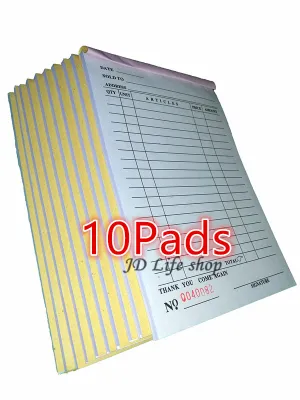
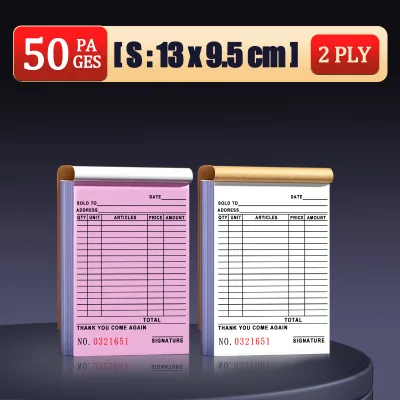
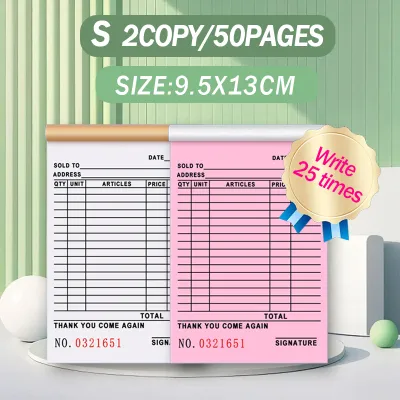
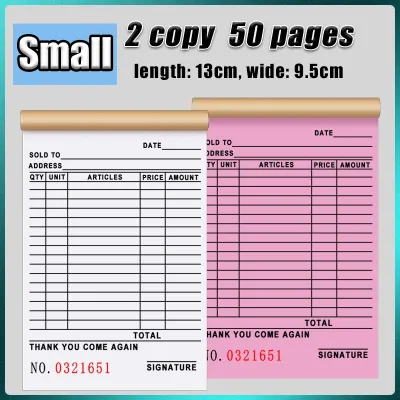
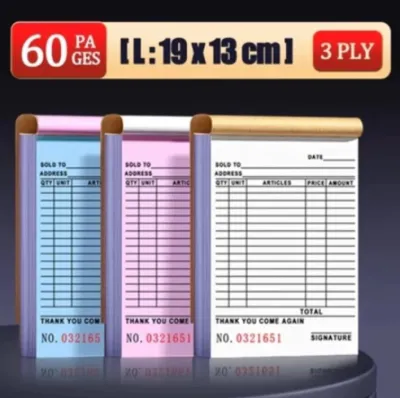
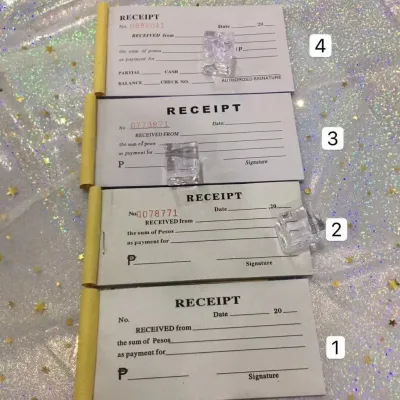
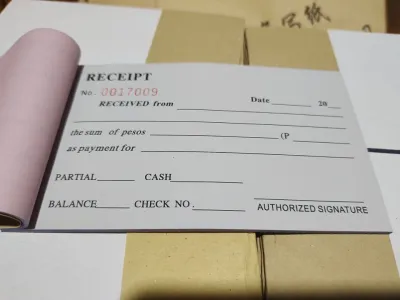
Prices are valid at publication and may change. Please refer to the product page for the latest price.
This mechanical difference directly influences the physical structure of the receipt books. Traditional carbon books require you to manually place a loose carbon sheet between the pages before writing, or they feature a bound-in carbon sheet that you must fold and position for each transaction. NCR books are pre-assembled with the reactive coatings already applied to the pages in a specific sequence (such as original, duplicate, and triplicate), allowing you to write directly on the top sheet without any manual preparation.
Ease of Use and Daily Workflow Efficiency
In a busy retail, dining, or service environment, the speed and ease of completing a transaction can significantly affect customer satisfaction and staff productivity. NCR receipt books offer a streamlined workflow because they require no manual setup. Cashiers or service technicians can simply open the book, write the transaction details, and tear out the copy. This eliminates the repetitive task of handling, positioning, and storing loose, messy carbon sheets during busy shifts.

The physical effort required to write a receipt also differs between the two formats. Traditional carbon paper requires firm, heavy handwriting pressure to ensure the wax-based ink transfers completely through to the duplicate sheet. This can lead to hand fatigue during long shifts. NCR paper, however, is highly sensitive to pressure. The micro-capsules rupture easily under normal writing pressure, producing a clear copy with much less physical effort.
Furthermore, NCR paper is compatible with mechanical impact printers, such as dot-matrix printers, which are widely used for back-office accounting and invoicing. The physical strike of the printer’s printhead is more than sufficient to trigger the chemical reaction across multiple plies. Traditional carbon paper is generally incompatible with modern printing equipment, as the loose carbon sheets can easily slip, jam the paper feed, or leave heavy ink residue on the printer’s internal rollers.
Messiness is another critical factor in daily operations. Traditional carbon paper is notorious for leaving dark smudges on hands, clothing, countertops, and the receipts themselves. This can present an unprofessional image to customers and lead to stained documents. NCR paper is completely dry and clean to the touch, ensuring that both your staff and your customers handle receipts without any risk of ink transfer or smudging.
Print Quality, Legibility, and Copy Clarity
Clear record-keeping is vital for tax compliance, inventory tracking, and resolving customer disputes. The legibility of a duplicate receipt depends heavily on the transfer medium. NCR paper produces highly consistent, sharp, and precise lines because the chemical reaction occurs exactly where the pen tip applies pressure. This results in clean, professional-looking duplicates that are easy to read and scan for digital archiving.
Traditional carbon paper duplicates are more prone to smudging, feathering, and uneven transfer. If the carbon sheet is worn out from repeated use, or if the writer does not apply uniform pressure, the duplicate text can become faint, patchy, or entirely illegible. Over time, the wax-based ink on carbon copies can also bleed into the surrounding paper fibers, especially when exposed to warm temperatures, making older records difficult to decipher.
The number of copies you need to produce simultaneously is another important consideration. Standard duplicate books (2-ply) work well with both methods. However, if your business workflow requires triplicate (3-ply) or quadruplicate (4-ply) copies—such as separate copies for the customer, accounting, inventory, and delivery—NCR paper is highly reliable. It can easily transfer the chemical reaction through multiple layers. Carbon paper struggles with multi-ply transfers, as the physical pressure of a pen diminishes with each additional layer of paper and carbon sheet, often leaving the bottom copies faint or blank.
Environmental factors also play a role in document longevity. In tropical climates with high humidity and elevated temperatures, traditional carbon paper can become sticky, and the wax coating may transfer prematurely under the weight of stacked books. While NCR paper is more stable under normal conditions, its chemical coatings can degrade if exposed to extreme heat, direct sunlight, or certain chemical vapors over extended periods. For long-term archiving, NCR copies should be stored in cool, dry, and dark environments to prevent the image from fading.
Cost Considerations and Budget Alignment
When evaluating the financial impact of your stationery choices, it is important to look beyond the initial purchase price. NCR duplicate receipt books generally carry a higher upfront cost per book compared to traditional carbon paper books. This premium is due to the advanced chemical coatings and specialized manufacturing processes required to produce carbonless paper. For a business operating on a very tight initial budget, carbon paper books may seem like the more economical choice.
However, traditional carbon paper introduces hidden operational costs that can quickly offset those initial savings. The time staff spend manually inserting, adjusting, and disposing of carbon sheets adds up to significant labor hours over weeks and months. There is also the cost of waste disposal, as used carbon sheets must be discarded regularly. Additionally, if carbon smudges ruin receipts or merchandise, your business faces the cost of wasted materials and potential customer dissatisfaction.
Bulk purchasing can help mitigate the higher cost of NCR books. Many local office supply distributors and online marketplaces offer volume discounts that bring the unit price of NCR books closer to that of carbon paper. When planning bulk purchases, consider the shelf life of the materials. Carbon paper can dry out and lose its transfer capability over several years if not stored properly. NCR paper also has a shelf life, typically around two to three years before the chemical coatings begin to lose sensitivity, so it is best to purchase only what your business will use within a reasonable timeframe.
To calculate the true cost of your receipt system, check local office supply specifications and compare the price per receipt in Philippine Pesos (₱) for both formats. Factor in the number of plies you require and the estimated time saved by your staff. In most active business scenarios, the minor price premium of NCR paper is easily justified by the gains in operational speed, cleanliness, and document legibility.
Decision Framework: Choosing the Right Receipt Book
To select the ideal duplicate receipt book for your business, evaluate your specific operational needs against the characteristics of each paper type.
When to Choose NCR Receipt Books:
- Your business handles a moderate to high volume of daily transactions where speed is critical.
- You require clean, smudge-free handling for a professional customer presentation.
- You need to produce three or more copies (triplicate or quadruplicate) of each transaction.
- You plan to feed the receipt forms through a dot-matrix or impact printer.
- You prioritize efficient workflows and want to eliminate the waste and hassle of loose carbon sheets.
When to Choose Carbon Paper Receipt Books:
- Your transaction volume is very low, such as a small service business that writes only a few receipts a week.
- You are operating under strict upfront budget constraints where every peso counts.
- The receipts are strictly for internal, low-priority tracking where minor smudging or variable legibility is acceptable.
- You only require a single duplicate copy (2-ply) and write all receipts manually.
Verify First Checklist: Before purchasing your duplicate receipt books, especially if you plan to use them with office hardware, complete these essential checks:
- Printer Compatibility: If using an impact printer, verify the manufacturer's guidelines regarding maximum paper thickness and the number of plies the printer can safely handle without jamming.
- Ply Requirements: Confirm whether your accounting and delivery workflows require 2-ply, 3-ply, or 4-ply books, as this will dictate the chemical sensitivity or physical pressure needed.
- Storage Space: Ensure you have a cool, dry storage area away from direct sunlight and heavy weights to prevent premature activation of NCR chemicals or melting of carbon wax.
Frequently Asked Questions (FAQ)
Can I use NCR receipt books in a laser or inkjet printer?
No, NCR receipt books are not compatible with laser or inkjet printers. NCR paper relies on physical pressure or mechanical impact to rupture the micro-capsules and trigger the chemical reaction that transfers the text. Laser printers use heat and static electricity to fuse toner to the paper, while inkjet printers spray liquid ink onto the surface. Neither of these methods provides the physical pressure required to create a duplicate. Furthermore, the heat from laser printers can damage the chemical coatings on NCR paper, potentially releasing fumes or leaving residue that could harm the printer’s internal components.
How should I store unused duplicate receipt books to maintain quality?
To preserve the quality and responsiveness of your duplicate receipt books, store them in a cool, dry place away from direct sunlight, high humidity, and extreme heat. This is particularly important in tropical climates, where heat can cause carbon paper wax to melt or NCR chemical coatings to degrade prematurely. Always store the books flat and avoid placing heavy boxes or equipment on top of them, as excessive pressure can accidentally rupture the micro-capsules in NCR paper, causing dark spots or pre-activating the transfer sheets before they are used.
Community discussion
Share your experience or ask a question. Comments are reviewed before publication.