
Finding the right notebook binder requires balancing three key elements: the paper format, the ring diameter, and the hole pattern. If these specifications do not align, you risk ending up with pages that spill over the cover, sheets that jam when turned, or refills that simply do not fit the rings. By understanding how these dimensions interact, you can select a binder that keeps your notes organized, protected, and easy to navigate.
Matching Paper Formats to Binder Dimensions
When choosing a notebook binder, the first step is matching the binder size to your preferred paper format. Standard paper formats like A4, A5, and B5 have fixed dimensions. However, a binder cover must always be physically larger than the paper it holds. This extra margin ensures that the edges of your pages do not stick out, protecting them from getting crumpled or torn inside your bag. It also provides the necessary clearance for index tabs or dividers.
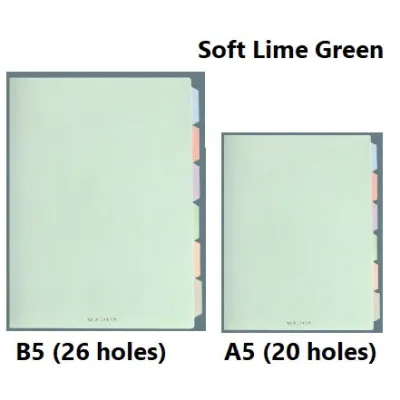
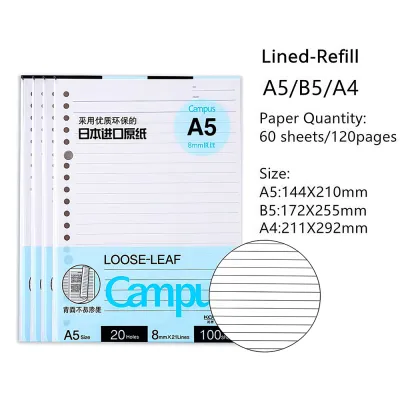
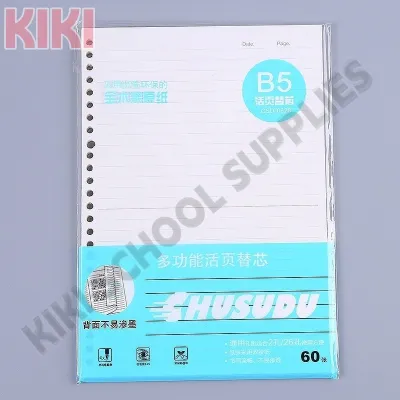
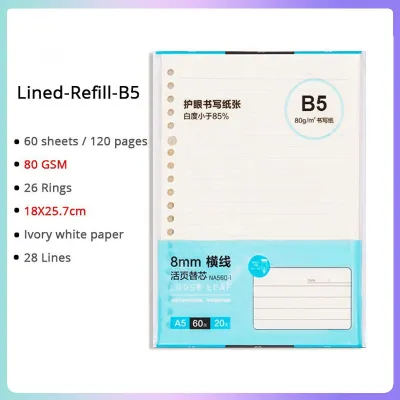
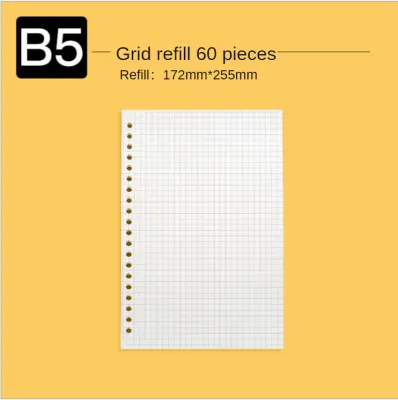
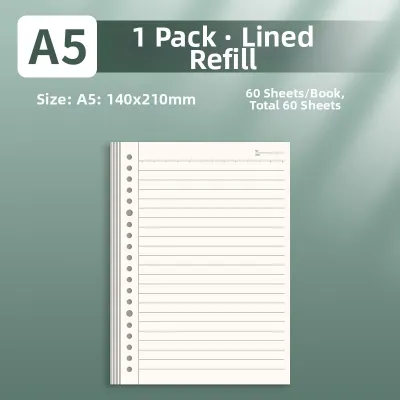
Beyond the paper size, you must pay close attention to the punch hole patterns. Common configurations include 2-hole, 4-hole, 6-hole, 20-hole, 26-hole, and 30-hole systems. For instance, a standard A5 binder might use a 6-hole system for personal organizers, or a 20-hole system for loose-leaf notebooks. Before purchasing, verify the exact spacing between the holes on your refill paper to ensure they align with the binder rings.
Products mentioned in this guide
Prices are valid at publication and may change. Please refer to the product page for the latest price.
Mixing regional standards is a frequent source of frustration. A binder designed for North American Letter size will not accommodate European or Asian A4 paper without custom punching. Similarly, Japanese B5 paper with 26 holes will not fit standard ISO B5 binders unless the hole spacing matches. Always check the exact millimeter measurements of both the binder rings and the paper refills rather than relying on generic size labels.
Decoding Ring Diameter and Sheet Capacity
The shape and diameter of the binder rings directly dictate how many sheets of paper you can store and how smoothly those pages will turn. The two most common ring designs are O-rings and D-rings. O-rings are mounted to the spine of the binder, which is highly common in round-back notebooks. While they allow for easy page-turning, the pages curve around the ring, which can limit capacity and cause the paper to bunch up on one side.

In contrast, D-rings are typically mounted to the back cover of the binder. This design allows the paper to lie completely flat on a straight bar, maximizing the usable stacking height. D-rings generally offer a higher sheet capacity than O-rings of the same nominal size and prevent the inner edges of your pages from curling or tearing over time.
To measure ring diameter accurately, measure the inside width of the ring at its widest point, not the external width of the binder spine. This measurement translates directly to sheet capacity, though the actual limit depends on paper thickness, measured in grams per square meter (GSM). For standard 80 GSM paper, a 15mm ring typically holds about 100 to 120 sheets, while a 25mm ring can accommodate roughly 150 to 200 sheets.
In humid tropical environments like the Philippines, paper naturally absorbs moisture from the air. This ambient humidity can cause individual sheets to swell slightly and stick together. To prevent ring strain, page tearing, and jamming under these conditions, it is wise to leave a small clearance gap—about 10% to 15% of the ring capacity—rather than packing the binder to its absolute limit.
Choosing the Right Specifications for Your Workflow
Selecting the ideal binder specifications depends heavily on your daily routine and how you plan to use the notebook. If your workflow involves constant movement, quick note-taking, or field work, a compact setup is highly practical. Opting for smaller formats like A5 or B5 with slim O-rings keeps the notebook lightweight and easy to slip into a small bag or hold in one hand while writing.
For heavy reference materials, archival storage, or extensive printed handouts, larger formats and high-capacity rings are necessary. An A4 binder equipped with 25mm or larger D-rings is ideal for organizing course modules, project documentation, or office records that stay primarily on a desk. The flat-stacking nature of the D-ring ensures that large volumes of paper remain orderly and readable over long periods.
When evaluating binders, look past non-essential features that add unnecessary bulk. While multiple interior pockets, zippered compartments, and exceptionally thick padded covers might seem appealing, they often make the binder heavy and difficult to carry. Focus instead on the core functionality: a sturdy cover that protects the paper and a reliable ring mechanism that matches your daily page-turning frequency.
Verifying Compatibility and Build Quality
Before finalizing your purchase, run through a quick verification checklist to ensure long-term usability. First, cross-check the binder’s punch pattern with your existing paper supply or your preferred refill brand. If you use pre-punched paper, counting the holes and measuring the distance between them is the most reliable way to avoid compatibility issues.
Next, inspect the physical build quality of the binder. Test the ring locking mechanism to ensure the rings align without leaving gaps where paper can snag. The spine reinforcement should feel rigid enough to support the weight of a fully loaded binder without warping, especially if you plan to carry it daily.
Finally, when shopping on online marketplaces, avoid relying solely on product titles, which often use generic keywords like “universal” or “standard.” Instead, scroll down to the detailed product specifications to verify the exact dimensions, ring diameter, and hole counts. Checking these technical details beforehand saves the hassle of dealing with returns and ensures a seamless writing experience.
Frequently Asked Questions (FAQ)
Can I use A4 paper in an A4-sized binder?
Yes, an A4 binder is specifically designed to hold standard A4 paper. This means the actual physical dimensions of the binder cover are larger than the A4 paper itself, providing a protective border around the sheets. If you are using non-standard, oversized, or custom-cut paper, always check the exact inner dimensions of the binder cover to ensure the edges do not protrude.
How do I fix a binder ring that will not close properly?
First, check the hinge and locking mechanism for any trapped paper fibers, dust, or debris that might prevent a clean closure. If the rings are slightly misaligned, you can try gently realigning them by hand without applying excessive force. If the metal rings are severely bent, warped, or the spring mechanism is broken, avoid forcing them back into place, as this can ruin your paper; in such cases, it is best to replace the binder.
Community discussion
Share your experience or ask a question. Comments are reviewed before publication.