
Choosing the right metallic outline marker depends entirely on the surface you are decorating, the environment where you are working, and the specific visual finish you want to achieve. These specialized writing instruments produce a unique dual-line effect: a shimmering metallic silver core bordered by a vibrant colored outline. This striking look is achieved through a physical separation process where the heavy metallic pigments settle in the center of the stroke while the colored dyes migrate outward.
To ensure your lettering, illustrations, or craft projects turn out crisp and durable, you must select the correct ink formulation. The choice between oil-based and water-based metallic markers dictates how the ink adheres, how quickly it dries, and whether it will bleed through your working medium.
Choose an oil-based metallic outline marker if:
Products mentioned in this guide
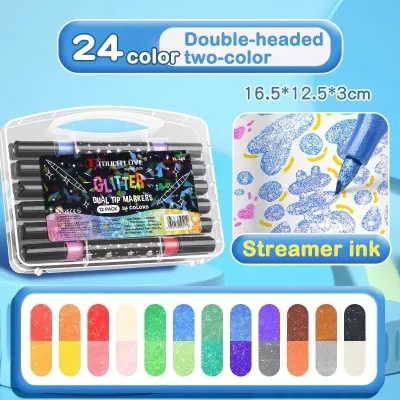
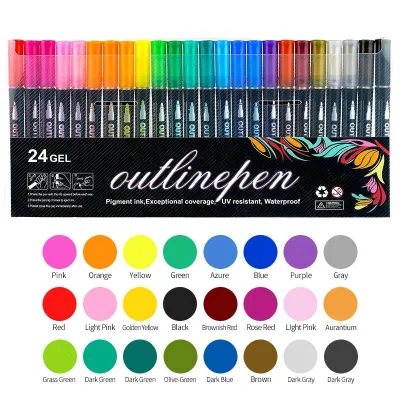
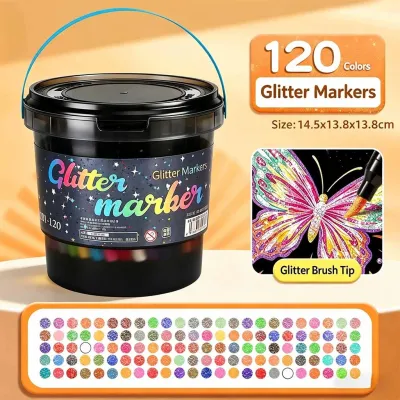
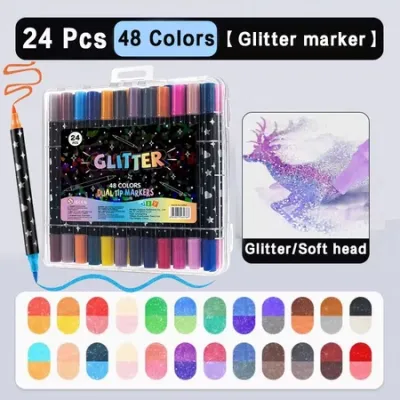
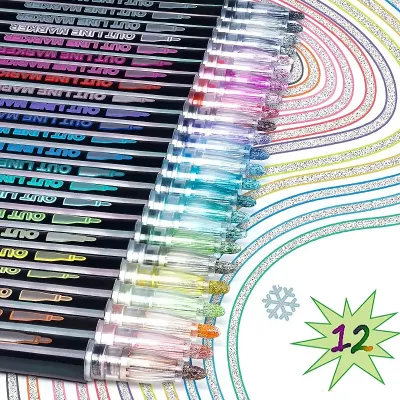
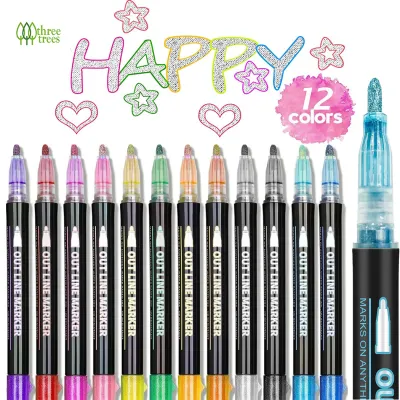
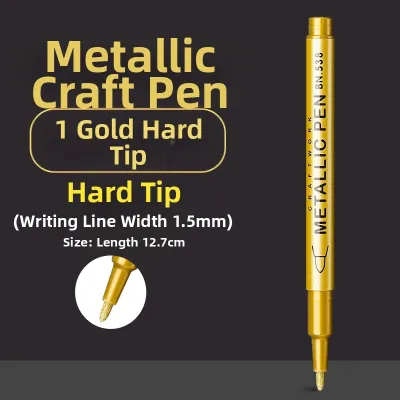
Prices are valid at publication and may change. Please refer to the product page for the latest price.
- You are writing on non-porous or slick surfaces such as glass, glazed ceramics, polished metal, smooth plastics, or coated acrylic panels.
- You require maximum opacity, high water resistance, and long-term durability on outdoor signage or items that will be handled frequently.
- You are working on dark-colored or black backgrounds and want the metallic pigment to remain highly reflective without sinking into the surface.
Choose a water-based metallic outline marker if:
- You are working on standard paper, heavy cardstock, bullet journal pages, or porous cardboard.
- You need a fast-drying ink to prevent accidental smudging as you write or draw.
- You prefer a low-odor, non-toxic option suitable for indoor crafting, classrooms, or projects involving children.
Verify first if:
- You plan to apply the markers to specialized fabrics, treated wood, or mixed-media canvases. Because performance on these materials varies wildly depending on the manufacturer's specific binders, you must test a small area first to determine if a primer or a protective clear sealant is required.
Core Differences in Ink Formulation and Opacity
Understanding the physical chemistry behind metallic outline markers explains why they behave so differently on various surfaces. The core of the marker’s performance lies in how the metallic flakes are suspended within the liquid carrier and how that carrier evaporates once applied.
Pigment Suspension and Flow
Metallic outline markers do not use traditional liquid dyes for their metallic shine; instead, they rely on tiny, suspended flakes of aluminum or bronze powder. In oil-based markers, these heavy metallic particles are suspended in organic solvents and synthetic resins. This mixture has a high viscosity when at rest, meaning the metallic flakes settle heavily at the bottom of the reservoir over time. To break this resting state, oil-based markers require vigorous shaking to allow an internal mixing ball to redistribute the heavy metallic particles evenly throughout the solvent.
Water-based markers suspend their metallic pigments in water and water-soluble acrylic or polymer binders. Because water has a lower density than organic solvents, these formulations are engineered to keep the particles suspended with less effort, though they still require shaking before use. Priming both types of markers involves a valve-action mechanism: you must press the spring-loaded fiber tip down repeatedly on a piece of scrap paper to open the internal valve and allow the ink to saturate the nib. Oil-based markers generally require a more deliberate, patient priming process, as the thicker solvent takes longer to flow smoothly down the feed channel.
Coverage on Dark Backgrounds
When applied to dark or black backgrounds, the differences in opacity between the two formulations become highly apparent. Oil-based inks form a solid, continuous film on top of the material as the solvent evaporates. This film acts as a physical barrier, preventing the dark background color from showing through and keeping the metallic silver pigment exceptionally bright and reflective. This high opacity means you rarely need to apply a second coat to achieve a solid, professional finish.
Water-based inks, by contrast, rely on a carrier that is easily absorbed by porous fibers. On dark paper, the water-soluble colored dye can sink into the page, sometimes leaving only a faint, translucent outline that is difficult to see against a black background. While the metallic silver core will still shine, the colored border may lose its vibrancy. To ensure you get the exact visual effect you want, always check the manufacturer’s specifications on the packaging for terms like “high opacity” or “designed for dark surfaces” rather than assuming all metallic markers will perform identically.
Surface Compatibility: Matching the Marker to Your Material
Selecting a marker that is incompatible with your working surface can lead to disappointing results, such as ink that beads up, smears indefinitely, or ruins the material underneath. Matching the ink chemistry to the porosity of your surface is the most critical step in your crafting process.

Porous Materials (Paper, Cardstock, Wood)
Water-based metallic outline markers are the ideal choice for porous surfaces like paper, cardstock, and unsealed wood. When you write on paper, the cellulose fibers quickly draw in the water-based carrier. This rapid absorption allows the colored dye to spread slightly outward to create the signature outline effect, while the larger metallic flakes remain trapped on the surface of the paper. This natural separation works beautifully on standard drawing paper or heavy cardstock. However, the weight of the paper matters immensely; using these markers on thin paper under 100 GSM (grams per square meter) can cause the water to saturate the sheet, leading to warping or fiber pilling.
Oil-based markers pose a significant risk when used on porous materials. The organic solvents have a very low surface tension, which causes them to soak rapidly through paper fibers. This leads to severe bleed-through, often staining the pages underneath or creating a greasy, yellowed halo around your writing. On highly absorbent, unsealed wood, an oil-based ink will sink deep into the grain, causing the colored outline to feather excessively and lose its sharp definition. If you must use oil-based markers on wood, the surface should first be sealed with a clear acrylic primer to control ink absorption.
Non-Porous Materials (Glass, Plastic, Metal, Ceramics)
For non-porous surfaces, oil-based metallic outline markers are the industry standard. Because materials like glass, smooth plastics, polished metals, and glazed ceramics cannot absorb liquids, the ink must rely entirely on surface adhesion. As the solvent in an oil-based marker evaporates, the remaining resins undergo a curing process, forming a durable, water-resistant plastic-like bond with the smooth surface. Once fully cured, the outline design resists smudging, light washing, and daily handling.
Water-based markers perform poorly on non-porous materials. Without fibers to absorb the water, the ink tends to bead up due to surface tension, pooling into uneven droplets that ruin the outline effect. Even if the water eventually evaporates, the remaining pigment has no chemical bond to the surface; it remains highly water-soluble and can be easily wiped away with a damp cloth or scratched off with a fingernail. Before applying any oil-based marker to a non-porous surface, always clean the material thoroughly with isopropyl alcohol to remove invisible oils, dust, and fingerprints that could interfere with ink adhesion.
Usability Factors: Drying Time, Bleed-Through, and Odor
Beyond surface compatibility, the practical aspects of your working environment and workflow should guide your choice. Factors like local climate, workspace ventilation, and the intended users of the markers play a significant role in your overall experience.
Drying Time and Smudge Resistance
In warm, humid tropical environments, drying times can vary significantly from standard laboratory ratings. Water-based metallic outline markers dry relatively quickly on paper because the moisture is absorbed by the fibers, typically setting within a few seconds to a minute. This fast drying time minimizes the risk of smudging, making them excellent for left-handed writers or fast-paced journaling.
Oil-based markers require a dual process of solvent evaporation and chemical curing. On slick, non-porous surfaces, they can take anywhere from several minutes to an hour to become dry to the touch, and they may require up to 24 hours to cure completely. Touching or stacking decorated items too early will smudge the outer colored ring and ruin the crisp border effect. If you are working in high humidity, expect these drying and curing times to be slightly prolonged.
Bleed-Through and Feathering
Bleed-through occurs when the ink carrier travels completely through the thickness of the paper, while feathering refers to the lateral spreading of ink along the paper fibers, resulting in fuzzy edges. Water-based inks are highly stable and resist feathering on high-quality, sized papers (papers treated to reduce absorbency). They stay exactly where you apply them, preserving the sharp contrast between the silver core and the colored outline.
Oil-based inks are highly prone to both bleed-through and feathering on standard paper. The organic solvents act as penetrants, carrying the pigment deep into the paper structure. This makes them unsuitable for double-sided notebook pages, standard planners, or delicate scrapbooking papers. If you choose to use an oil-based marker for a paper craft, always place a thick sheet of scrap cardboard or silicone protective sheet directly beneath your work to protect your desk.
Odor, Ventilation, and Safety
Oil-based solvents release volatile organic compounds (VOCs) as they dry, which produce a strong, characteristic chemical odor. Working with these markers in a small, enclosed room or an air-conditioned space can quickly lead to headaches or dizziness. It is highly recommended to use oil-based markers outdoors or in well-ventilated areas. Because of these chemical solvents, oil-based markers are generally not suitable for young children.
Water-based markers are virtually odorless and do not release harmful VOCs, making them the preferred choice for classrooms, community workshops, and home crafting at the dining table. When purchasing markers for family use or school projects, always check the product packaging for safety certifications, such as the ACMI AP (Approved Product) seal, which verifies that the formulation has been toxicologically evaluated and deemed safe for users of all ages.
Quick Comparison: Oil-Based vs. Water-Based Markers
To help you make a quick and informed decision, the table below summarizes the key performance dimensions of both marker formulations under typical crafting conditions.
| Feature | Oil-Based Metallic Markers | Water-Based Metallic Markers |
|---|---|---|
| Best Surfaces | Glass, plastic, metal, ceramics, sealed wood | Paper, cardstock, cardboard, unsealed wood |
| Opacity on Dark Colors | High (forms a solid, reflective layer) | Moderate to low (colored outline may fade) |
| Drying Time | Slow (requires curing time on slick surfaces) | Fast (absorbs quickly into porous fibers) |
| Bleed-Through Risk | High on standard or thin papers | Low on paper weights above 100 GSM |
| Odor & Safety | Strong solvent odor; requires ventilation | Low odor; safe for children and indoor use |
| Water Resistance (Once Dry) | High (permanent on most non-porous surfaces) | Low (can be wiped off smooth surfaces with water) |
How to Test and Verify Your Choice Before Crafting
Because ink formulations and surface coatings vary widely among different stationery brands, you should never start a major project without verifying how your specific marker interacts with your chosen material. Taking a few minutes to run a controlled test will save you time and preserve your raw materials.
The Scrap Test
Always perform a test application on a hidden area of your object or on an identical scrap piece of the same material. For instance, if you are decorating a glass jar, test the marker on the underside of the base. If you are working on a custom journal, use a blank page at the very back of the book. This simple step allows you to observe how the metallic pigment separates from the colored dye on that specific surface texture without risking the visual appeal of your final piece.
Observation Checklist
During your scrap test, pay close attention to how the ink behaves immediately after application and after it has rested. Use the following observation checklist to evaluate the results:
- Ink Pooling: Does the ink lay down in a smooth, even line, or does it bead up into small droplets on the surface?
- Feathering Edges: Does the colored outline remain sharp and distinct, or does it bleed outward into fuzzy, uncontrolled spiderweb patterns?
- Drying Speed: Touch a small section of the test line with a scrap piece of paper after one minute, five minutes, and ten minutes to determine exactly how long the ink takes to set in your local humidity.
- Adhesion Check: Once the ink is completely dry, give it a gentle rub with a dry fingertip. If the pigment flakes off, smears, or transfers to your skin, the marker is not bonding properly to the material.
Label Verification
Before you begin, read the manufacturer’s instructions printed on the marker barrel or the outer packaging. Pay close attention to the recommended storage orientation; most metallic outline markers must be stored horizontally to prevent the heavy metallic flakes from clogging the tip or settling permanently at the back of the reservoir. Additionally, check if the manufacturer recommends a specific priming method or suggests applying a clear acrylic topcoat to seal the finished design. Following these specific care and preparation steps ensures your metallic outline markers deliver brilliant, long-lasting results every time.
Community discussion
Share your experience or ask a question. Comments are reviewed before publication.