
Selecting the right paper bag handle is a balancing act between structural utility, visual appeal, and environmental responsibility. Whether you are preparing corporate giveaways, packaging retail goods, or wrapping a delicate gift, the handle is the primary point of physical contact between your recipient and your packaging. The ideal handle material depends entirely on your specific project requirements: twisted paper provides robust, eco-friendly utility for retail; cotton rope offers a comfortable, premium grip for heavier packages; ribbon delivers elegant decorative flair for special events; and die-cut handles present a sleek, cost-effective, and fully recyclable solution.
To make an informed choice, you must evaluate how each handle type performs under load, how it behaves in different environmental conditions, and how it aligns with your aesthetic goals. Selecting an incompatible handle can lead to structural failures, such as tearing or detachment, which can damage the items inside and compromise the presentation of your brand or gift.
Quick Guide to Paper Bag Handle Selection
The handle of a paper bag does far more than facilitate transport; it defines the bag’s structural limits and sets the tone for the recipient’s overall experience. In retail packaging and gift wrapping, the handle serves as the bridge between form and function. A poorly chosen handle can make a high-quality bag feel cheap, while a well-matched handle enhances both the security of the contents and the perceived value of the package.
Products mentioned in this guide
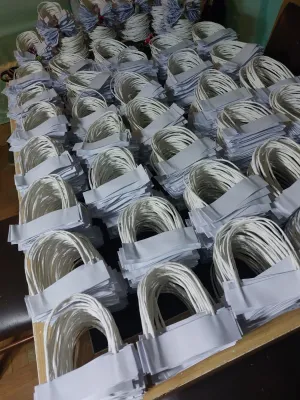
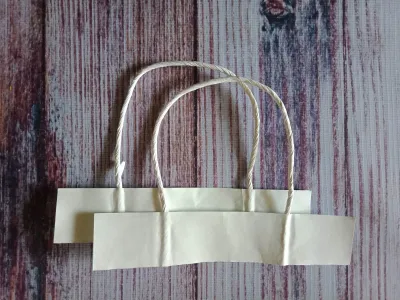

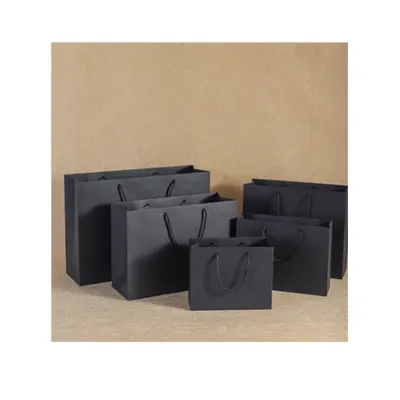
Prices are valid at publication and may change. Please refer to the product page for the latest price.
When choosing a handle, three core decision factors should guide your selection:
- Weight Capacity: The maximum load the handle and its attachment points can support without tearing or stretching.
- Aesthetic Appeal: The visual and tactile impression the handle conveys, ranging from rustic and natural to luxurious and formal.
- Environmental Impact: The ease with which the entire bag can be recycled or composted at the end of its life cycle.
For everyday retail and eco-conscious branding, twisted paper handles are the industry standard due to their balance of strength and recyclability. Premium gift bags and corporate packages often utilize cotton rope for its soft grip and high weight tolerance. Decorative events, such as weddings or product launches, frequently employ satin or grosgrain ribbon to maximize elegance. Meanwhile, die-cut handles offer a minimalist, highly cost-effective option for lightweight items.
Comparing Paper Bag Handle Materials and Types
To select the best paper bag handle, it is helpful to understand how different materials and manufacturing methods influence performance. The choice of handle directly impacts how weight is distributed across the bag’s collar, how the bag behaves when exposed to environmental elements, and how easily the packaging can be processed in municipal recycling facilities.

These handles generally fall into three primary categories: paper-based designs, fabric-based options, and integrated structural cutouts. Each category has distinct mechanical properties, aesthetic profiles, and production costs that make them suitable for specific applications.
Twisted and Flat Paper Handles
Twisted paper handles are manufactured by spinning long strands of kraft paper together to form a tight, rope-like cord. This twisting process dramatically increases the tensile strength of the paper fibers, allowing them to support surprisingly heavy loads. These handles are typically glued to the inside collar of the bag under a reinforcing paper patch. They offer a stiff, upright shape that makes bags easy to grab and fill quickly, making them highly popular in busy retail environments, bookshops, and grocery stores.
Flat paper handles are constructed by folding a flat strip of kraft paper into a multi-layered, loop-shaped band. Because they require less processing than twisted cords, flat paper handles are highly economical to produce. They fold down flat against the bag, which minimizes storage space and makes them excellent for bulk packaging. They are commonly used for take-out food containers and apparel shopping bags where items are light but bulky.
- Limitations: Both twisted and flat paper handles are highly vulnerable to moisture and high humidity. In tropical climates, prolonged exposure to humid air can soften the paper fibers and weaken the water-soluble adhesives holding the handles in place. Additionally, paper handles have a lower maximum weight tolerance than fabric alternatives. When sourcing paper bags with these handles, always verify the bag's paper weight—measured in Grams per Square Meter (GSM)—to ensure the body of the bag is strong enough to support the handle attachment under load. A minimum of 120 GSM is recommended for standard retail use.
Cotton Rope and Ribbon Handles
Cotton rope handles provide a soft, comfortable grip and a premium tactile experience. Typically made from braided or three-ply twisted cotton fibers, these handles possess excellent tensile strength and flexibility. They do not dig into the carrier’s hands, making them the preferred choice for carrying heavy items such as gourmet food jars, thick corporate planners, or multiple cosmetics bottles. Their substantial feel immediately elevates the perceived quality of corporate gifts and luxury retail items.
Ribbon handles—including satin, grosgrain, and organza—are chosen primarily for their decorative and aesthetic value. Satin ribbon offers a smooth, glossy finish that reflects light beautifully, making it ideal for high-end boutique packaging and wedding favors. Grosgrain ribbon features a ribbed texture that provides slightly more friction and structural body, preventing the handle from feeling too floppy. Organza ribbon is sheer and delicate, reserved almost exclusively for ultra-lightweight gift bags.
- Attachment Requirements: Unlike paper handles, which are glued flat, fabric-based handles require holes to be punched through the bag's collar. To prevent the fabric from tearing through the paper under the strain of a load, these holes must be reinforced. This is typically achieved using metal or plastic eyelets (grommets) or by inserting a thick cardboard reinforcement strip inside the bag's turn-top fold. The handles are then secured on the inside using bulky knots or plastic T-lace ends.
Die-Cut Handles
Die-cut handles are integrated directly into the body of the paper bag. A precise shape—usually an oval, a kidney, or a rounded rectangle—is punched out of the upper section of the bag during manufacturing. To ensure the handle does not tear when lifted, the upper edge of the bag is usually folded inward to create a double-layered reinforcement zone around the cutout. Some high-quality die-cut bags also feature a glued cardboard patch sandwiched between these paper layers for added durability.
- Pros: Because they do not require external materials or complex manual assembly, die-cut bags are highly cost-effective to produce in large volumes. They feature a clean, modern, and minimalist aesthetic that sits completely flat, making them incredibly easy to stack, store, and transport. They are also fully recyclable without any disassembly.
- Cons: The primary drawback of die-cut handles is their limited weight capacity. Because the user's fingers pull directly against the flat edge of the paper, carrying heavy loads can cause the paper to slice uncomfortably into the hands. Furthermore, if the bag is overloaded, the stress concentrated at the upper corners of the cutout can easily initiate a tear. For these reasons, die-cut handles require a thick paper stock—typically 150 GSM or higher—and are best suited for lightweight items like clothing, documents, or flat jewelry boxes.
How to Match the Handle to Your Packaging Project
Selecting the right handle requires analyzing the physical properties of your items, the context of your event, and your environmental goals. By balancing these factors, you can prevent packaging failures while staying within your budget.
Weight and Load Capacity
Before choosing a handle, calculate the total weight of the items you plan to place inside the bag. Heavy or dense items require handles with high tensile strength and reinforced attachment points. Lightweight, high-volume items can use simpler, more economical designs.
- Lightweight (up to 1 kg): Flat paper handles or unreinforced die-cut handles are perfect for apparel, stationery, and small accessories.
- Medium Weight (1 to 3 kg): Standard twisted paper handles or reinforced die-cut handles work well for books, packaged cosmetics, and light groceries.
- Heavy Weight (3 kg and above): Braided cotton rope handles with reinforced metal eyelets and a thick cardboard top-fold insert are essential for glass bottles, heavy corporate gifts, and dense promotional materials.
Aesthetic and Event Context
Your packaging is a visual extension of your brand or event theme. The material of the handle should match the design language of the bag and the occasion.
- Rustic or Eco-Friendly: Natural brown kraft bags paired with matching twisted or flat paper handles reinforce an organic, sustainable, or artisanal aesthetic. This is highly popular for local craft markets, organic skincare brands, and eco-conscious corporate events.
- Luxury and Corporate: Matte-finished bags paired with thick cotton rope handles in matching or contrasting colors convey professionalism and high value. This combination is ideal for annual corporate giveaways, executive gifts, and high-end retail.
- Celebratory and Formal: Glossy or textured paper bags finished with wide satin or grosgrain ribbon handles add a sense of luxury and anticipation. This style is perfect for weddings, anniversaries, and exclusive product launch events.
Environmental Considerations
Sustainability is an increasingly important factor for consumers and businesses alike. The ease of disposal varies significantly across different handle styles.
- Fully Recyclable: Twisted paper, flat paper, and die-cut handles are made entirely of paper and can be placed directly into standard paper recycling bins along with the bag. They do not require any separation, making them the most eco-friendly options.
- Mixed Materials: Cotton rope and synthetic ribbon handles must be removed from the bag before the paper can be recycled. While cotton is biodegradable, synthetic ribbons (such as polyester satin) are not. If you choose fabric handles, consider adding a small print on the bottom of the bag advising users to remove the handles before recycling.
Handle Comparison Matrix
| Handle Type | Weight Capacity | Aesthetic Level | Eco-Friendliness | Best Use Case |
|---|---|---|---|---|
| Twisted Paper | Medium | Moderate / Clean | High (100% Recyclable) | Retail shopping, bookshops, grocery stores |
| Flat Paper | Low to Medium | Basic / Utility | High (100% Recyclable) | Take-out food, apparel boutiques, bulk packaging |
| Cotton Rope | High | Premium / Luxury | Moderate (Requires removal) | Heavy gifts, corporate giveaways, luxury retail |
| Ribbon | Low | Elegant / Decorative | Low to Moderate | Wedding favors, cosmetics, jewelry packaging |
| Die-Cut | Low | Modern / Minimalist | High (100% Recyclable) | Document folders, lightweight clothing, flat boxes |
Tips for Assembling and Reinforcing Handles
If you are assembling custom gift bags or sourcing packaging for a small business, applying proper reinforcement techniques can dramatically increase the lifespan and weight capacity of your bags.
Use top-fold reinforcement boards. The upper collar of a paper bag is its primary structural weak point. When assembling bags, ensure the top edge is folded inward over a strip of rigid cardstock (typically 300 to 350 GSM greyboard). This board distributes the lifting force across the entire width of the bag rather than concentrating the stress solely on the handle holes or glue points.
Install metal or plastic eyelets. For rope and ribbon handles, punching a bare hole in paper invites tearing. Inserting a metal grommet or eyelet protects the paper edge from the sawing motion of the fabric cord as the bag moves. Ensure the eyelet is tightly crimped to clamp the paper and reinforcement board together securely.
Master secure knotting techniques. To prevent fabric handles from slipping through the eyelets under load, tie a substantial knot on the inside of the bag. A standard overhand knot is often insufficient for thin or slippery satin ribbons. Instead, use a figure-eight knot or a double overhand knot, and lightly singe the ends of synthetic ribbons with a heat source to prevent fraying over time.
Frequently Asked Questions (FAQ)
Can I recycle paper bags with cotton rope or ribbon handles attached?
You should not recycle paper bags with fabric handles still attached. While the paper bag itself is highly recyclable, cotton ropes, metal eyelets, and synthetic ribbon handles can tangle in paper mill pulping machinery and contaminate the recycling stream. Always cut or pull the fabric handles and metal grommets off the bag, disposing of them separately, before placing the paper body into your recycling bin.
How do I prevent paper handles from tearing in humid weather?
High humidity weakens the hydrogen bonds in paper fibers, making paper handles more susceptible to tearing. To prevent this, store your paper bags in dry, climate-controlled indoor areas before use. If you operate in a highly humid environment or are planning an outdoor event during the rainy season, consider upgrading to cotton rope handles with reinforced eyelets, which maintain their structural integrity regardless of moisture levels.
What is the maximum weight a standard twisted paper handle can hold?
A standard twisted paper handle can typically support between 2 to 4 kilograms, but this capacity depends heavily on the thickness of the bag’s paper (GSM), the quality of the adhesive patch, and the structural reinforcement of the collar. To avoid unexpected tears, always check the manufacturer’s weight specifications and perform a manual lift test with your heaviest items before committing to a bulk packaging run.
Community discussion
Share your experience or ask a question. Comments are reviewed before publication.