
Managing a growing stack of loose documents often leads to a frustrating choice between fasteners that slip off entirely and those that crush your pages beyond recognition. Deciding whether to use paper clips or binder clips comes down to matching the thickness of your document stack, how often you need to add or remove pages, and the level of physical protection your paper requires. While paper clips offer a quick, low-profile solution for small, temporary groupings, binder clips provide a heavy-duty, mechanical grip designed to keep thick bundles securely bound for long-term storage.
How do paper clips and binder clips differ in holding capacity and document thickness?
Paper clips and binder clips are engineered for entirely different volume thresholds, with paper clips handling small, temporary groupings of up to 10 or 15 sheets, while binder clips secure thick stacks ranging from 20 to over 200 sheets. This difference stems from their mechanical designs, which dictate how much physical tension they can apply without failing.
Standard wire paper clips rely on the torsional elasticity of a single bent wire. When you slide a paper clip onto a stack of pages, the wire bends outward, creating a small clamping force. However, if you attempt to force a standard paper clip onto a stack thicker than 10 or 12 sheets of standard 80 gsm paper, the metal exceeds its elastic limit. This causes the clip to bend permanently, losing its tension and causing pages to slip out.
Products mentioned in this guide
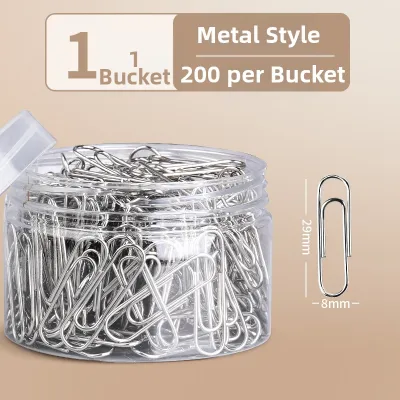
4 Lazada user ratings
Design:Eye-catching colors, soo kinis, smooth. so gandaa😍 Price:worth it. good quality po kase. Durability:matibay, excellent.
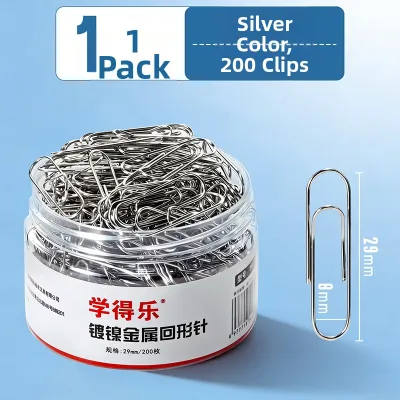
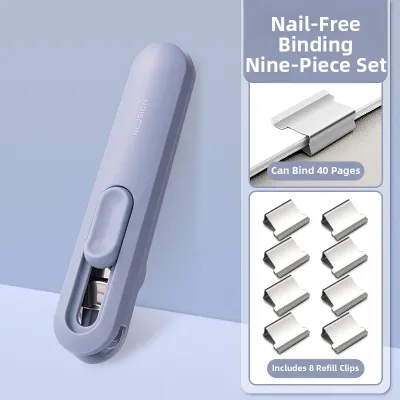
95 Lazada user ratings
The clipper is super handy to use, and its ergonomic sliding part doesn't tire my hand. The section at the back for unloading clips is a gre…Read full reviewShow less
The clipper is super handy to use, and its ergonomic sliding part doesn't tire my hand. The section at the back for unloading clips is a great bonus—it's efficient and quick, leaving no marks on the paper.
I don't know where they sourced their stuff, but everything I touched was dusty. The items are okay, but I wouldn't recommend this store.
Very good. It even came with 8 staples. The quality is excellent and the design is minimalist.
It's easy to push and simple to use, and the clip-on particles can be removed and reused.
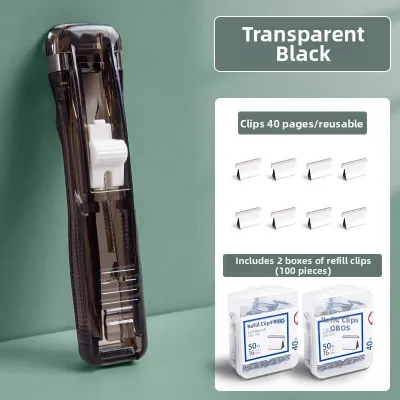
14 Lazada user ratings
complete ordered items received, securely packed👍👍 Durability:lightweight, plastic material, easy to use, I hope it is durable
It definitely deserves a full five stars! You can really feel the seller's effort!
Bought it for the students, hasn't been opened, I usually give good reviews.
Pretty good, using the sign-in rewards is really nice, not bad.
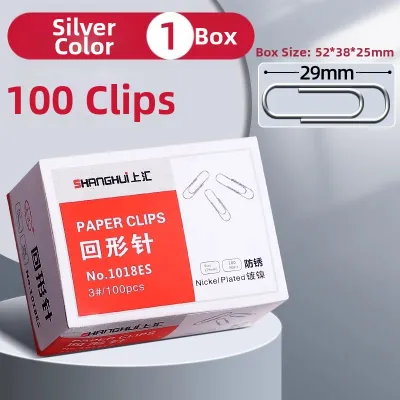
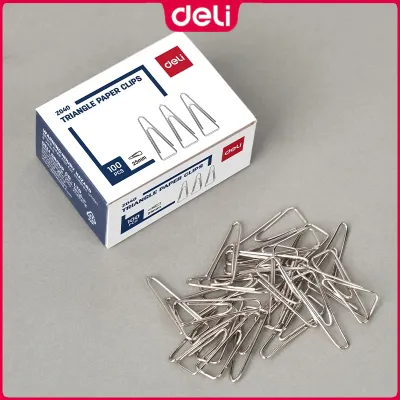
291 Lazada user ratings
Great for school and office use. Compact and lightweight design. I have the round shaped clip and I'm very satisfied with the quality and pr…Read full reviewShow less
Great for school and office use. Compact and lightweight design. I have the round shaped clip and I'm very satisfied with the quality and price. That's why I also bought the triangular clip. Same result, I'm happy with my purchase. I got two boxes - one for personal use, the other for my office files. Thanks, Deli! My go-to supplies store.
Eco-friendly metal material, Great for school and office use, Great for school and office use, Non-slip secure hold, 100 pieces per pack, Pe…Read full reviewShow less
Eco-friendly metal material, Great for school and office use, Great for school and office use, Non-slip secure hold, 100 pieces per pack, Perfect for organizing papers, Compact and lightweight design,
Perfect for organizing papers, Compact and lightweight design, Great for school and office use, Non-slip secure hold, 100 pieces per pack, G…Read full reviewShow less
Perfect for organizing papers, Compact and lightweight design, Great for school and office use, Non-slip secure hold, 100 pieces per pack, Great for school and office use, Eco-friendly metal material,
Compact and lightweight design, Great for school and office use, Great for school and office use, Perfect for organizing papers, Non-slip se…Read full reviewShow less
Compact and lightweight design, Great for school and office use, Great for school and office use, Perfect for organizing papers, Non-slip secure hold, Eco-friendly metal material,
Compact and lightweight design, Great for school and office use, Great for school and office use, Non-slip secure hold,
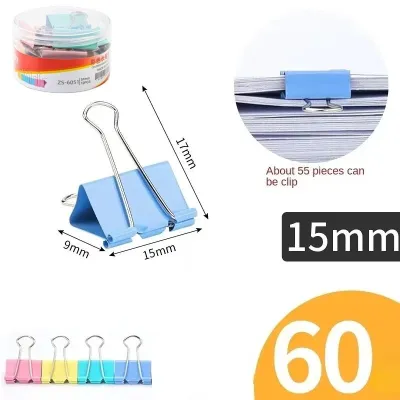
372 Lazada user ratings
Nice quality plus great price. This type of clips are all the time helpful. Convenient, easy to use, always surely working in correct ways.
Cheaper than buying it locally, but stronger. Will definitely buy again. Could hold a lot of documents and is cute colored.
Dumating ng mabilis, maayos at kumpleto lahat ng items.. I am happy with my purchase.. Good job seller..
Strong grip without damaging paper, Multi-functional usage options, Available in multiple sizes,
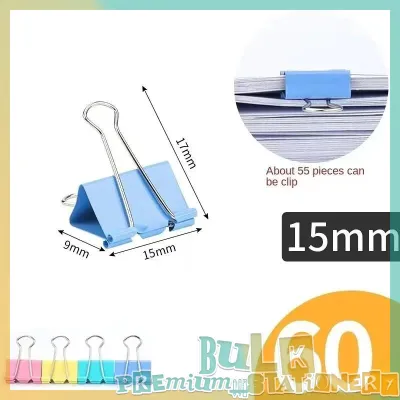
177 Lazada user ratings
Item received safe and complete. I even counted if the item was really 10 pcs and guess what? It’s 12 pieces po huhuhu. And it comes from va…Read full reviewShow less
Item received safe and complete. I even counted if the item was really 10 pcs and guess what? It’s 12 pieces po huhuhu. And it comes from variety of color pink, sky blue, and light yellow. Madami inorder ko para sa Ginagawa kung flash card for my review sa LET.
Design: Unique and creative, Beautiful design, Eye-catching colors, Price: Inexpensive, Reasonably priced, Affordable price, Durability: Str…Read full reviewShow less
Design: Unique and creative, Beautiful design, Eye-catching colors, Price: Inexpensive, Reasonably priced, Affordable price, Durability: Strong and tough, Excellent durability,
napakacute po ng kulay nya at size... nakaka enjoy gamitin at ang dami nya sarap sa mata... thank you seller sa mabilis na pag deliver...
Perfect for crafts and DIY, Multiple sizes available, Durable stainless steel clips, Smooth powder coat finish,
Prices are valid at publication and may change. Please refer to the product page for the latest price.
The friction coefficient between smooth metal wire and paper fibers also plays a critical role. Standard paper clips have very little surface area in contact with the paper, meaning they rely almost entirely on the tension of the wire loop to prevent slipping. If the document is handled frequently, carried in a bag, or passed between colleagues, the slight shifting of the pages can easily overcome this minimal friction, causing the clip to slide off entirely.
In contrast, binder clips utilize a tempered spring steel strip bent into a triangular cross-section, paired with two foldable wire handles. This design provides a mechanical advantage, distributing high clamping pressure evenly across the entire depth of the jaw. The spring steel can open wide and snap back to its original shape repeatedly without losing tension, making it highly effective for heavy, multi-page documents, manuals, or manuscripts.
To avoid guessing which size you need, always check the manufacturer’s packaging for the stated sheet capacity. Standard paper clips are typically categorized as No. 1 (standard, holding around 10 sheets) or Jumbo (holding up to 20 sheets). Binder clips are sold by width, ranging from 15mm (holding about 40 sheets) up to 50mm or more (capable of holding over 220 sheets). Verifying these specifications prevents you from overstressing the fasteners or under-securing your files.
Which fastener poses a higher risk of damaging or tearing your paper?
Binder clips pose a higher risk of leaving permanent creases, indentations, and tears on thin or delicate paper due to their intense, concentrated clamping force. While paper clips exert less pressure, they carry their own risks, such as scratching paper fibers or leaving rust stains during long-term storage in humid environments.

The rigid, flat jaws of a binder clip press tightly against the paper surface to prevent slipping. On standard copy paper, this localized pressure often leaves deep, horizontal indentations that are difficult to flatten out. If you attempt to pull a single page out of a binder-clipped stack without fully releasing the wire arms, the tight grip will easily tear the top or bottom edges of your document.
When a binder clip is forced onto a stack that is too thin, the concentrated pressure can cause the sharp metal edges of the jaws to bite directly into the paper fibers. Over time, or under shifting temperatures, this pressure can weaken the paper, leading to clean cuts or tears right at the fold line. For historical records, legal deeds, or original artwork, this risk makes standard binder clips highly unsuitable without protective buffers.
Standard metal paper clips present a different set of preservation challenges. The exposed wire ends can scratch or gouge the paper surface as you slide them on and off. Furthermore, when stored for extended periods in warm or humid conditions, standard steel wire clips can oxidize, leaving permanent, unsightly orange rust stains that eat through paper fibers and ruin archival documents. Over years, the metal can actually bond with the paper fibers as it degrades, making it nearly impossible to remove the clip without tearing a chunk out of the page corner.
To minimize surface damage on sensitive or important materials, consider alternative clip designs. Vinyl-coated paper clips provide a smooth, non-abrasive barrier that prevents scratching and eliminates the risk of rust. Plastic paper clips offer similar rust-free protection, though they have less holding power. For binder clips, placing a small piece of cardstock between the clip’s jaws and your document can help distribute the pressure and prevent deep creasing.
How does the frequency of access affect your choice between paper clips and binder clips?
Your daily workflow and how often you need to edit, rearrange, or read individual pages should dictate which fastener you choose. Paper clips are ideal for highly active, temporary documents that require rapid sorting, whereas binder clips are better suited for finalized, static files that need secure containment.
The simple, one-handed slide-on action of a paper clip makes it the perfect tool for active drafts, incoming mail, or temporary sorting piles. If you are constantly adding receipts to an expense report or shuffling pages during an editing session, a paper clip allows you to release and re-secure the pages in a single second. It facilitates a fluid, fast-paced workspace where document structures change by the hour.
Binder clips require a deliberate, two-step squeeze-and-fold process to open and close. While this mechanism ensures that pages will not accidentally fall out during transport, it slows down your ability to quickly reference or swap out individual sheets. If you need to read a binder-clipped document like a book, you must either fold back the wire arms or remove the clip entirely, as the wide metal jaws block the text along the top or side margins.
From an ergonomic perspective, handling dozens of documents a day with binder clips can quickly lead to hand fatigue. Squeezing the stiff wire arms of a large binder clip requires significant pinch force, which can become uncomfortable during high-volume filing tasks. Paper clips, requiring only a gentle sliding motion, are much easier on the fingers and wrists during repetitive sorting. However, if your primary goal is archival security—ensuring that a multi-page contract remains intact and unalterable during shipping or storage—the physical effort required to open a binder clip is a small price to pay for the assurance that no pages will slip out unnoticed.
Repeated opening and closing also affects the lifespan of both fasteners. Standard paper clips degrade quickly; after being slid onto a few thick stacks, the wire remains stretched out and must be discarded. Binder clips, constructed from high-tensile spring steel, maintain their gripping power through hundreds of cycles, making them a more durable choice for documents that are accessed occasionally but need to remain firmly bound over several months.
How should you adapt your filing and organization strategies for each clip type?
Effective document organization requires matching the physical profile of your fasteners to your storage system to prevent unnecessary bulk and clutter. Paper clips excel in flat, high-density filing cabinets, while binder clips offer unique vertical storage and color-coding opportunities.
Standard paper clips have an extremely low profile, adding minimal thickness to the edges of your documents. This makes them highly suitable for traditional filing folders stored vertically in drawers. Because they lie relatively flat, you can stack dozens of clipped folders next to each other without causing the files to bulge awkwardly at the corners or snag on adjacent folders when pulled out.
Binder clips, with their bulky triangular bodies, can quickly crowd a standard filing drawer if many clipped documents are stacked together. However, you can turn this bulk into an organizational advantage. By leaving the wire arms extended, you can hang binder-clipped documents from wall hooks, pegboards, or magnetic rails for easy visual reference. Additionally, you can slide one of the wire arms over the rings of a standard binder to secure loose inserts without punching holes in them.
Another strategy involves using the physical structure of binder clips for indexing. You can write directly on the flat spine of a binder clip using a metallic permanent marker, or stick a small adhesive label onto it. This allows you to label document bundles while they are stacked vertically or horizontally, turning the fastener itself into a tabbed index. Paper clips do not offer enough surface area for labeling, meaning you must rely on separate sticky notes or colored dividers to achieve the same level of organization. When combining both systems, you can use paper clips to group sub-sections within a larger report that is bound together by a single, heavy-duty binder clip.
Both fastener types are widely available in multi-colored assortments, allowing you to implement a visual sorting system. You can assign specific colors to represent different project stages, departments, or urgency levels. For instance, red vinyl-coated paper clips can signal urgent review files, while blue binder clips organize completed monthly financial statements, allowing you to assess your workspace status at a single glance.
How can you verify the right clip size and material for your specific workspace?
Selecting the ideal clip involves inspecting your current document sizes and verifying that the material composition matches your local office environment. Taking a systematic approach to evaluating your supplies prevents paper damage and ensures your fasteners last as long as possible.
Begin by measuring the width of the clip’s grip area against the margin of your standard paper sizes, such as A4 or letter. The clip should be wide enough to hold the sheets securely without encroaching on the printed text or margins. For standard 20-page reports, a small 19mm binder clip is usually sufficient, whereas a 50mm clip is necessary to prevent a 200-page manuscript from twisting or slipping.
Pay close attention to product labels regarding material composition, especially in humid climates like the Philippines. Standard steel clips without protective coatings are highly susceptible to rust when exposed to moisture in the air. Look for fasteners labeled as nickel-plated, stainless steel, or vinyl-coated, as these treatments provide a protective barrier that resists corrosion and keeps your archival documents clean.
Tension retention is another critical factor to verify during your workspace audit. To test this, open a binder clip to its maximum capacity and hold it open for thirty seconds, then release it and check if the jaws close completely without leaving a gap. For paper clips, bend the outer loop slightly outward and see if it springs back to its original position; if it remains bent, the metal lacks the necessary elasticity for reliable reuse. Checking these physical responses ensures you do not waste your office budget on low-grade fasteners that fail after a single use.
When purchasing office supplies, evaluate bulk pack prices in ₱ against the expected lifespan of the clips. While basic wire paper clips are incredibly inexpensive per unit, their high rate of deformation means they are often treated as single-use items. Binder clips carry a higher initial cost in ₱, but their durable spring steel construction and reusable nature often make them more cost-effective over a multi-year period in a busy workspace.
Before committing to a large purchase or fastening highly sensitive archival documents, always test a small batch of clips on non-critical scrap paper. Check how easily the clip slides onto the sheets, observe whether it leaves deep indentations or tears upon removal, and verify that the clamping tension is strong enough to prevent the pages from shifting when the stack is shaken gently.

Community discussion
Share your experience or ask a question. Comments are reviewed before publication.